Source: Wikimedia Commons
Blackside hawkfish
IntermediateParacirrhites forsteri
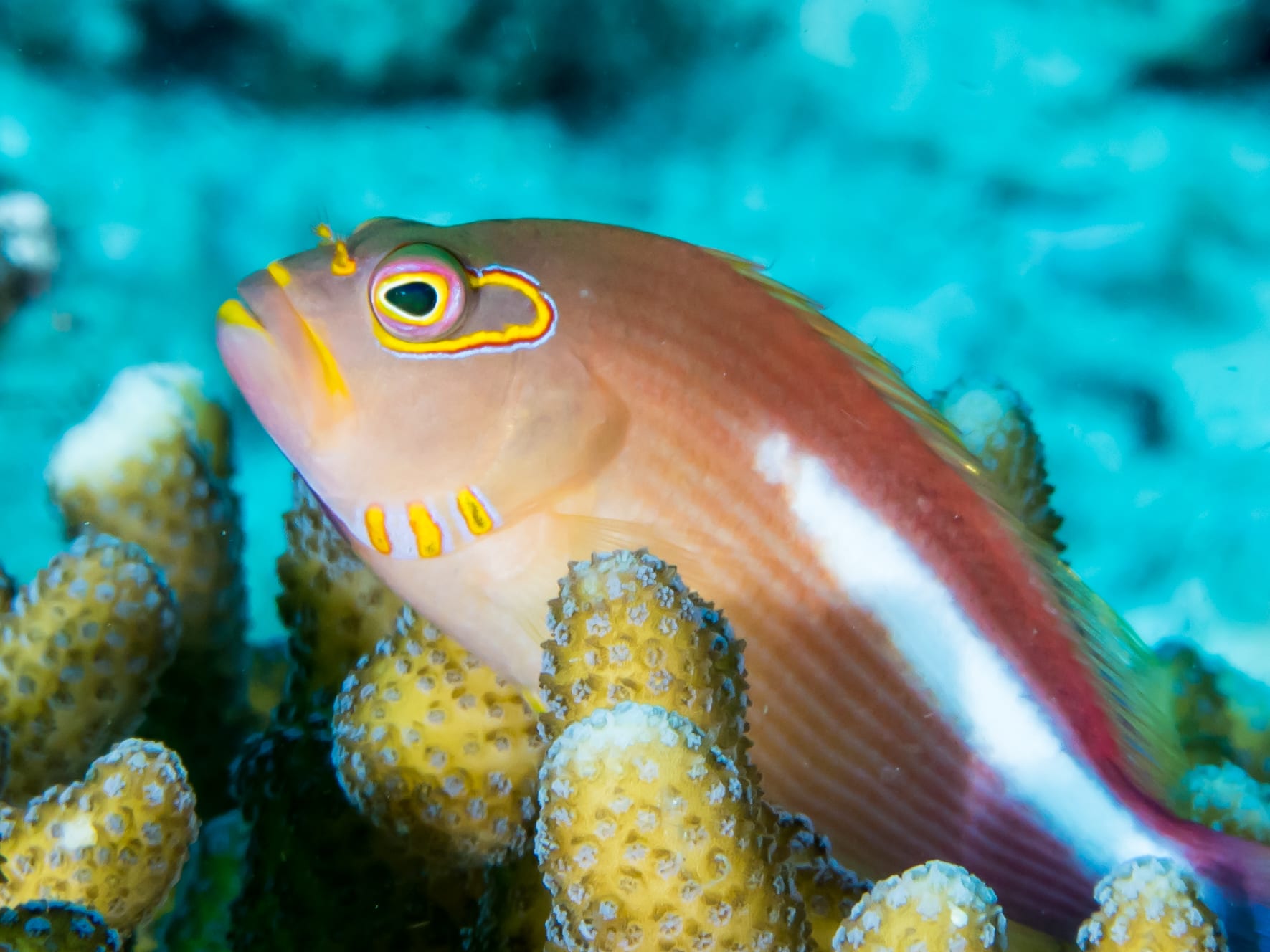
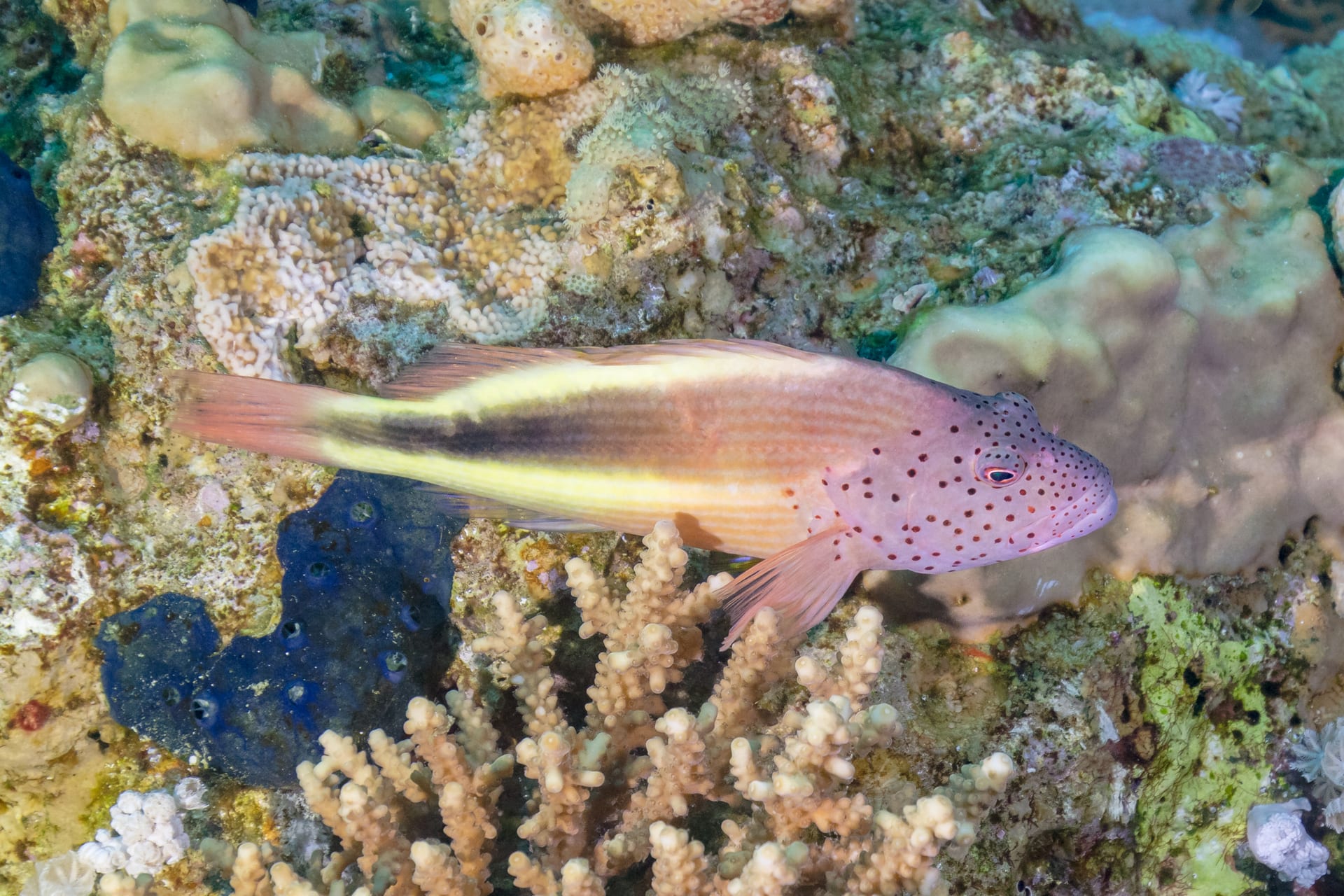
A hawkfish with many small reddish-brown freckles on the head and often a black stripe along the upper rear body. Colour varies greatly with age and locality, but the head freckles are constant.
Difficulty
Intermediate
Temperature
22〜27℃
Lifespan
Little data available
Size
Up to 22 cm TL (FishBase)
Diet
Carnivore (small fish and crustaceans)
About
The blackside or freckled hawkfish (Paracirrhites forsteri) ranges widely across the Indo-Pacific from the Red Sea and East Africa to Hawaii, the Line, Marquesas and Ducie islands, north to southern Japan and south to New Caledonia (FishBase). At up to 22 cm TL it is a medium-sized hawkfish. Colour varies greatly with growth stage and locality, but all fish share many small reddish-brown freckles on the head. Adults are often yellowish with a black stripe on the upper rear body; juveniles tend to be golden green above in Oceania and red above in continental areas. It perches on the outer branches of Pocillopora and Acropora corals in clear lagoons and seaward reefs, propped on its fins, and darts out at small fish and crustaceans. Adults have no swim bladder. Give it rocks to perch on and feed meaty frozen foods twice a day. It does not eat corals, but it eats small fish, ornamental shrimp, tubeworms, small snails and crabs, so Saltcorner recommends a fish-only tank with larger, robust fish. Specialist shops stock it regularly, and it also occurs in southern Japan.
Source: Wikipedia (CC BY-SA 4.0)
Size of the Blackside hawkfish
The Blackside hawkfish grows to Up to 22 cm TL (FishBase).
Temperature & humidity for the Blackside hawkfish
The ideal temperature for the Blackside hawkfish is 22〜27℃.
Basic Info
Origin
Indo-Pacific (Red Sea and East Africa to Hawaii and the Marquesas, north to southern Japan, south to New Caledonia)
Lifespan
Little data available
Care Specifications
- Water Temp.
- 22–27℃
- Specific Gravity
- 1.02–1.026
- Min. Tank
- 190 L
AggressiveWith caution
Sources: FishBase (Paracirrhites forsteri) / Saltcorner Fish Library (Bob Goemans)
References & Sources
Edited & verified by: BreederDirect editorial team
The taxonomic, regulatory, and husbandry data on this page are compiled and verified against the authoritative primary sources below.
Taxonomy & Authority
Regulations & Conservation Status
Not CITES-listedIUCN LC · Least Concern
Not listed in the CITES Appendices (checked on Species+). Not designated as an Invasive Alien Species under Japanese law. It also occurs along the coasts of Japan (southern Japan, the Ryukyu Islands, etc.); collecting in Japan is subject to each prefecture's fisheries adjustment regulations. Never release aquarium animals into the sea.
Sources: Species+ (CITES) / Ministry of the Environment: List of Designated Invasive Alien Species / FishBase
Regulations may change. Always verify the latest information with the relevant authorities.
Blackside hawkfish Listings
Loading latest listingsFind listings for this species