Complete Guide to Choosing Lids to Prevent Marine Fish Jumping Accidents | High-Risk Species and Countermeasures
Marine fish jumping accidents are among the leading causes of death. This practical guide explains the characteristics of high-risk species, lid materials, gap prevention, and methods to ensure proper ventilation, all aimed at preventing accidents.
Key Takeaways
Marine fish jumping accidents are among the leading causes of death. This practical guide explains the characteristics of high-risk species, lid materials, gap prevention, and methods to ensure proper ventilation, all aimed at preventing accidents.
Related Species
Fish Jumping Accidents: A Blind Spot in Marine Aquarium Keeping
While many hobbyists pay attention to issues such as marine ich and water quality deterioration when keeping marine fish, death caused by jumping accidents is a challenge that tends to be underestimated. In fact, jumping is one of the leading causes of death in marine fish, and it often occurs during unattended hours at night, with many cases where discovery comes too late.
Although jumping may appear to be a sudden accident, it often occurs as a combination of three factors: species-specific behavioral tendencies, tank environment, and external stimuli, and most cases can be prevented by understanding these factors in advance and taking appropriate measures. This article systematically explains the characteristics of high-risk species, how to choose lids, and alternative measures when lids are not used.
Marine Fish Species with Particularly High Jumping Risk
Fish jumping tendencies vary greatly by species. Below are representative high-risk species.
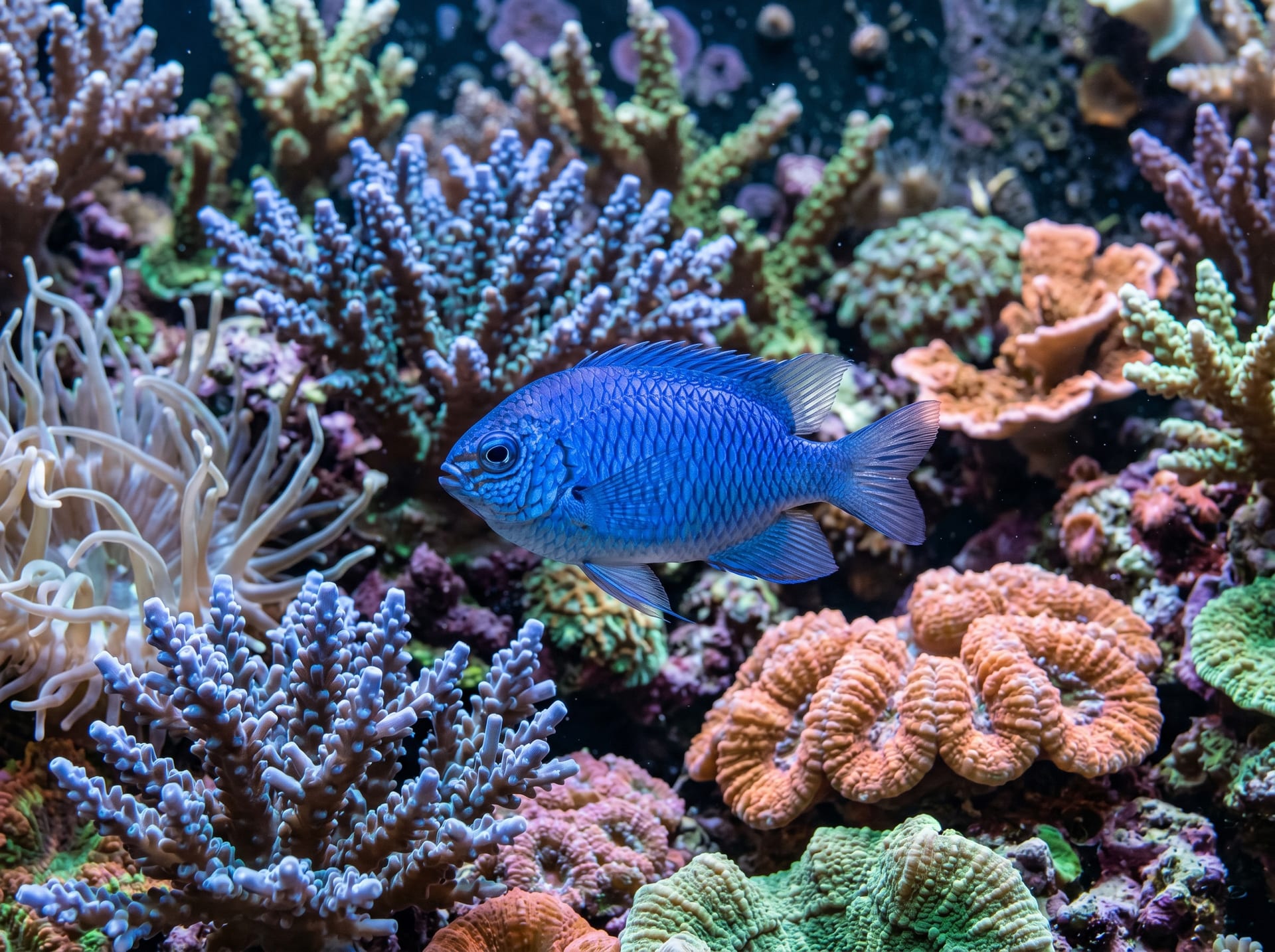
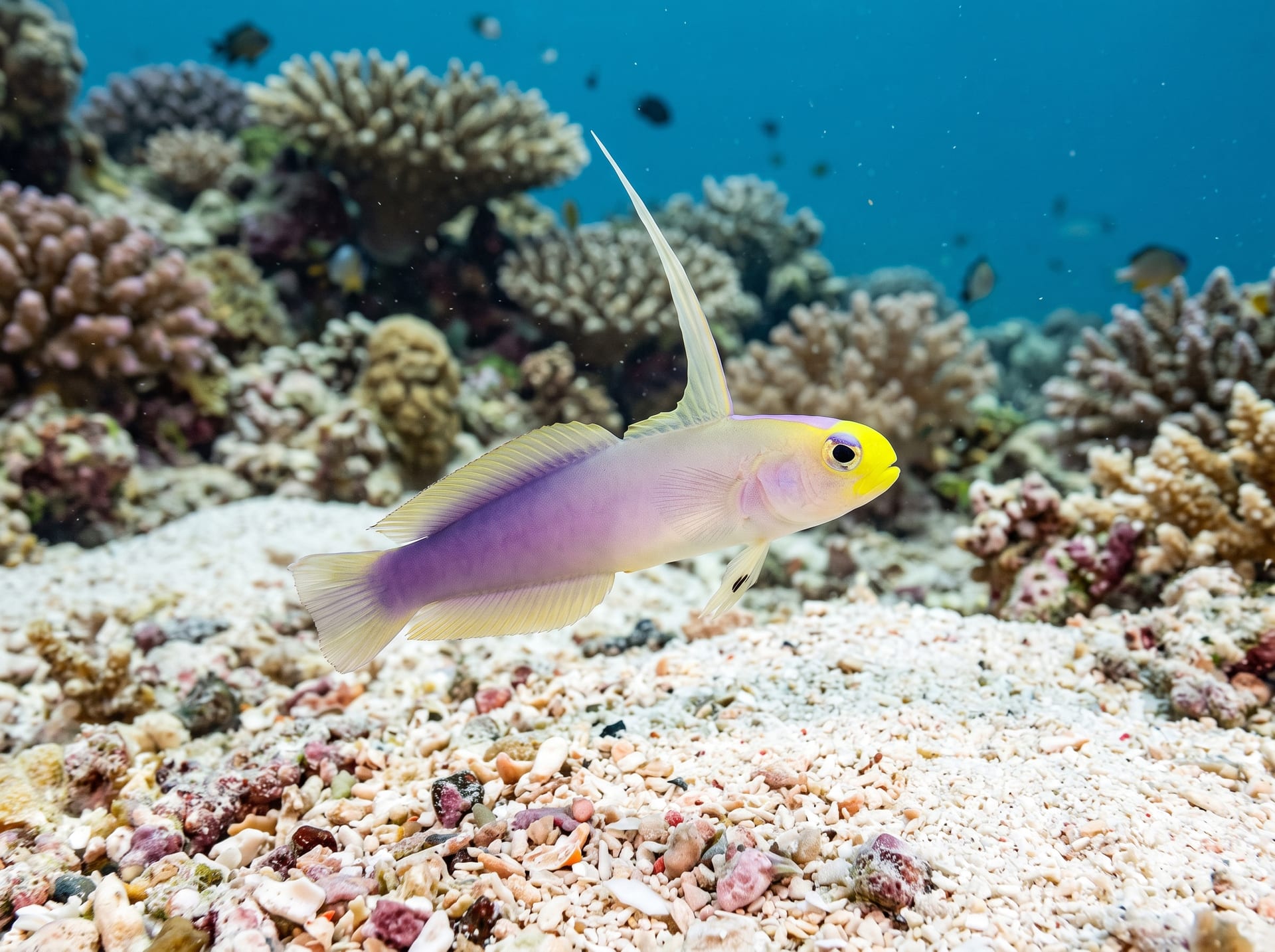
Goby family: One of the groups with the highest jumping risk. Species such as the Firefish, Helfrich's Firefish Goby, and Sunrise Goby perform vertical jumps at high speed when startled. In open tanks without enclosures, they jump out from minor stimuli such as lighting adjustments, being chased by other fish, or vibrations from maintenance.
Blenny family: Species such as the Yellowhead Blenny and Convict Blenny, which prefer rocky crevices, have a habit of exploring the edges of the tank. They can easily escape through gaps as small as a few centimeters at the edge of a glass lid.
Flasher Wrasse and Cichlid Wrasse (Wrasse family): Fast-swimming wrasses are particularly prone to jumping during the initial period after introduction when they are not yet acclimated. Species with burrowing habits (such as the Blacktail Wrasse genus) sometimes jump out of the sand at night and collide with tank walls.
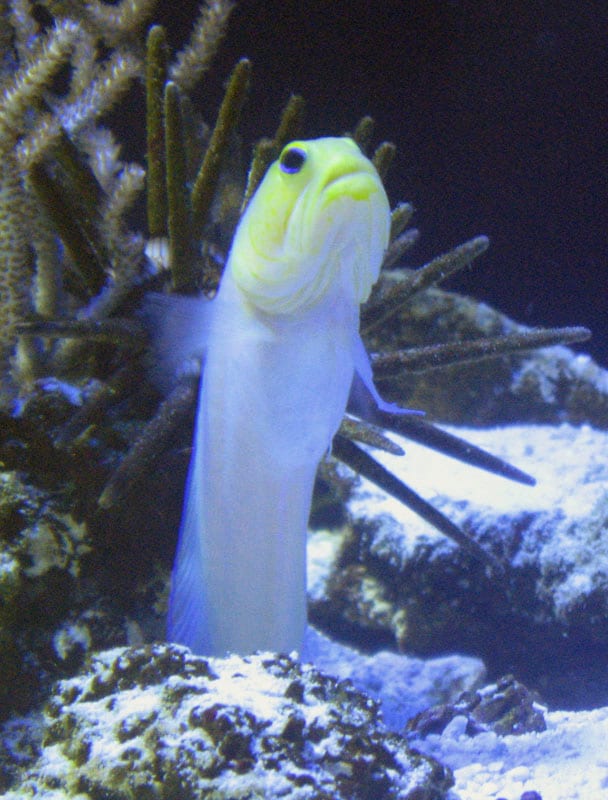
Jawfish (Jawfish family): Jawfish are normally quiet as they are burrowing fish, but they may suddenly jump during mouthbrooding periods or when stressed by water quality changes.
Trumpetfish and similar slender species: Elongated fish with slender body shapes can sometimes pass through thin gaps in glass lids.
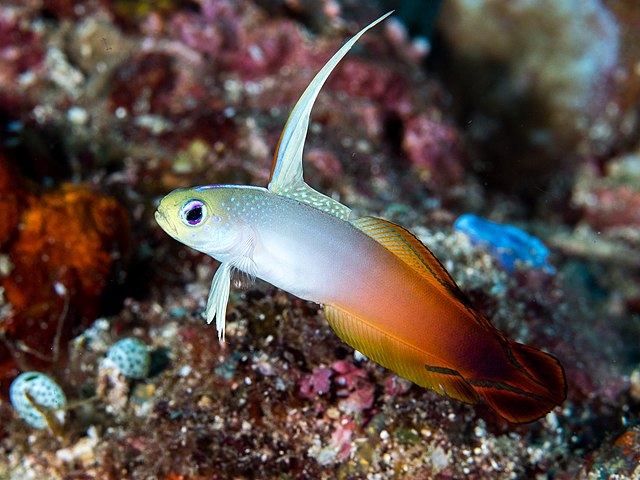
All species sensitive to surprise: Cobalt Damselfish and damselfish species can also jump in response to sudden sounds or vibrations. Special care is needed for the first 1-2 weeks after introduction.
Lid Materials and Selection
Glass Lids
The most common and reliable option. They offer high transparency without obstructing tank observation and reduce water evaporation. The disadvantages are that they are heavy, fragile, and limit lighting installation space. Particularly for large tanks (90 cm or larger), multiple panels are used for installation, requiring careful management of gaps between panels.
Acrylic Lids
Lighter and easier to work with than glass, allowing for custom cuts to fit lighting units. However, acrylic deteriorates and yellows under UV exposure, potentially losing transparency over several years. It also scratches more easily than glass.
Mesh Lids (Shrimp/Fly Screen)
Lids made of aluminum or stainless steel mesh have high breathability, preventing lighting heat from directly accumulating on the water surface. They also have minimal interference with lighting units and can be used without reducing light output. This style is primarily used by American breeders and enthusiasts.
However, corrosion from salt spray is common, so material selection requires careful attention. Choose stainless steel grade SUS 316 or higher, or aluminum with a surface coating.
How to Make DIY Mesh Lids
The method of attaching shrimp mesh netting to a commercial aluminum frame achieves both cost-effectiveness and functionality. It can be cut to fit tank size, and designing it with multiple independent windows that can be slid with one hand improves maintenance.
Strategies Without a Lid: Open-Top Tank Cases
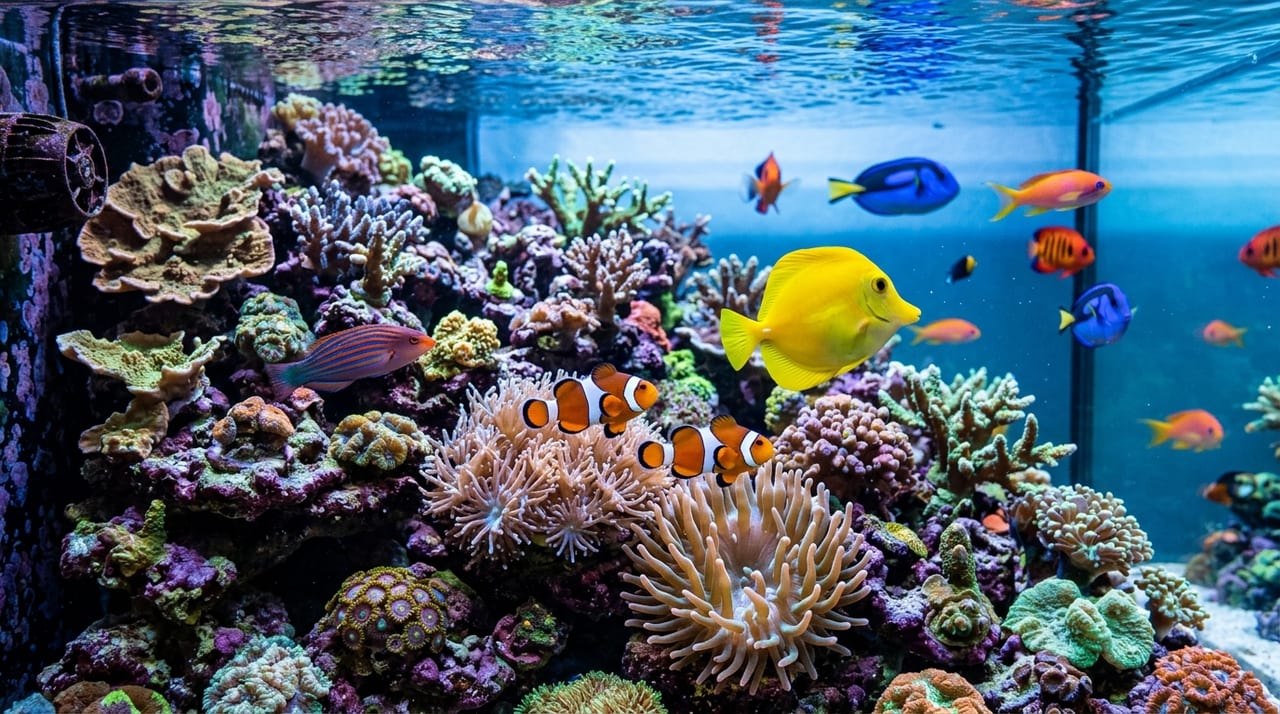
Coral tanks are often operated as open-top (lidless) to maximize LED lighting efficiency, and many high-end reef tanks do not use lids. In such cases, implement the following measures:
Lower water level: Increasing the height from the water surface to the top edge of the tank (freeboard) makes it harder for jumping fish to escape. The ideal distance is 15 cm or more. However, since this also changes the distance to the lights, confirm the impact on corals.
Avoid high-risk species: If operating open-top, avoiding or not including previously mentioned high-risk species (especially gobies and blennies) in the same tank is an effective choice.
Install sensor alarms: Using a water level alarm with a water surface sensor can create a system to receive notifications when fish jump and the water level suddenly changes. However, since fish can only survive in air for a very short time, this is merely a supplementary measure.
Lighting Interference Issues and Solutions
The most common problem when installing a lid is interference with lighting units. When suspended LED or clamp-type lighting interferes with a lid, the following solutions are effective:
- Design the lighting position to be above the lid: Fix the lid to the tank rim and suspend the lighting above or place it on a frame above the lid.
- Provide a slit in the lid for the lighting cord: Adding cord guide slots to acrylic or mesh lids increases flexibility in lighting installation.
- Use divided lids: Rather than covering the entire tank with one piece, divide it into multiple smaller lids and separately manage the lighting unit's space and the fish escape openings.
Common Escape Scenarios and Prevention
Below are common escape scenarios reported by experienced hobbyists and their respective prevention strategies.
During maintenance (water changes and cleaning): Fish may jump when startled as you place your hand in the tank. Develop the habit of only partially opening the lid during work rather than removing it completely.
Immediately after introducing new fish: Fish often jump out as they swim frantically around the tank when anxious in a new environment. For the first 1-2 weeks after introduction, be especially diligent about lid management and always close it at night.
Sudden light shutdown: Turning off the lights suddenly at night can startle fish and cause panic. Either use a timer to gradually dim the lights or turn off the room lights before the tank lights to maintain proper procedure.
Mixing with predators: Small fish chased by hawkfish or dottybacks may jump when they run out of places to hide. Confirming compatibility before mixing species and providing sufficient hiding places is the fundamental solution.
Summary: Lid Installation is Basic Infrastructure for Aquarium Keeping
Fish jumping accidents are nearly always fatal once they occur, and remedial measures come too late. Treat lid installation not as "something you should do" but as essential basic infrastructure that you must implement.
- High-risk species (gobies, blennies, and elongated body shapes) require lids
- Choose material (glass, acrylic, or mesh) to suit your tank and layout
- Utilize divided lids and foam padding to eliminate gaps
- For open-top tanks, avoid high-risk species and maintain adequate freeboard
By implementing these practices, you can prevent the tragedy of jumping accidents and keep your valued marine fish safe for a long time.