Source: Wikimedia Commons
Banded pipefish
IntermediateDunckerocampus dactyliophorus
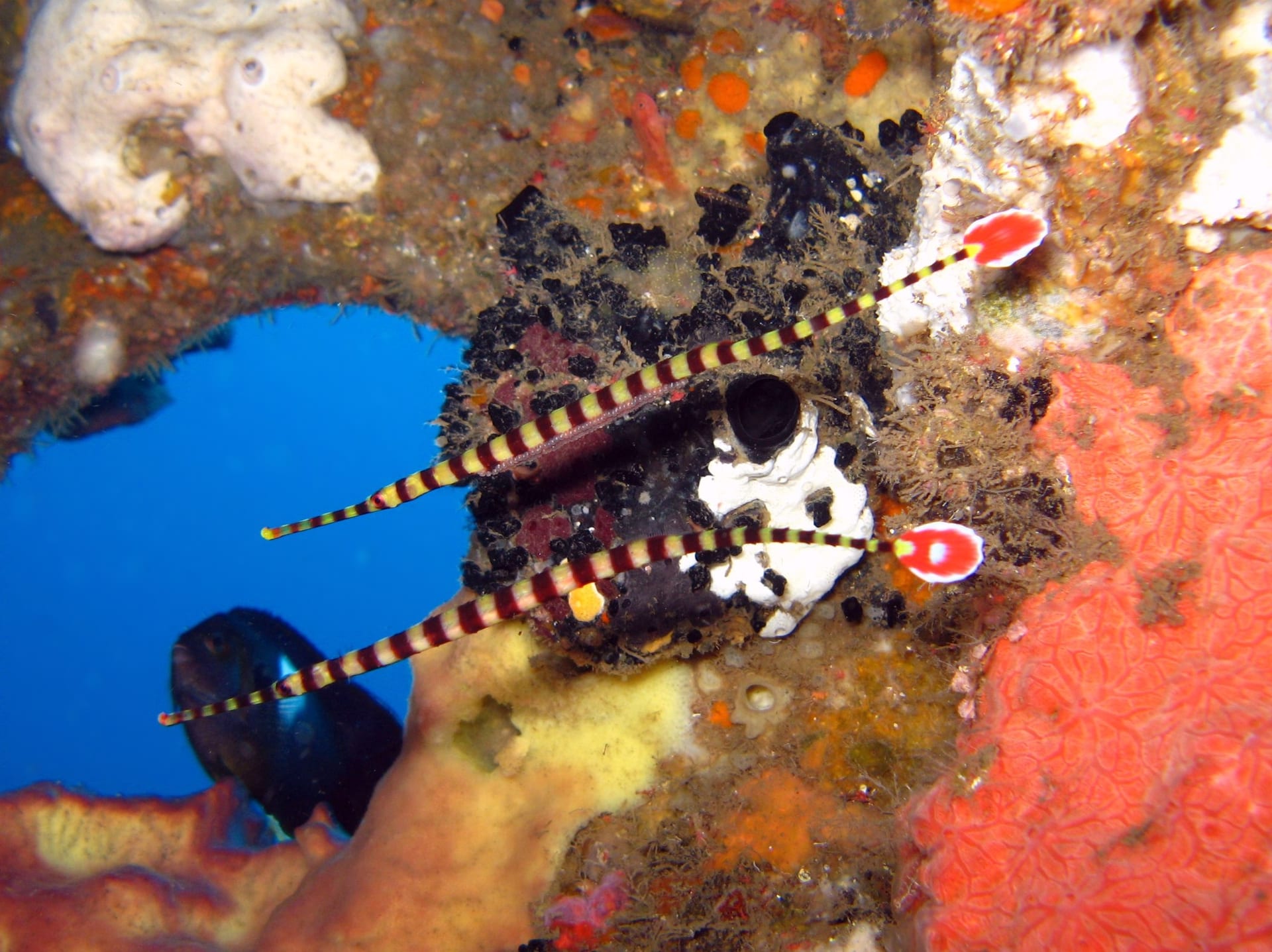
A pipefish of Indo-Pacific reefs with a slender body ringed in red and white or yellow bands and a white-edged red tail. The male carries the eggs in a brood pouch.
Difficulty
Intermediate
Temperature
23〜26℃
Lifespan
Few reliable data
Size
Up to 19 cm TL (FishBase)
Diet
Carnivore (small crustaceans and other zooplankton)
About
The banded pipefish, Dunckerocampus dactyliophorus, is widespread in the Indo-Pacific from the Red Sea and East Africa to Samoa, north to southern Japan and south to Australia (FishBase). It reaches 19 cm TL. Its straight, slender body is ringed with alternating red and white bands, with skin flaps on the head. It lives in tide pools, lagoons and outer reef slopes, alone, in pairs or small groups in caves, crevices and under ledges, feeding on small invertebrates. As in seahorses, the female places her eggs in the brood pouch under the male's tail, and he broods them until the young are born; it has been reared in captivity. It is one of the most widely traded pipefishes in Japan and also occurs along Japanese coasts.
Source: Wikipedia (CC BY-SA 4.0)
Size of the Banded pipefish
The Banded pipefish grows to Up to 19 cm TL (FishBase).
Basic Info
Origin
Indo-Pacific (Red Sea and East Africa to Samoa; southern Japan to Australia)
Lifespan
Few reliable data
Size
Up to 19 cm TL (FishBase)
Temperature
23〜26℃
Diet
Carnivore (small crustaceans and other zooplankton)
Care Guide
References & Sources
Edited & verified by: BreederDirect editorial team
The taxonomic, regulatory, and husbandry data on this page are compiled and verified against the authoritative primary sources below.
Primary sources
Taxonomy & Authority
Accepted name: Dunckerocampus dactyliophorus (Bleeker, 1853)
Synonyms: Acanthognathus caulleryi Chabanaud, 1929, Doryhamphus dactyliophorus (Bleeker, 1853), Doryramphus dactyliophorus (Bleeker, 1853), Doryrhamphus dactyliophorus (Bleeker, 1853), Dunckerocampus caulleryi (Chabanaud, 1929), Dunckerocampus caulleryi caulleryi, Dunckerocampus dactyliophorus dactyliophorus, Syngnathus dactyliophorus Bleeker, 1853
Authority databases: GBIF · GBIF · FishBase
Nomenclature follows global taxonomic authority databases.
Regulations & Conservation Status
Not CITES-listedIUCN DD · Data Deficient
Not listed in the CITES Appendices (checked on Species+). Not a designated invasive alien species in Japan. Listed as Data Deficient (DD) on the IUCN Red List. It also occurs in southern Japan and the Ryukyu Islands; collecting in Japan must follow each prefecture's fisheries adjustment regulations. Never release aquarium fish into the sea.
Sources: Species+ (CITES) / FishBase
Regulations may change. Always verify the latest information with the relevant authorities.
Banded pipefish Listings
Loading latest listingsFind listings for this species