Source: Wikimedia Commons
Atlantic blue tang
IntermediateAcanthurus coeruleus
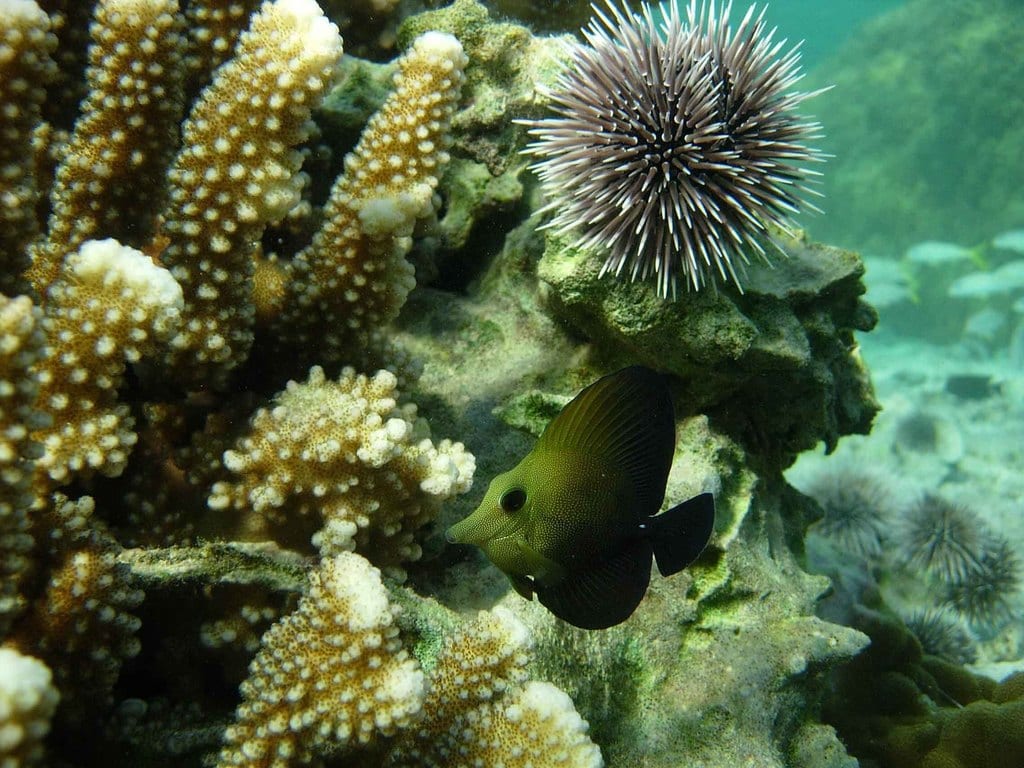
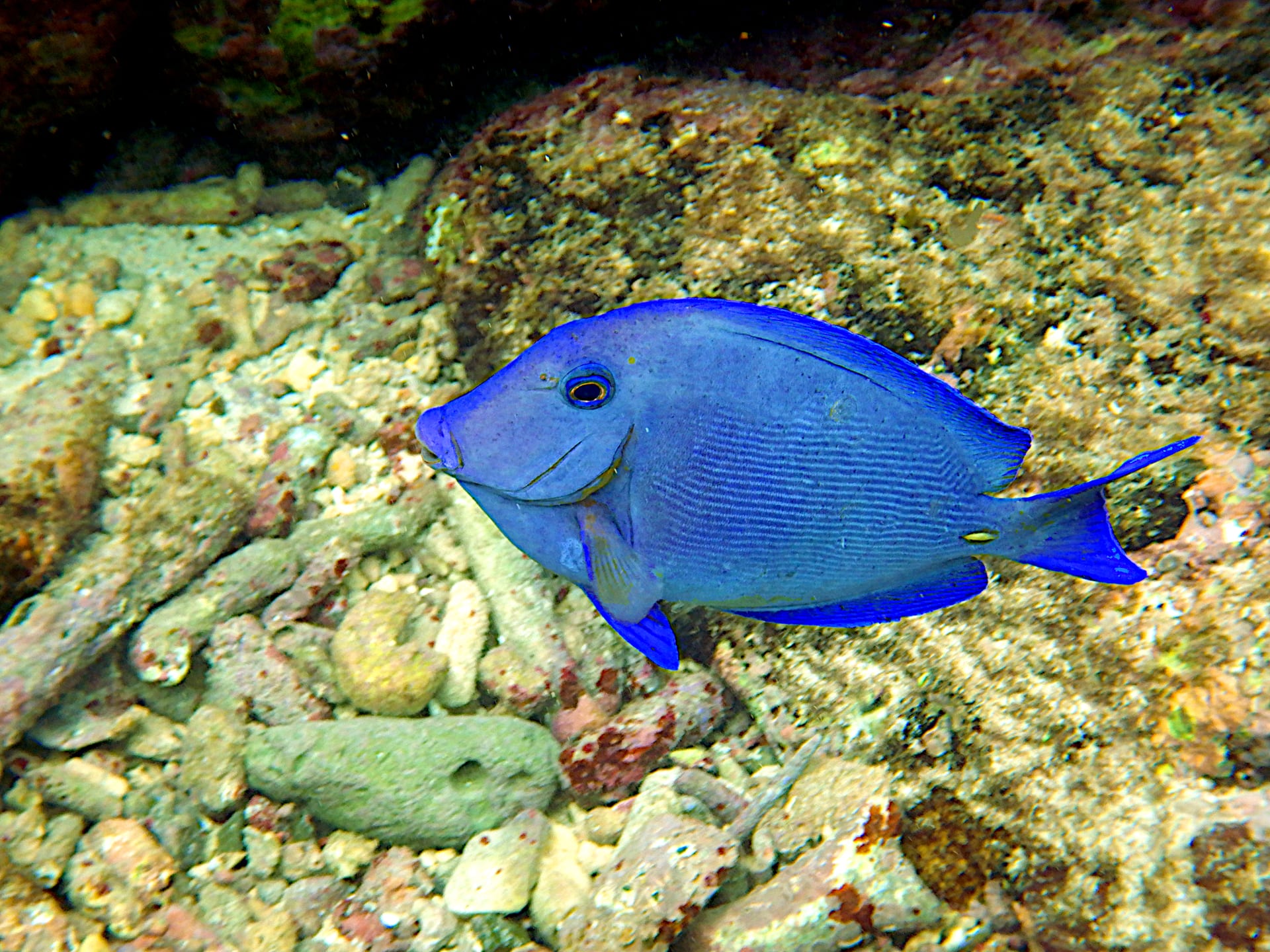
A surgeonfish of the western Atlantic including the Caribbean. Adults are blue with golden-blue fins, juveniles yellow, and subadults blue with a yellow tail. An algae-eating herbivore.
Difficulty
Intermediate
Temperature
23〜26℃
Lifespan
Few reliable data
Size
Up to 39 cm TL, commonly about 25 cm (FishBase)
Diet
Herbivore (seaweed, algae-based prepared foods)
About
Acanthurus coeruleus, the Atlantic blue tang, occurs in the western Atlantic from New York and Bermuda to the Gulf of Mexico and Brazil, and at Ascension Island (FishBase). It reaches 39 cm TL, commonly 25 cm. Its colour changes with growth, from a yellow juvenile through a blue subadult with a yellow tail to the blue adult. It lives in small groups on coral reefs and algae-rich inshore rocky or grassy areas, is diurnal and feeds entirely on algae. Juveniles have been recorded cleaning algae and parasites from green turtles. It belongs to a different genus from the Indo-Pacific blue tang (Paracanthurus hepatus), despite the shared English name. The spines on both sides of the tail base can inflict painful wounds. It is sold by Japanese marine specialist shops.
Source: Wikipedia (CC BY-SA 4.0)
Size of the Atlantic blue tang
The Atlantic blue tang grows to Up to 39 cm TL, commonly about 25 cm (FishBase).
Basic Info
Origin
Western Atlantic (US east coast and Bermuda to the Gulf of Mexico and Brazil; Ascension Island)
Lifespan
Few reliable data
Size
Up to 39 cm TL, commonly about 25 cm (FishBase)
Temperature
23〜26℃
Diet
Herbivore (seaweed, algae-based prepared foods)
References & Sources
Edited & verified by: BreederDirect editorial team
The taxonomic, regulatory, and husbandry data on this page are compiled and verified against the authoritative primary sources below.
Primary sources
Taxonomy & Authority
Accepted name: Acanthurus coeruleus Bloch & Schneider, 1801
Synonyms: ? caeruleus Bloch & Schneider, 1801, Acanthurus brevis Poey, 1860, Acanthurus broussonnetii Desmarest, 1823, Acanthurus caeruleus (Bloch & Schneider, 1801), Acanthurus coerulus Bloch & Schneider, 1801, Acanthurus heliodes (Barbour, 1905), Acanthurus helioides (Barbour, 1905), Acanthurus violaceus Castelnau, 1855, Acronurus caeruleatus Poey, 1875, Hepatus caeruleus (Bloch & Schneider, 1801), Hepatus pawnee Breder, 1927, Teuthis coeruleus (Bloch & Schneider, 1801), Teuthis helioides Barbour, 1905
Authority databases: GBIF · GBIF · FishBase
Nomenclature follows global taxonomic authority databases.
Regulations & Conservation Status
Not CITES-listedIUCN LC · Least Concern
Not listed in the CITES Appendices (checked on Species+). Not a designated invasive alien species in Japan. Never release aquarium fish into the sea.
Sources: Species+ (CITES) / FishBase
Regulations may change. Always verify the latest information with the relevant authorities.
Atlantic blue tang Listings
Loading latest listingsFind listings for this species