Complete Guide to White Spot & Velvet Disease Management for Tangs and Yellow Tangs | Quarantine, Treatment & Prevention
Comprehensive guide to infectious disease management for tangs (Yellow Tangs, Sailfin Tangs, etc.) susceptible to white spot disease (Cryptocaryoniasis) and velvet disease (Oodiniosis). Learn specific procedures for copper treatment, hyposalinity, and temperature management, why tangs are prone to Ich, essential quarantine (QT) processes, and how to maintain immune function through proper tank mate management.
Key Takeaways
Comprehensive guide to infectious disease management for tangs (Yellow Tangs, Sailfin Tangs, etc.) susceptible to white spot disease (Cryptocaryoniasis) and velvet disease (Oodiniosis). Learn specific procedures for copper treatment, hyposalinity, and temperature management, why tangs are prone to Ich, essential quarantine (QT) processes, and how to maintain immune function through proper tank mate management.
Related Species
Tangs (Yellow Tangs, Surgeonfish) and Infectious Diseases
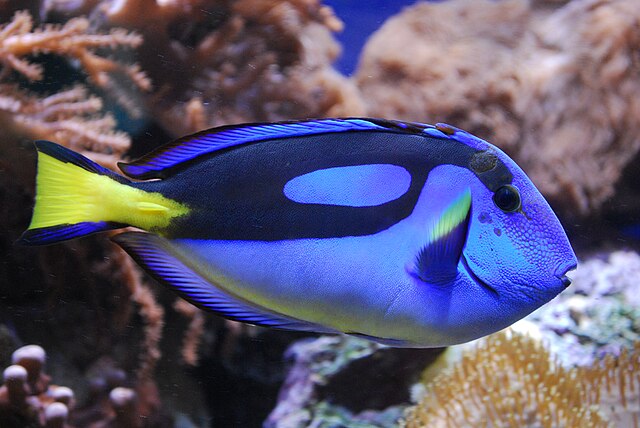
Tangs—including Yellow Tangs (Dory), Sailfin Tangs, and Black Tangs of the family Acanthuridae (Surgeonfish)—are among the most popular groups in saltwater aquariums. However, they are also notorious for being susceptible to infectious diseases such as white spot disease (Ich / Cryptocaryoniasis) and velvet disease (Oodiniosis), leading to the common saying "tangs love Ich."
This article explains the mechanisms of representative infectious diseases in tangs and practical prevention and treatment procedures.
White Spot Disease (Cryptocaryoniasis / Marine Ich)
Cause and Symptoms
White spot disease is caused by the ciliate Cryptocaryon irritans. Small white spots (resembling sand grains) appear on the fish's body surface, gills, and fins.
Symptom Progression
- Early stage: A few white spots; fish rubbing themselves against rocks or sand (sign of itching)
- Mid-stage: Increased spots; loss of appetite; hovering near the water surface
- Advanced stage: Numerous spots reducing gill function; labored breathing
Life Cycle and Tank Dynamics
C. irritans reproduces through the following cycle:
- Trophont (Parasitic Stage): Attaches to fish skin and feeds (5–7 days)
- Tomont (Encysted Stage): Falls from fish and forms a cyst in substrate (days to weeks)
- Theront (Free-Swimming Stage): Released from cyst; infectious larvae seek a host fish (dies within 24–36 hours if unsuccessful)
Critical fact: Even if white spots disappear from the fish's body, infection persists as long as cysts remain in the substrate.
Why Tangs Are Prone to Ich
- Thin mucus layer: Tangs have less protective mucus than other fish, making them vulnerable to parasite invasion
- High stress sensitivity: Water quality changes, tank mate incompatibility, and inadequate space immediately stress tangs, suppressing immunity
- Difficulty spotting early symptoms: Bright blue tangs like Yellow Tangs may have spots that are difficult to detect
Treatment Methods
1. Copper Treatment (Recommended)
Copper ions are effective against Theront and Trophont stages.
- Medications: Seachem Cupramine, Copper Power, etc.
- Recommended concentration: Cu²⁺ 0.20–0.35 ppm (monitor daily with copper test)
- Treatment duration: Minimum 4 weeks (to completely cover the cyst cycle)
- Warning: Highly toxic to invertebrates (corals, shrimp, hermit crabs). Always perform in an isolation (QT) tank.
2. Hyposalinity (Low Salinity) Treatment
- Reduce specific gravity to 1.008–1.010 to inhibit Cryptocaryon reproduction
- Maintain for at least 8–10 weeks (to eliminate the cyst cycle)
- Less harmful to fish but may not completely eradicate Ich in all cases when used alone
3. Elevated Temperature (Supplementary Method)
- Raising temperature to 30°C (86°F) accelerates the Trophont cycle
- Effective when combined with hyposalinity (insufficient alone)
Main Tank Management: Fish-Free Period
During treatment, remove all fish from the main tank and maintain a fish-free period of 6–8 weeks or longer to break the Ich cycle completely.
Velvet Disease (Oodiniosis / Marine Velvet)
Cause and Symptoms
Velvet disease is caused by the dinoflagellate Amyloodinium ocellatum. It appears as a fine dust-like coating (velvet texture) and is smaller and more lethal than Ich.
Symptoms
- Very fine gold to rust-colored powder-like spots on body surface and gills
- Intense scratching behavior from the early stage (rubbing forcefully against rocks and sand)
- Sudden loss of appetite and respiratory distress
- Deteriorates more rapidly than Ich; can be fatal within days
Distinguishing Ich from Velvet
| Characteristic | Ich (White Spot) | Velvet (Oodiniosis) |
|---|---|---|
| Spot size | Sand to salt grain (0.3–0.5 mm) | Fine powder-like (0.05–0.1 mm) |
| Color | White | Gold to rust-brown |
| Progression speed | Relatively gradual | Rapid (severe within days) |
| Spot shimmer | None | Glimmers in light |
Treatment Methods
1. Copper Treatment (First Choice)
Copper is effective for velvet as with Ich, but rapid treatment is essential due to faster progression.
- Achieve Cu²⁺ 0.30–0.40 ppm quickly
- Minimum treatment duration: 4 weeks
2. Light Deprivation (Darkness)
A. ocellatum is a photosynthetic dinoflagellate; complete darkness for 72 hours increases mortality in the Tomont (encysted) stage. Move fish to an isolation tank and darken the main tank.
3. Chloroquine
Less harmful to fish than copper; effective against both velvet and Ich.
- Recommended concentration: 10 mg/L
- Treatment duration: 2–3 weeks
- May be difficult to obtain in Japan
Common Prevention Strategies
Thorough Quarantine Procedure
Always quarantine new saltwater fish—especially tangs—for at least 4 weeks before introduction.
Quarantine Tank Setup
- Minimum capacity: 100L or more (tangs need swimming space)
- Filter: Sponge filter (compatible with copper treatment)
- Lighting: Dim (to reduce stress)
- Hiding places: PVC pipe, plastic products (non-copper-absorbing)
Recommended Prophylaxis (Preventive Medication)
Even without visible disease, consider preventive treatment:
- Hyposalinity (1.010–1.012) for 2 weeks
- OR copper (0.20 ppm) for 2 weeks
Stress Management
Reducing stress in tangs significantly lowers infection risk.
- Tank size: 150L+ for adult Yellow Tangs; ideally 250L+
- Swimming space: Long tanks (90 cm+) allowing back-and-forth movement
- Tank mates: Avoid multiple same or closely related species (prevent territorial conflicts)
- Water flow: Tangs prefer strong flow; use random flow patterns to approximate natural conditions
- Lighting cycle: Regular 12–14 hour light/dark cycle
Water Quality Management
- Regular water changes (15–20% weekly) to support immunity
- Maintain nitrate (NO₃) below 5–10 ppm (elevated nitrate suppresses tang immunity)
- Ensure protein skimmer is always operational
Nutritional Management
Provide varied diet to maintain immunity.
- Dried seaweed (nori, spirulina sheets): Clip and provide daily
- Pellets and flakes: 2–3 small feedings daily
- Vitamin C supplementation (ascorbic acid): Enhances immune function
Summary: Infectious Disease Management for Tangs
Tangs represent the dual reality of beauty and infection risk. Long-term care is possible by following these practices:
- Thorough quarantine before introduction (4+ weeks)
- Stress-free environment (adequate tank size, water flow, nutrition)
- Early detection and rapid response (daily observation habit)
- Maintained isolation (QT) tank (emergency preparedness)
- Fish-free period in main tank (permanent eradication)