Complete Guide to Keeping Blue Tangs (Dory)|Keeping Conditions, Disease Management, and Tank Mate Compatibility Notes
Detailed explanation of Blue Tang care requirements including large aquariums, protein skimmers, water quality management, white spot disease prevention, and tank mate compatibility for long-term care of the fish made famous by the movie.
Key Takeaways
Detailed explanation of Blue Tang care requirements including large aquariums, protein skimmers, water quality management, white spot disease prevention, and tank mate compatibility for long-term care of the fish made famous by the movie.
The Blue Tang (Paracanthurus hepatus) is a beautiful blue saltwater fish made famous by the movies. However, contrary to its beauty, it has high difficulty in keeping and requires careful attention from beginners. This article provides detailed explanations on equipment needed, water quality management, disease prevention, and tank mate compatibility for Blue Tang care.
✍️
BreederDirect Editorial
The BreederDirect editorial team specializes in care information for animals, covering veterinary care and breeding to deliver beginner-friendly guides.
Find Marine Fish on BreederDirect
Buy directly from verified breeders
Browse Related Listings
Find Marine Fish listings related to this article on BreederDirect. Buy directly from verified breeders.
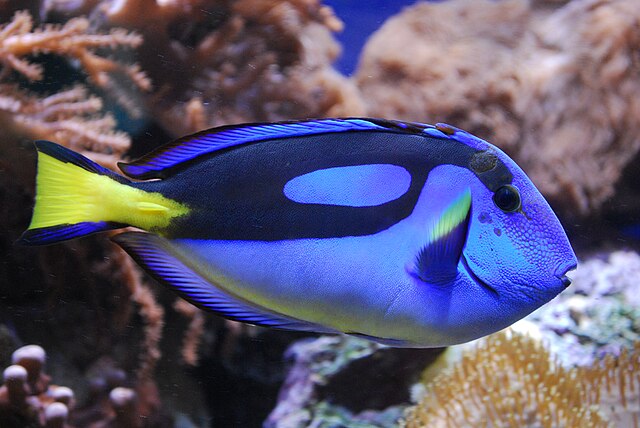
The Blue Tang is characterized by its distinctive tricolor pattern: vibrant royal blue body, black palette-like markings, and a yellow tail fin. Near the base of the tail, there is a sharp spine called a "venomous spine," which is a common trait among surgeonfish species.
Equipment and Water Volume Requirements
Minimum Water Volume and Tank Size
The Blue Tang is an extremely active swimmer. A minimum of 300L or more (equivalent to a 120 cm tank) is recommended.
Tank Size Guidelines:
Minimum: 120 cm × 45 cm × 45 cm (approx. 240L)
Recommended: 150 cm × 60 cm × 60 cm (approx. 540L) or larger
Small tanks (60 cm or less): Not suitable - Stress reduces immunity and white spot disease becomes more likely
Risks of Small Tank Size:
Chronic stress
Frequent occurrence of white spot disease (Cryptocaryon)
Loss of appetite
Increased aggression toward other fish
Required Equipment List
Equipment
Recommended Specs
Protein Skimmer
Capacity to process 2x or more of tank volume
Sump (Secondary Tank)
Recommended for installation (water stability)
Live Rock
20 kg or more (bacterial colonization, hiding places)
Water Circulation Pump
Strong circulation throughout tank
Lighting
LED (or Metal Halide) if keeping corals
Hydrometer
Daily water gravity check
Thermometer
High-precision digital
Water Quality Management
Appropriate Water Quality Parameters
Parameter
Recommended Value
Specific Gravity
1.020–1.025 (natural seawater is 1.025–1.026)
Water Temperature
24–28°C (optimal 25–26°C)
pH
8.1–8.4
Ammonia
0 ppm
Nitrite
0 ppm
Nitrate
10 ppm or less (ideal 5 ppm or less)
Phosphate
0.05 ppm or less
Water Change Method
Frequency: 10–15% water change once weekly (or 20–25% twice monthly)
Water Type: RO water (reverse osmosis) + artificial sea salt mix
Temperature Adjustment: Within ±0.5°C of current tank temperature
Specific Gravity Adjustment: Measure accurately before adding
Why Blue Tang Care Difficulty is High
Vulnerability to White Spot Disease (Saltwater Ich)
The Blue Tang is notoriously prone to white spot disease (Cryptocaryon). Other fish in the same tank may be unaffected, but the Blue Tang alone can develop the disease.
White Spot Disease Symptoms:
White spots on entire body (grain-salt-like appearance)
Fish rubbing against live rock and sand (itching)
Loss of appetite, lethargy
In severe cases, infection spreads to gills, causing labored breathing
Treatment Method (Recommended Steps):
Move to a quarantine/treatment tank
Add copper-based medication (e.g., Cupramine) at recommended dosage
Treat for 2–4 weeks
Wait 4–6 weeks after recovery for parasites in original tank to die before returning fish
Important: Copper-based medications kill corals and invertebrates—never add to main tank
White Spot Disease Prevention
Always quarantine new fish for 1–4 weeks before introduction
Maintain stable water conditions (avoid rapid temperature fluctuations)
Install UV sterilizer
Provide ample swimming space
Feeding Management
Blue Tang Diet
Blue Tangs are primarily herbivorous to omnivorous, feeding mainly on algae in the wild.
Recommended Foods:
Algae-based pellets (with nori/spirulina)
Frozen brine shrimp (protein supplementation)
Frozen food (Marine Pure)
Artificial saltwater fish food (herbivore formula)
Feeding Tips:
Feed 2–3 times daily in small amounts
Use seaweed clips to attach algae sheets to tank walls (promotes natural foraging behavior)
Remove uneaten food immediately
Signs of Nutritional Deficiency
Color fading (blue becomes pale)
Thinning body appearance
Reduced activity
Tank Mate Compatibility
Compatible Fish Species
Fish Species
Compatibility
Reason
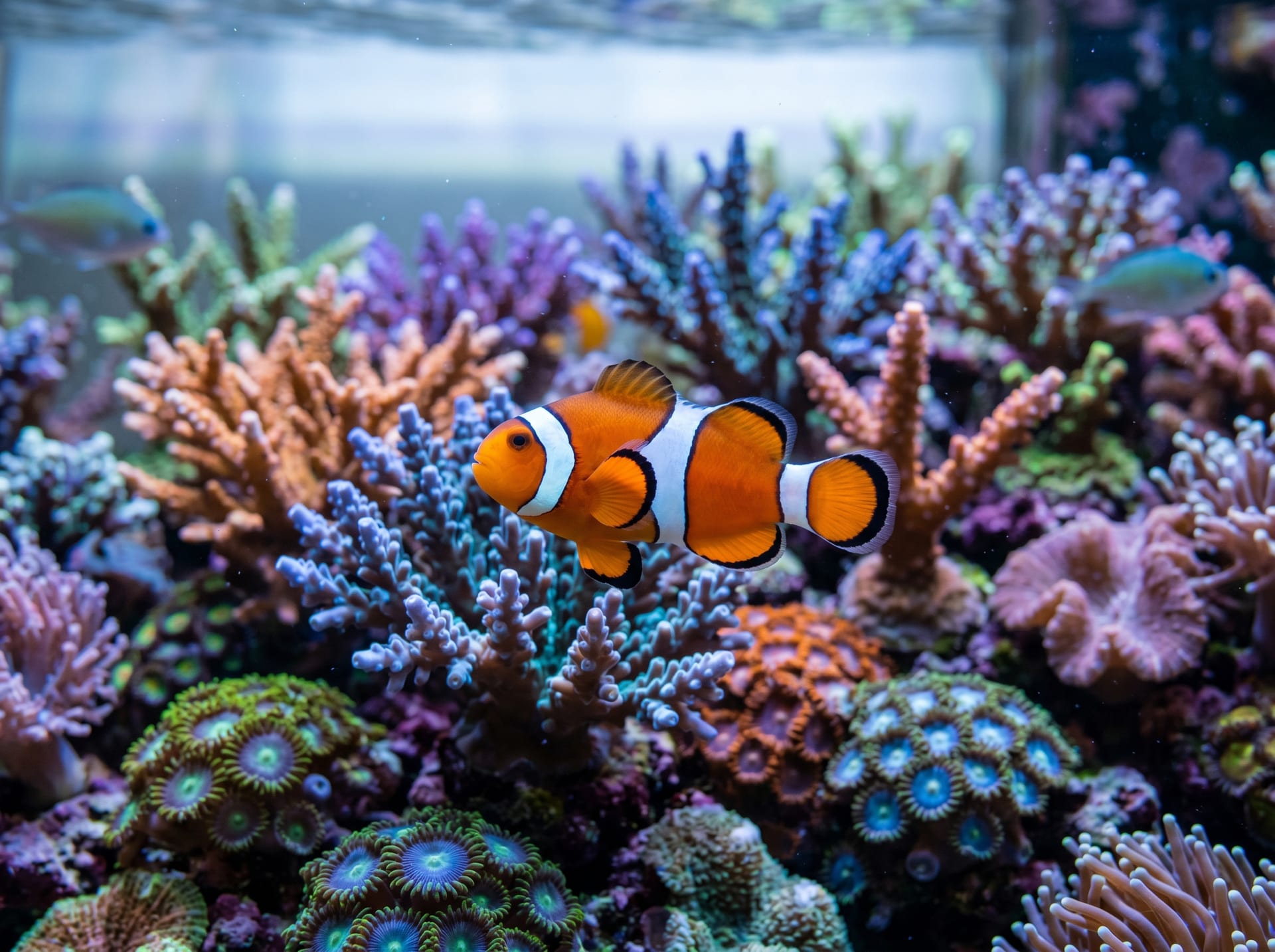
Clownfish
◎
Peaceful, non-overlapping territory
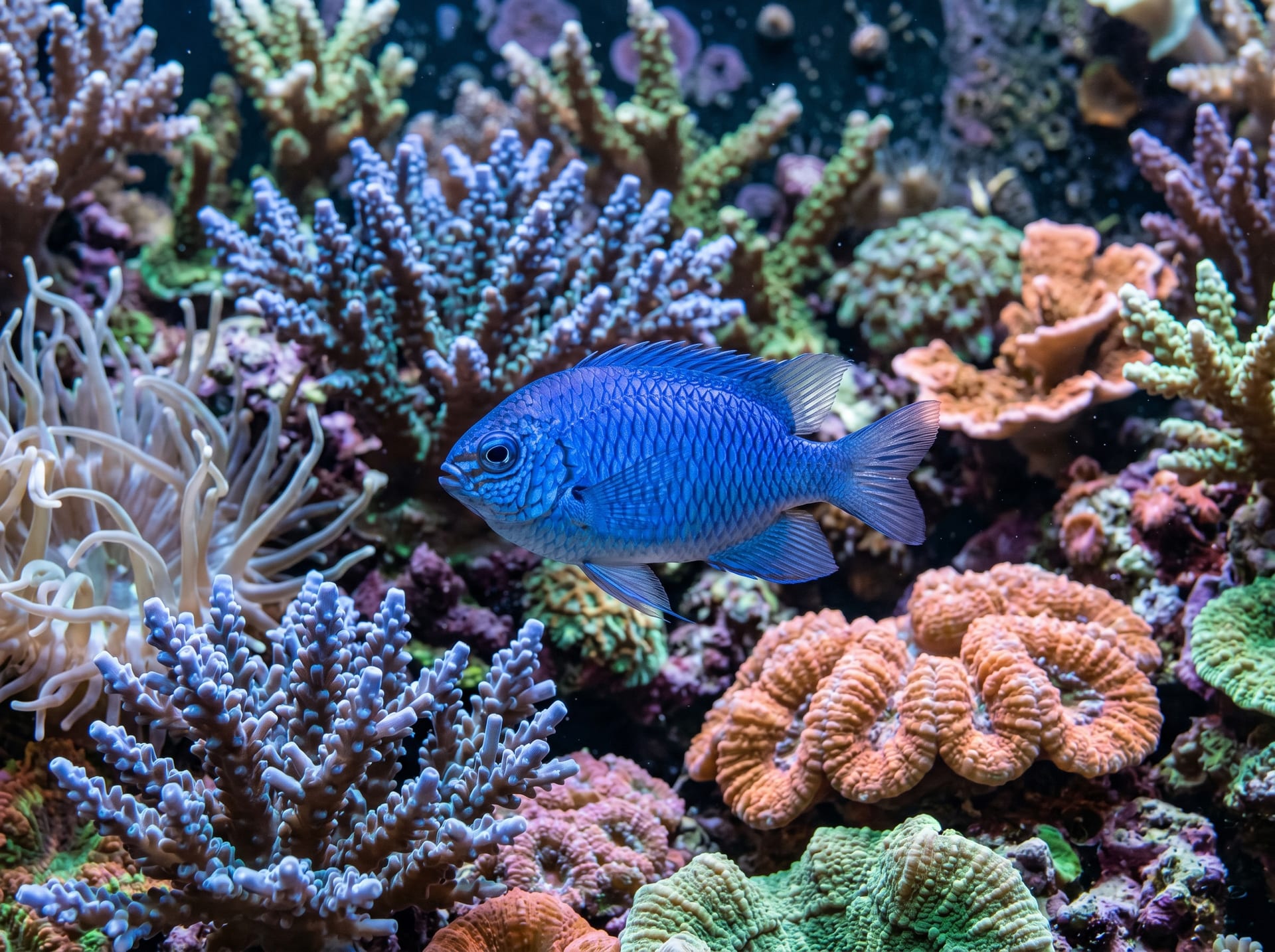
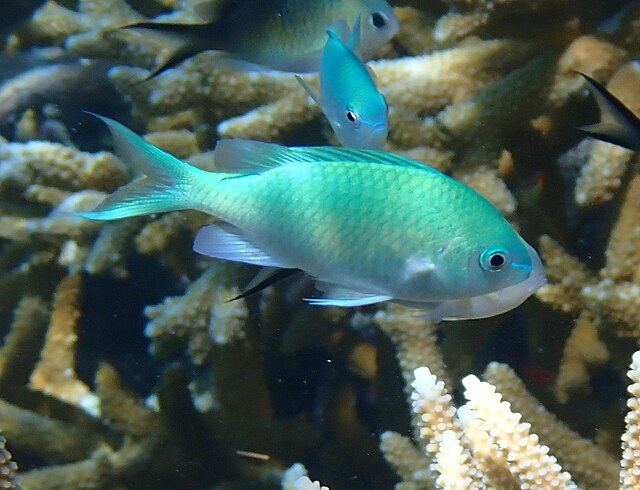
Damselfish
○
School behavior reduces aggression
Goby species (sand-dwelling)
◎
Different ecological niche
Large Angelfish
△
Individual variation; may be attacked
Combinations to Avoid
Same species/related surgeonfish: Intense territorial fights
Small fish: May become aggressive
Aggressive species (certain damselfish): Blue Tang may be bullied
Summary
While the Blue Tang is popular for its beautiful appearance and unique swimming behavior, proper care requires a large tank, stable water quality management, and white spot disease prevention. Impulse purchases motivated by "wanting Dory" often lead to regret, so prepare adequate equipment and knowledge before bringing one home.
With proper conditions, long-term care of 10+ years is achievable, and the Blue Tang will remain a striking centerpiece in your aquarium.