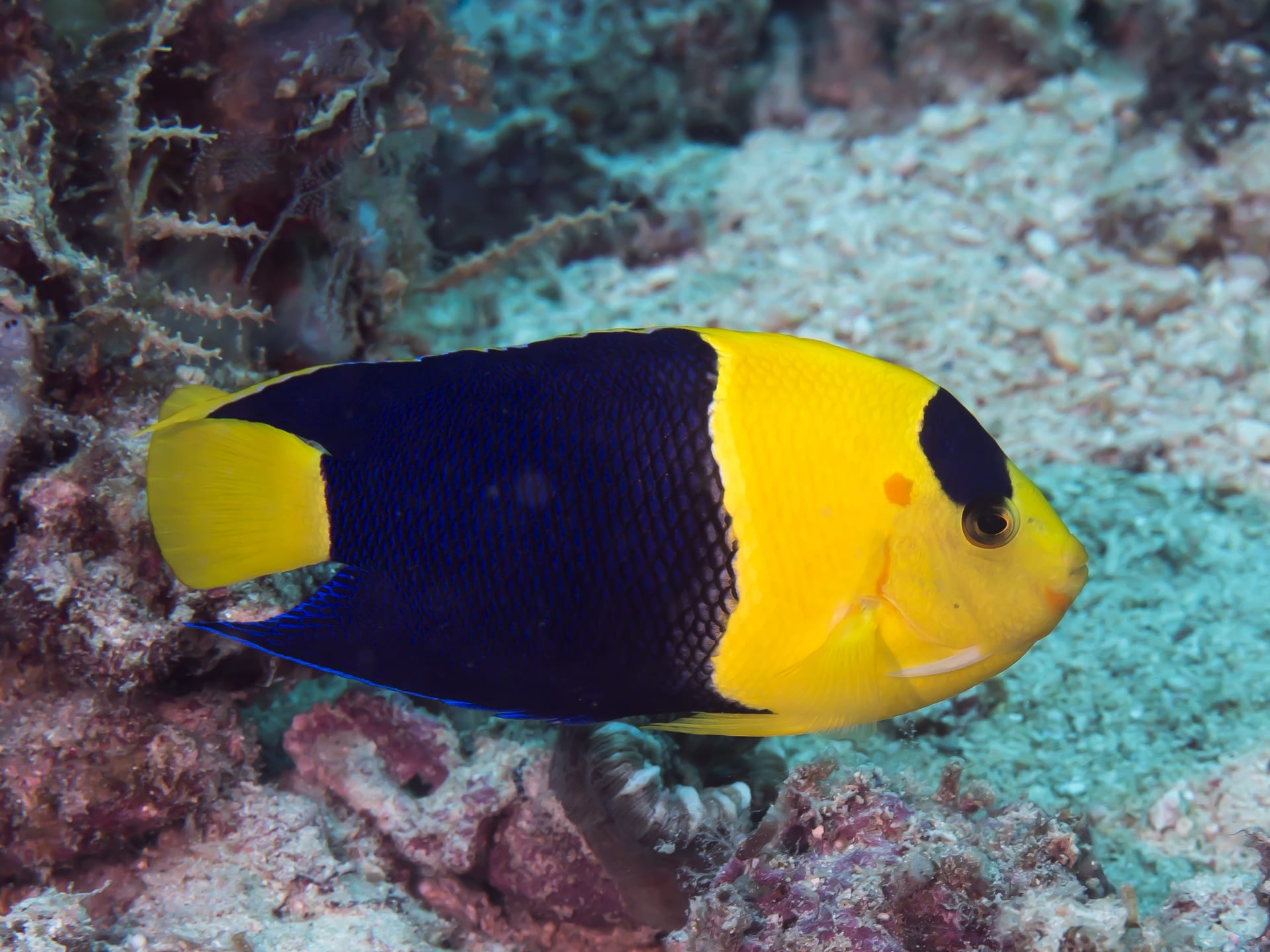
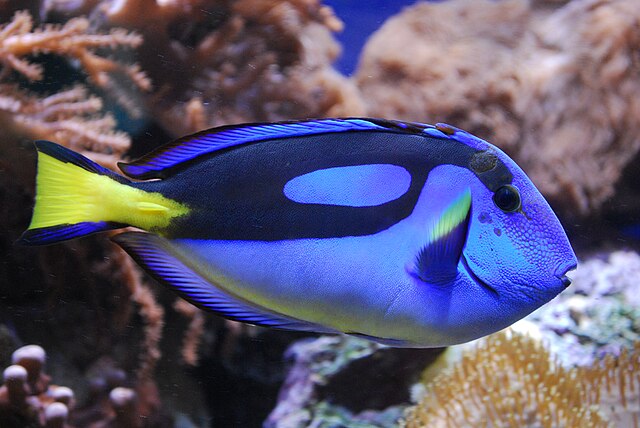
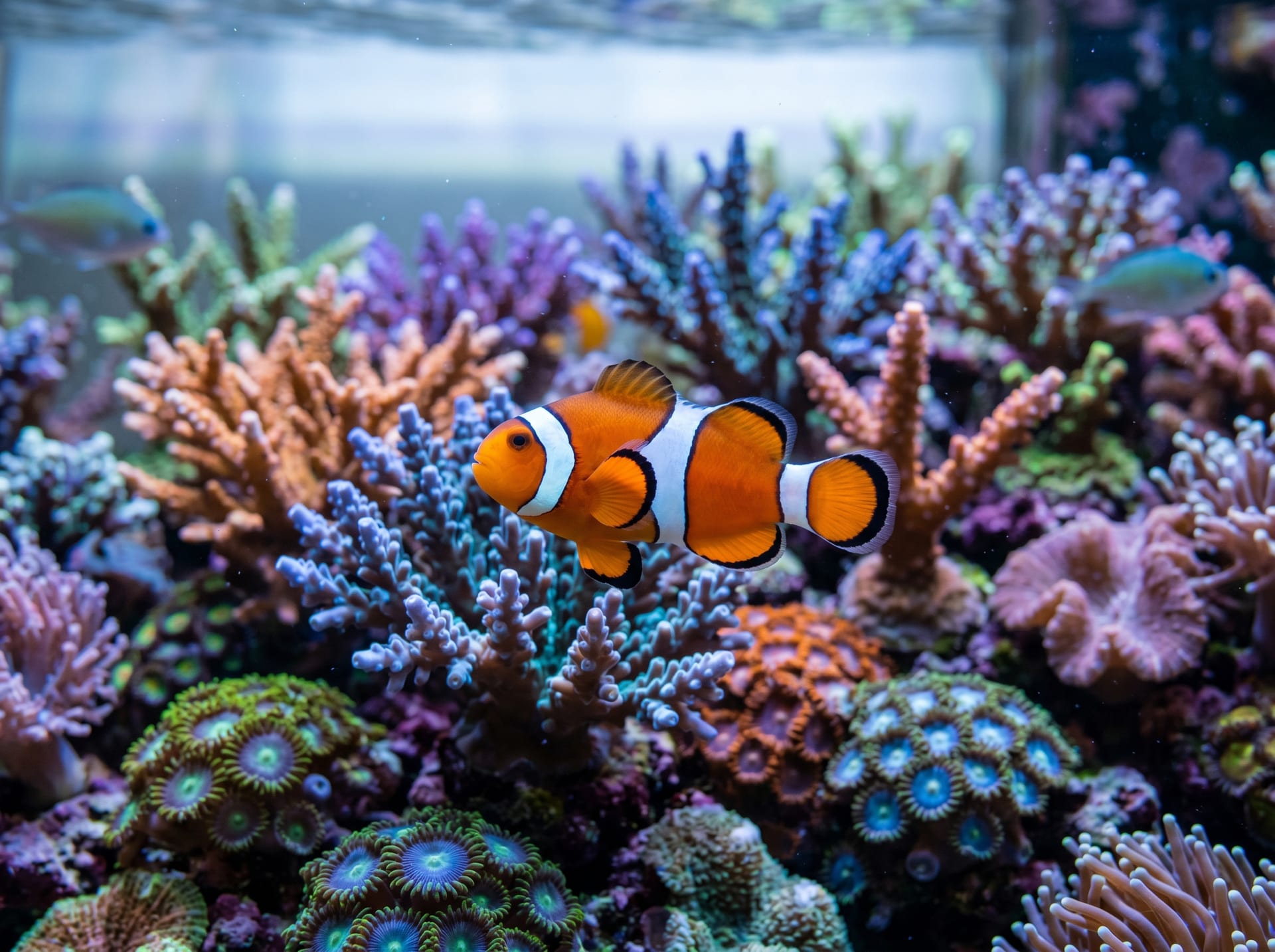
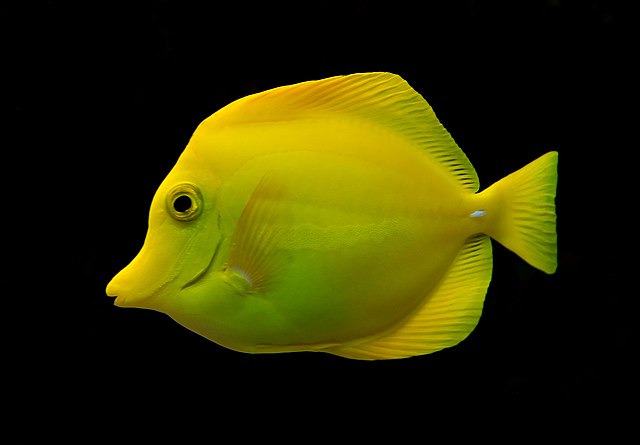
Saltwater fish diseases often differ from freshwater fish diseases, and treatment methods also differ. In particular, saltwater white spot disease is caused by a different parasite than freshwater white spot disease, so a different treatment approach is necessary. Even popular species like Ocellaris Clownfish, Yellow Tang, and Bicolor Angelfish can develop these diseases when triggered by water quality degradation or transport stress. This article provides practical explanations covering the symptoms, causes, and treatment methods of representative diseases, as well as daily health checks and prevention measures.
Saltwater White Spot Disease (Cryptocaryon Infection)
The most common disease in saltwater fish.
Symptoms
- White spots appear on the body surface (grains tend to be larger than freshwater white spot disease)
- Fish rub their bodies against rocks
- Breathing becomes labored
- Loss of appetite
Cause
A ciliate protozoan called Cryptocaryon irritans. It is a different species from the freshwater white spot parasite.
Treatment Method
- Isolate the affected fish in a quarantine tank
- Copper ion therapy (copper sulfate): Maintain 0.15–0.25 ppm for 2–4 weeks
- Check copper ion concentration daily with a copper test kit (overdose is fatal)
- Do not use copper in coral tanks (corals and shrimp will die)
- Maintaining the main tank fish-free for 6–8 weeks will kill off the white spot parasites (tank transfer method)
Tangs such as Yellow Tang and Blue Tang are particularly susceptible to white spot disease, so it's reassuring to also check Tang and Yellow Tang White Spot and Velvet Disease Prevention.
Lymphocystis (Lymphocystis)
Symptoms
- Cauliflower-like white tumors form on the body surface and fins
- Appearance is poor, but it is often not fatal
Cause
Infection with lymphocystis virus. It is prone to develop under stress or water quality degradation.
Treatment Method
- There is no specific cure, but natural recovery often occurs through water quality improvement and nutritional enhancement
- Large tumors may be surgically removed (consult a veterinarian)
- Feed vitamin-supplemented food to boost immune function
- In many cases, tumors naturally fall off within 2–8 weeks
Vibriosis
Symptoms
- Red inflammation and ulcers appear on the body surface
- Eye protrusion (popeye)
- Loss of appetite, sudden weakness
- Sudden death may occur
Cause
Vibrio bacteria (Vibrio genus). Rising water temperature, water quality degradation, and transport stress are triggers.
Treatment Method
- Antibiotic treatment mixed into food (medicated feed) should be done under veterinarian guidance
- For medication baths, use Green F Gold powder
- Maintain stable water temperature within the appropriate range
- Treatment in a quarantine tank is preferable
Trichodiniasis
Symptoms
- Body surface becomes cloudy/whitish
- Excessive mucus secretion
- Fish rub their bodies
Cause
Parasitization by trichodina (ciliate protozoan). It multiplies with water quality degradation.
Treatment Method
- Freshwater bath (2–5 minutes): Place saltwater fish in freshwater to eliminate trichodina
- Formalin bath (for advanced aquarists)
- Water quality improvement is the fundamental solution
Amyloodiniasis (Saltwater Pepper Disease, Velvet Disease)
Symptoms
- Body surface appears dusted with fine gold powder
- Breathing becomes labored
- Progresses rapidly with high mortality rate
Cause
Amyloodinium (Amyloodinium ocellatum). Among saltwater fish diseases, it is one of the most dangerous.
Treatment Method
- Copper ion therapy (0.15–0.25 ppm) for 2–4 weeks
- Early detection and early treatment are extremely important
- Because mortality is high, prevention (quarantine) is the best strategy
For infections other than white spot disease, Saltwater Fish Infection Guide comprehensively covers viral and bacterial diseases.
Other Bacterial Problems to Watch For
In addition to the representative diseases mentioned above, the following problems can occur when triggered by water quality degradation or stress.
Fin Rot
A bacterial infection where the edges of the fins become cloudy white and fray. In early stages, recovery often occurs with just water changes and water quality improvement, but as it progresses, it can erode the body surface, so medicated baths with antibacterial agents should be considered if it worsens.
Popeye (Eye Protrusion)
A condition where one or both eyes protrude, caused either by trauma or bacterial infection. In the bacterial case, water quality improvement and antibiotic-medicated food are the basics. When only one eye protrudes, it is often due to physical trauma, and in such cases, stabilizing water quality may allow it to return to normal naturally.
Brooklynella Infection
A parasitic disease where a white membrane appears to cover the body surface and mucus peels off. It is particularly common in clownfish species, and combined freshwater and formalin baths are considered effective.
Practical Precautions for Copper Ion Therapy
Copper ion therapy is the most reliable method for parasitic infections in saltwater fish, but improper handling can kill fish. Be sure to follow these points:
- Always measure daily with a copper test kit: Copper concentration drops quickly as it adsorbs to activated carbon, live rock, and substrate, so frequent adjustments are necessary.
- Never use in tanks with invertebrates: Corals, shrimp, and snails die from even trace amounts of copper. Always perform treatment in a dedicated quarantine tank.
- Increase treatment concentration gradually: Raising it suddenly to the maximum level can shock the fish, so approach the target concentration over 2–3 days.
- Completely remove copper with activated carbon after treatment: Before returning fish to the main tank, remove any remaining copper using activated carbon adsorption.
Quarantine (Treatment) Methods
The most important disease prevention measure for saltwater fish is quarantine when introducing new fish. Saltwater Fish Breeder Quarantine System and Pathogen Introduction Prevention Guide provides useful reference for professional breeder practices.
Quarantine Tank Setup
- Set up a 40–60L tank with heater and aeration
- Fill with seawater at the same salinity and temperature as the main tank
- Provide hiding places such as PVC pipes (live rock cannot be used because it cannot be used during copper treatment)
Quarantine Procedure
- Keep new fish in the quarantine tank for 2–4 weeks
- Observe during the first week
- If no abnormalities, introduce to the main tank after 2 weeks
- If symptoms appear, treat before introducing to the main tank
Prevention Tips
- Always quarantine: New fish must always pass through a quarantine tank
- Stable water quality: Regular water changes and water quality testing
- Proper feeding: Supply vitamins through nutritionally balanced food
- Avoid overstocking: Stress is the greatest cause of disease
- Stable water temperature: Maintain stable 24–26°C
Daily Health Checks for Saltwater Fish
Health management for saltwater fish begins with daily observation. Develop a habit of checking the following items during daily feeding:
Visual Inspection Checkpoints
- Body color: Healthy fish have vibrant coloration. Faded or darkened colors are signs of stress or disease
- Body surface: Check for white spots (white spot disease), white film (velvet disease), or red patches (bacterial infection)
- Fins: Check for tears, missing pieces, or inflammation. Fin rot is an early sign of bacterial infection
- Eyes: Cloudy white or protruding eyes may indicate water quality degradation or bacterial infection
- Body shape: Check for abnormal abdominal swelling or excessive thinness
Behavioral Checkpoints
- Appetite: If a normally eager fish suddenly stops eating, it's a warning sign
- Swimming: Drifting unsteadily, gasping near the surface, or resting on the bottom indicates a problem
- Respiration: Abnormally rapid gill movement may indicate water quality degradation or parasites
- Rubbing: "Flashing" (rubbing the body against rocks or sand) is a typical sign of parasitic infection
- Social interaction: Fish that are bullied and hide constantly are prone to stress-related illness
Water Quality and Health
Most health problems in fish are actually caused by water quality. If ammonia and nitrite are not zero, the fish's immune system weakens and they become prone to disease. Nitrate exceeding 30 ppm becomes chronic stress, which shortens fish lifespan long-term. Sudden pH changes also cause serious damage to fish, so regular water quality testing and maintaining a stable environment are fundamental to health management.
Frequently Asked Questions (FAQ)
Q. Is salt bath effective for white spot disease in saltwater fish?
A. Salt baths cannot be used on saltwater fish (because they are already in salt water). Copper ion therapy is the standard treatment instead.
Q. Is freshwater bath safe?
A. A freshwater bath of 2–5 minutes is safe for most saltwater fish. However, pufferfish and boxfish species are sensitive, so caution is necessary.
Q. What should I do if fish become sick in a coral tank?
A. Move the fish to a separate quarantine tank for treatment. Never add copper or medications directly to the coral tank.
Q. Are there veterinarians who treat saltwater fish?
A. Ornamental fish specialists are extremely rare, but consulting experienced staff at aquarium shops is also effective.
Choosing Healthy Fish on BreederDirect
The first step in disease prevention is acquiring a healthy fish to begin with. On BreederDirect, you can purchase directly from breeders with extensive experience in maintaining and breeding saltwater fish. By bypassing long-term aquarium shop holding, transport and environmental stress are minimized, and you can message breeders before purchase to confirm quarantine practices and rearing conditions. By starting with a healthy fish and continuing daily observation with the knowledge from this article, you can greatly reduce the risk of disease.