Source: Wikimedia Commons
Orangespine unicornfish
AdvancedNaso elegans
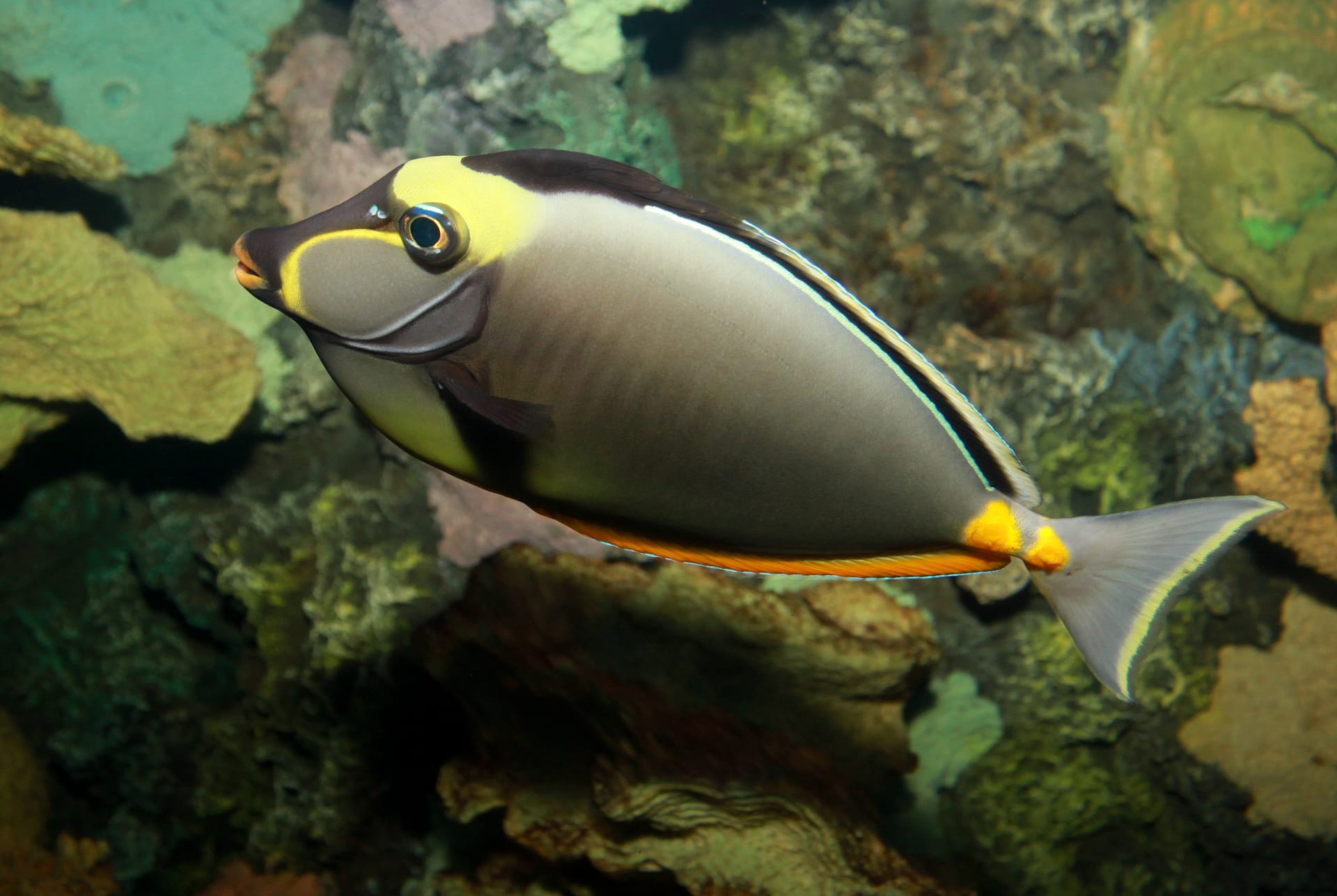
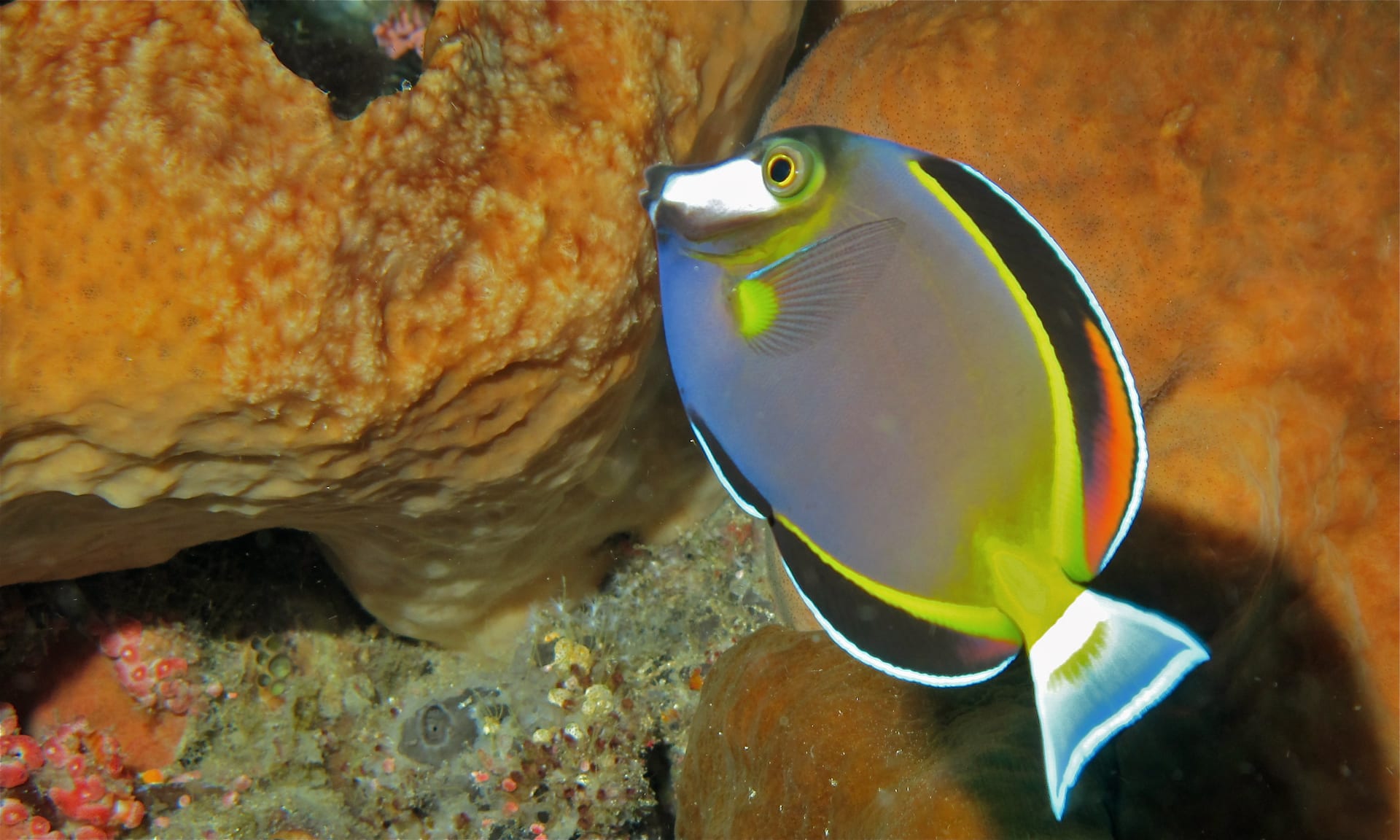
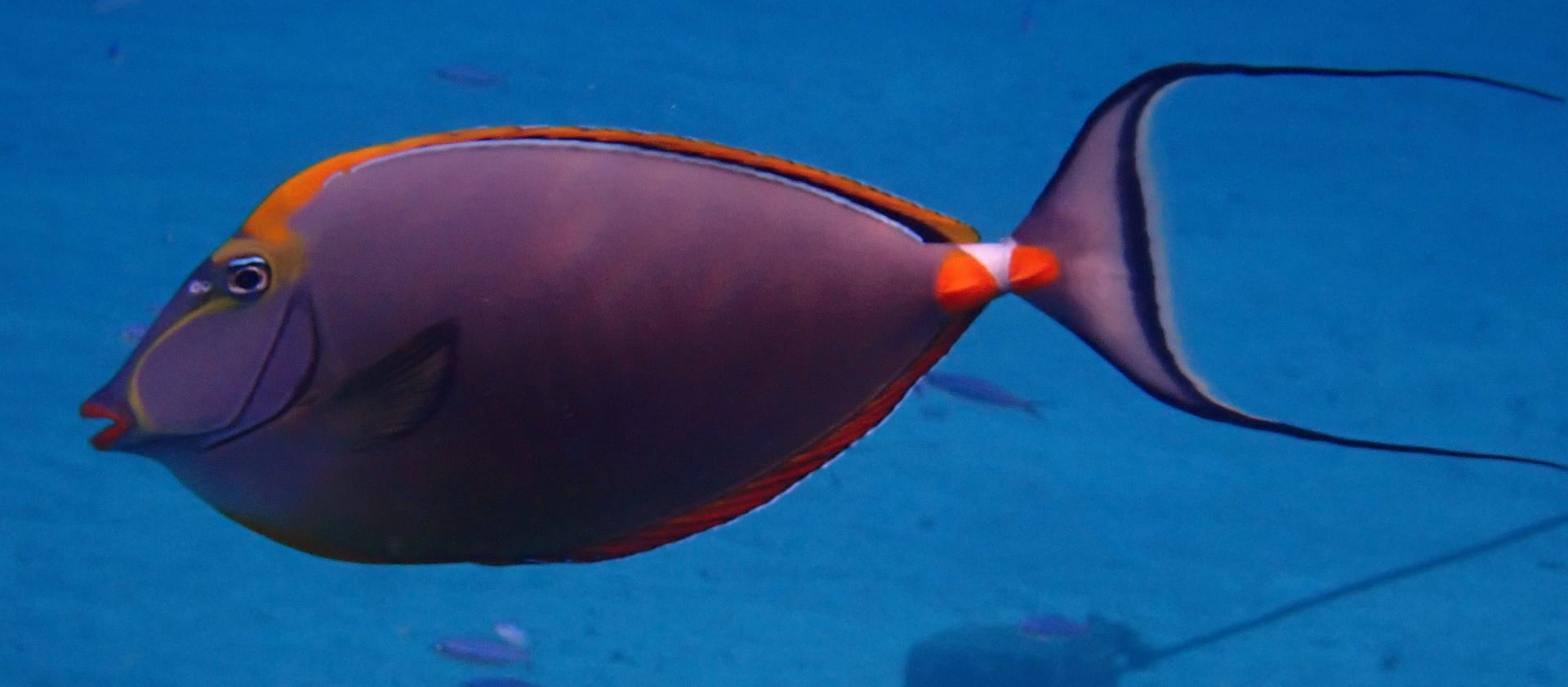
An Indian Ocean unicornfish, grey with a dark snout, a yellow bar at the eyes and a yellow dorsal fin, plus bright orange plates on the tail base. A large tang reaching 45 cm.
Difficulty
Advanced
Temperature
23〜26℃
Lifespan
Few reliable data
Size
Up to 45 cm, commonly about 35 cm TL (FishBase)
Diet
Herbivore (brown algae and other seaweeds, algae-based prepared foods)
About
Naso elegans, the elegant or orangespine unicornfish (also 'lipstick tang'), occurs from the Red Sea south to Durban and east across the Indian Ocean to Bali (FishBase, Wikipedia). Long regarded as an Indian Ocean colour form of the Pacific N. lituratus, it was separated after consistent meristic differences were shown. It is grey with a dark snout, a yellow bar at the eyes and a yellow dorsal fin, and the plates on the caudal peduncle are vivid orange. Males have larger keels and longer caudal filaments. It reaches 45 cm TL, typically 35 cm. It lives in small groups on reef flats and rocky bottoms, feeding on benthic algae, particularly brown algae such as Sargassum and Dictyota. It is sold by Japanese marine specialist shops.
Source: Wikipedia (CC BY-SA 4.0)
Size of the Orangespine unicornfish
The Orangespine unicornfish grows to Up to 45 cm, commonly about 35 cm TL (FishBase).
Basic Info
Origin
Indian Ocean (Red Sea and East Africa to Bali, Indonesia)
Lifespan
Few reliable data
Size
Up to 45 cm, commonly about 35 cm TL (FishBase)
Temperature
23〜26℃
Diet
Herbivore (brown algae and other seaweeds, algae-based prepared foods)
Care Guide
References & Sources
Edited & verified by: BreederDirect editorial team
The taxonomic, regulatory, and husbandry data on this page are compiled and verified against the authoritative primary sources below.
Primary sources
Taxonomy & Authority
Regulations & Conservation Status
Not CITES-listedIUCN LC · Least Concern
Not listed in the CITES Appendices (checked on Species+). Not a designated invasive alien species in Japan. Never release aquarium fish into the sea.
Sources: Species+ (CITES) / FishBase
Regulations may change. Always verify the latest information with the relevant authorities.
Orangespine unicornfish Listings
Loading latest listingsFind listings for this species