 © Jan Ebr & Ivana Ebrová / CC BY 4.0
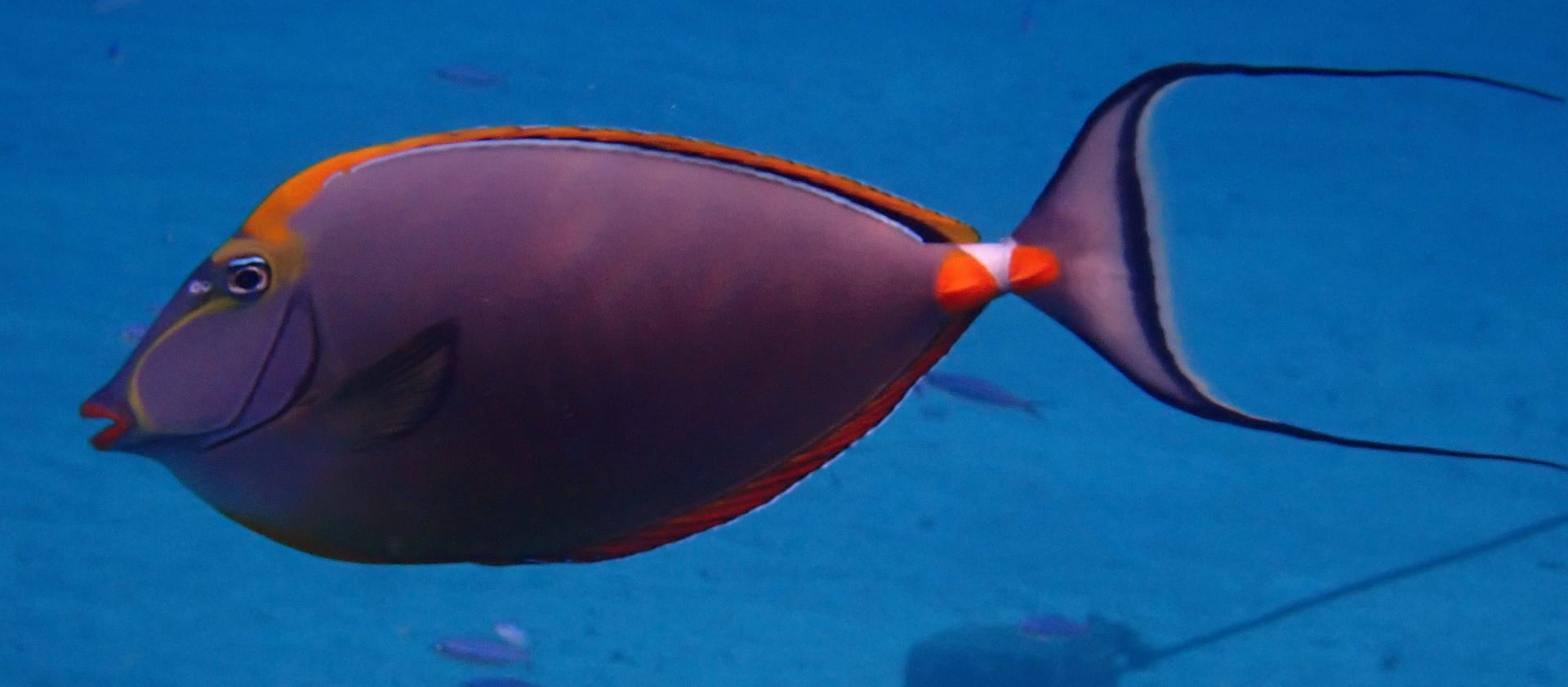
Orangespine unicornfish
The Orangespine unicornfish is a large tang from the Indian Ocean. It has a grey body, a black snout, a yellow band around the eye and a yellow dorsal fin, with a bright orange bony plate at the base of the tail. It reaches a maximum of 45 cm and is typically around 35 cm, so it needs plenty of swimming room. Like other tangs, it tends to graze on algae, and it does best with good water quality and a steady feeding routine. It is considered a species for experienced aquarists, and little is documented about its lifespan, so be prepared for long-term care.
View Orangespine unicornfish encyclopedia →Breeder Wanted!
List on BreederDirect and sell directly to customers nationwide!
BreederDirect's 6 Transparency Commitments
Every Marine Fish listing shows Breeder's full disclosure. No wild-caught. Captive-bred priority, tank size guidance, temperament details—transparent aquaculture.
- Captive-bred
- WYSIWYG
- Reef-safe
- Care Info Included
- Origin Disclosed
- Temperament Listed
Browse all 215 breeds
Care Difficulty
Reef-safe
Temperament
Verified breeders wanted for Marine Fish
Breeders are signing up now ahead of launch. Subscribe to be notified when new listings go live.
Getting alerts is free with a member account. When new listings match your saved search, we'll notify you by email and in-app.
Browse other categories
Verified breeders (preview)
Are you raising marine fish?
Register as a breeder and connect with buyers directly.
Apply as a breederOrangespine unicornfish key facts
- Care level
- Advanced
- Lifespan
- Few reliable data
- Size
- Up to 45 cm, commonly about 35 cm TL (FishBase)
- Diet
- Herbivore (brown algae and other seaweeds, algae-based prepared foods)
- Water Temperature & Quality
- Few species-specific temperature data. Large and messy, so provide ample filtration.
- Aquarium
- A large tang growing to 35-45 cm; lifelong care needs a very large tank with extensive swimming space.
- Tank Mates & Compatibility
- Prone to fighting other tangs, especially other Naso; ensure ample space and limit tankmates.
- Reef Compatibility
- A seaweed-eating herbivore that leaves corals and invertebrates alone and is considered reef-safe, though it will eat macroalgae in the tank.
- Diet & Feeding
- Feed mainly brown seaweeds, dried seaweed and algae-rich prepared foods.
- Health & Cautions
- It is distinct from the similar N. lituratus and is told apart by its yellow dorsal fin. The tail-base plates are sharp, so handle with care.
About Orangespine unicornfish
Learn about the Orangespine unicornfish from the Indian Ocean: its appearance, adult size of up to 45 cm, tank needs and what to know before bringing one home. A large tang best suited to experienced aquarists.
7 things to know before welcoming a Orangespine unicornfish
1For experienced keepers
This species is rated as suitable for experienced aquarists. It is large and active, and feeding, water quality and tank-mate choices all call for some experience. It suits keepers who have already looked after tangs or other large marine fish.
2Adults reach 45 cm
It reaches a maximum of 45 cm in total length, typically around 35 cm (FishBase). Choose the tank for the adult size, not for the size the fish has when you bring it home.
3Give it a wide tank
A large, active tang needs a wide, deep tank rather than just a large volume of water. Arrange the rockwork so that open swimming space remains. A lid is a sensible precaution, since tangs can jump when startled.
4An algae-grazing diet
Tangs tend to graze on algae. Plan to offer plant-based foods such as dried seaweed on a regular basis. Before you buy, ask the seller what the fish is eating now.
5Preparing for white spot
Tangs are said to be prone to white spot disease. Keep a newly arrived fish in a separate tank for observation, and keep temperature and water quality stable. If something looks wrong, consult an experienced keeper or another specialist early.
6Check tank-mate fit
Tangs may squabble over territory with other tangs or with fish of a similar body shape. Consider the temperament of your resident fish and the size of your tank before mixing species.
7The bony tail plate
The orange bony plate at the base of the tail is hard and can snag in a net or injure a hand. When moving the fish, avoid chasing it and handle it with care.
Frequently asked questions about Orangespine unicornfish
- Q.Can a beginner keep this fish?
- A.It is regarded as a species for experienced aquarists. It grows large and calls for experience with feeding, water quality and choosing tank mates, so prior experience with tangs or other large marine fish is helpful.
- Q.How large does it grow?
- A.Its total length reaches a maximum of 45 cm, and is typically around 35 cm. Prepare a spacious tank with the adult size in mind.
- Q.What does it eat?
- A.Tangs tend to prefer algae, so plant-based foods such as dried seaweed form the basis of the diet. Individual fish differ in what they accept, so ask the seller what the fish is currently being fed before you buy.
- Q.Can it live in a coral tank?
- A.It is large and swims actively, so it needs a spacious tank with open swimming space. It is a herbivore that grazes on seaweed and is considered reef safe, leaving corals and invertebrates alone. It will, however, eat any macroalgae in the tank.
- Q.How long does it live?
- A.Little information is available on its lifespan, so no clear figure is known. Prepare your tank and setup with the possibility of long-term care in mind.
Useful tools for Orangespine unicornfish care
Learn more about Orangespine unicornfish in the encyclopedia
View Orangespine unicornfish encyclopedia entry →
Care difficulty, lifespan, size and diet — all basics covered.
More in this category
Can't find the one you're looking for?
Post your wishes for free and breeders with matching animals will contact you with introductions.