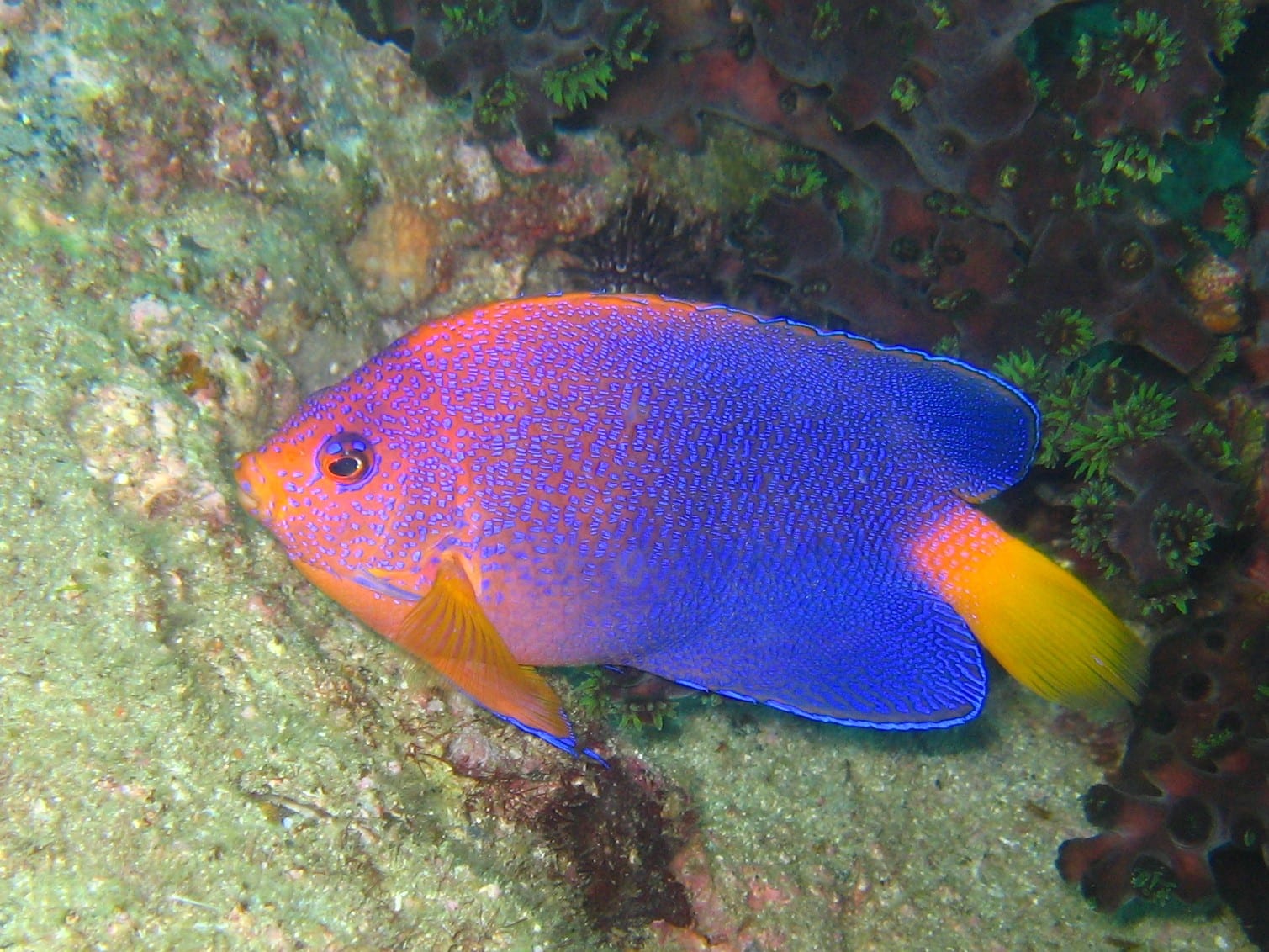
 © Juuyoh TANAKA / CC BY 2.0
Japanese pygmy angelfish
The Japanese pygmy angelfish is a small marine angelfish with an orange body, scattered blue-purple spots and a bright yellow tail. It is a temperate species from the rocky reefs around Japan, especially the Izu and Ogasawara Islands, and it grows to a maximum of about 15 cm, which is large for its genus. In a settled tank you can watch it weave between rocks and pick at algae. Its colors are the main draw, but it tends to be territorial, and it is rated as suitable for intermediate keepers. It suits hobbyists who already have some marine fish experience and want a rewarding next step.
View Japanese pygmy angelfish encyclopedia →Breeder Wanted!
List on BreederDirect and sell directly to customers nationwide!
BreederDirect's 6 Transparency Commitments
Every Marine Fish listing shows Breeder's full disclosure. No wild-caught. Captive-bred priority, tank size guidance, temperament details—transparent aquaculture.
- Captive-bred
- WYSIWYG
- Reef-safe
- Care Info Included
- Origin Disclosed
- Temperament Listed
Browse all 215 breeds
Care Difficulty
Reef-safe
Temperament
Verified breeders wanted for Marine Fish
Breeders are signing up now ahead of launch. Subscribe to be notified when new listings go live.
Getting alerts is free with a member account. When new listings match your saved search, we'll notify you by email and in-app.
Browse other categories
Verified breeders (preview)
Are you raising marine fish?
Register as a breeder and connect with buyers directly.
Apply as a breederJapanese pygmy angelfish key facts
- Care level
- Intermediate
- Lifespan
- Little data available
- Size
- Up to 15 cm TL (FishBase)
- Temperature
- 19〜24℃
- Diet
- Omnivore (algae, small invertebrates, sponges)
- Water Temperature & Quality
- Wild fish prefer cooler water; Saltcorner suggests 19-24°C and specific gravity from 1.020. Avoid prolonged high temperatures in summer.
- Container & Tank
- At least about 190 L (50 gallons), established, with plenty of live rock to graze. Not suited to small tanks.
- Tank Mates & Compatibility
- Keep one Centropyge species per tank.
- Reef Compatibility
- Underfed fish may nip clam mantles, anemones, LPS corals and soft corals such as zoanthids, so it is reef-safe only with caution.
- Diet & Feeding
- It picks at algae and detritus. Offer spirulina-based foods and frozen brine shrimp and mysis several times a day, especially just after introduction.
- Health & Cautions
- It hides at first but becomes territorial once settled. When buying, ask what temperature it was kept at (wild-caught or captive-bred).
About Japanese pygmy angelfish
The Japanese pygmy angelfish is an orange marine angelfish with blue-purple spots and a yellow tail, growing to about 15 cm. Learn about its temperament, tank setup and what to know before bringing one home.
7 things to know before welcoming a Japanese pygmy angelfish
1For intermediate keepers
Its care level is listed as intermediate. It is easier to handle once you are comfortable with the basics of marine fishkeeping, such as keeping water quality stable and spotting illness early. Get the tank set up and running stably before the fish arrives.
2Temperate: watch temperature
This is a temperate species from the rocky reefs of Japan, most common around the Izu and Ogasawara Islands. Tropical-style settings may put strain on it, so ask the seller what temperature the fish is kept at and avoid sudden changes. It also helps to plan for summer with a cooling fan or chiller.
3Grows to about 15 cm
Adults reach a maximum total length of about 15 cm, which is large for a pygmy angelfish. Even if you start with a small juvenile, choose a tank with room to spare for its adult size. Leave open swimming space as well as rockwork hiding places so the fish can settle in.
4Territory and tankmates
Fish in this genus tend to be territorial and may chase members of their own species or fish with a similar shape or color. If you plan to keep tankmates, check that the tank is roomy enough and that there are plenty of hiding spots. Keep a separate tank available in case the chasing does not stop.
5Include algae in the diet
It likes to graze on algae growing on rocks and glass, so combining algae-based foods with meaty foods such as shrimp helps keep the diet balanced. Some fish refuse food in a new tank, so ask the seller beforehand whether it already eats prepared foods. Feed small amounts a few times a day and remove leftovers promptly.
6Compatibility with corals
In a reef tank, some individuals are said to nip at coral tissue or clams, so compatibility depends on the fish. If you keep it with corals, start with just a few and be ready to move the fish to another tank if it begins picking at them.
7Quarantine and acclimation
A newly acquired marine fish can carry diseases such as white spot, so watching it in a separate quarantine tank for a while is worthwhile. Acclimate it slowly, and reduce the gaps in temperature and salinity before moving it to the main tank. Right after arrival the fish is stressed by the change, so keep the lights low and the tank quiet.
Frequently asked questions about Japanese pygmy angelfish
- Q.Can a beginner keep this fish?
- A.Its care level is listed as intermediate. It suits people who are already comfortable with water quality management and acclimation, so first-time marine keepers may want to gain experience with a hardier fish before considering it.
- Q.How large does it get?
- A.Adults reach a maximum total length of about 15 cm, which is large for its genus. Plan for a roomy tank that allows for its full growth.
- Q.Is it safe to keep with corals?
- A.Some individuals are said to nip at corals and clams, and it varies from fish to fish, so it cannot be called guaranteed safe. Start with a few corals and be ready to move the fish to another tank if it starts picking at them.
- Q.How long does it live?
- A.There is little published information on its lifespan, so no clear figure is known. Assume you will keep it for a long time, and set up stable water quality and feeding routines before bringing one home.
- Q.Can I keep it with other angelfish?
- A.It tends to be territorial and may fight with its own species or with similar-looking angelfish. Consider tankmates carefully, and only in a large tank with plenty of hiding places. Be ready to separate the fish if the fighting continues.
Useful tools for Japanese pygmy angelfish care
Learn more about Japanese pygmy angelfish in the encyclopedia
View Japanese pygmy angelfish encyclopedia entry →
Care difficulty, lifespan, size and diet — all basics covered.
More in this category
Can't find the one you're looking for?
Post your wishes for free and breeders with matching animals will contact you with introductions.