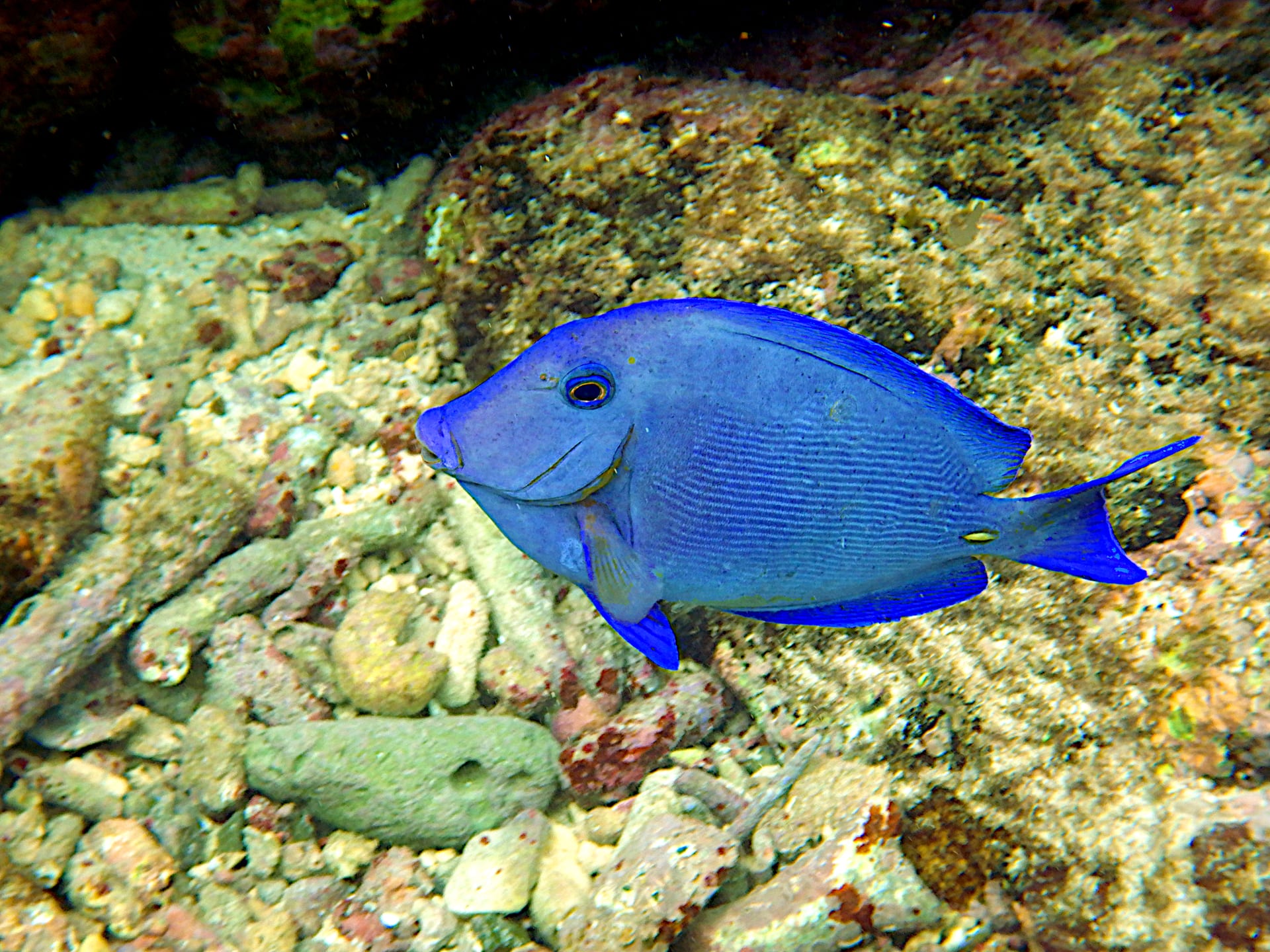
 © DRVIP93 / CC BY-SA 4.0
Atlantic blue tang
The Atlantic blue tang is a surgeonfish (family Acanthuridae) from the Caribbean and the wider western Atlantic. Juveniles are yellow, subadults have a blue body with a yellow tail, and adults are blue, so watching its colors change as it grows is part of the appeal. It is a herbivore that grazes on algae, and it usually reaches about 25 cm, with a maximum of 39 cm in total length. That size calls for a roomy tank. Rated as intermediate difficulty, it suits aquarists who already have some experience with marine fish.
View Atlantic blue tang encyclopedia →0% commission on your first sales!Register by September 30, 2026 and your first 2 sales are commission-free!
Breeder Wanted!
List on BreederDirect and sell directly to customers nationwide!
BreederDirect's 6 Transparency Promises
Every Marine Fish listing shows Breeder's full disclosure. No wild-caught. Captive-bred priority, tank size guidance, temperament details—transparent aquaculture.
- Captive-bred
- WYSIWYG
- Reef-safe
- Care Info Included
- Origin Disclosed
- Temperament Listed
Browse all 215 breeds
Care Difficulty
Reef-safe
Temperament
Verified breeders wanted for Marine Fish
Breeders are signing up now ahead of launch. Subscribe to be notified when new listings go live.
Getting alerts is free with a member account. When new listings match your saved search, we'll notify you by email and in-app.
Browse other categories
Verified breeders (preview)
Are you raising marine fish?
Register as a breeder and connect with buyers directly.
Apply as a breederAtlantic blue tang key facts
- Care level
- Intermediate
- Lifespan
- Few reliable data
- Size
- Up to 39 cm TL, commonly about 25 cm (FishBase)
- Diet
- Herbivore (seaweed, algae-based prepared foods)
- Water Temperature & Quality
- Few species-specific temperature data. Keep water well oxygenated and stable.
- Aquarium
- Adults exceed 25 cm and swim actively, so a large tank with plenty of open space is needed.
- Tank Mates & Compatibility
- Prone to fighting other tangs; if keeping several, provide ample space and add them together.
- Reef Compatibility
- Feeds almost entirely on algae and leaves corals and invertebrates alone; considered reef-safe.
- Diet & Feeding
- Feed algae-rich prepared foods and dried seaweed often; juveniles feed heavily, so do not let them go short.
- Health & Cautions
- The spines on both sides of the tail base can cause painful wounds; handle with care.
About Atlantic blue tang
Atlantic blue tang: a Caribbean surgeonfish that turns from yellow juvenile to blue adult. Algae-eating, about 25 cm (up to 39 cm), intermediate difficulty.
7 things to know before welcoming a Atlantic blue tang
1Up to 39 cm as an Adult
Adults are usually around 25 cm, and the species can reach 39 cm in total length. A small juvenile will outgrow a compact tank, so plan for a wide, spacious aquarium from the start. Think about the adult size before you bring one home.
2Colors Change with Growth
Juveniles are yellow, subadults have a blue body with a yellow tail, and adults are blue, so the look changes a lot as the fish grows. The color of the fish you bring home tells you roughly which growth stage it is at. If the color suddenly dulls or the fish looks unlike its usual self, check its condition as well.
3Intermediate-Level Care
This species is rated as intermediate difficulty. It calls for stable water quality and the habit of noticing small changes in the fish early. It is a good idea to consider it after you have gained some experience with marine fish.
4Plant-Based Diet
As an algae-eating herbivore, it does best on seaweed and other plant-based foods. It will graze on algae that grows in the tank, but that may not be enough on its own. Watch how well it eats and adjust the type and amount of food accordingly.
5Check Tank Mate Compatibility
Many tangs are territorial and may squabble with their own kind or with fish of a similar body shape. If you keep it with other fish, give the tank plenty of room, with open swimming space and places to hide. After introduction, watch whether it chases its tank mates.
6Disease Prevention on Arrival
Tangs are said to be prone to external parasite problems such as white spot disease. Where possible, keep a new fish in a separate tank for observation before moving it to the main tank. Check its skin, fins, appetite, and breathing regularly, and act early if anything looks off.
7Mind the Tail Spine
Surgeonfish, including this species, have a sharp spine at the base of the tail. Take care when moving the fish or cleaning the tank so the spine does not catch on your hands or a net. Scooping the fish with a container instead of chasing it with a net is easier on both the fish and you.
Frequently asked questions about Atlantic blue tang
- Q.Can beginners keep it?
- A.It is rated as intermediate difficulty. It suits people who have marine fish experience and can manage water quality and watch the fish's condition. If you are new to the hobby, it is best to gain some experience first.
- Q.How large does it grow?
- A.It is usually around 25 cm in total length and can reach 39 cm. Because even a small juvenile grows large, it is safer to prepare a spacious tank suited to the adult size.
- Q.What does it eat?
- A.It is an algae-eating herbivore. Feed mainly seaweed and other plant-based foods, adjusting to how well it eats. It also grazes on algae growing in the tank.
- Q.How long does it live?
- A.There is little reliable information on its lifespan, so a specific figure cannot be given. Since it may live for a long time, it is a good idea to set up a comfortable, spacious environment from the start.
- Q.Is it the same as the regal blue tang?
- A.No, they are different species. The regal blue tang lives in the Indo-Pacific, while the Atlantic blue tang lives in the Caribbean and the wider western Atlantic. Both are blue tangs, but their ranges and species differ.
Useful tools for Atlantic blue tang care
Learn more about Atlantic blue tang in the encyclopedia
View Atlantic blue tang encyclopedia entry →
Care difficulty, lifespan, size and diet — all basics covered.
More in this category
Can't find the one you're looking for?
Post your wishes for free and breeders with matching animals will contact you with introductions.