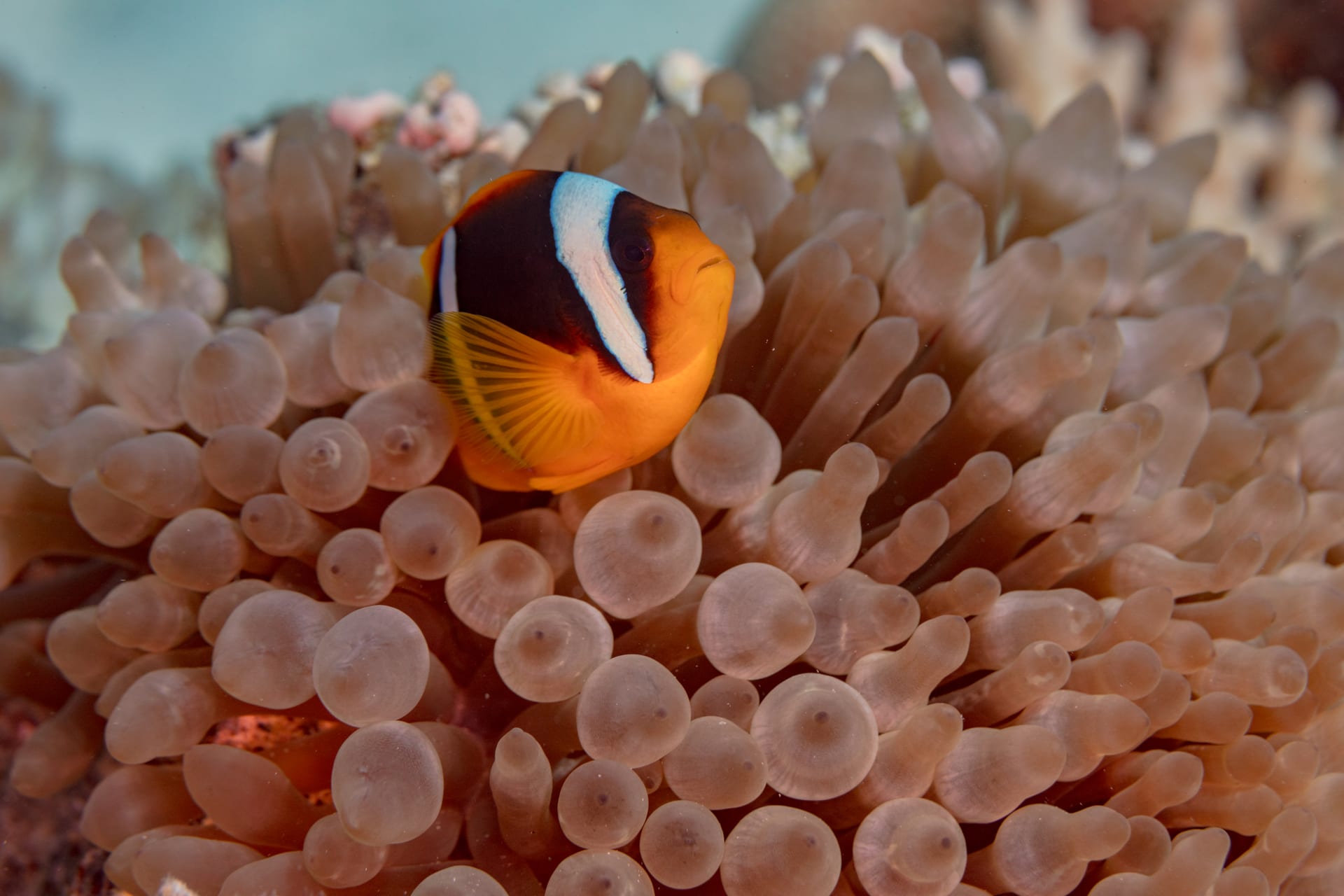
 © Diego Delso / CC BY-SA 4.0
Twoband anemonefish
The Twoband anemonefish is a clownfish from the Red Sea. Its yellow-orange to brown body is marked with two white bands edged in black, and its fins are yellow. It lives with five species of sea anemone, including the bubble-tip anemone, and grows to a maximum total length of 14 cm. It is rated beginner-friendly, but like other clownfish it is territorial and some individuals can be feisty, so choose tank mates and tank space with care.
View Twoband anemonefish encyclopedia →0% commission on your first sales!Register by September 30, 2026 and your first 2 sales are commission-free!
Breeder Wanted!
List on BreederDirect and sell directly to customers nationwide!
BreederDirect's 6 Transparency Commitments
Every Marine Fish listing shows Breeder's full disclosure. No wild-caught. Captive-bred priority, tank size guidance, temperament details—transparent aquaculture.
- Captive-bred
- WYSIWYG
- Reef-safe
- Care Info Included
- Origin Disclosed
- Temperament Listed
Browse all 215 breeds
Care Difficulty
Reef-safe
Temperament
Verified breeders wanted for Marine Fish
Breeders are signing up now ahead of launch. Subscribe to be notified when new listings go live.
Getting alerts is free with a member account. When new listings match your saved search, we'll notify you by email and in-app.
Browse other categories
Verified breeders (preview)
Are you raising marine fish?
Register as a breeder and connect with buyers directly.
Apply as a breederTwoband anemonefish key facts
- Care level
- Beginner-friendly
- Lifespan
- Little data available
- Size
- Up to 14 cm TL (FishBase)
- Temperature
- 23〜27℃
- Diet
- Omnivore (zooplankton and algae)
- Water Temperature & Quality
- 23-27°C, specific gravity 1.020-1.026 (Saltcorner).
- Container & Tank
- About 110 L (30 gallons) or more on its own, or about 190 L (50 gallons) with a host anemone.
- Tank Mates & Compatibility
- With a host anemone it may become aggressive towards other fish while guarding it. Keep singly or as a pair.
- Reef Compatibility
- Leaves corals alone; reef-safe.
- Diet & Feeding
- Feed frozen brine shrimp, mysis and chopped seafood, plus spirulina-based prepared foods, once or twice a day.
- Health & Cautions
- It does fine without an anemone but often settles better with a host such as a bubble-tip. Captive-bred fish are considered hardier.
About Twoband anemonefish
Twoband anemonefish: a Red Sea clownfish with two black-edged white bands, reaching up to 14 cm. Learn about its temperament, its beginner-friendly care level, and what to know before bringing one home.
7 things to know before welcoming a Twoband anemonefish
1Two bands, yellow fins
Look for a yellow-orange to brown body with two white bands edged in black and yellow fins. Band pattern and color depth can vary between individuals, so it helps to study the photos on the listing before you decide.
2Plan for up to 14 cm
This fish reaches a maximum total length of 14 cm. A juvenile may look small, but choose a tank with room for its adult size and its territorial habits. Reliable data on its lifespan is limited, so prepare for a long-term commitment.
3Mind its territorial streak
Clownfish are territorial, and some Twoband anemonefish can be quite assertive. Adding other clownfish to the same tank may lead to fights, so think carefully about tank mates. Build hiding places with rockwork so that other fish have somewhere to retreat.
4Is an anemone required?
In the wild, this fish lives with five species of sea anemone, including the bubble-tip anemone. It is generally said to be keepable in an aquarium without one, but keeping an anemone calls for its own attention to lighting and water quality. Getting comfortable with the fish first, then considering an anemone, is one sensible approach.
5Set up the tank first
Even a beginner-friendly species can be stressed by sudden changes in water quality. Get a tank with stable filtration running before the fish arrives, and check temperature and specific gravity regularly. When it comes home, acclimate it slowly and carefully.
6Feed small, often
Clownfish are omnivorous and eat marine fish prepared foods and frozen foods. Feed small portions several times a day and remove leftovers promptly to keep the water clean. Right after arrival, watch how it eats to confirm it has a good appetite.
7Observe after arrival
Watch regularly for white spots on the body, damaged fins, or rapid breathing. If possible, observe a new fish in a separate tank before moving it into the main tank, which makes it easier to avoid bringing in disease. If something looks wrong, check the water quality first and act early.
Frequently asked questions about Twoband anemonefish
- Q.Can a beginner keep this fish?
- A.Its care level is rated beginner-friendly. Because it is territorial, though, think carefully about tank mates and tank size. With a habit of regular water checks, it can make a good first marine fish.
- Q.Can it be kept without an anemone?
- A.It is generally said to be keepable in an aquarium without an anemone. If you want to pair it with one, consider a species it lives with in nature, such as the bubble-tip anemone, and pay attention to lighting and water quality.
- Q.Can I keep it with other clownfish?
- A.Clownfish are territorial, and keeping them with other clownfish can lead to fights. If you plan to keep more than one, provide plenty of space and hiding places and proceed carefully while watching their behavior. Asking the breeder about compatibility is also a good idea.
- Q.How long does it live?
- A.Reliable data on its lifespan is limited, so we cannot give a definite figure. Since it grows to a maximum total length of 14 cm, it is best to set up the tank and equipment with long-term keeping in mind.
- Q.What should I check on a listing?
- A.Check the color and band pattern in the photos, the size, whether it is eating, and the environment it has been kept in. If anything is unclear, it is reassuring to ask the seller before you decide.
Useful tools for Twoband anemonefish care
Learn more about Twoband anemonefish in the encyclopedia
View Twoband anemonefish encyclopedia entry →
Care difficulty, lifespan, size and diet — all basics covered.
More in this category
Can't find the one you're looking for?
Post your wishes for free and breeders with matching animals will contact you with introductions.