Source: Wikimedia Commons
Longnose surgeonfish
IntermediateZebrasoma rostratum
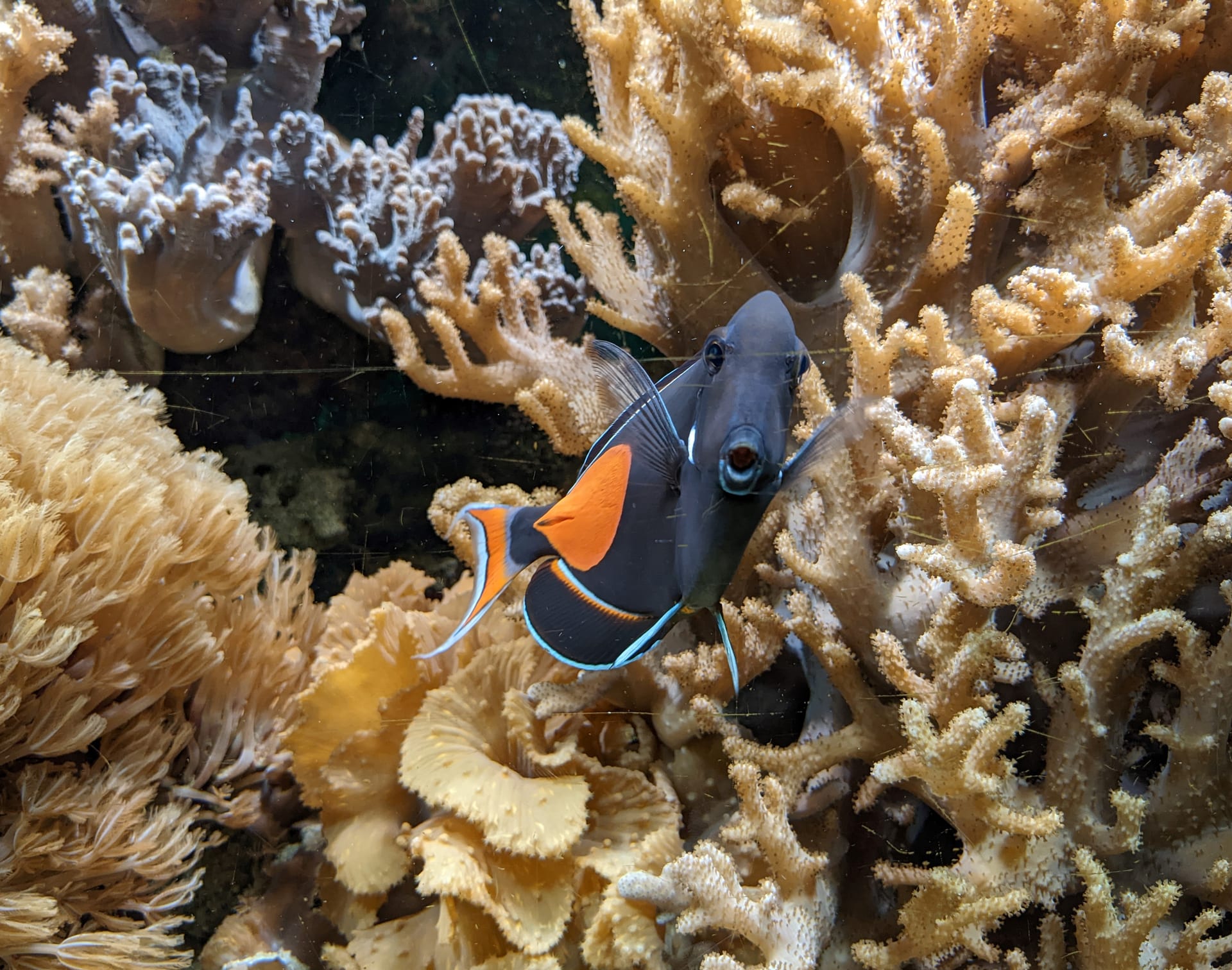
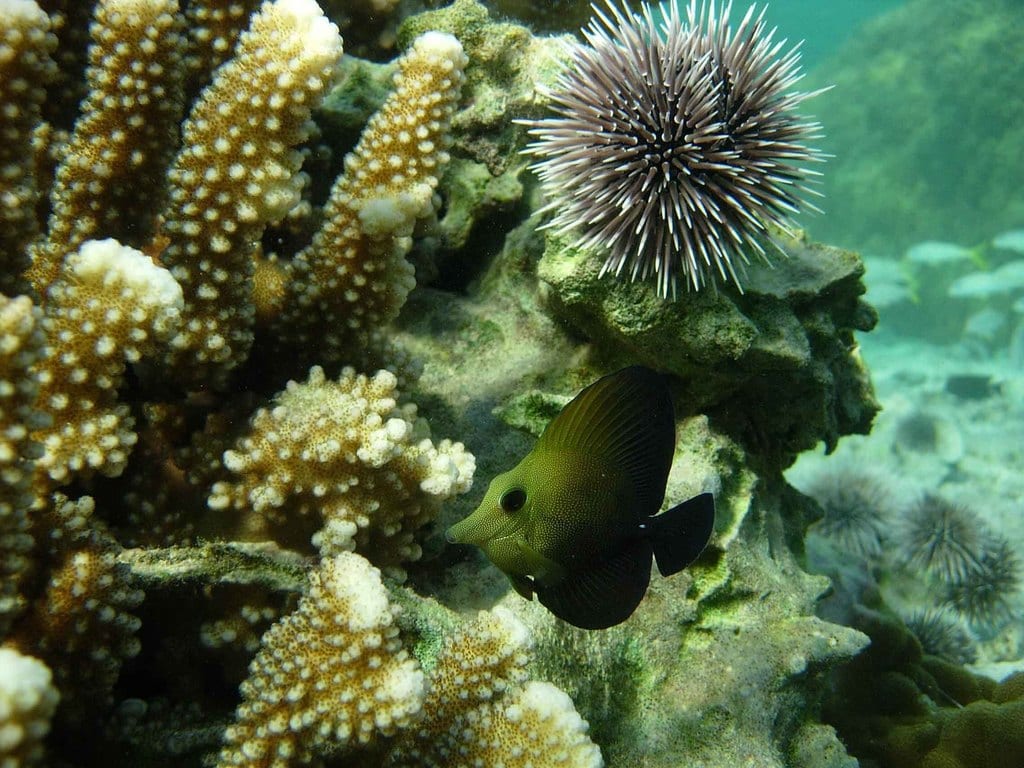
A Zebrasoma from islands of the central South Pacific, entirely black with a long snout and a white patch around the tail spine. A rare black tang with a restricted range.
Difficulty
Intermediate
Temperature
23〜28℃
Lifespan
Few reliable data
Size
Up to 21 cm TL (FishBase)
Diet
Herbivore (filamentous algae, seaweed, algae-based prepared foods)
About
Zebrasoma rostratum, the longnose surgeonfish or black tang, was described in 1875 from the Society Islands. It occurs in the central South Pacific from Tuvalu to the Pitcairn Islands, including all of French Polynesia and the Line Islands (FishBase, Wikipedia), and reaches 21 cm TL. Its name means 'beaked', referring to a longer snout than the yellow tang. Adults are entirely black with a white patch around the tail spine, and males have a patch of bristles in front of the spine; juveniles are grey at the front and black behind. It lives on lagoon and seaward reefs, and its pharyngeal teeth suggest a diet mainly of filamentous algae. It forms a species pair with the purple tang (Z. xanthurum). Uncommon throughout its range, it is listed as Data Deficient by the IUCN because the impact of aquarium collecting is unknown. It is sold by Japanese marine specialist shops.
Source: Wikipedia (CC BY-SA 4.0)
Size of the Longnose surgeonfish
The Longnose surgeonfish grows to Up to 21 cm TL (FishBase).
Temperature & humidity for the Longnose surgeonfish
The ideal temperature for the Longnose surgeonfish is 23〜28℃.
Basic Info
Origin
Central South Pacific (French Polynesia, Line Islands, Pitcairn Islands)
Lifespan
Few reliable data
Size
Up to 21 cm TL (FishBase)
Temperature
References & Sources
Edited & verified by: BreederDirect editorial team
The taxonomic, regulatory, and husbandry data on this page are compiled and verified against the authoritative primary sources below.
Primary sources
Taxonomy & Authority
Regulations & Conservation Status
Not CITES-listedIUCN DD · Data Deficient
Not listed in the CITES Appendices (checked on Species+). Not a designated invasive alien species in Japan. Listed as Data Deficient (DD) on the IUCN Red List. Never release aquarium fish into the sea.
Sources: Species+ (CITES) / FishBase
Regulations may change. Always verify the latest information with the relevant authorities.
Longnose surgeonfish Listings
Loading latest listingsFind listings for this species