Powder Blue Tang (Acanthurus leucosternon) Care Guide | Beautiful Blue Coloration and Ich Prevention
Learn how to care for the stunning Powder Blue Tang with its vibrant blue coloration. This guide covers required tank size, water parameters, managing susceptibility to ich disease, feeding strategies, and tankmate compatibility—perfect for beginner to intermediate aquarists.
Key Takeaways
Learn how to care for the stunning Powder Blue Tang with its vibrant blue coloration. This guide covers required tank size, water parameters, managing susceptibility to ich disease, feeding strategies, and tankmate compatibility—perfect for beginner to intermediate aquarists.
Related Species
Allure and Characteristics of the Powder Blue Tang
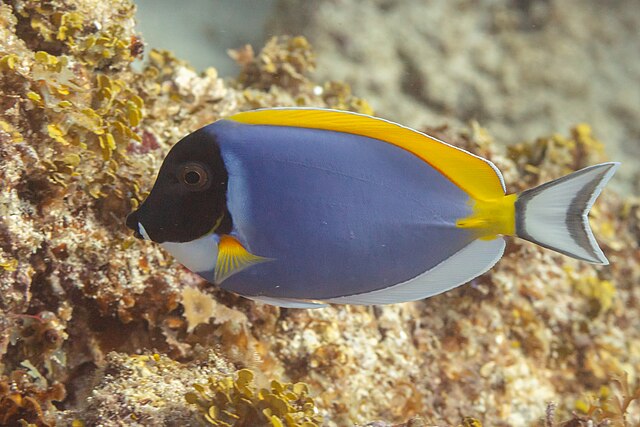
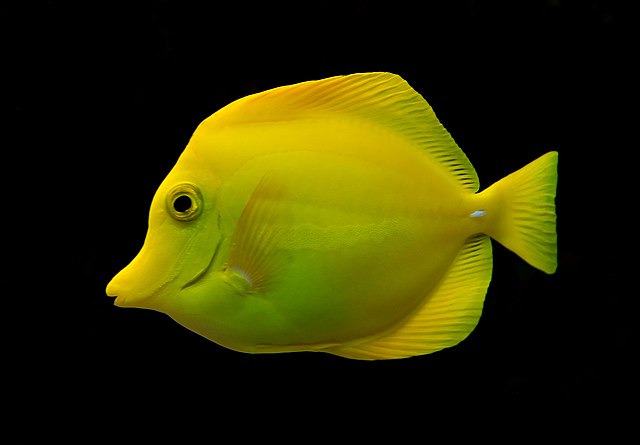
The Powder Blue Tang (scientific name: Acanthurus leucosternon) is a marine surgeonfish native to the Indian Ocean. True to its English name "Powder Blue Tang," its striking powder-blue coloration covering the entire body is among the most beautiful of all marine fish.
- Body length: Reaches approximately 20–23 cm when fully grown
- Body shape: Typical surgeonfish form—flattened, oval-shaped
- Distinctive markings: Beautiful contrast between the blue body, black face, and yellow dorsal and caudal fin bases
- Caudal spine: A blade-like defense weapon common to all surgeonfish. Use caution when handling
In nature, the Powder Blue Tang feeds primarily on algae and algal films in coral reefs and is highly active, constantly grazing. These natural behaviors create specific requirements for aquarium husbandry.
Required Tank Size
Because the Powder Blue Tang is highly active, a minimum tank of 120 cm (180+ liters) is required. While a 90 cm tank can work short-term, stress-induced color fading and increased risk of ich disease become significant concerns.
| Tank Size | Viability |
|---|---|
| 90 cm or smaller | Not recommended (short-term only) |
| 120 cm (~180 L) | Minimum threshold |
| 150 cm or larger | Recommended. Better for color enhancement and long-term care |
To ensure adequate open swimming space, concentrate large live rock structures toward the back of the tank and create a wide open area in the front for swimming.
Managing High Susceptibility to Ich
The Powder Blue Tang is notably highly susceptible to marine ich (Cryptocaryon irritans) compared to most other marine fish. Neglecting quarantine when introducing one will almost certainly result in an ich outbreak.
Quarantine (Treatment) is Essential
Before introducing the Powder Blue Tang to the main tank, it must be quarantined in a separate tank for 2–4 weeks.
Quarantine Tank Setup
- A simple 20–40 L tank (no live rock needed; sponge filter only)
- Maintain temperature at 26–27°C (slightly elevated to speed up the parasite lifecycle and ensure faster eradication)
- Copper-based medication (such as Cupramine) treatment: approximately 2 weeks of therapy is standard
Prevention in the Main Tank
- Low specific gravity (SG 1.020) suppresses ich reproduction but is incompatible with corals
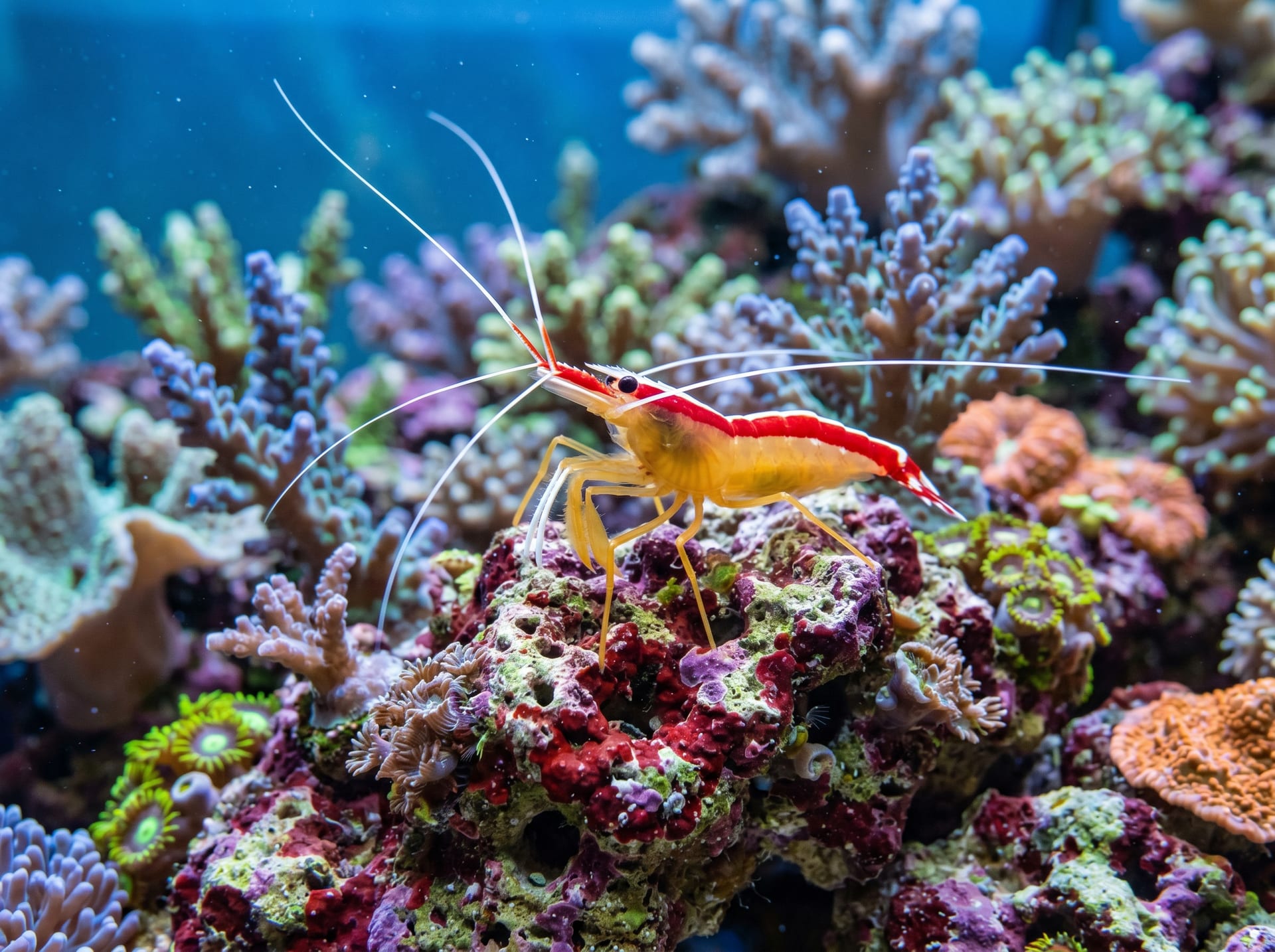
- Introduce multiple cleaner shrimp (Lysmata amboinensis, Lysmata debelius) to establish cleaning stations
- Regular water changes (10–15% weekly) maintain clean water conditions
- Minimize stress factors (pursuit by tankmates, sudden lighting changes, etc.)
Stress Triggers Ich Outbreaks
Most ich outbreaks in Powder Blue Tangs result from tankmate aggression, sudden water parameter changes, or transport stress. Observe closely for 2–3 weeks after introducing to the main tank.
Feeding Management and Color Enhancement
To maintain vibrant blue coloration during long-term care, vegetable-based foods must be the dietary foundation.
Recommended Foods
| Food Type | Frequency | Notes |
|---|---|---|
| Nori sheets (dried seaweed) | Daily | Affix to tank with dedicated clip |
| Spirulina-enriched flakes | 2–3 times daily | Small portions per feeding |
| Frozen brine shrimp | 2–3 times weekly | Protein supplementation |
| Frozen copepods | 1–2 times weekly | Easy to digest |
| Marine pellet food (Hikari marine) | Daily | Primary diet |
Multiple small daily feedings are key to maintaining good health. Feed only what can be consumed in approximately 3 minutes per feeding.
Tips for Color Enhancement
- Regularly feeding foods rich in spirulina and carotenoids will intensify blue coloration
- Adequate lighting also impacts coloration; insufficient light tends to dull colors
Tankmate Compatibility Notes
While the Powder Blue Tang is relatively peaceful among surgeonfish, cohabitation with the same species or genus is extremely difficult.
Compatible Tank Mates
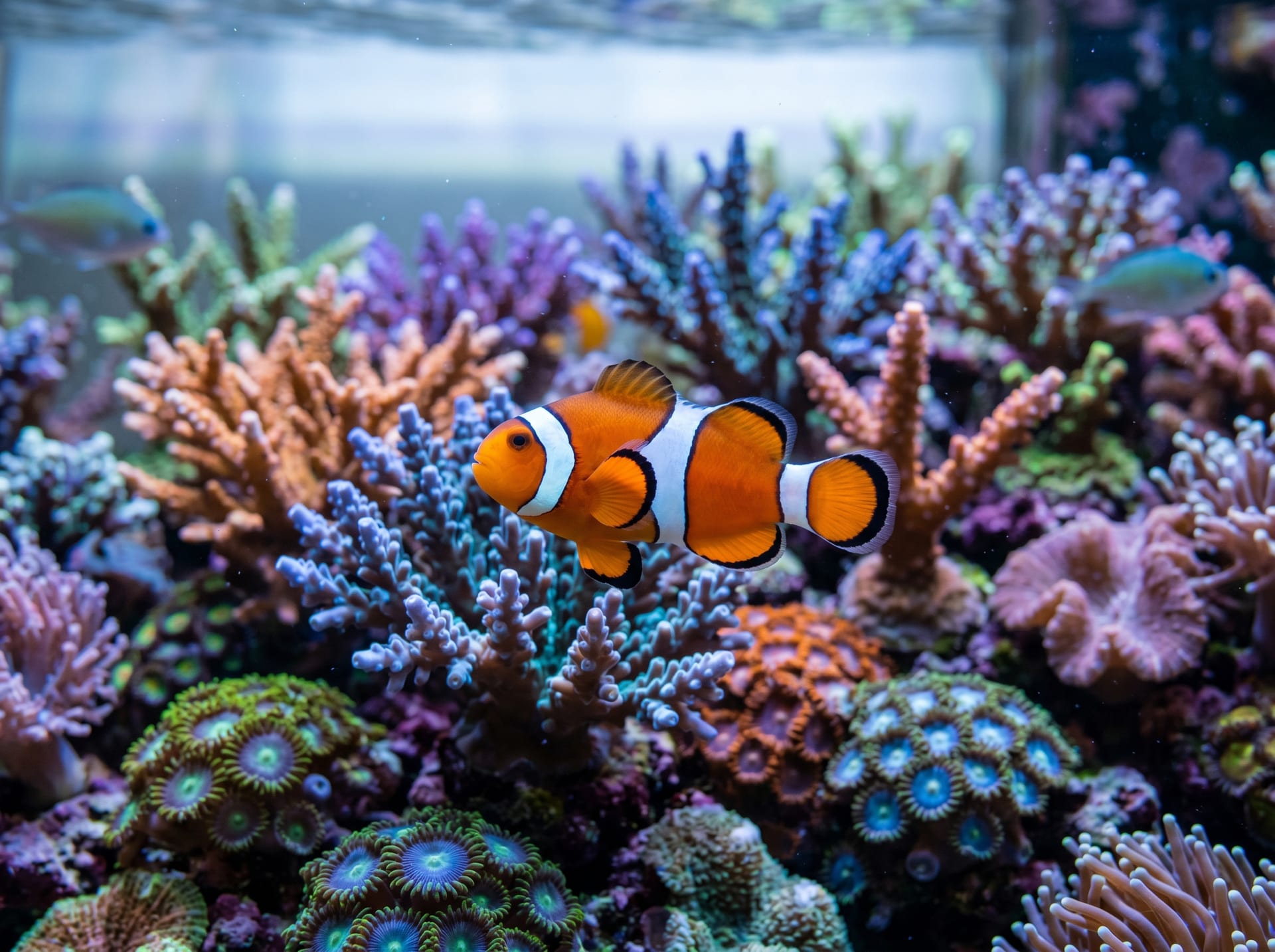
- Ocellaris Clownfish (non-aggressive)
- Small gobies (such as Watchman Goby)
- Fairy Wrasses (peaceful)
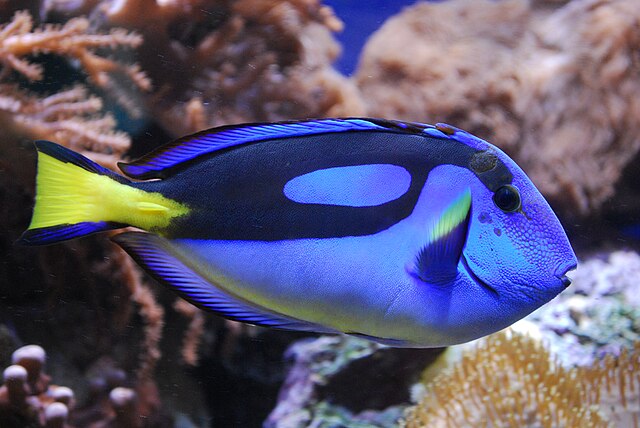
- Similar-sized surgeonfish (Blue Tang, Yellow Tang): May compete if of comparable size but generally coexist reasonably well
Incompatible Tank Mates
- Other Powder Blue Tangs (intense territorial disputes)
- Surgeonfish of similar size in general (compatibility depends on introduction order and tank size)
- Aggressive dottybacks and large wrasses
When keeping multiple surgeonfish, simultaneous introduction is essential; fish added later are more likely to be bullied.
Water Quality Management
The Powder Blue Tang inhabits coral reefs and thus requires high water quality.
| Parameter | Target |
|---|---|
| Temperature | 24–26°C |
| Specific gravity | 1.025–1.026 |
| pH | 8.1–8.3 |
| Ammonia & Nitrite | 0 ppm |
| Nitrate (NO₃) | 10 ppm or lower |
When water quality deteriorates, the Powder Blue Tang's coloration dulls first; thus, color vibrancy serves as a water quality indicator.
Summary
The Powder Blue Tang is among the most beautiful of all marine fish and a dreamed-of addition for many aquarists. However, it is often considered an "advanced" fish due to its susceptibility to ich and substantial tank requirements. That said, with proper quarantine, an adequately sized tank, and a vegetable-based diet, the vibrant blue beauty can be enjoyed for many years. It is a rewarding species that befits the goal of "trying Powder Blue Tang care after gaining solid marine aquarium experience."