Source: Wikimedia Commons
Naso Tang
IntermediateNaso lituratus
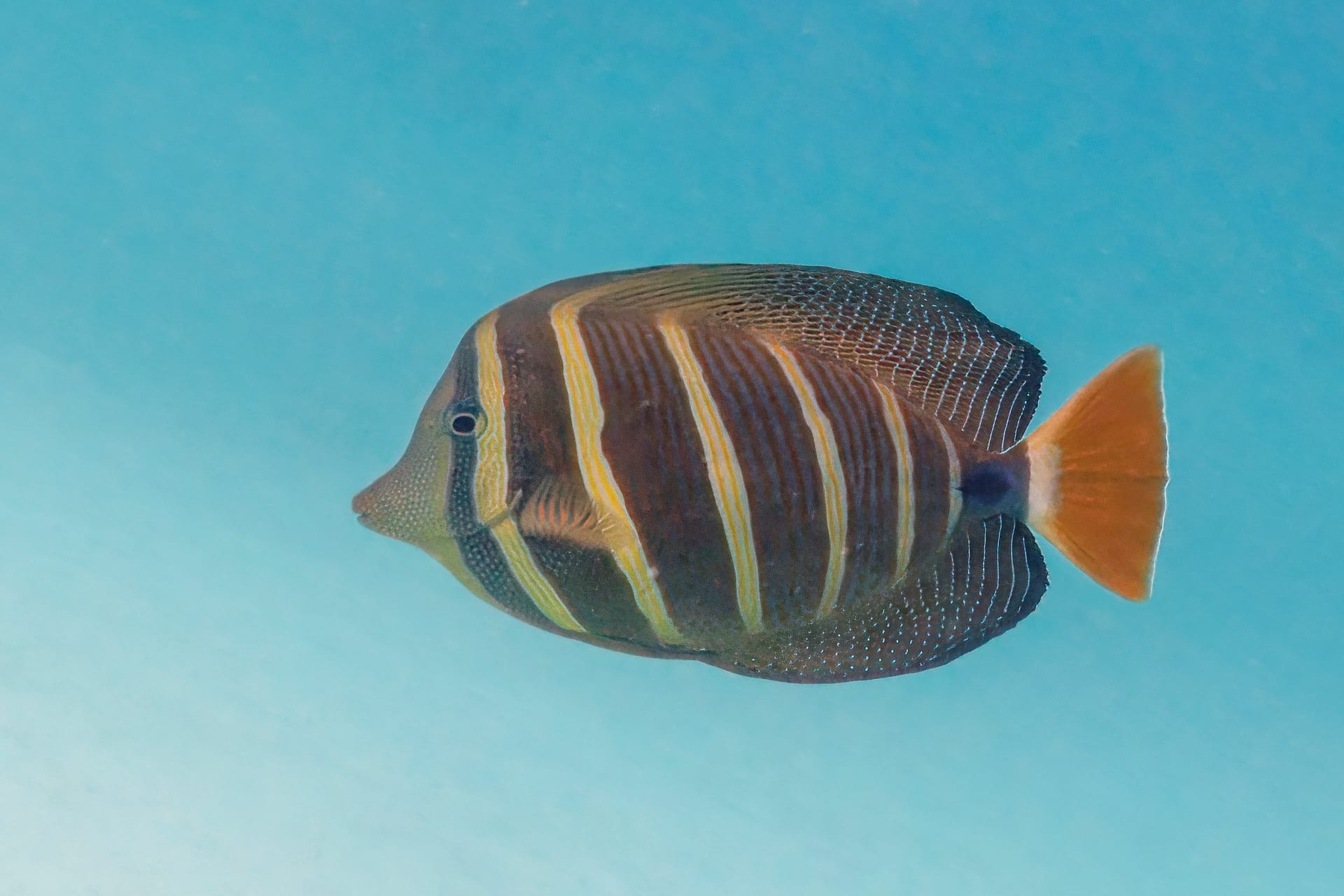
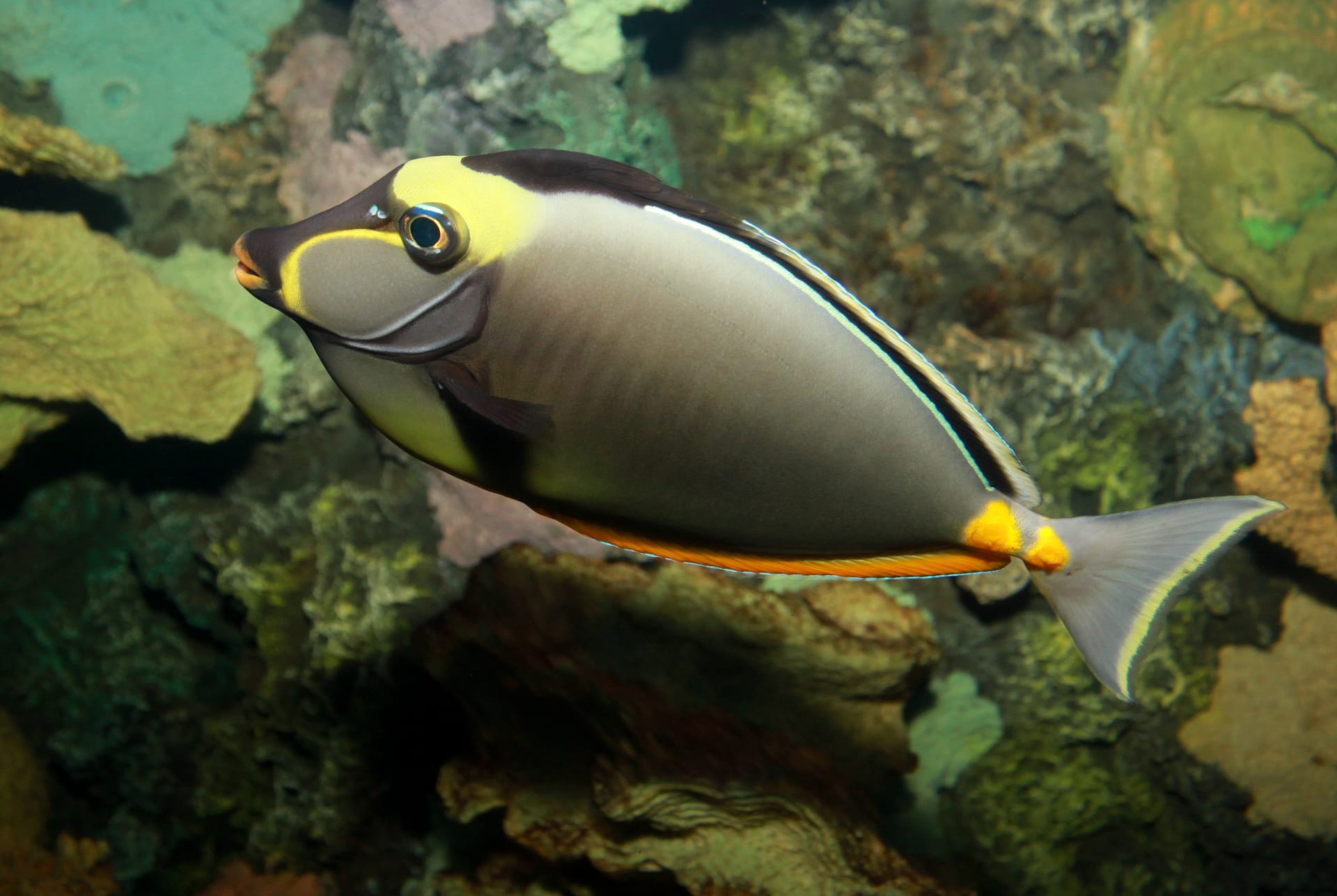
A large unicornfish with two pairs of orange hooked spines on the tail base. Black face mask, orange lips and a black band on the dorsal fin; adults exceed 40cm. Needs strong flow and high oxygen.
Difficulty
Intermediate
Temperature
22〜26℃
Size
Up to 46cm
Diet
Seaweed (brown algae), algae-based pellets, dried nori
About
The Naso Tang (Naso lituratus) is a unicornfish found across the Pacific from southern Japan to the Great Barrier Reef, Hawaii and French Polynesia. A closely related species, N. elegans, occupies the Indian Ocean and Red Sea, and this species is confined to the Pacific. The body is brown to blue-grey with a yellowish belly; a black mask from eye to mouth is edged in yellow and the lips are orange. Two sharp, forward-hooked orange spines sit on each side of the tail base, so handle with care. FishBase records a maximum of 46cm (standard length); it usually lives at 5-30m and feeds mainly on leafy brown algae such as Sargassum. Adults form small groups. In captivity it needs a tank of 680L or more, strong flow, high oxygen and a secure lid. Feed seaweed-based foods daily. It is aggressive toward other tangs but peaceful with other families, and does not harm corals. Hawaiian fish are prized for their bright colour.
Source: Wikipedia (CC BY-SA 4.0)
Size of the Naso Tang
The Naso Tang grows to Up to 46cm.
Temperature & humidity for the Naso Tang
The ideal temperature for the Naso Tang is 22〜26℃.
Basic Info
Origin
Pacific Ocean (southern Japan to the Great Barrier Reef, Hawaii, French Polynesia and Pitcairn)
Size
Up to 46cm
Temperature
22〜26℃
Diet
Care Specifications
- pH
- 8.1–8.4
- Water Temp.
- 22–26℃
- Specific Gravity
- 1.02–1.025
- Min. Tank
- 680 L
Semi-aggressiveReef safe
Sources: LiveAquaria / FishBase
References & Sources
Edited & verified by: BreederDirect editorial team
The taxonomic, regulatory, and husbandry data on this page are compiled and verified against the authoritative primary sources below.
Taxonomy & Authority
Regulations & Conservation Status
Not CITES-listedIUCN LC · Least Concern
Sources: CITES Appendices (species not listed) / IUCN Red List
Regulations may change. Always verify the latest information with the relevant authorities.
Naso Tang Listings
Loading latest listingsFind listings for this species