Source: Wikimedia Commons
Japan surgeonfish
IntermediateAcanthurus japonicus
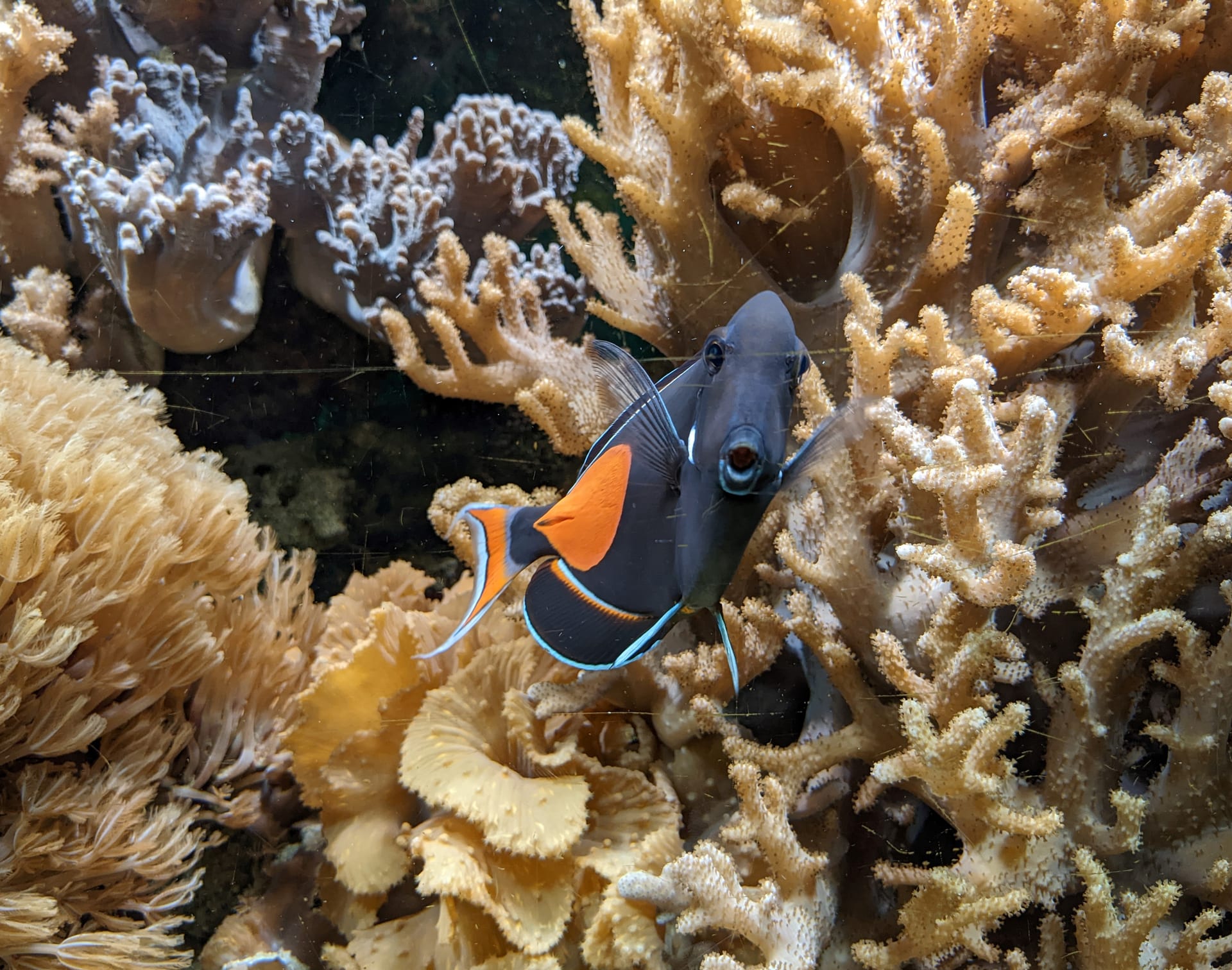
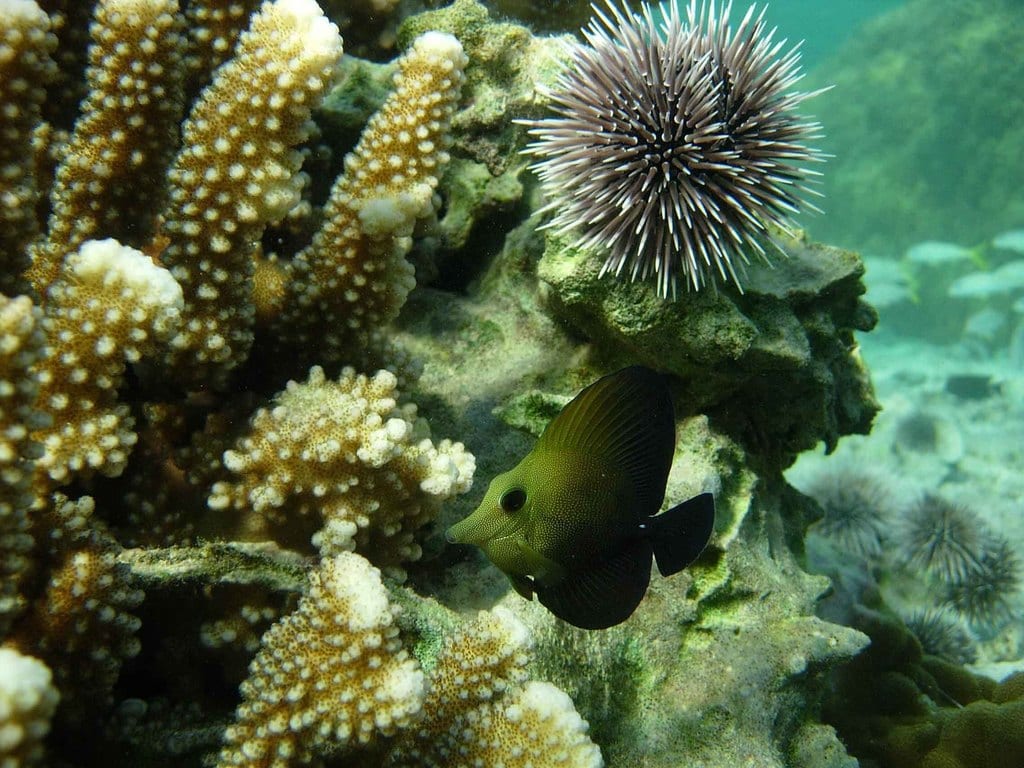
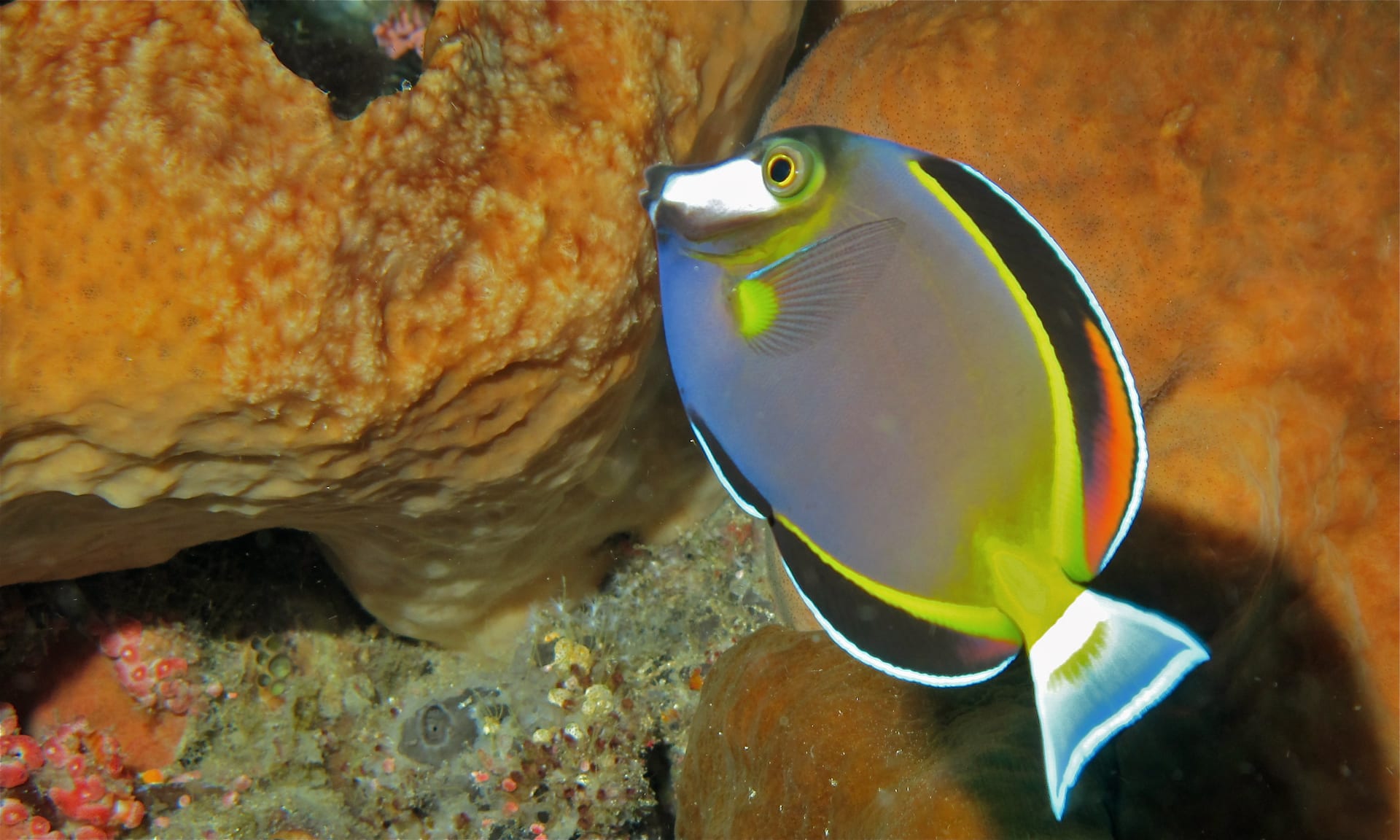
A western Pacific surgeonfish, brown with a white band from below the eye to the upper lip, a reddish band along the soft dorsal fin and a yellow tail base. An algae grazer that is reef-safe.
Difficulty
Intermediate
Temperature
24〜28℃
Lifespan
Few reliable data
Size
Up to 23 cm TL (FishBase)
Diet
Herbivore (marine algae, algae-based prepared foods)
About
Acanthurus japonicus, known as the Japan surgeonfish, powder brown tang or gold rim tang, was described in 1931 from Amami-Oshima in the Ryukyus. It occurs in the western Pacific from southern Japan to Sulawesi, including the Philippines (FishBase, Wikipedia), and reaches 23 cm TL. Body colour changes with mood from brown to bluish or yellowish, but the key feature is a broad white band from below the eye to the upper lip. There is a reddish band along the soft dorsal fin, and the black caudal peduncle has a yellow base. It lives in shallow, clear lagoons and seaward reefs in small groups, feeding on algae. It is a different species from the similarly named powder blue tang (A. leucosternon), and in Japan it is often regarded as a hardier relative. It also occurs along Japanese coasts.
Source: Wikipedia (CC BY-SA 4.0)
Size of the Japan surgeonfish
The Japan surgeonfish grows to Up to 23 cm TL (FishBase).
Temperature & humidity for the Japan surgeonfish
The ideal temperature for the Japan surgeonfish is 24〜28℃.
Basic Info
Origin
Western Pacific (southern Japan and the Ryukyus to the Philippines and Sulawesi)
Lifespan
Few reliable data
Size
Up to 23 cm TL (FishBase)
Temperature
24〜28℃
References & Sources
Edited & verified by: BreederDirect editorial team
The taxonomic, regulatory, and husbandry data on this page are compiled and verified against the authoritative primary sources below.
Primary sources
Taxonomy & Authority
Regulations & Conservation Status
Not CITES-listedIUCN LC · Least Concern
Not listed in the CITES Appendices (checked on Species+). Not a designated invasive alien species in Japan. It also occurs in southern Japan and the Ryukyu Islands; collecting in Japan must follow each prefecture's fisheries adjustment regulations. Never release aquarium fish into the sea.
Sources: Species+ (CITES) / FishBase
Regulations may change. Always verify the latest information with the relevant authorities.
Japan surgeonfish Listings
Loading latest listingsFind listings for this species