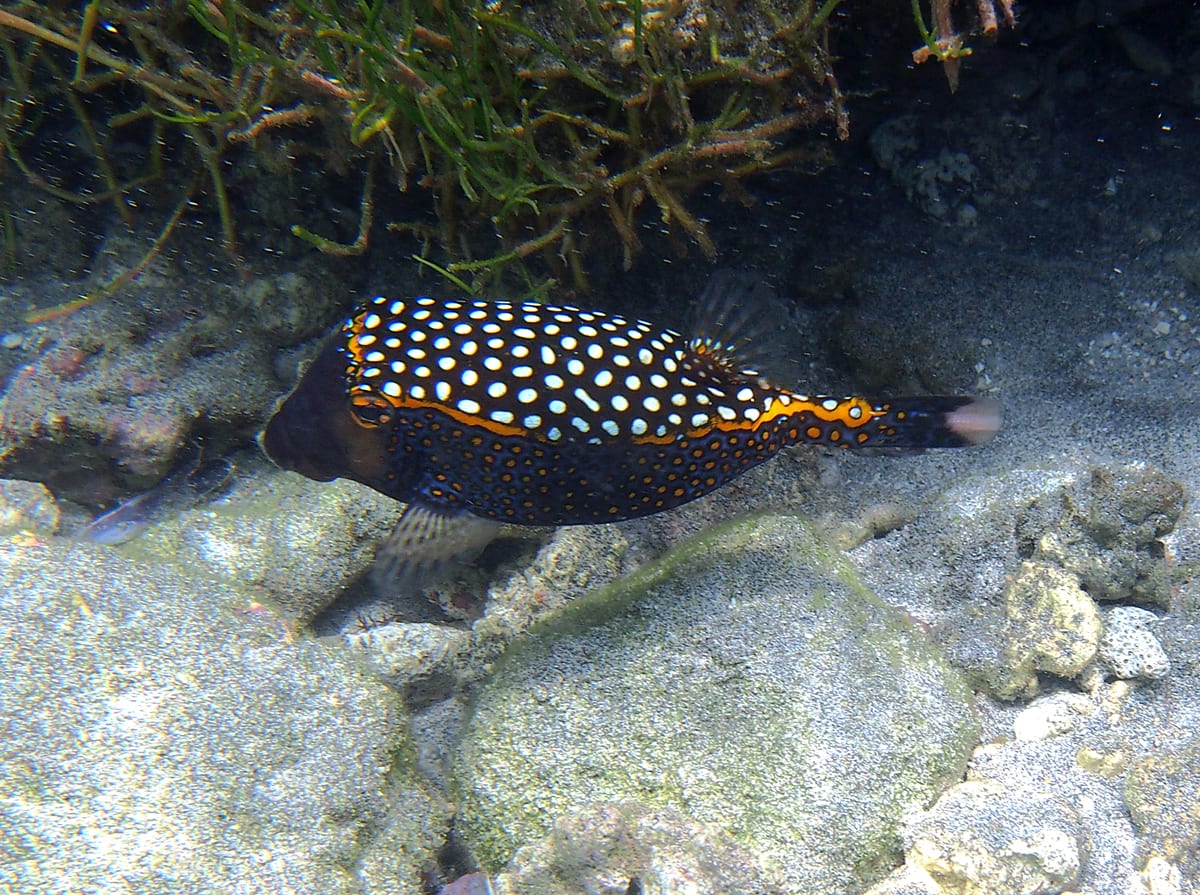
Source: Wikimedia Commons
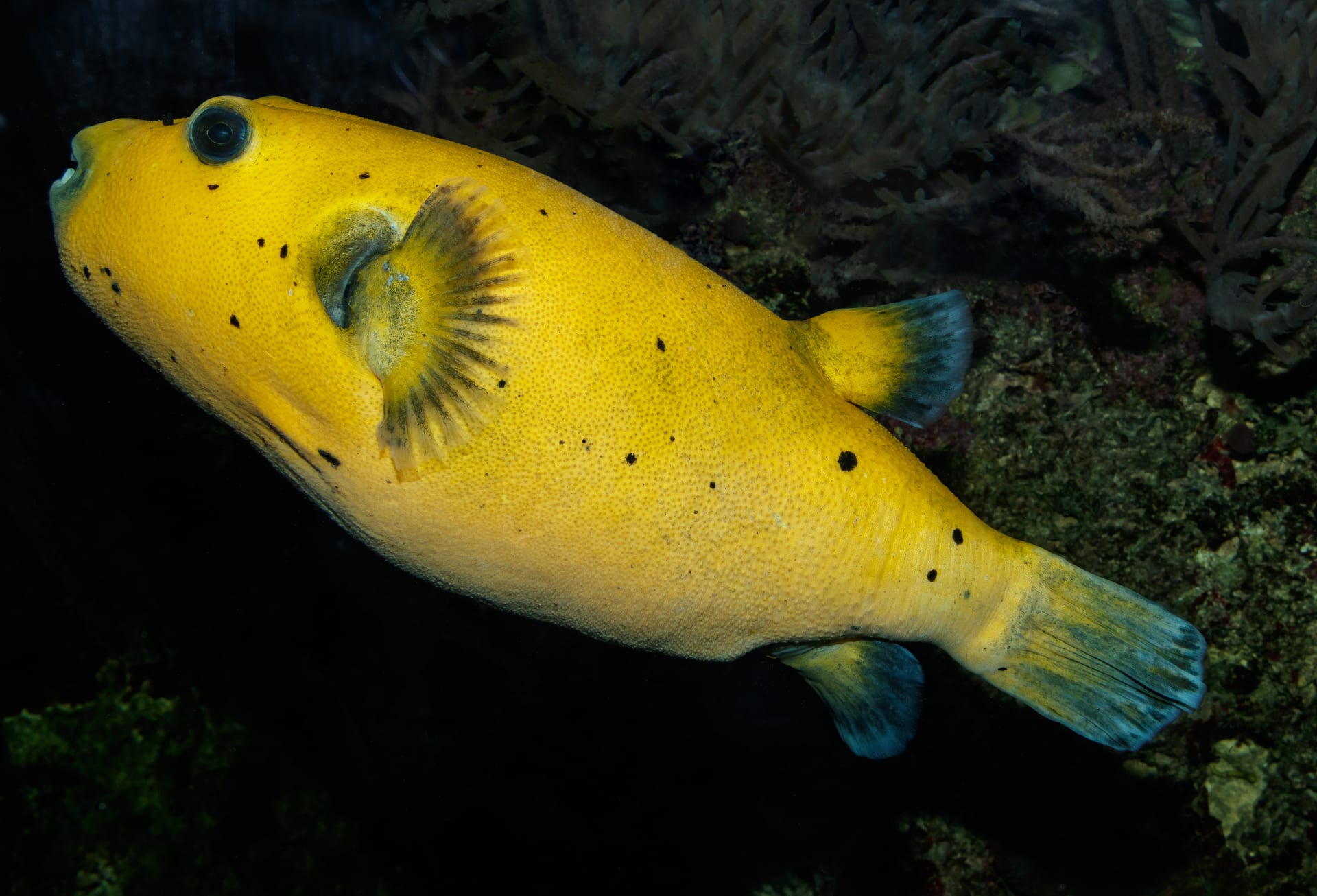
Blackspotted puffer
IntermediateArothron nigropunctatus
An Arothron puffer of Indo-Pacific reefs whose ground colour varies from grey or brown to yellow, scattered with black spots. Dark rings around the eyes and mouth give it the nickname dog-faced puffer.
Difficulty
Intermediate
Temperature
23〜26℃ (typical for Marine Fish)
Size
Up to 33 cm TL
Diet
Omnivore (molluscs, crustaceans, frozen foods, algae)
About
The blackspotted or dog-faced puffer, Arothron nigropunctatus, occurs across the Indo-Pacific from East Africa to Micronesia and Samoa, north to southern Japan and south to New South Wales; in the Red Sea it is replaced by A. diadematus (FishBase). It reaches 33 cm TL. The ground colour varies widely between individuals — grey, light brown, bluish or bright yellow — with scattered dark spots and dark areas around the eyes and mouth. It lives on reef slopes and lagoons rich in invertebrates, feeding on corals (usually Acropora tips), crustaceans, molluscs, sponges, tunicates and algae. It contains tetrodotoxin and inflates with water or air when threatened. It is a popular medium-sized puffer in Japanese marine shops and also occurs along Japanese coasts.
Source: Wikipedia (CC BY-SA 4.0)
Size of the Blackspotted puffer
The Blackspotted puffer grows to Up to 33 cm TL.
Basic Info
Origin
Indo-Pacific (East Africa to Samoa, southern Japan to Australia; absent from the Red Sea)
Size
Up to 33 cm TL
Temperature
23〜26℃ (typical for Marine Fish)
Diet
Omnivore (molluscs, crustaceans, frozen foods, algae)
Care Guide
References & Sources
Edited & verified by: BreederDirect editorial team
The taxonomic, regulatory, and husbandry data on this page are compiled and verified against the authoritative primary sources below.
Primary sources
Taxonomy & Authority
Accepted name: Arothron nigropunctatus (Bloch & Schneider, 1801)
Synonyms: Arothron citrinellus (Günther, 1870), Arothron melanorhynchos Bleeker, 1855, Arothtron nigropunctatus (Bloch & Schneider, 1801), Tetraodon nigropunctatus Bloch & Schneider, 1801, Tetraodon nigropunctatus var. citrinella Günther, 1870, Tetraodon trichoderma Bleeker, 1854, Tetraodon trichodermatoides Bleeker, 1854, Tetrodon aurantius Ogilby, 1890, Tetrodon nigropunctatus Bloch & Schneider, 1801, Tetrodon nigropunctatus citrinella Günther, 1870, Tetrodon nigropunctatus var. citrinella Günther, 1870
Authority databases: GBIF · GBIF · FishBase
Nomenclature follows global taxonomic authority databases.
Regulations & Conservation Status
Not CITES-listedIUCN LC · Least Concern
Not listed in the CITES Appendices (checked on Species+). Not a designated invasive alien species in Japan. It also occurs in southern Japan and the Ryukyu Islands; collecting in Japan must follow each prefecture's fisheries adjustment regulations. Never release aquarium fish into the sea.
Sources: Species+ (CITES) / FishBase
Regulations may change. Always verify the latest information with the relevant authorities.
Blackspotted puffer Listings
Loading latest listingsFind listings for this species