Source: Wikimedia Commons
Whitespotted boxfish
AdvancedOstracion meleagris
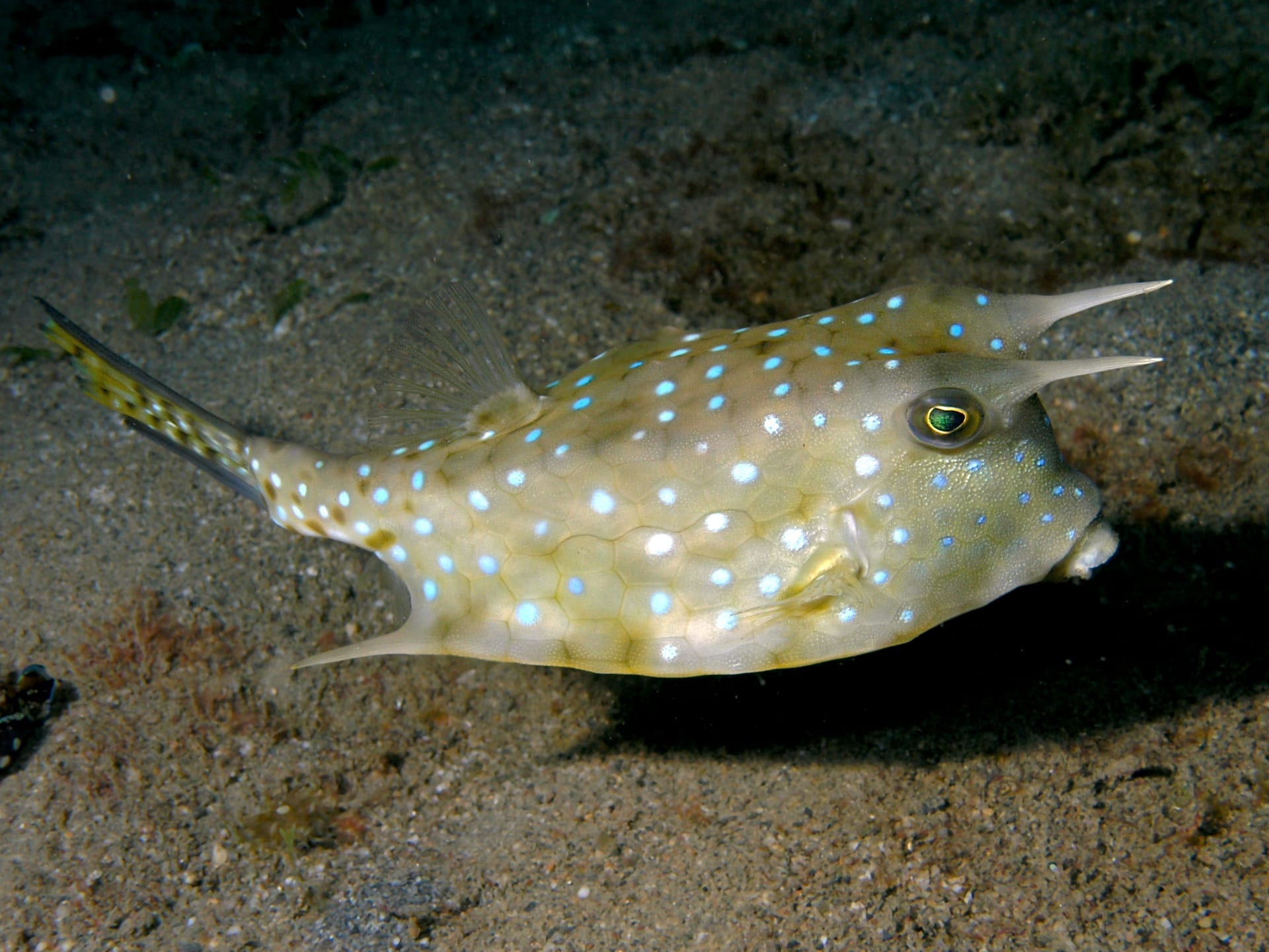
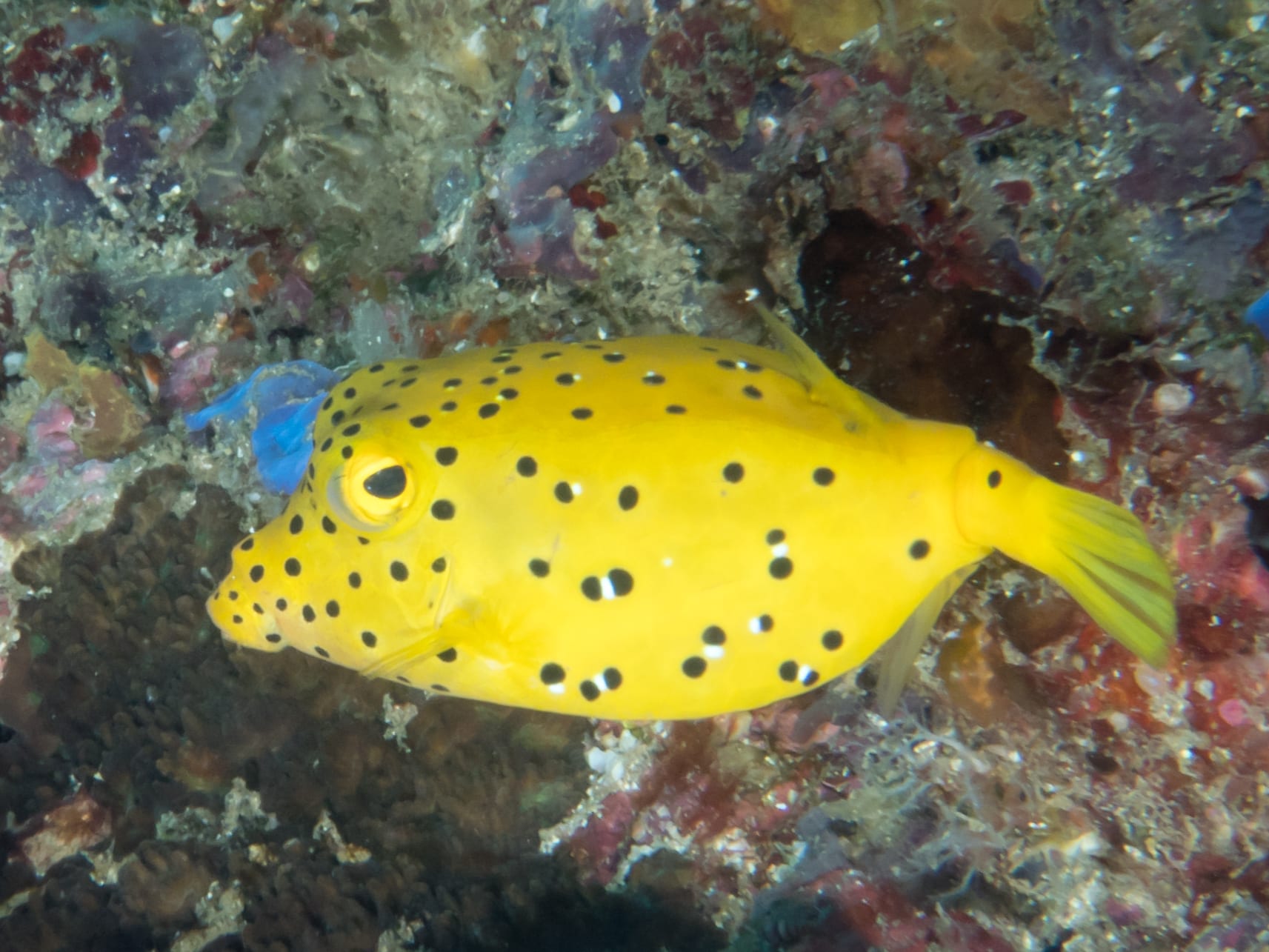
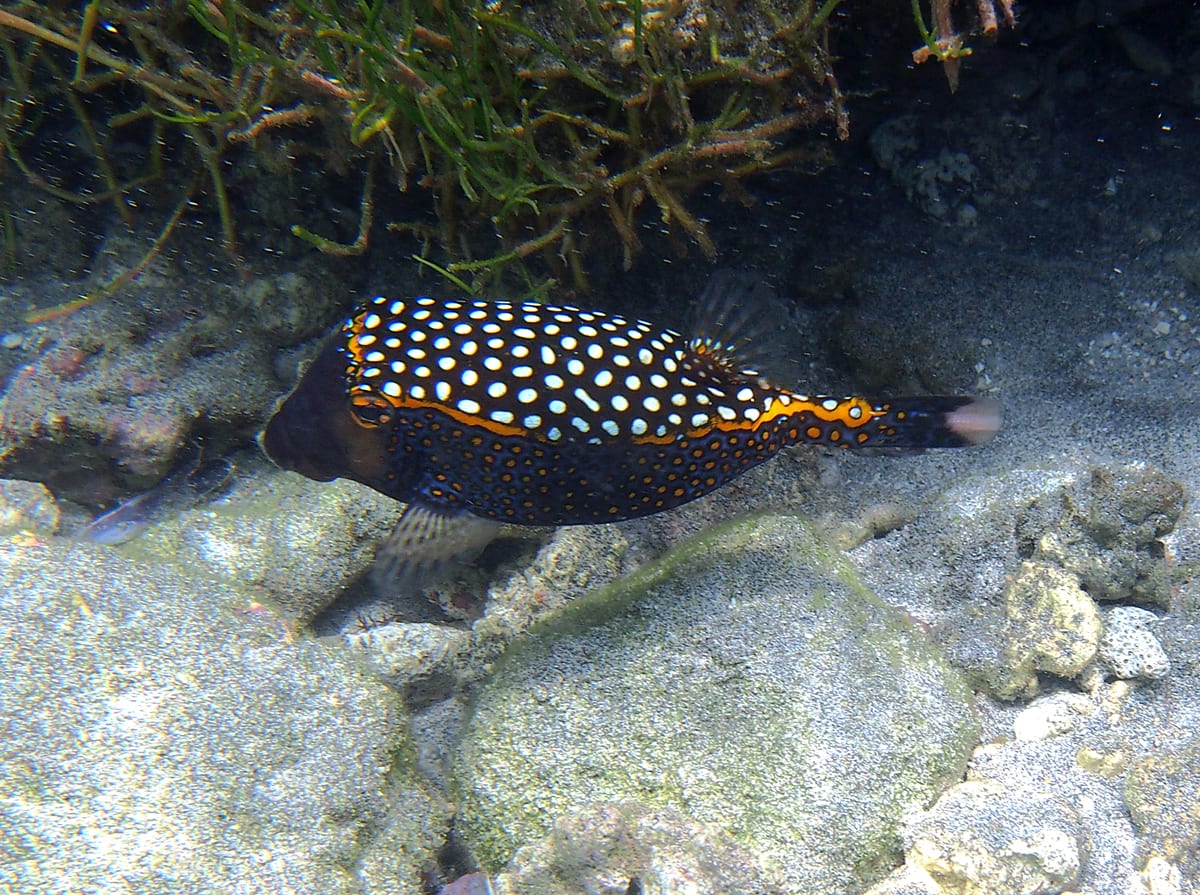
A small boxfish of Indo-Pacific and eastern Pacific reefs. Females are dark brown with white spots; males have a black, white-spotted back and blue sides with yellow markings. Its body is encased in a bony box.
Difficulty
Advanced
Temperature
23〜26℃
Lifespan
Few reliable data
Size
Up to 25 cm TL (FishBase)
Diet
Omnivore (small invertebrates, frozen foods, algae)
About
The whitespotted or spotted boxfish, Ostracion meleagris, ranges from East Africa to Mexico, north to southern Japan and Hawaii and south to New Caledonia (FishBase). It reaches 25 cm TL. Its body is enclosed in a box of joined hexagonal bony plates. The sexes differ strongly: females and juveniles are dark brown with white spots, while males have a black, white-spotted back and blue sides with yellow bands and spots. Juveniles with male colours have not been seen, suggesting females change sex. It lives in clear lagoons and seaward reefs, feeding on tunicates, polychaetes, sponges, molluscs, copepods and algae. Boxfishes are known to release a toxin (pahutoxin) in skin mucus when stressed, which in a closed aquarium can harm other fish and the boxfish itself. It is sold in Japanese marine shops for its striking sexual dichromatism and also occurs along Japanese coasts.
Source: Wikipedia (CC BY-SA 4.0)
Size of the Whitespotted boxfish
The Whitespotted boxfish grows to Up to 25 cm TL (FishBase).
Basic Info
Origin
Indo-Pacific and eastern Pacific (East Africa to Mexico; southern Japan and Hawaii to New Caledonia)
Lifespan
Few reliable data
Size
Up to 25 cm TL (FishBase)
Temperature
23〜26℃
Diet
Omnivore (small invertebrates, frozen foods, algae)
References & Sources
Edited & verified by: BreederDirect editorial team
The taxonomic, regulatory, and husbandry data on this page are compiled and verified against the authoritative primary sources below.
Primary sources
Taxonomy & Authority
Accepted name: Ostracion meleagris Shaw, 1796
Synonyms: Ostracion camurum Jenkins, 1901, Ostracion clippertonense Snodgrass & Heller, 1905, Ostracion lentiginosus Bloch & Schneider, 1801, Ostracion meleagris meleagris, Ostracion oahuensis Jordan & Evermann, 1903, Ostracion punctatus Bloch & Schneider, 1801, Ostracion sebae Bleeker, 1851, Ostracium sebae Bleeker, 1851
Authority databases: GBIF · GBIF · FishBase
Nomenclature follows global taxonomic authority databases.
Regulations & Conservation Status
Not CITES-listedIUCN LC · Least Concern
Not listed in the CITES Appendices (checked on Species+). Not a designated invasive alien species in Japan. It also occurs in southern Japan and the Ryukyu Islands; collecting in Japan must follow each prefecture's fisheries adjustment regulations. Never release aquarium fish into the sea.
Sources: Species+ (CITES) / FishBase
Regulations may change. Always verify the latest information with the relevant authorities.
Whitespotted boxfish Listings
Loading latest listingsFind listings for this species