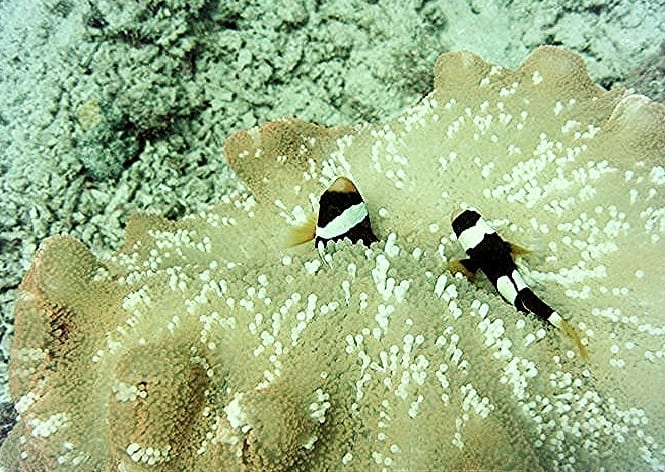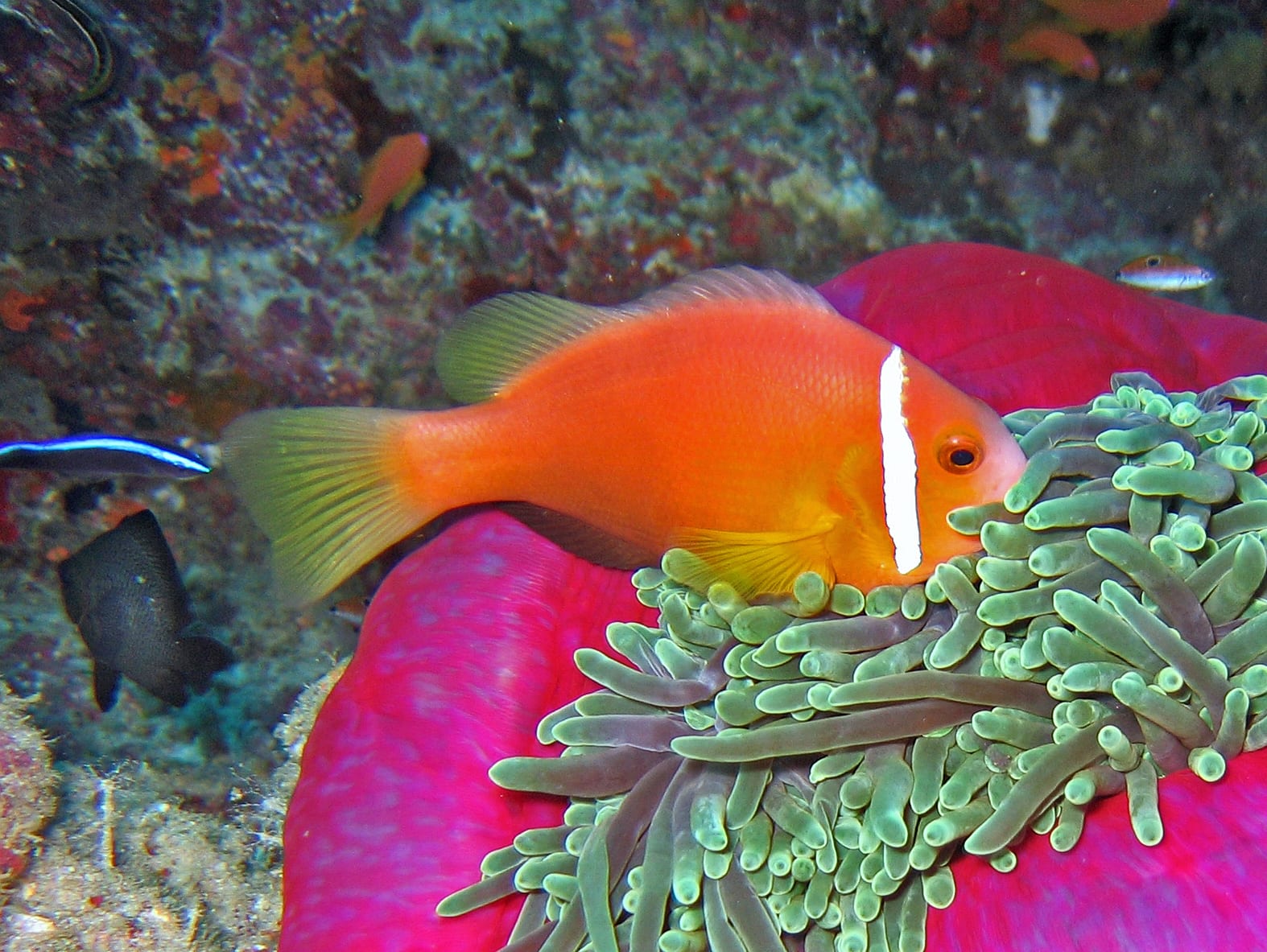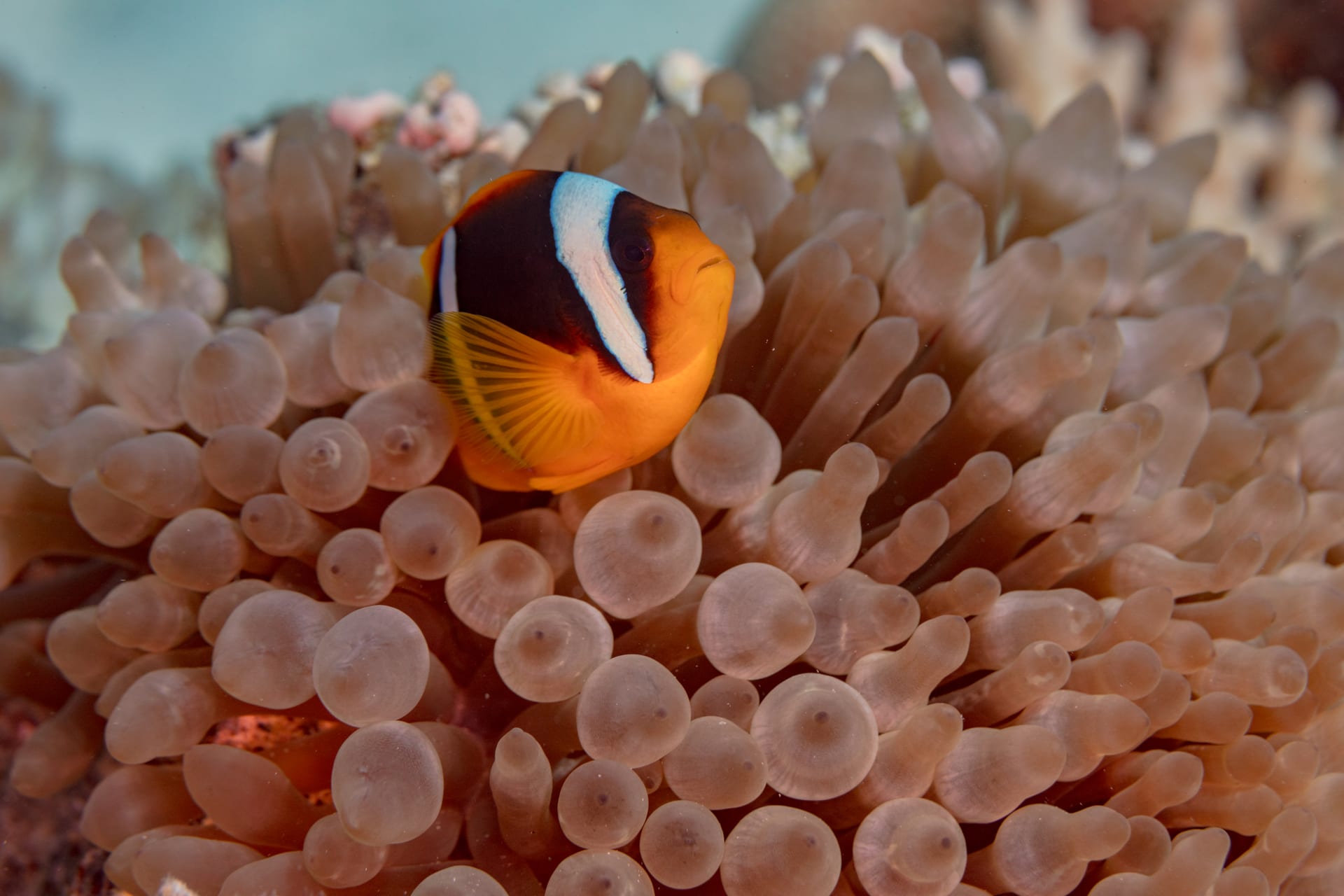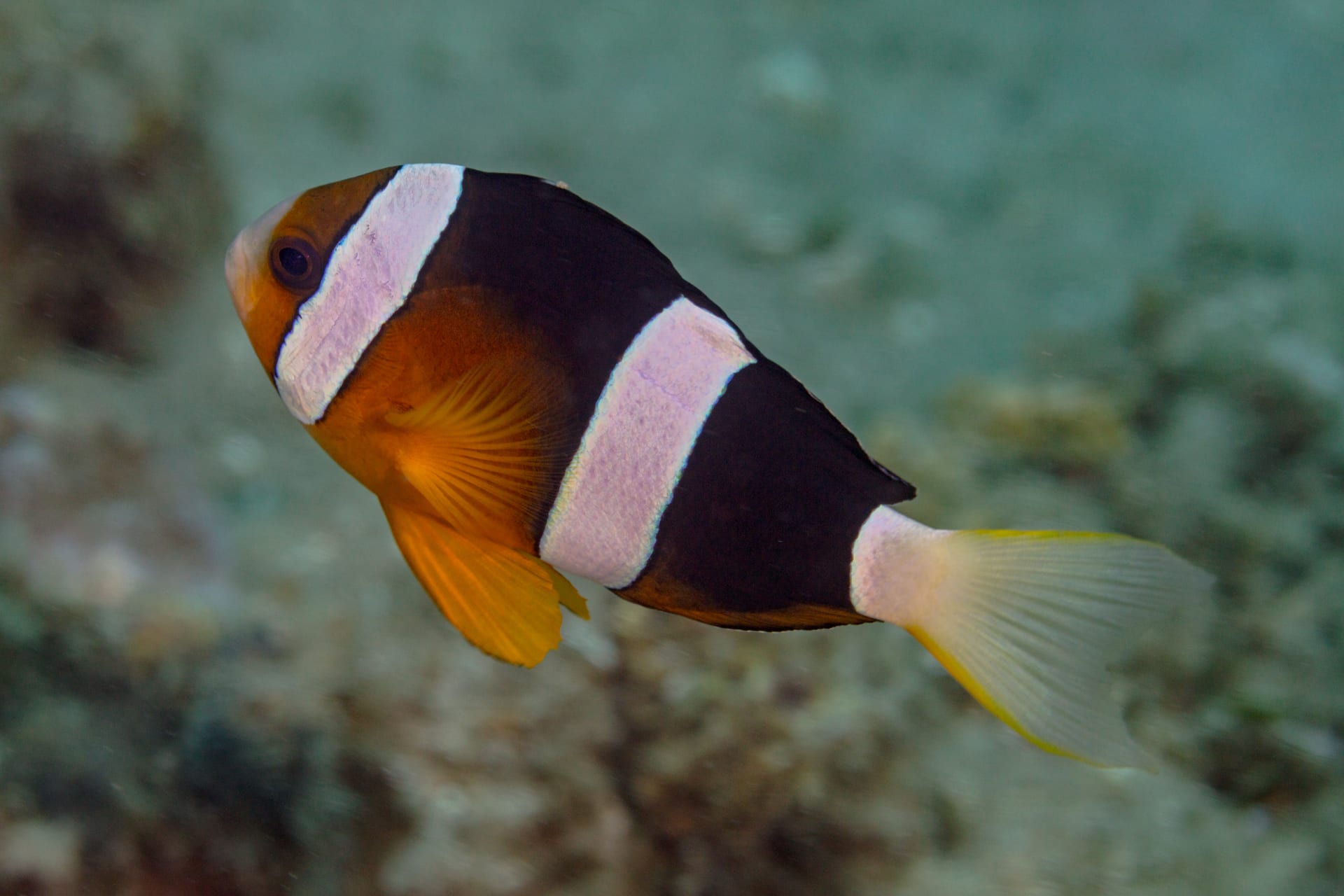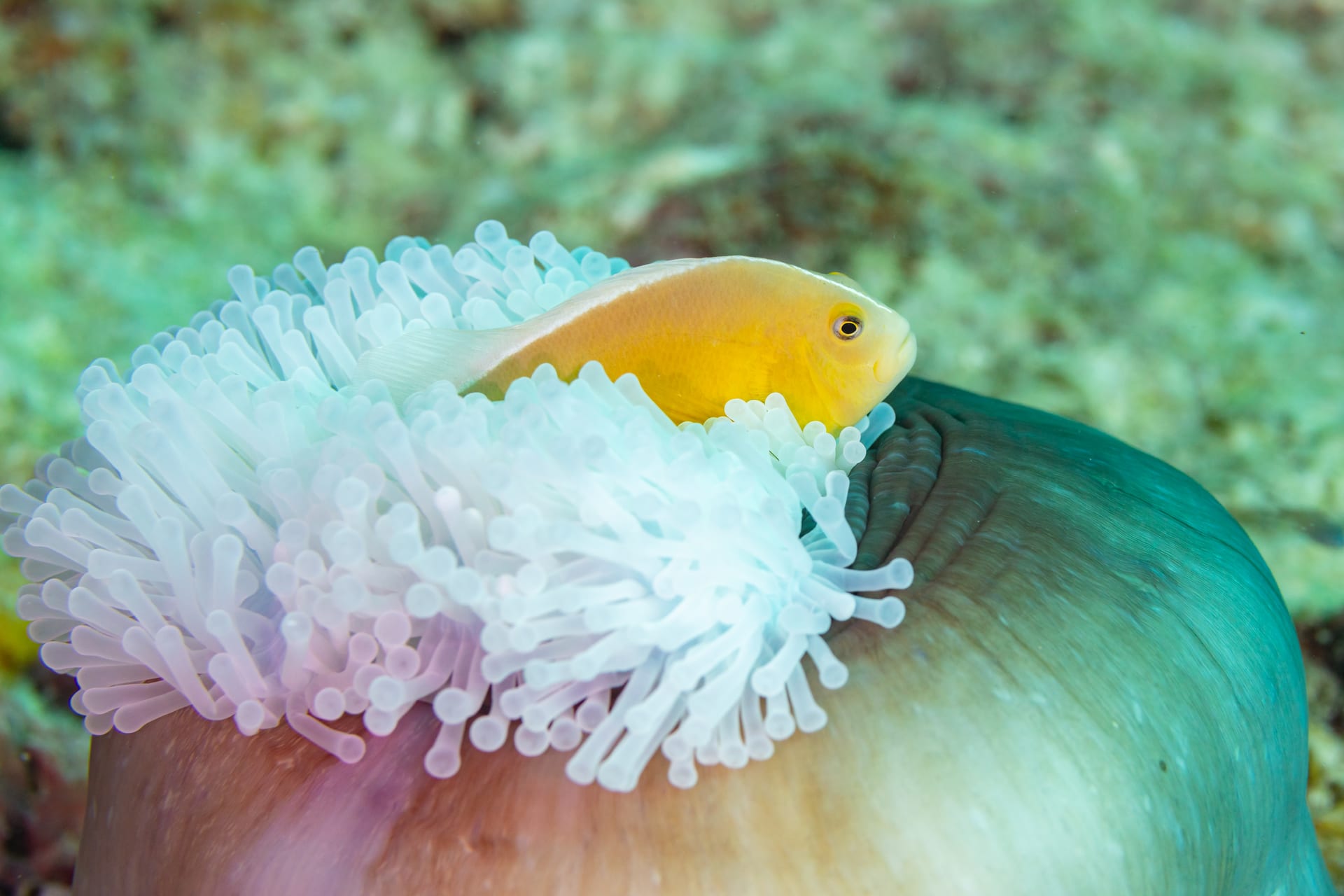
Source: Wikimedia Commons
Skunk clownfish
BeginnerAmphiprion akallopisos
An Indian Ocean clownfish, pale orange with a single narrow white stripe along the back from snout to tail base. Despite the "skunk" name it is a different species from the Pacific skunk clownfish.
Difficulty
Beginner
Temperature
23〜27℃
Lifespan
Little data available
Size
Up to 11 cm SL (FishBase)
Diet
Omnivore (zooplankton and algae)
About
The skunk or nosestripe clownfish (Amphiprion akallopisos) occurs in East Africa, Madagascar, the Comoros, the Seychelles, the Andaman Sea, Sumatra and the Seribu Islands in the Java Sea, but not in the Maldives or Sri Lanka (FishBase). It reaches 11 cm SL. It is pale orange with a single narrow white stripe along the back from the snout to the tail base. The western Pacific orange skunk clownfish (A. sandaracinos) is a different species, and because both are sold as "skunk" clownfish it is worth checking the scientific name and origin. It lives on shallow reefs, often in strong current, with the magnificent sea anemone and Mertens' carpet anemone (Stichodactyla mertensii). Each anemone holds a large female, a smaller breeding male and several juveniles; if the female is lost the male changes sex. It can be kept without an anemone, takes frozen and prepared foods well and does not harm corals. It can be bred in captivity.
Source: Wikipedia (CC BY-SA 4.0)
Size of the Skunk clownfish
The Skunk clownfish grows to Up to 11 cm SL (FishBase).
Temperature & humidity for the Skunk clownfish
The ideal temperature for the Skunk clownfish is 23〜27℃.
Basic Info
Origin
Indian Ocean (East Africa and Madagascar to the Andaman Sea, Sumatra and the Java Sea)
Lifespan
Little data available
Size
Up to 11 cm SL (FishBase)
Care Specifications
- Water Temp.
- 23–27℃
- Specific Gravity
- 1.02–1.026
- Min. Tank
- 110 L
PeacefulReef safe
Sources: FishBase (Amphiprion akallopisos) / Saltcorner Fish Library (Bob Goemans)
References & Sources
Edited & verified by: BreederDirect editorial team
The taxonomic, regulatory, and husbandry data on this page are compiled and verified against the authoritative primary sources below.
Taxonomy & Authority
Regulations & Conservation Status
Not CITES-listedIUCN LC · Least Concern
Not listed in the CITES Appendices (checked on Species+). Not designated as an Invasive Alien Species under Japanese law. Never release aquarium animals into the sea.
Sources: Species+ (CITES) / Ministry of the Environment: List of Designated Invasive Alien Species / FishBase
Regulations may change. Always verify the latest information with the relevant authorities.
Skunk clownfish Listings
Loading latest listingsFind listings for this species