Source: Wikimedia Commons
African pygmy angelfish
IntermediateCentropyge acanthops
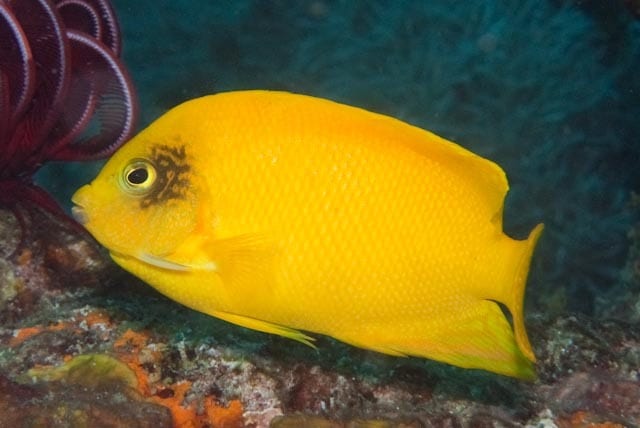
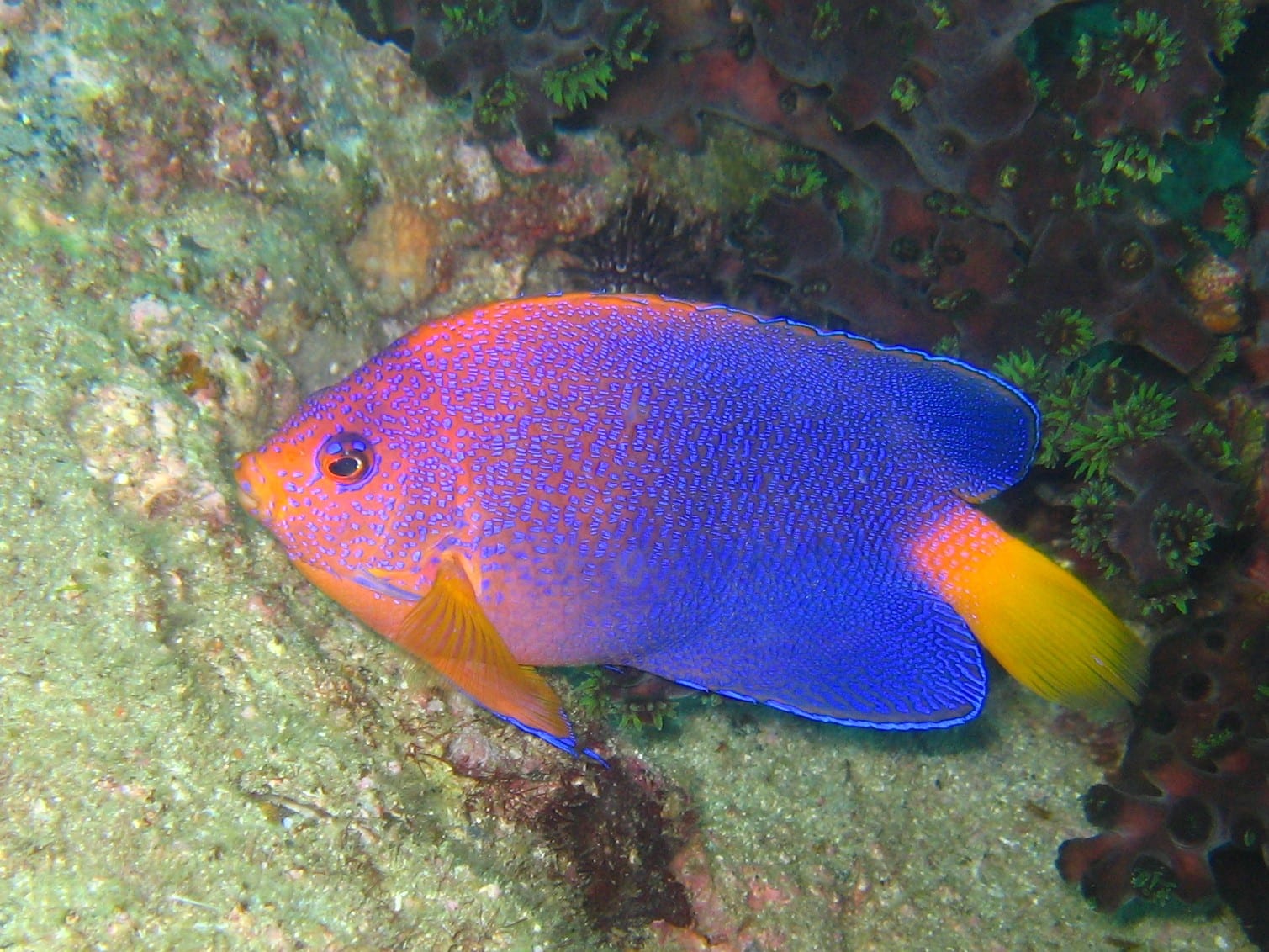
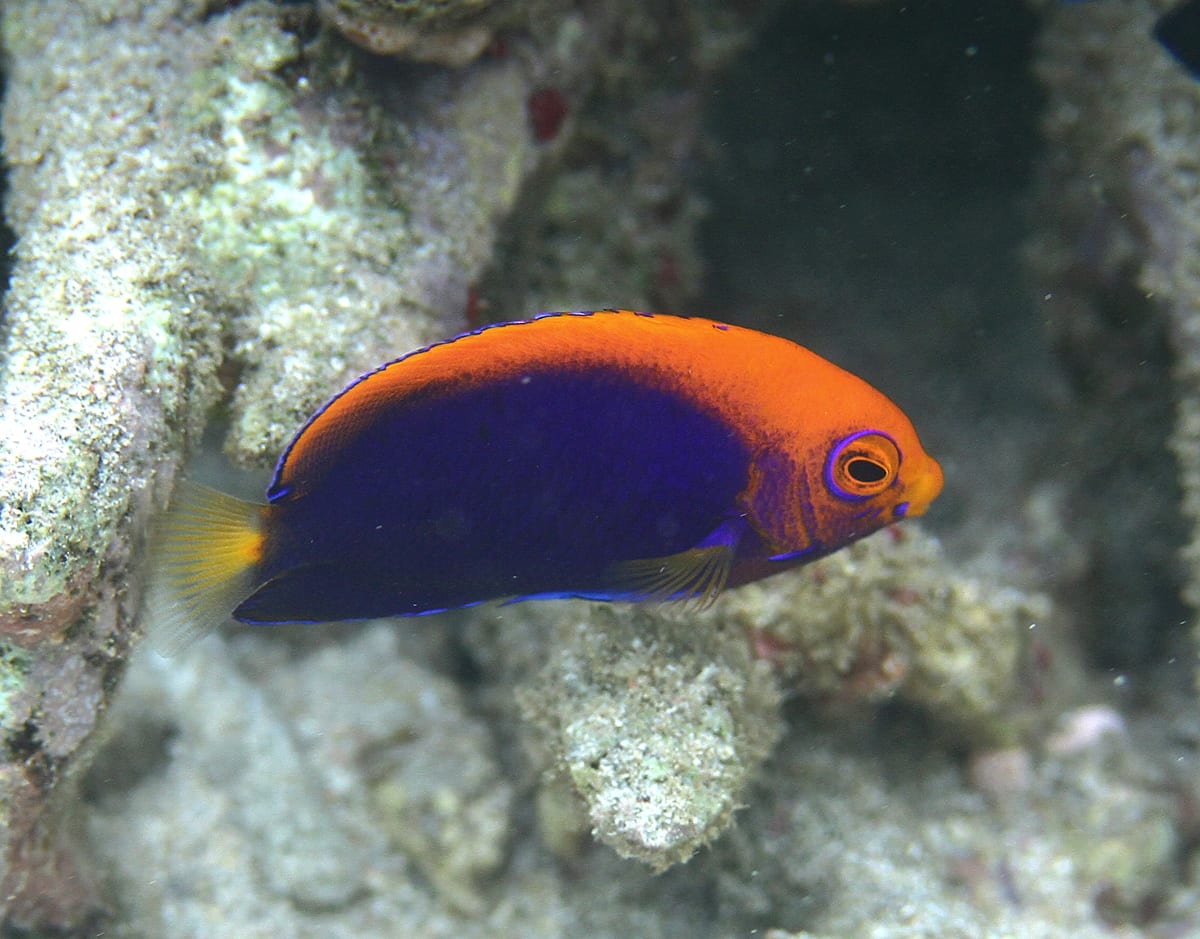
A small dwarf angelfish with a deep-blue body and an orange-yellow band from the head along the back. Its pale yellow to transparent tail separates it from the similar Brazilian flameback.
Difficulty
Intermediate
Temperature
22〜27℃
Lifespan
Little data available
Size
Up to 8 cm TL (FishBase)
Diet
Omnivore (algae and small invertebrates)
About
The African pygmy or orangeback angelfish (Centropyge acanthops) occurs in the western Indian Ocean from Somalia to East London, South Africa, and around offshore islands (FishBase). At 8 cm TL it is small even for its genus. The lower two-thirds of the body is deep blue with close-set purple spots, the head, back and dorsal fin are orange-yellow, and the tail is pale yellow to transparent. That pale tail distinguishes it from the similar Brazilian flameback (C. aurantonotus) and cherub angelfish (C. argi). It lives in small groups of up to about ten fish among coral rubble, feeding on algae and small invertebrates. Keep it in a tank with plenty of live rock to graze and feed spirulina-based and frozen foods about twice a day. One Centropyge species per tank is recommended, and underfed fish may nip corals and clams. It has been bred in captivity, and Japanese specialist shops stock it regularly.
Source: Wikipedia (CC BY-SA 4.0)
Size of the African pygmy angelfish
The African pygmy angelfish grows to Up to 8 cm TL (FishBase).
Temperature & humidity for the African pygmy angelfish
The ideal temperature for the African pygmy angelfish is 22〜27℃.
Basic Info
Origin
Western Indian Ocean (Somalia to South Africa and nearby islands)
Lifespan
Little data available
Size
Up to 8 cm TL (FishBase)
Care Specifications
- Water Temp.
- 22–27℃
- Min. Tank
- 190 L
Semi-aggressiveWith caution
Sources: FishBase (Centropyge acanthops) / Saltcorner Fish Library (Bob Goemans)
References & Sources
Edited & verified by: BreederDirect editorial team
The taxonomic, regulatory, and husbandry data on this page are compiled and verified against the authoritative primary sources below.
Taxonomy & Authority
Regulations & Conservation Status
Not CITES-listedIUCN LC · Least Concern
Not listed in the CITES Appendices (checked on Species+). Not designated as an Invasive Alien Species under Japanese law. Never release aquarium animals into the sea.
Sources: Species+ (CITES) / Ministry of the Environment: List of Designated Invasive Alien Species / FishBase
Regulations may change. Always verify the latest information with the relevant authorities.
African pygmy angelfish Listings
Loading latest listingsFind listings for this species