Source: Wikimedia Commons
Camel shrimp
BeginnerRhynchocinetes durbanensis
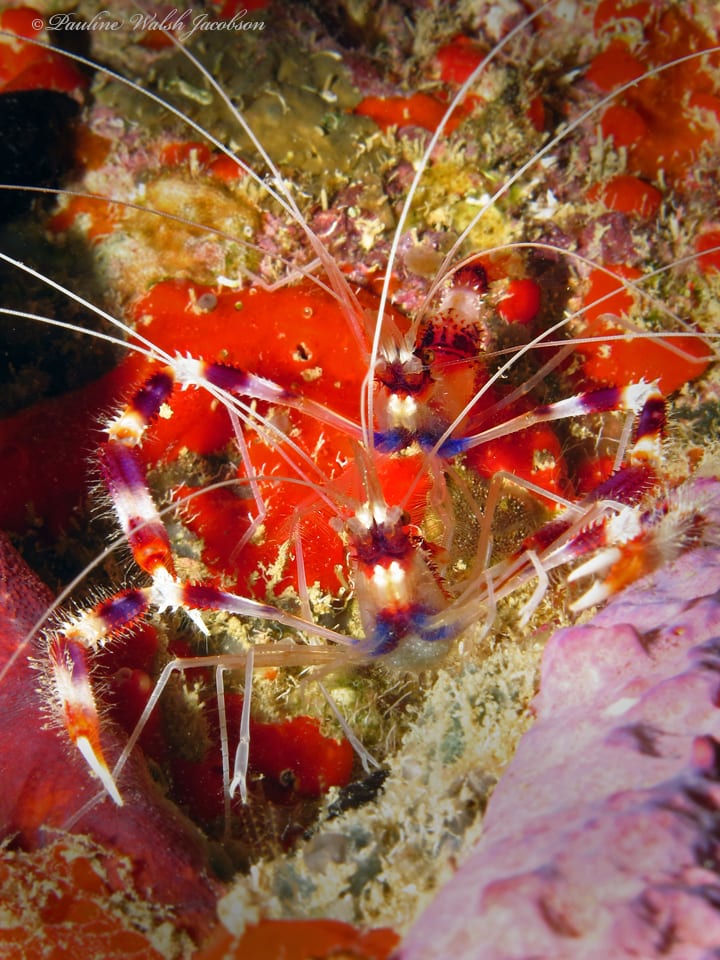
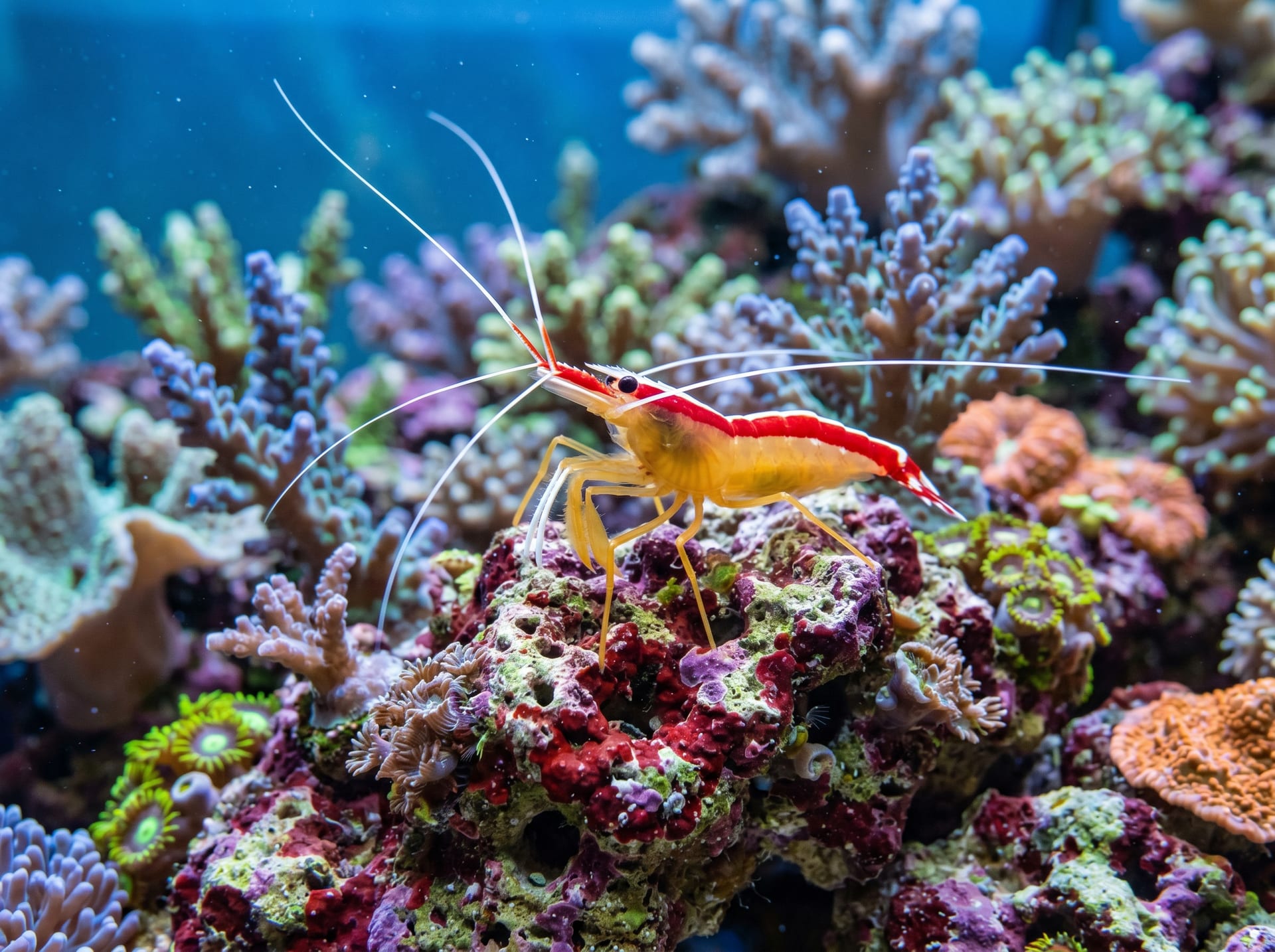
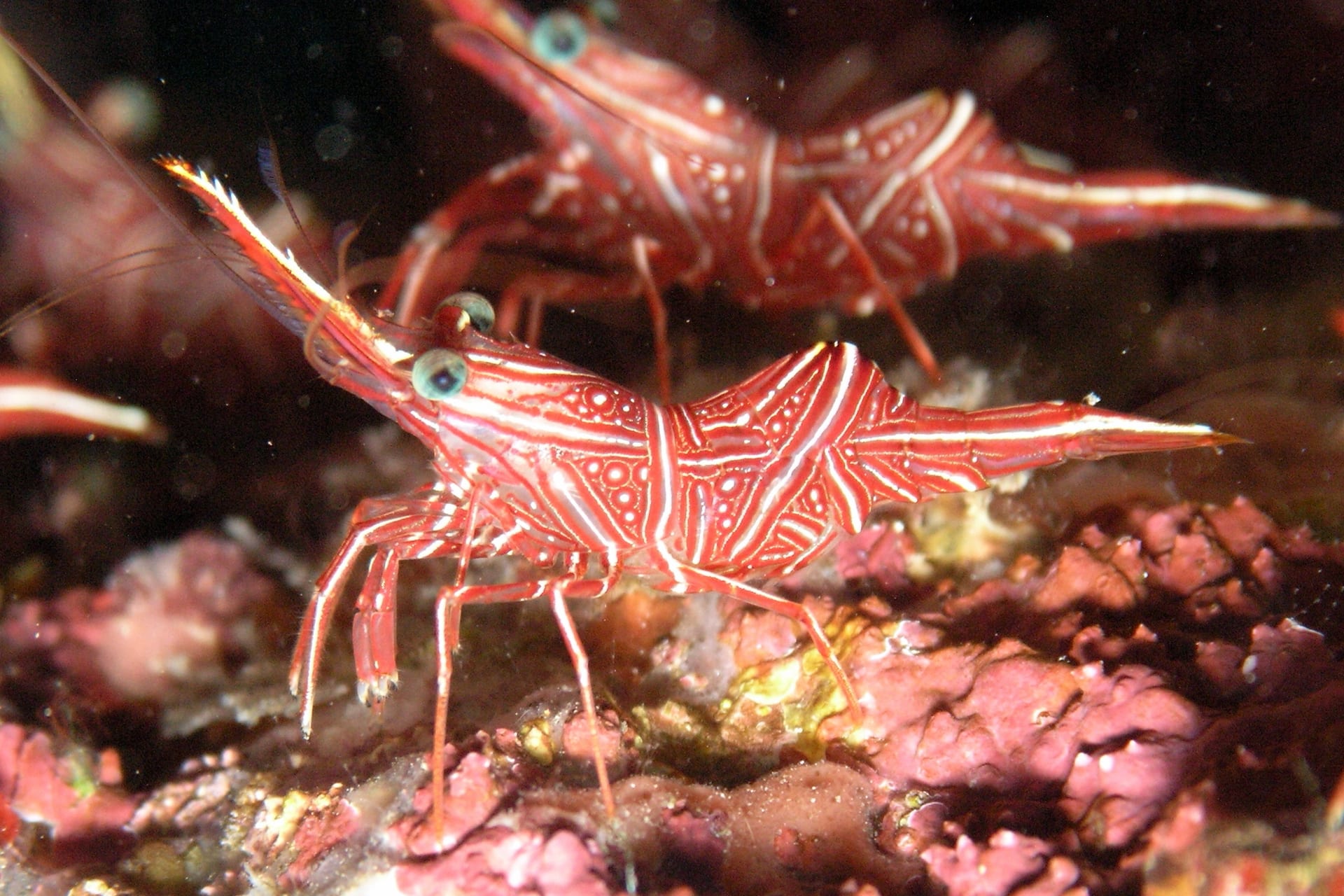
A shrimp with red and white lines and white spots on a translucent body and a hinged, upturned rostrum. It lives in groups of dozens in rock crevices.
Difficulty
Beginner
Temperature
18〜25℃
Lifespan
Little data available
Size
Up to 4 cm (SeaLifeBase)
Diet
Omnivore
About
The camel or hingebeak shrimp (Rhynchocinetes durbanensis) is an Indo-Pacific shrimp (SeaLifeBase) named for its hinged rostrum, which bends upwards. It reaches 4 cm (SeaLifeBase). The translucent body has red and white lines, many white eyespots and a Y-shaped white mark on the front of the carapace. The sexes are clearly different, dominant males having larger first claws. It lives in groups of dozens in hollows and crevices at 5-35 m. It is often confused with R. uritai and similar species, so the trade name alone does not guarantee the species. It is easy to keep, readily eats frozen and prepared foods and lives happily in groups. However, LiveAquaria notes that it may nip colonial anemones (zoanthids), disc corals and soft leather corals, so it is only conditionally reef-safe. It needs hiding places for moulting. In Japan it is a staple shrimp sold by size.
Source: Wikipedia (CC BY-SA 4.0)
Size of the Camel shrimp
The Camel shrimp grows to Up to 4 cm (SeaLifeBase).
Temperature & humidity for the Camel shrimp
The ideal temperature for the Camel shrimp is 18〜25℃.
Basic Info
Origin
Indo-Pacific
Lifespan
Little data available
Size
Up to 4 cm (SeaLifeBase)
Temperature
18〜25℃
Care Specifications
- Water Temp.
- 18–25℃
- Specific Gravity
- 1.023–1.025
PeacefulWith caution
Sources: SeaLifeBase (Rhynchocinetes durbanensis) / LiveAquaria
References & Sources
Edited & verified by: BreederDirect editorial team
The taxonomic, regulatory, and husbandry data on this page are compiled and verified against the authoritative primary sources below.
Taxonomy & Authority
Accepted name: Rhynchocinetes durbanensis Gordon, 1936
Authority databases: WoRMS · GBIF · GBIF · WoRMS · SeaLifeBase
Nomenclature follows global taxonomic authority databases.
Regulations & Conservation Status
Not CITES-listed
Not listed in the CITES Appendices (checked on Species+). Not designated as an Invasive Alien Species under Japanese law. Never release aquarium animals into the sea.
Sources: Species+ (CITES) / Ministry of the Environment: List of Designated Invasive Alien Species / SeaLifeBase
Regulations may change. Always verify the latest information with the relevant authorities.
Camel shrimp Listings
Loading latest listingsFind listings for this species