Source: Wikimedia Commons
Yano's shrimpgoby
BeginnerAmblyeleotris yanoi
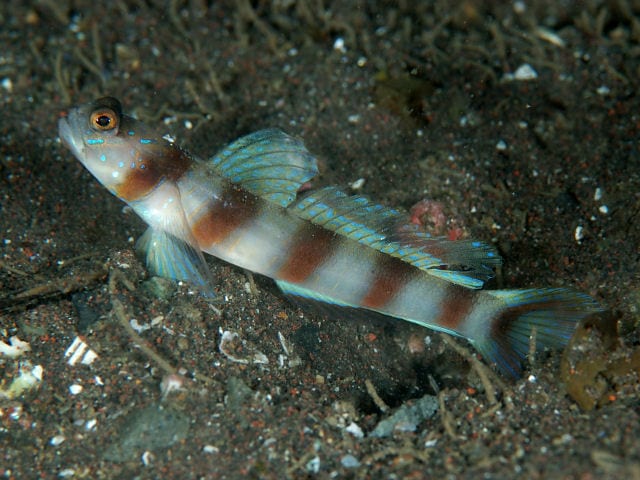
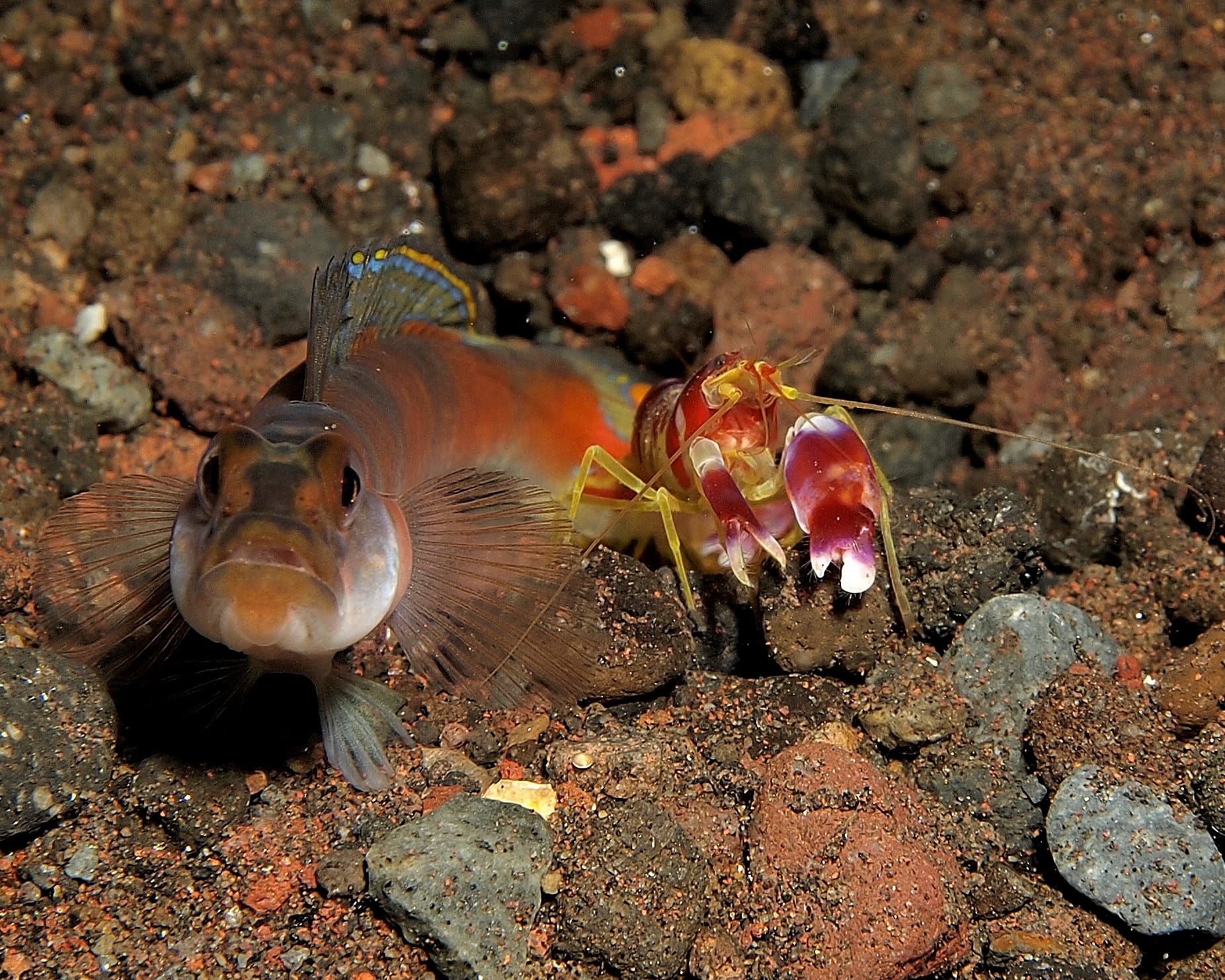
A shrimp goby with orange-brown bars on a whitish body and a yellow tail marked with red-orange and blue bands. It shares a burrow with the red-banded snapping shrimp.
Difficulty
Beginner
Temperature
22〜27℃
Lifespan
Little data available
Size
Up to 13 cm SL (FishBase)
Diet
Carnivore (small benthic invertebrates, zooplankton)
About
Yano's shrimpgoby or flagtail shrimp goby (Amblyeleotris yanoi) ranges through the western Pacific from the Ryukyu Islands to Papua New Guinea (FishBase). It was described as recently as 1996. It reaches 13 cm SL. The body is whitish with five pale orange-brown bars and brown saddles on the back between them; the long, lance-shaped tail is yellow with a reddish-orange centre and oblique blue bands. It lives on coastal sand slopes and in deep lagoons at 3-30 m, sharing a burrow with the red-banded snapping shrimp (Alpheus randalli): the shrimp digs and maintains the burrow while the goby keeps watch at the entrance. In the aquarium, provide a deep bed of coarse sand (2-4 mm) mixed with rubble so a burrow can be built (Saltcorner), and a lid, as it jumps. It readily eats meaty frozen foods and leaves corals alone, but may threaten very small ornamental shrimp. It is a staple shrimp goby in the trade.
Source: Wikipedia (CC BY-SA 4.0)
Size of the Yano's shrimpgoby
The Yano's shrimpgoby grows to Up to 13 cm SL (FishBase).
Temperature & humidity for the Yano's shrimpgoby
The ideal temperature for the Yano's shrimpgoby is 22〜27℃.
Basic Info
Origin
Western Pacific (Ryukyu Islands to Papua New Guinea)
Lifespan
Little data available
Size
Up to 13 cm SL (FishBase)
Temperature
Care Specifications
- Water Temp.
- 22–27℃
- Specific Gravity
- 1.02–1.026
- Min. Tank
- 110 L
PeacefulReef safe
Sources: FishBase (Amblyeleotris yanoi) / Saltcorner Fish Library (Bob Goemans)
References & Sources
Edited & verified by: BreederDirect editorial team
The taxonomic, regulatory, and husbandry data on this page are compiled and verified against the authoritative primary sources below.
Taxonomy & Authority
Regulations & Conservation Status
Not CITES-listedIUCN LC · Least Concern
Not listed in the CITES Appendices (checked on Species+). Not designated as an Invasive Alien Species under Japanese law. It also occurs along the coasts of Japan (southern Japan, the Ryukyu Islands, etc.); collecting in Japan is subject to each prefecture's fisheries adjustment regulations. Never release aquarium animals into the sea.
Sources: Species+ (CITES) / Ministry of the Environment: List of Designated Invasive Alien Species / FishBase
Regulations may change. Always verify the latest information with the relevant authorities.
Yano's shrimpgoby Listings
Loading latest listingsFind listings for this species