Source: Wikimedia Commons
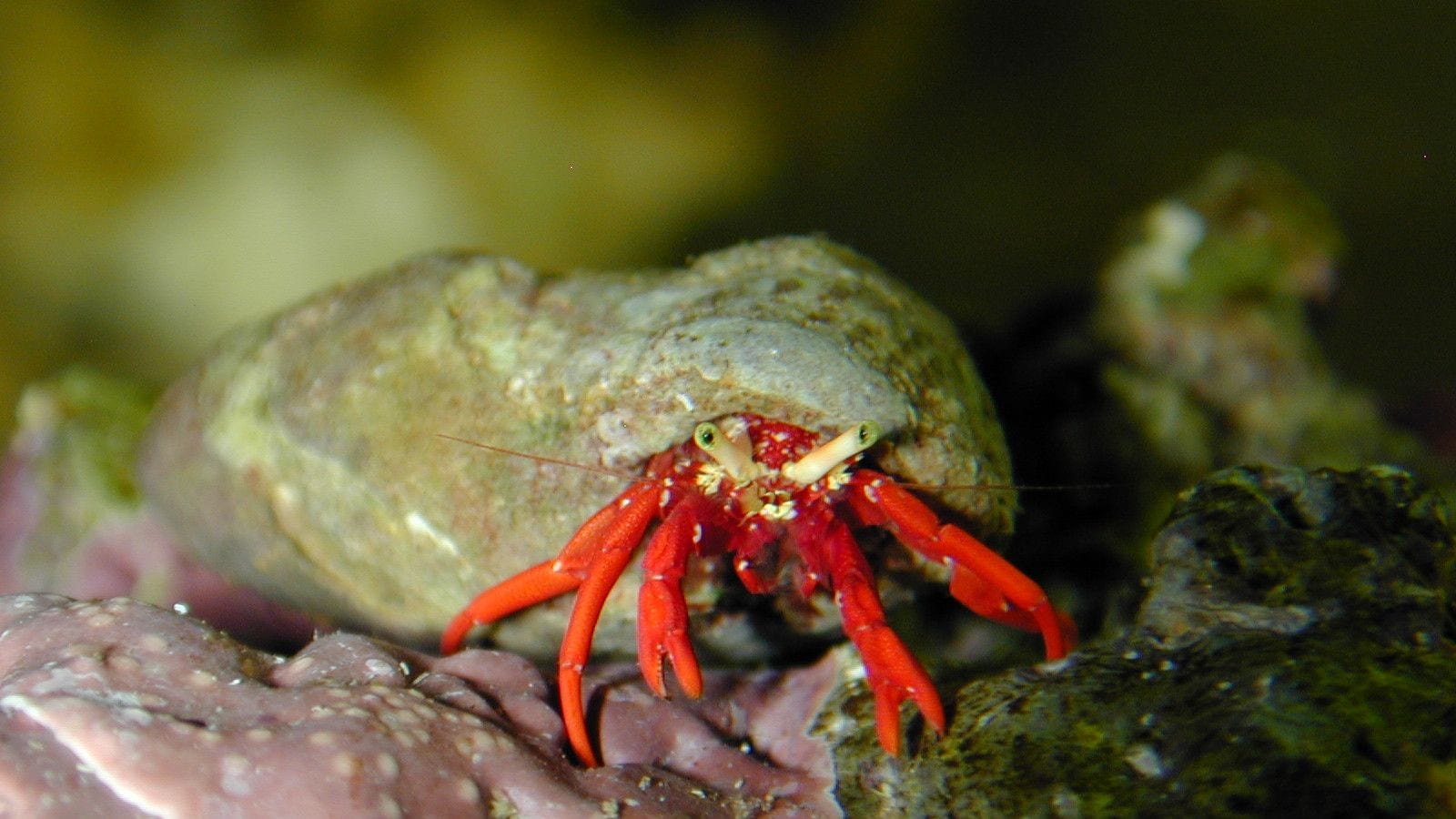
Blue Leg Hermit Crab
BeginnerClibanarius tricolor
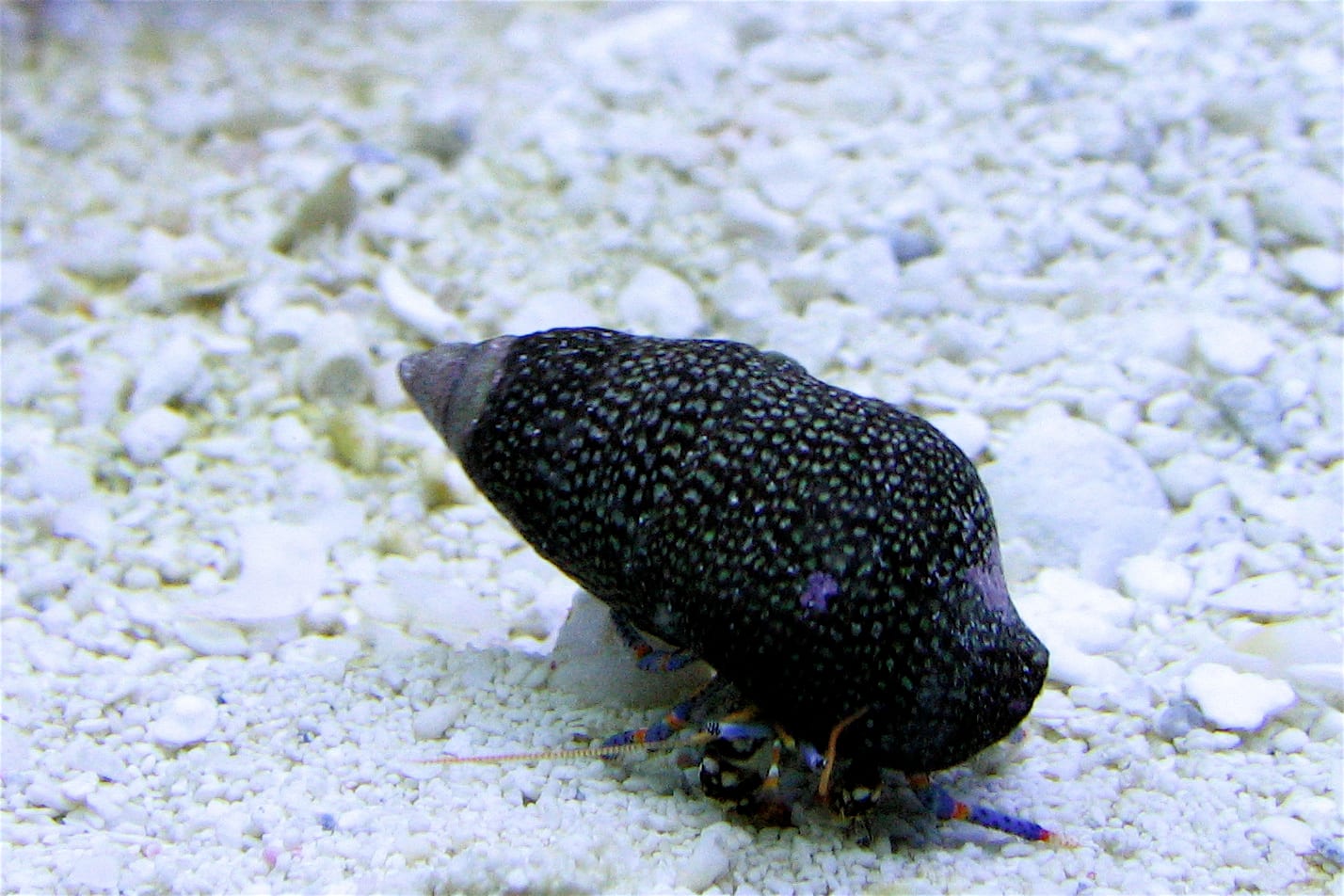
A tiny hermit crab with blue legs banded in orange-red. A staple, easy-to-keep clean-up crew member that eats hair algae and cyanobacteria, but it may attack snails for their shells if empty shells run out.
Difficulty
Beginner
Temperature
22〜26℃
Size
Up to about 2.5cm body length
Diet
Algae, detritus, dried seaweed (omnivore)
About
The blue leg hermit crab (Clibanarius tricolor) is a small diogenid hermit crab of the western Atlantic, centered on the Caribbean, living on shallow rocky bottoms from the intertidal zone to about 3 m. Equal-sized claws are characteristic of the genus. An omnivorous scavenger, it squeezes into the smallest gaps in live rock to eat hair algae, cyanobacteria and detritus, and its digging helps aerate the sand bed, which makes it a staple of reef clean-up crews. It is easy to keep at 22-26 C, pH 8.1-8.4 and specific gravity 1.020-1.025. Being tiny, it is usually stocked in numbers rather than singly in larger tanks. The key to keeping it is shell supply: always provide empty shells of various sizes so it can move up as it grows and molts. When shells or food run short it may attack snails to take their shells. Supplement with dried seaweed if algae becomes scarce. Like other invertebrates it cannot tolerate copper-based medications or sudden swings in water parameters.
Source: Wikipedia (CC BY-SA 4.0)
Size of the Blue Leg Hermit Crab
The Blue Leg Hermit Crab grows to Up to about 2.5cm body length.
Body length reaches about 2.5 cm, with blue legs banded in orange-red.
Temperature & humidity for the Blue Leg Hermit Crab
The ideal temperature for the Blue Leg Hermit Crab is 22〜26℃.
Basic Info
Origin
Intertidal and shallow waters of the western Atlantic and Caribbean
Size
Up to about 2.5cm body length
Care Specifications
- pH
- 8.1–8.4
- Water Temp.
- 22–26℃
- Specific Gravity
- 1.02–1.025
PeacefulReef safeGroup
Sources: LiveAquaria / SeaLifeBase
References & Sources
Edited & verified by: BreederDirect editorial team
The taxonomic, regulatory, and husbandry data on this page are compiled and verified against the authoritative primary sources below.
Taxonomy & Authority
Accepted name: Clibanarius tricolor (Gibbes, 1850)
Authority databases: WoRMS
Nomenclature follows global taxonomic authority databases.
Regulations & Conservation Status
Not CITES-listed
Sources: CITES Appendices (species not listed)
Regulations may change. Always verify the latest information with the relevant authorities.
Blue Leg Hermit Crab Listings
Loading latest listingsFind listings for this species