Source: Wikimedia Commons
Exquisite wrasse
IntermediateCirrhilabrus exquisitus
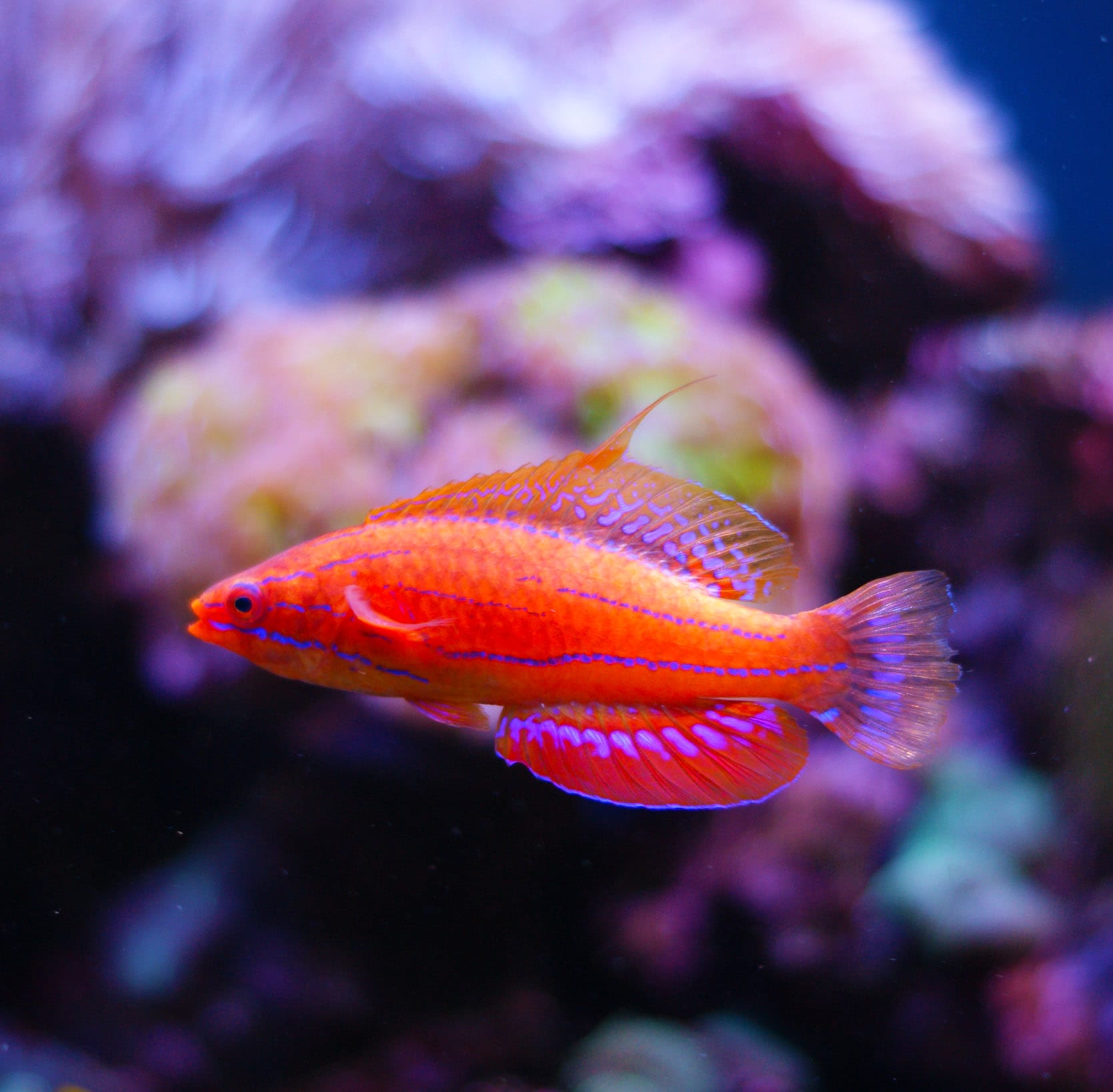
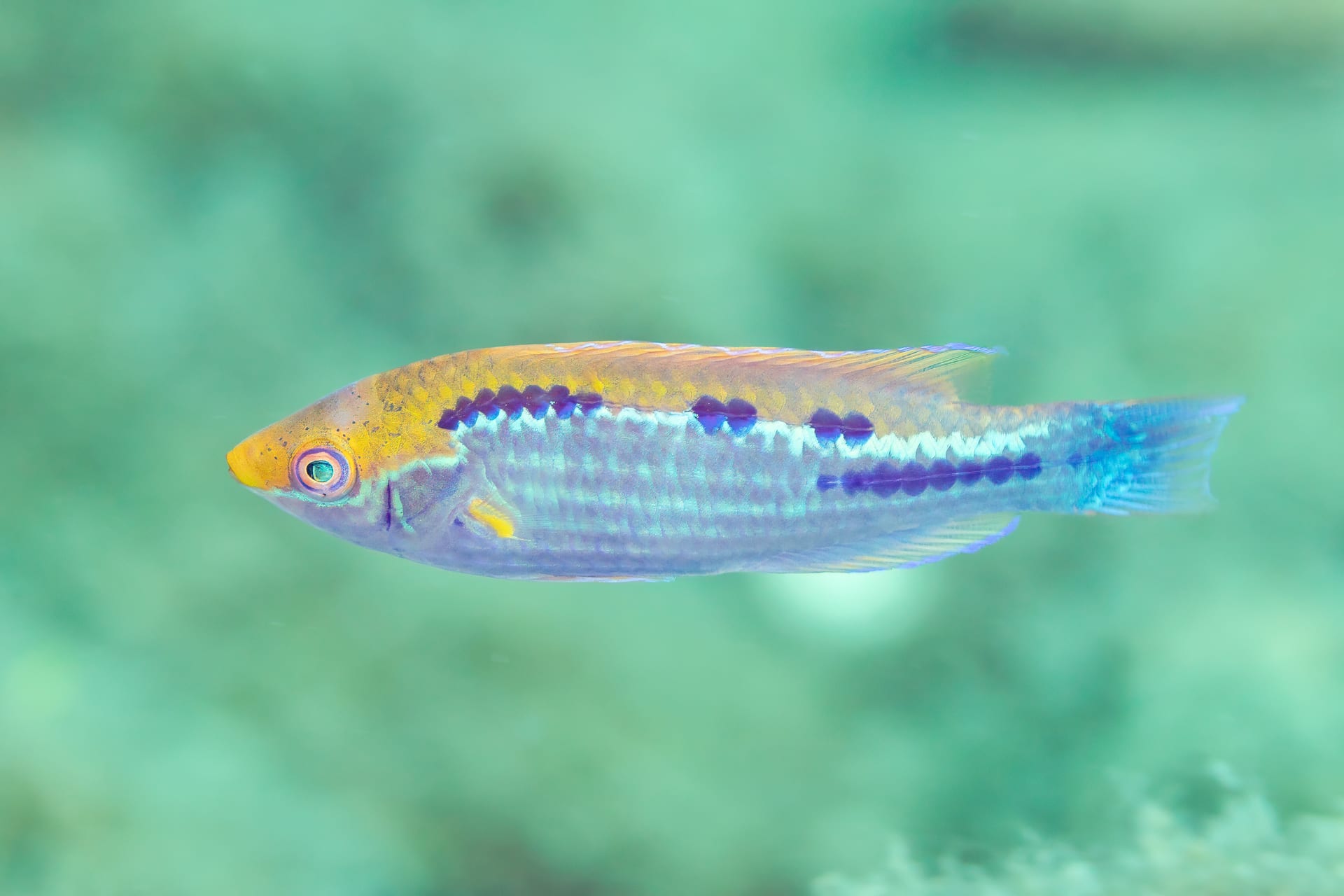
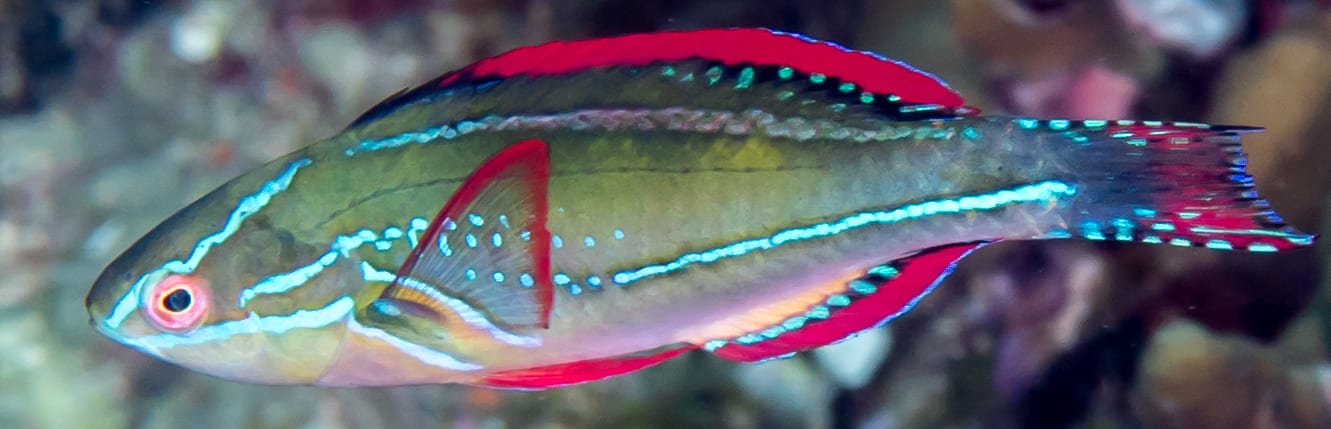
A widespread Indo-Pacific fairy wrasse. Males are green to reddish with blue lines and an oval black spot on the tail base. A reef-safe wrasse that feeds on zooplankton in open water.
Difficulty
Intermediate
Temperature
23〜26℃ (typical for Marine Fish)
Size
Up to 12 cm SL
Diet
Carnivore (zooplankton, frozen mysis and brine shrimp)
About
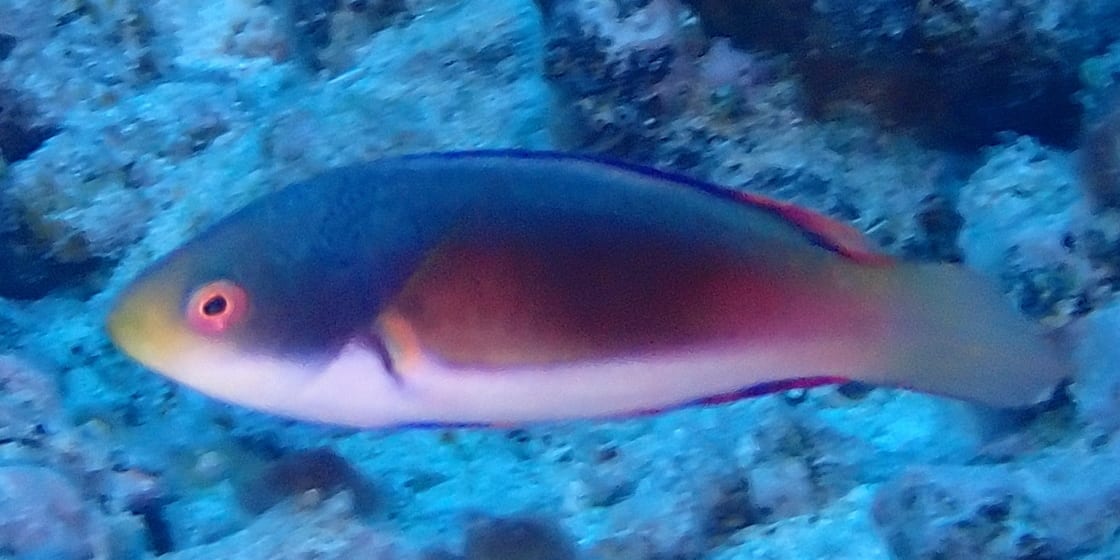
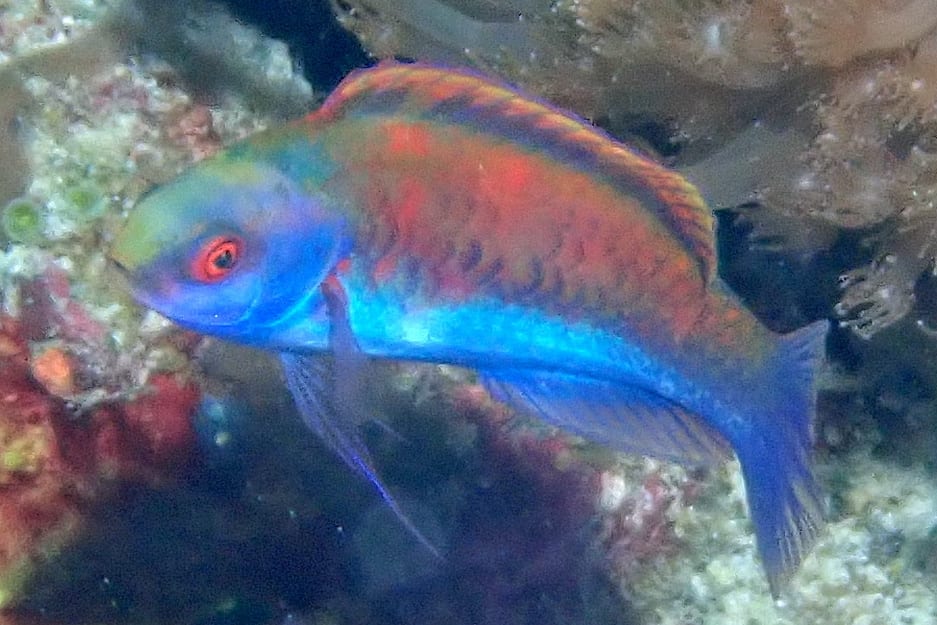
The exquisite wrasse, Cirrhilabrus exquisitus (Japanese standard name nishiki-itohikibera), ranges from East Africa south to Sodwana Bay, across the Indian Ocean to the Tuamotus, north to the Ryukyu Islands and south to the northern Great Barrier Reef (FishBase, Wikipedia). It is the most widespread member of its genus and may prove to be a species complex, with colour varying geographically. It reaches 12 cm SL. Males are olive-green above fading to white, pale blue or pink below, with blue lines on the head and body and an oval black spot on the caudal peduncle; juveniles and small females are reddish. It lives over rubble and low patch reefs in currents, feeding on zooplankton well above the bottom in mixed-sex groups. It is a protogynous hermaphrodite and has not yet been bred in aquaria. It is sold by Japanese marine specialist shops.
Source: Wikipedia (CC BY-SA 4.0)
Size of the Exquisite wrasse
The Exquisite wrasse grows to Up to 12 cm SL.
Basic Info
Origin
Indo-Pacific (East Africa to the Tuamotus; Ryukyu Islands to the northern Great Barrier Reef)
Size
Up to 12 cm SL
Temperature
23〜26℃ (typical for Marine Fish)
Diet
Carnivore (zooplankton, frozen mysis and brine shrimp)
Care Guide
References & Sources
Edited & verified by: BreederDirect editorial team
The taxonomic, regulatory, and husbandry data on this page are compiled and verified against the authoritative primary sources below.
Primary sources
Taxonomy & Authority
Regulations & Conservation Status
Not CITES-listedIUCN DD · Data Deficient
Not listed in the CITES Appendices (checked on Species+). Not a designated invasive alien species in Japan. Listed as Data Deficient (DD) on the IUCN Red List. It also occurs in southern Japan and the Ryukyu Islands; collecting in Japan must follow each prefecture's fisheries adjustment regulations. Never release aquarium fish into the sea.
Sources: Species+ (CITES) / FishBase
Regulations may change. Always verify the latest information with the relevant authorities.
Exquisite wrasse Listings
Loading latest listingsFind listings for this species