Source: Wikimedia Commons
Spotted porcelain crab
BeginnerNeopetrolisthes maculatus
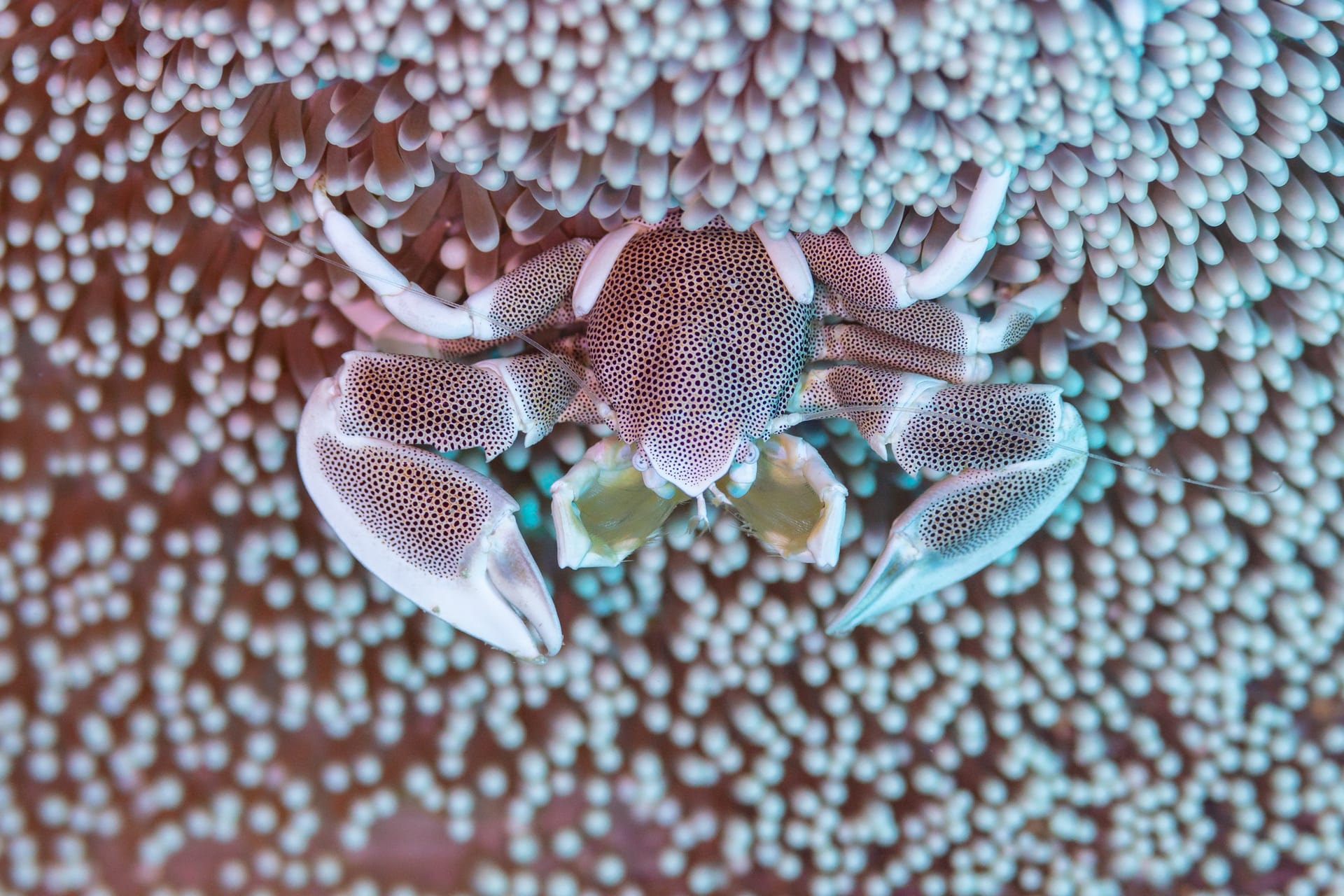
A small crab with a porcelain-like white shell dotted with red spots. It lives among the tentacles of large sea anemones and filters plankton from the water with feathery mouthparts.
Difficulty
Beginner
Temperature
22〜26℃
Lifespan
Little data available
Size
Little data (a small crab a few centimetres across)
Diet
Filter feeder (plankton, host mucus)
About
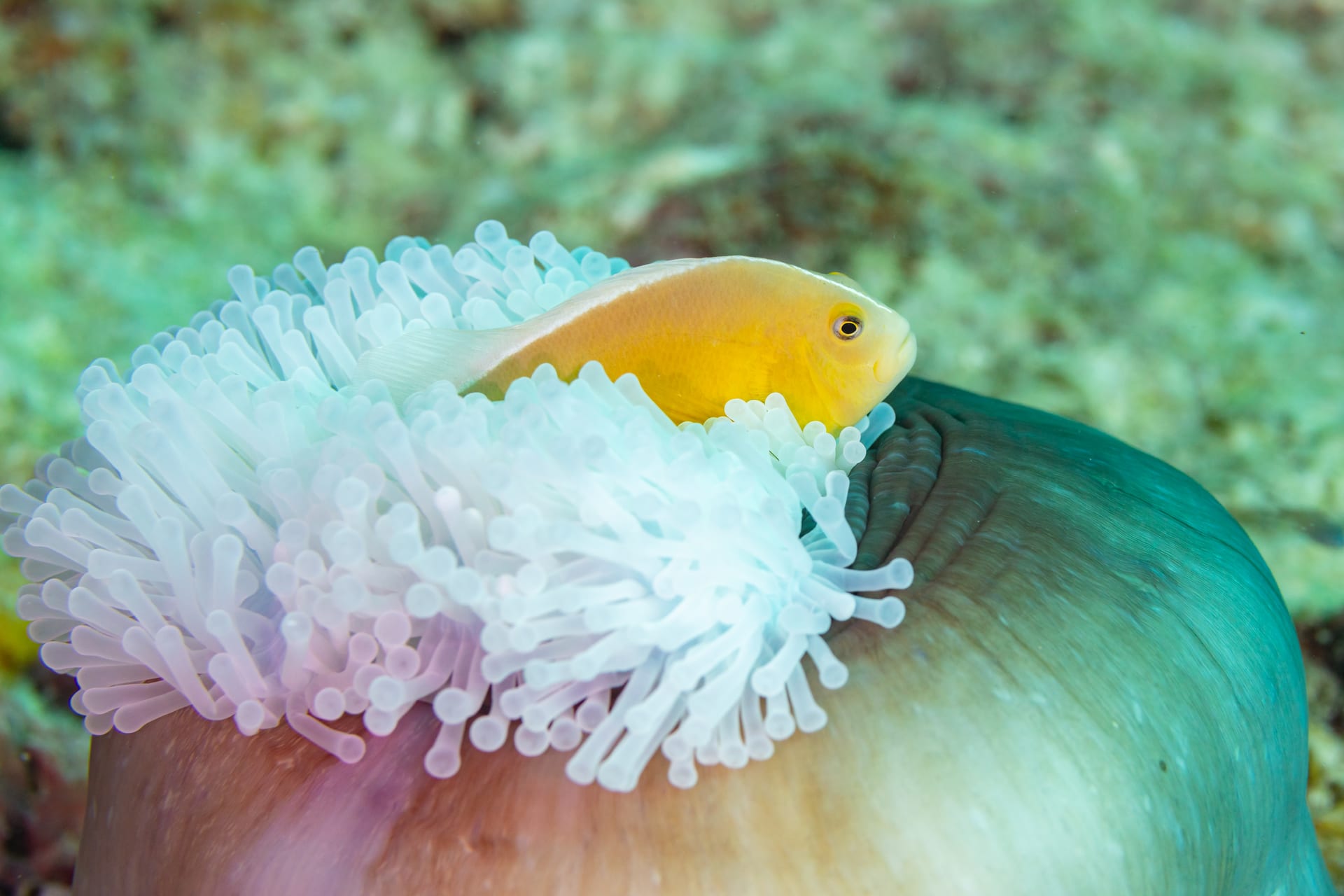
The anemone porcelain crab (Neopetrolisthes maculatus) is an Indo-Pacific porcelain crab found in shallow water at 1-10 m (SeaLifeBase). Despite the name it is not a true crab but a porcellanid, closer to the hermit crabs. Its round, smooth shell looks like porcelain - white with small red spots. It usually lives among the tentacles of large sea anemones, one pair per anemone, and defends its host. The large claws are for defence rather than feeding: it sweeps plankton and small organisms from the water with long bristles on its mouthparts, and also feeds on the host's mucus, though it does not depend on the anemone. N. ohshimai is a synonym and still appears in trade listings. In the aquarium, keeping it with a large host anemone such as a carpet anemone shows its natural behaviour. As a filter feeder, it should be target-fed fine frozen plankton with a pipette. It leaves corals alone but fights with its own kind and with larger crabs. It is a staple anemone-dwelling crab in the Japanese trade.
Source: Wikipedia (CC BY-SA 4.0)
Temperature & humidity for the Spotted porcelain crab
The ideal temperature for the Spotted porcelain crab is 22〜26℃.
Basic Info
Origin
Indo-Pacific
Lifespan
Little data available
Size
Little data (a small crab a few centimetres across)
Temperature
22〜26℃
Diet
Care Specifications
- Water Temp.
- 22–26℃
- Specific Gravity
- 1.023–1.025
PeacefulWith caution
Sources: SeaLifeBase (Neopetrolisthes maculatus) / LiveAquaria
References & Sources
Edited & verified by: BreederDirect editorial team
The taxonomic, regulatory, and husbandry data on this page are compiled and verified against the authoritative primary sources below.
Taxonomy & Authority
Accepted name: Neopetrolisthes maculatus (H. Milne Edwards, 1837)
Synonyms: Neopetrolisthes ohshimai Miyake, 1937, Petrolisthes ohshimai (Miyake, 1937), Porcellana maculata H. Milne Edwards, 1837
Authority databases: WoRMS · GBIF · GBIF · WoRMS · SeaLifeBase
Nomenclature follows global taxonomic authority databases.
Regulations & Conservation Status
Not CITES-listed
Not listed in the CITES Appendices (checked on Species+). Not designated as an Invasive Alien Species under Japanese law. Never release aquarium animals into the sea.
Sources: Species+ (CITES) / Ministry of the Environment: List of Designated Invasive Alien Species / SeaLifeBase
Regulations may change. Always verify the latest information with the relevant authorities.
Spotted porcelain crab Listings
Loading latest listingsFind listings for this species