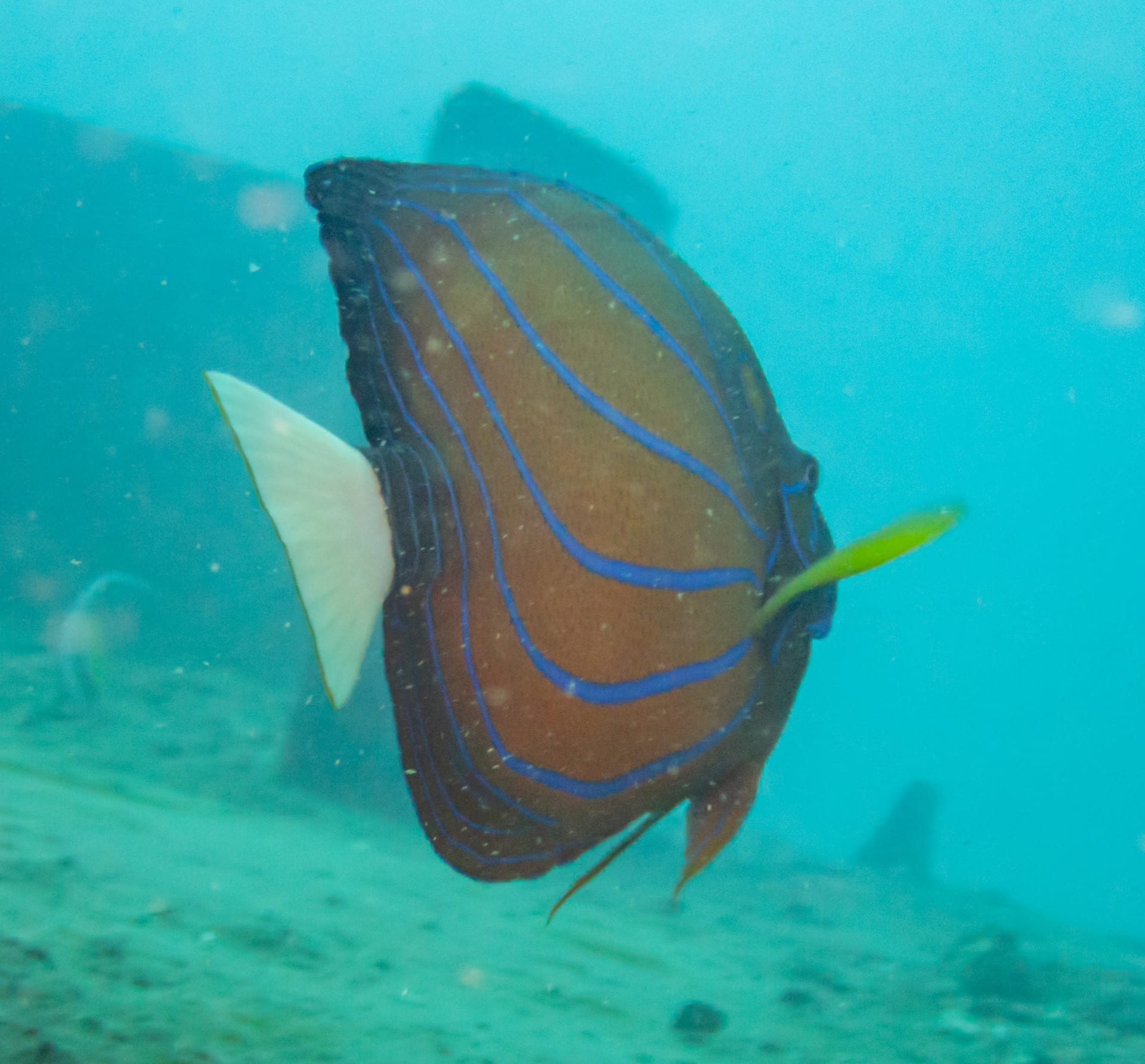
Source: Wikimedia Commons
Sixbar angelfish
IntermediatePomacanthus sexstriatus
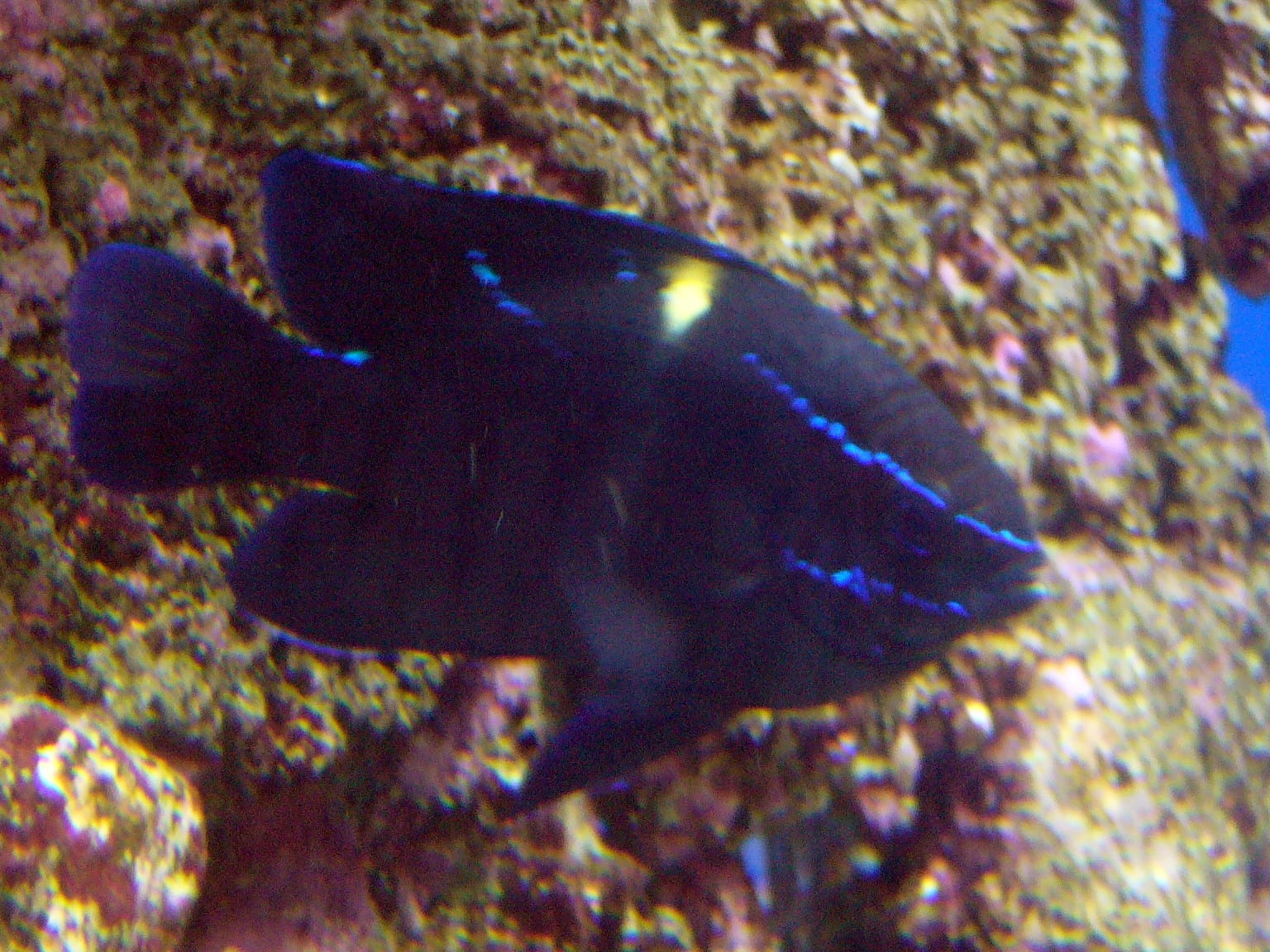
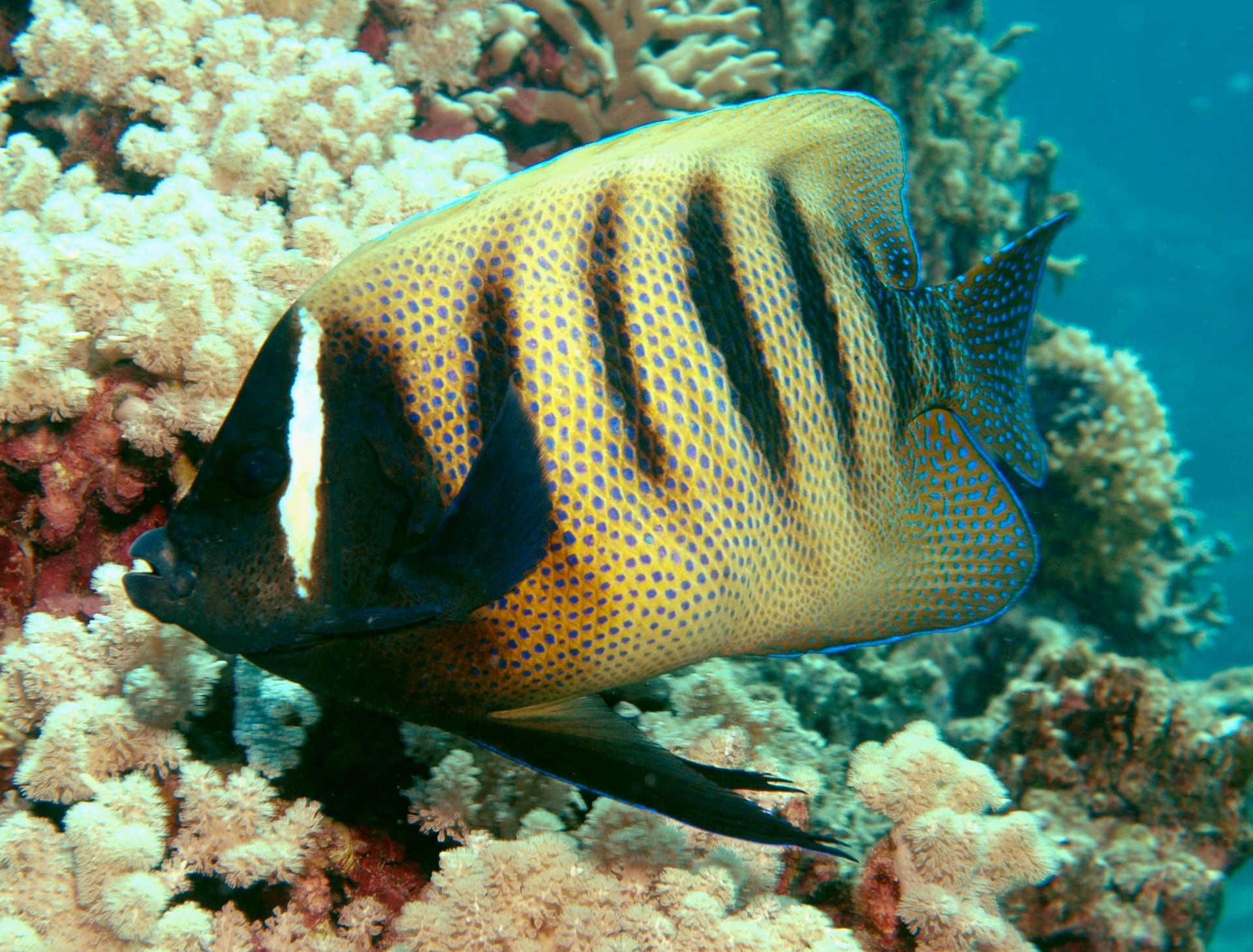
A large angelfish with a yellowish-brown body crossed by dark bars and a single white bar behind the head, dotted all over with small blue spots. Juveniles are blue-black with white bars.
Difficulty
Intermediate
Temperature
22〜27℃
Lifespan
Little data available
Size
Up to 46 cm TL (FishBase)
Diet
Omnivore (sponges, tunicates, algae)
About
The sixbar angelfish (Pomacanthus sexstriatus) ranges across the Indo-Pacific from the Ryukyu Islands to Malaysia, Indonesia and the Solomon Islands, south to Australia (FishBase), and reaches 46 cm TL. Adults are yellowish brown with dark bars, a single white bar just behind the head and small blue spots over the body and fins; juveniles are blue-black with white bars and change colour as they grow. Juveniles live on sheltered inner reefs and adults on coral-rich reefs with high relief, usually in pairs; they grunt loudly when disturbed. The diet is sponges, tunicates and algae. FishBase notes that only juveniles make good aquarium fish, and raising one to adult size calls for about 680 L (180 gallons) or more (Saltcorner). Feed sponge-containing angelfish foods, frozen foods and algae-based foods several times a day. Adults nip corals and clams, so it is not reef-safe. In Japan it is sold at sizes from juvenile to adult.
Source: Wikipedia (CC BY-SA 4.0)
Size of the Sixbar angelfish
The Sixbar angelfish grows to Up to 46 cm TL (FishBase).
Temperature & humidity for the Sixbar angelfish
The ideal temperature for the Sixbar angelfish is 22〜27℃.
Basic Info
Origin
Indo-Pacific (Ryukyu Islands to Malaysia, Indonesia and the Solomon Islands, south to Australia)
Lifespan
Little data available
Size
Up to 46 cm TL (FishBase)
Care Specifications
- Water Temp.
- 22–27℃
- Specific Gravity
- 1.02
- Min. Tank
- 680 L
Semi-aggressiveNot reef safe
Sources: FishBase (Pomacanthus sexstriatus) / Saltcorner Fish Library (Bob Goemans)
References & Sources
Edited & verified by: BreederDirect editorial team
The taxonomic, regulatory, and husbandry data on this page are compiled and verified against the authoritative primary sources below.
Taxonomy & Authority
Regulations & Conservation Status
Not CITES-listedIUCN LC · Least Concern
Not listed in the CITES Appendices (checked on Species+). Not designated as an Invasive Alien Species under Japanese law. Never release aquarium animals into the sea.
Sources: Species+ (CITES) / Ministry of the Environment: List of Designated Invasive Alien Species / FishBase
Regulations may change. Always verify the latest information with the relevant authorities.
Sixbar angelfish Listings
Loading latest listingsFind listings for this species