 © Rickard Zerpe / CC BY 2.0
Blacktail dascyllus
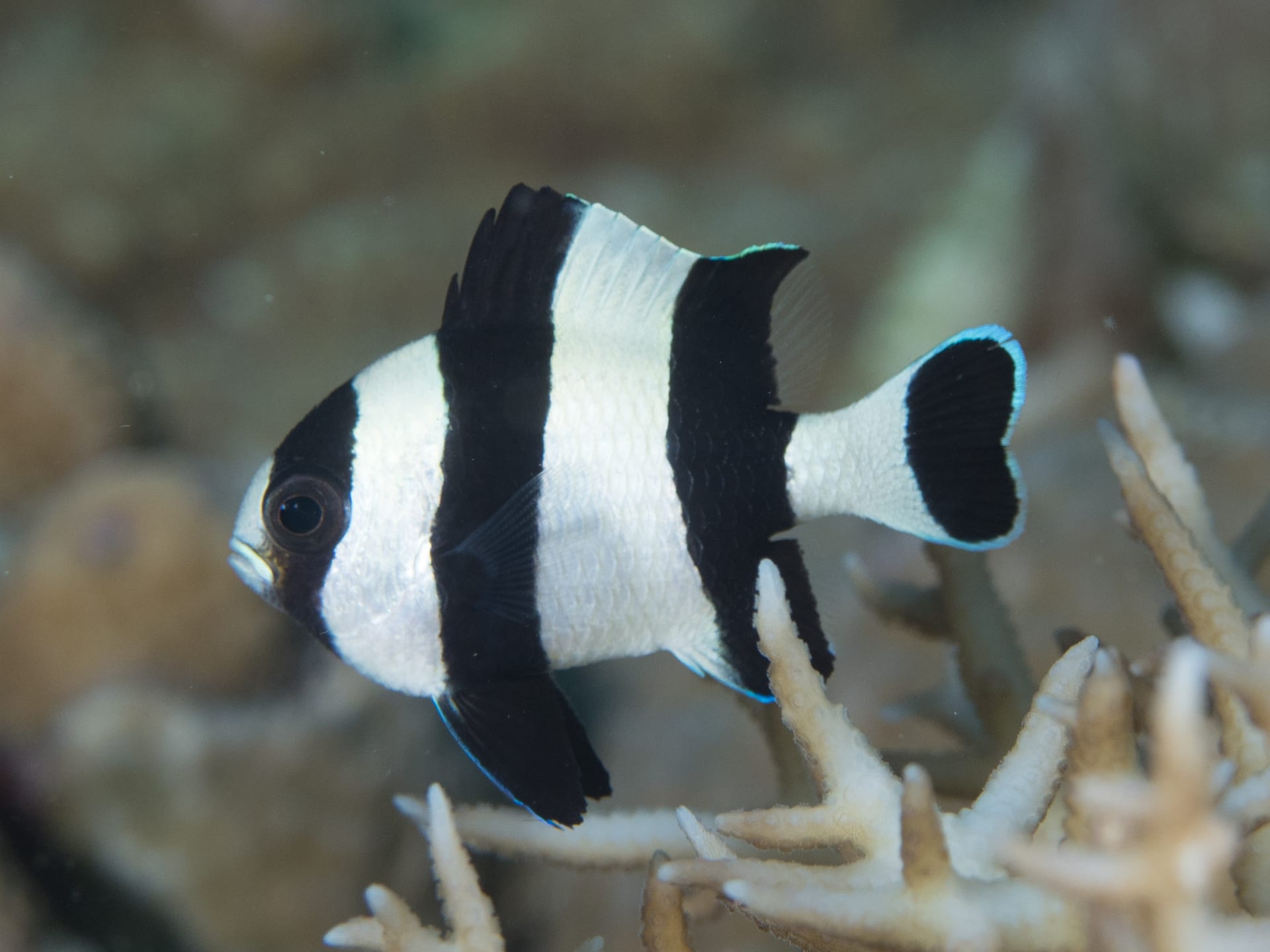
The Blacktail dascyllus is a small damselfish with three black bars across a white body and a tail whose outer two-thirds turns black. It grows to a total length of up to 8 cm, and its sharp black-and-white contrast is a large part of its appeal. Its care difficulty is rated as beginner-friendly. You can tell it apart from the similar Three-stripe damselfish by its black tail. It becomes more assertive as it grows, so plan tank mates and layout ahead of time. Reliable information on its lifespan is limited.
View Blacktail dascyllus encyclopedia →0% commission on your first sales!Register by September 30, 2026 and your first 2 sales are commission-free!
Breeder Wanted!
List on BreederDirect and sell directly to customers nationwide!
BreederDirect's 6 Transparency Promises
Every Marine Fish listing shows Breeder's full disclosure. No wild-caught. Captive-bred priority, tank size guidance, temperament details—transparent aquaculture.
- Captive-bred
- WYSIWYG
- Reef-safe
- Care Info Included
- Origin Disclosed
- Temperament Listed
Browse all 215 breeds
Care Difficulty
Reef-safe
Temperament
No listings match your filters
Adjust your filters, or get notified when new listings arrive.
Getting alerts is free with a member account. When new listings match your saved search, we'll notify you by email and in-app.
Browse other categories
Verified breeders (preview)

Are you raising marine fish?
Register as a breeder and connect with buyers directly.
Apply as a breederBlacktail dascyllus key facts
- Care level
- Beginner-friendly
- Lifespan
- Little data available
- Size
- Up to 8 cm TL (FishBase)
- Temperature
- 23〜28℃
- Diet
- Omnivore (zooplankton and algae)
- Water Temperature & Quality
- 23-28°C, specific gravity 1.020-1.026 (Saltcorner).
- Container & Tank
- About 110 L (30 gallons) or more, with branching coral or rockwork for cover.
- Tank Mates & Compatibility
- It becomes feisty as it matures and harasses peaceful fish, so pair it with robust tankmates.
- Reef Compatibility
- Leaves corals and invertebrates alone; reef-safe.
- Diet & Feeding
- Feed frozen brine shrimp and mysis, prepared foods and spirulina-based foods several times a day.
- Health & Cautions
- Easily confused with the humbug damselfish, which has a white tail; this species has a black outer tail.
About Blacktail dascyllus
The Blacktail dascyllus is a small damselfish with three black bars on a white body and a black-tinged tail. It reaches up to 8 cm in total length and is rated beginner-friendly.
7 things to know before welcoming a Blacktail dascyllus
1Spot the black tail
This fish has three black bars on a white body, and the outer two-thirds of its tail fin is black. That black tail is what separates it from the similar Three-stripe damselfish. Check the tail color in the photos and description before you commit, so you don't mix the two up.
2Gets bolder with age
It stays small, at up to 8 cm in total length, but it becomes more assertive as it grows. Don't judge it by how a young fish behaves; plan for the adult it will become. How bold it gets can vary from one individual to another.
3Choose tank mates well
Because it tends to become assertive, think carefully before housing it with timid or gentle small fish. Add new fish gradually rather than all at once, and watch for chasing so you can step in early if needed.
4Hiding spots and space
Provide both hiding places, such as a rockwork arrangement, and open space to swim, so the fish can settle in comfortably. Having spots where other fish can retreat from a bolder individual also helps reduce stress for its tank mates.
5Stable water, slow acclimation
Its care difficulty is rated beginner-friendly, but as a marine fish it still depends on stable water quality and temperature. Acclimate it carefully, and if you have the space, observe it in a separate container before moving it to the main tank to lower the risk of bringing problems into your established system.
6Watch feeding daily
After bringing it home, check every day that it is eating and that its color and movement look normal. If you notice a drop in appetite or changes on the body surface, first check the water quality and how it gets along with its tank mates, and ask the seller or an experienced keeper if you are unsure.
7Lifespan data is limited
There is little consolidated information on its lifespan, so we can't give a reliable estimate. Set up an environment where you can keep up good water management before bringing one home, on the assumption that you will keep it for a long time. Asking the seller about the fish's care history beforehand can also help with its ongoing care.
Frequently asked questions about Blacktail dascyllus
- Q.Can beginners keep a Blacktail dascyllus?
- A.Its care difficulty is rated as beginner-friendly. Since it becomes more assertive as it grows, it helps to plan tank mates and the tank layout in advance.
- Q.How is it different from the Three-stripe damselfish?
- A.The two look alike, but the Blacktail dascyllus can be identified by the black outer two-thirds of its tail fin. Check the tail color when choosing a fish.
- Q.How large does it grow?
- A.Its total length is up to 8 cm according to FishBase. It is small, but keep in mind that it becomes more assertive as it grows.
- Q.Can it live with other fish?
- A.Because it becomes more assertive as it grows, tank mates need to be chosen with care. Think especially hard about pairing it with gentle or timid fish, and introduce tank mates gradually while watching how they interact.
- Q.How long does it live?
- A.There is little information on its lifespan, so a clear number isn't available. To enjoy it for as long as possible, keep the water quality stable and observe it every day.
Useful tools for Blacktail dascyllus care
Learn more about Blacktail dascyllus in the encyclopedia
View Blacktail dascyllus encyclopedia entry →
Care difficulty, lifespan, size and diet — all basics covered.
More in this category
Can't find the one you're looking for?
Post your wishes for free and breeders with matching animals will contact you with introductions.