 © Rickard Zerpe / CC BY 2.0
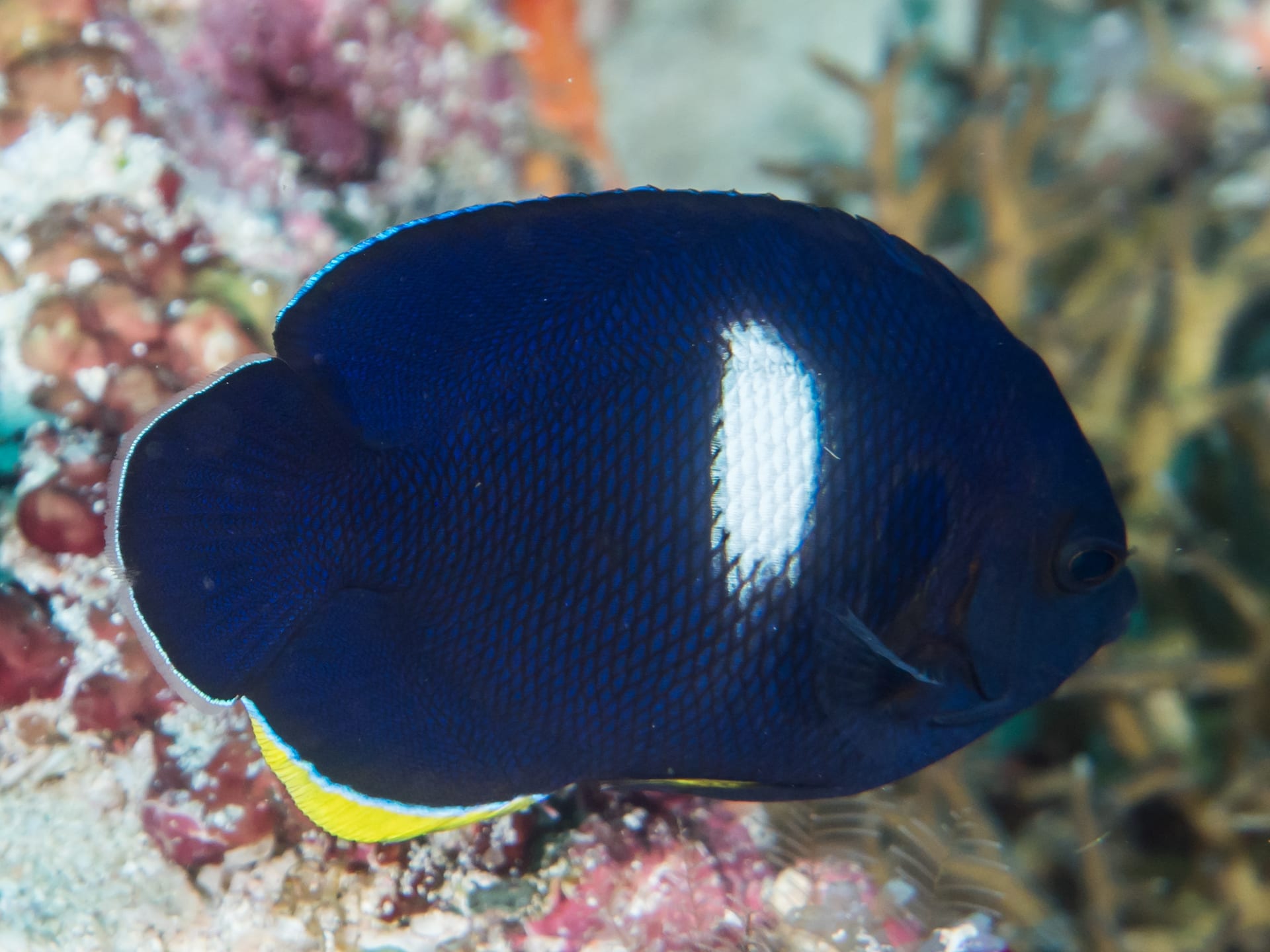
Keyhole Angelfish
The Keyhole Angelfish is a small marine angelfish known for the white keyhole-shaped patch at the center of its black to dark-blue body. A touch of yellow along the lower pelvic and anal fins adds a subtle accent to its otherwise understated coloring. Among Centropyge-type dwarf angelfish, it ranks among the larger species, with some individuals reaching around 19cm. It's also found along the coasts of southern Japan, giving it a familiar presence among local marine aquarists. Its temperament is semi-aggressive and it may nip at corals, but it is known for its hardiness and has long been a popular choice for intermediate keepers who appreciate quiet, understated beauty over flashy color.
View Keyhole Angelfish encyclopedia →Breeder Wanted!
List on BreederDirect and sell directly to customers nationwide!
BreederDirect's 6 Transparency Commitments
Every Marine Fish listing shows Breeder's full disclosure. No wild-caught. Captive-bred priority, tank size guidance, temperament details—transparent aquaculture.
- Captive-bred
- WYSIWYG
- Reef-safe
- Care Info Included
- Origin Disclosed
- Temperament Listed
Browse all 215 breeds
Care Difficulty
Reef-safe
Temperament
No listings match your filters
Adjust your filters, or get notified when new listings arrive.
Getting alerts is free with a member account. When new listings match your saved search, we'll notify you by email and in-app.
Browse other categories
Verified breeders (preview)
Are you raising marine fish?
Register as a breeder and connect with buyers directly.
Apply as a breederKeyhole Angelfish key facts
- Care level
- Intermediate
- Lifespan
- 5-10 years
- Size
- Up to about 19cm
- Temperature
- 22〜26℃
- Diet
- Marine algae and spirulina, angelfish pellets, frozen mysis and shrimp
- Notes
- Tolerates ionic copper medication poorly; use copper-free treatments where possible.
- Container & Tank
- 265L or larger with plenty of live rock for hiding and grazing.
- Water Temperature & Quality
- 22-26C, pH 8.1-8.4, SG 1.020-1.025.
- Diet & Feeding
- Feed marine algae, spirulina, angelfish preparations and frozen mysis or shrimp 2-3 times daily; also grazes filamentous algae and diatoms.
- Tank Mates & Compatibility
- Semi-aggressive; may nip corals and clam mantles. Avoid other dwarf angels.
About Keyhole Angelfish
The Keyhole Angelfish has a dark body with a white keyhole-shaped marking and yellow-tinged lower fins. Growing up to about 19cm, it's one of the largest Centropyge angelfish and a hardy pick for intermediate marine aquarists.
7 things to know before welcoming a Keyhole Angelfish
1Compatibility with Tankmates
Keyhole Angelfish are semi-aggressive, so it's safest to avoid keeping them with other small angelfish. They may also nip at hard corals, soft corals, and the mantle of giant clams, so take care in reef tanks. Give tankmates a roomy tank and watch how they get along when choosing combinations.
2Tank Size and Hiding Spots
Since they can grow to around 19cm, plan for a tank that comfortably suits their adult size. Adding rockwork with crevices gives them a place to retreat, helping them settle in and feel secure.
3Feeding Preferences
In the wild they feed mainly on algae, and in the aquarium most accept seaweed, spirulina, angelfish formula foods, and frozen daphnia or shrimp. They also graze on filamentous algae and diatoms growing on live rock. Newly introduced fish can be picky at first, so offering a few different food types can help them settle in.
4Water Quality Care
As with most marine fish, sudden shifts in temperature, salinity, or pH can be stressful. Take extra care with acclimation when introducing a new fish, and keep water parameters stable for long-term health.
5Health and Quarantine
Like many angelfish, they can be susceptible to issues such as white spot disease. A quarantine period to observe a new fish before adding it to the main tank can help catch problems early.
6Hardy and Easy to Keep for Intermediate Aquarists
Keyhole Angelfish are known for being a relatively hardy species, making them approachable for aquarists with some marine fishkeeping experience. Even so, hardiness is no substitute for regular observation and consistent care.
7Subtle, Understated Beauty
Rather than bold colors, this fish offers a quieter appeal: a dark body accented by a white keyhole marking and touches of yellow. It's a great fit for anyone building a tank with a more refined, understated look.
Frequently asked questions about Keyhole Angelfish
- Q.How big does the Keyhole Angelfish get?
- A.It can grow to around 19cm at maximum, making it one of the larger species among Centropyge-type dwarf angelfish. Since growth varies by individual, it's wise to plan tank size around its adult potential.
- Q.Is the Keyhole Angelfish suitable for beginners?
- A.It's generally considered a good fit for intermediate keepers rather than complete beginners, thanks to its hardiness. Some prior experience with water quality management and feeding routines will help you keep it successfully.
- Q.Can it be kept with other fish?
- A.It is semi-aggressive, so avoid keeping it with other small angelfish. It may also nip at corals and the mantle of giant clams, so take care in reef tanks. Give tankmates plenty of space and monitor interactions closely when combining fish.
- Q.What does it eat?
- A.It feeds mainly on algae, and most individuals accept seaweed, spirulina, angelfish formula foods, and frozen daphnia or shrimp. Newly introduced fish may be picky at first, so having a variety of food options on hand can help.
- Q.Where does the Keyhole Angelfish live?
- A.It's found along the coasts of southern Japan, making it a familiar species in Japanese waters. Its hardiness also helps it adapt well to aquarium conditions.
Useful tools for Keyhole Angelfish care
Learn more about Keyhole Angelfish in the encyclopedia
View Keyhole Angelfish encyclopedia entry →
Care difficulty, lifespan, size and diet — all basics covered.
More in this category
Can't find the one you're looking for?
Post your wishes for free and breeders with matching animals will contact you with introductions.