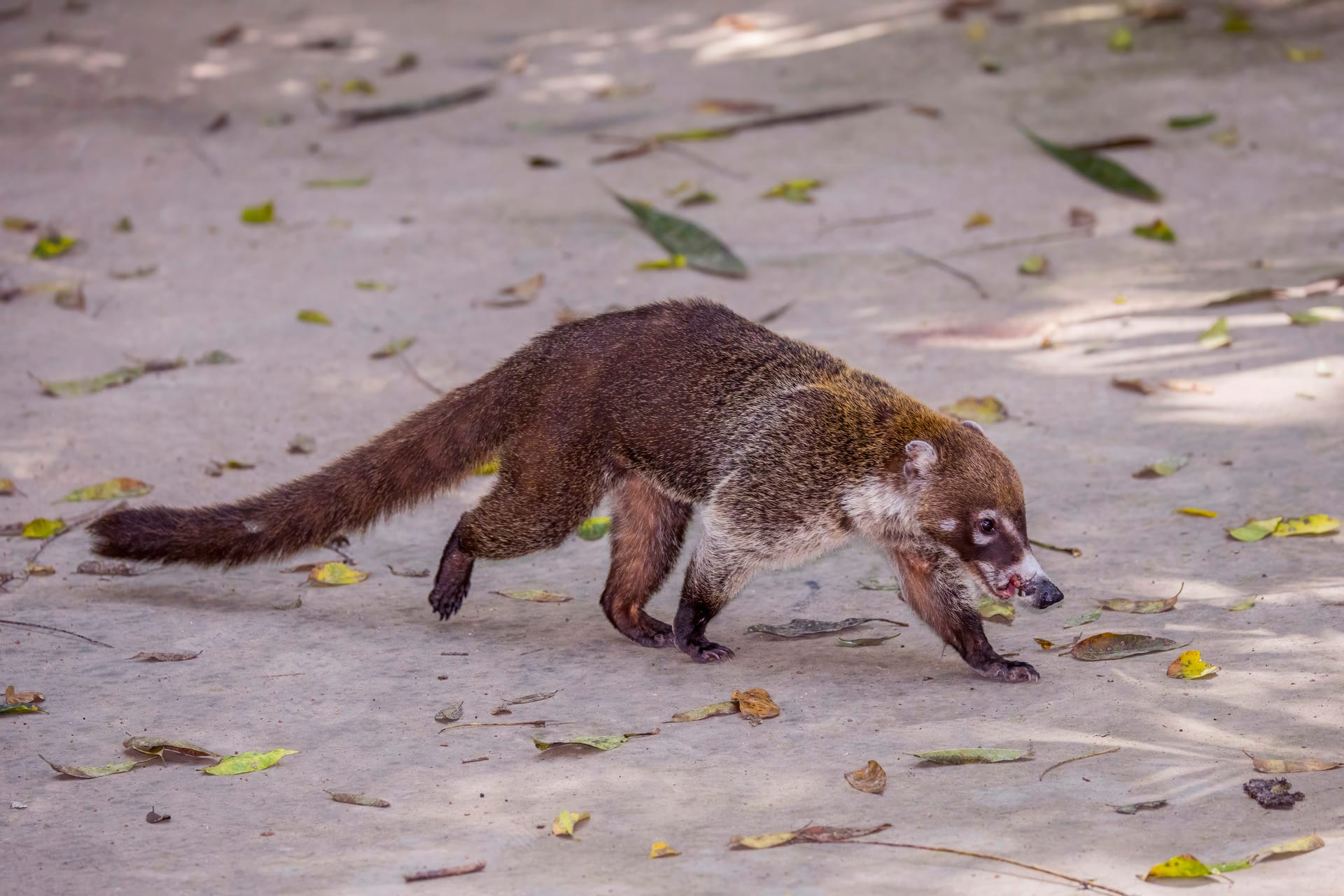
 © Charles J. Sharp / CC BY-SA 4.0
White-nosed Coati
The white-nosed coati is a member of the raccoon family, recognizable by the white band at the tip of its long, constantly moving snout. It walks with its black-ringed tail held upright, and that tail makes up more than half of a total length of 80 to 130 cm. Adults weigh 3 to 5 kg. Coatis are active by day, curious, and eat almost anything, with insects at the center of the diet. In the wild, females and young animals form groups. Care is rated for experienced keepers, and the captive lifespan averages about 14 years, so this is a long commitment.
View White-nosed Coati encyclopedia →Breeder Wanted!
List on BreederDirect and sell directly to customers nationwide!
BreederDirect's 6 Transparency Commitments
Every Small Pets listing from Breeder includes the information below. We guarantee transparency through health checks, vaccinations, microchips, and more.
- Hand-Tamed
- Health Checked
- Vaccinated
- Microchipped
- Real Photos
- Age Specified
Browse all 168 breeds
Care Difficulty
Verified breeders wanted for Small Pets
Breeders are signing up now ahead of launch. Subscribe to be notified when new listings go live.
Getting alerts is free with a member account. When new listings match your saved search, we'll notify you by email and in-app.
Browse other categories
Verified breeders (preview)

Are you raising small pets?
Register as a breeder and connect with buyers directly.
Apply as a breederWhite-nosed Coati key facts
- Care level
- Advanced
- Lifespan
- About 14 years on average in captivity (some into their late teens)
- Size
- 80–130cm including tail (over half is tail); 3–5kg
- Diet
- Omnivore: mainly insects and other invertebrates, plus fruit
- Housing
- It digs with snout and claws by day and sleeps in trees at night. It needs a large, strong enclosure with branches, shelves and a sleeping box; it is dexterous and strong, so secure doors and mesh against escape.
- Diet
- Wild coatis eat beetles, spiders, termites and grubs, plus fruit and sometimes small vertebrates. Feed insects with fruit and plan the diet with an exotic-animal vet.
- Temperament
- Females and young live in bands, but males are solitary and fight other males. As carnivorans with sharp teeth, adults can inflict serious bites.
- Odour
- Males mark with urine and by dragging their belly to spread anal-gland secretions. Indoors this means odour control and frequent cleaning.
- Regulations
- Listed in CITES Appendix III by Honduras; imports fall under the animal import notification system. Not a specified animal in Japan.
- Notes
- It lives over 10 years and few vets treat it. In the United States, escaped pets have been found in the wild. Never release captive animals into the wild.
About White-nosed Coati
Meet the white-nosed coati: a diurnal raccoon relative, 80–130 cm with tail and 3–5 kg, rated for experienced keepers and living about 14 years in captivity on average.
7 things to know before welcoming a White-nosed Coati
1For Experienced Keepers
Care is rated for experienced keepers. Coatis are curious, active, and physically strong, so they are better considered by people with prior animal-keeping experience who have done thorough research first.
280–130 cm with the Tail
Total length is 80 to 130 cm including the tail, which makes up more than half of that. Weight is 3 to 5 kg, and because coatis move around actively, plan for height as well as floor space.
3Active in the Daytime
Coatis are diurnal and spend much of the day probing with their snouts, digging with their forepaws, and roaming. An environment that lets them act on these instincts helps reduce boredom and stress.
4An Omnivorous Diet
Coatis are omnivores that eat almost anything, with insects at the center of the diet. Offer a varied menu to avoid imbalances, and ask an experienced vet or keeper if you are unsure about amounts or combinations.
5Groups and Solitary Males
In the wild, females and young animals form groups, while mature males typically live alone. If you are thinking of keeping more than one, ask the seller about compatibility and pairings before you bring any home.
6Dexterous and Escape-Prone
With nimble forepaws and sharp claws, coatis fiddle with latches and dig up whatever they can reach. Secure locks and sturdy fittings are essential to prevent escapes and damage. Bites and scratches are also possible, so handling calls for care.
7A Long-Term Commitment
The captive lifespan averages about 14 years. Think through whether you can keep up the care even as your life changes. It also helps to find a vet who treats exotic animals before you bring one home.
Frequently asked questions about White-nosed Coati
- Q.Can a beginner keep a white-nosed coati?
- A.Care is rated for experienced keepers. Coatis are curious, active, and long-lived, so they can be demanding for someone getting their first animal.
- Q.How big do adults get?
- A.Adults measure 80 to 130 cm including the tail, and more than half of that length is tail. They weigh 3 to 5 kg.
- Q.How long do they live?
- A.In captivity the average lifespan is about 14 years. Consider whether you can provide care for that long before bringing one home.
- Q.What do they eat?
- A.They are omnivores that eat almost anything, with insects as the main part of the diet. Keep the menu varied, and ask an experienced vet or keeper if you are unsure.
- Q.Is it listed under CITES?
- A.Yes. Honduras has listed it in CITES Appendix III. Even when importing from countries other than Honduras, documents such as a certificate of origin are required. Imported animals are also subject to Japan's import notification system under the Infectious Diseases Control Law. No notification is needed to buy, sell or keep animals bred in Japan.
Useful tools for White-nosed Coati care
Learn more about White-nosed Coati in the encyclopedia
View White-nosed Coati encyclopedia entry →
Care difficulty, lifespan, size and diet — all basics covered.
More in this category
Can't find the one you're looking for?
Post your wishes for free and breeders with matching animals will contact you with introductions.