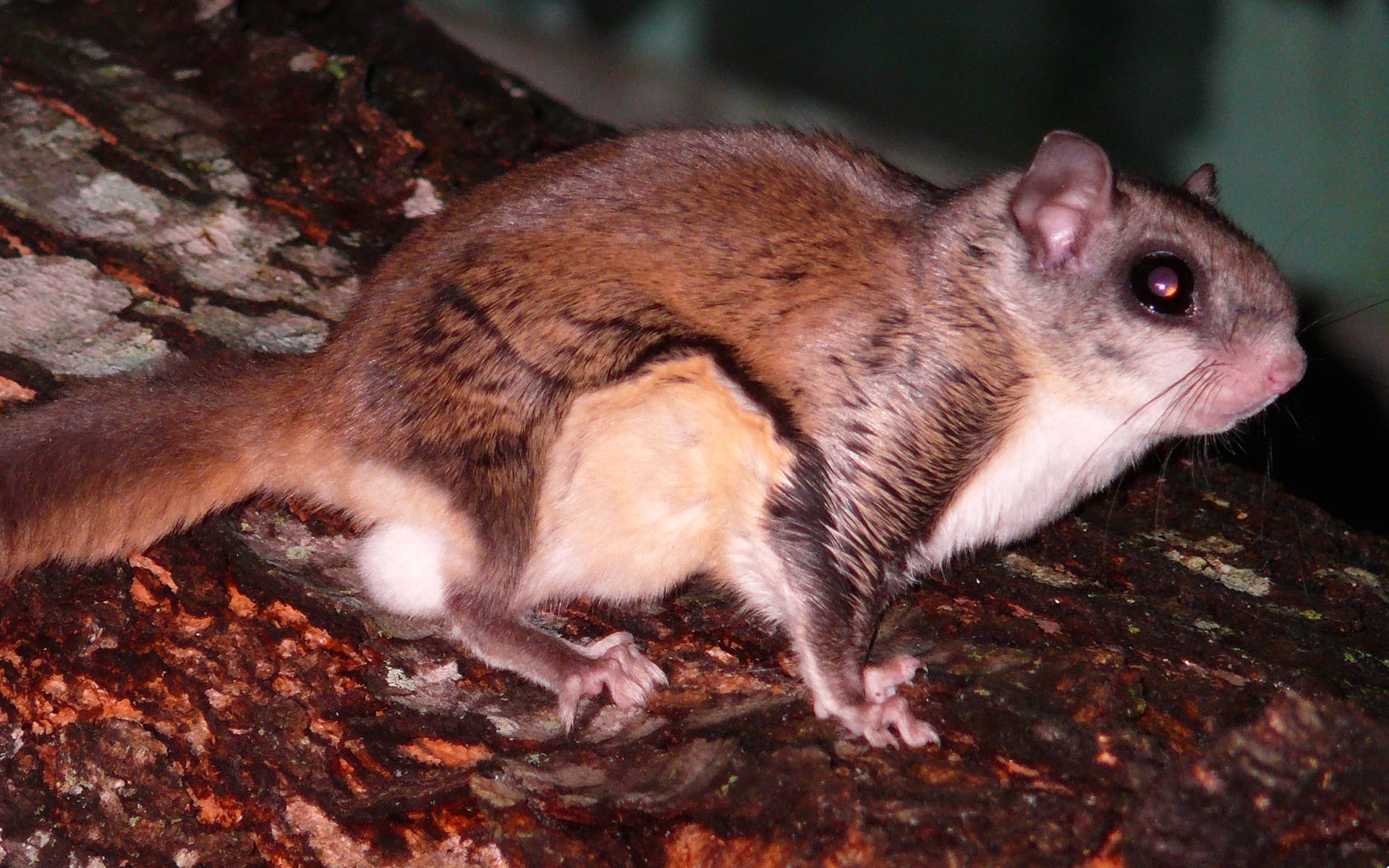
 © Ken Thomas / Public domain
Southern Flying Squirrel
The Southern Flying Squirrel is a small gliding squirrel native to the forests of eastern North America and the most commonly kept flying squirrel species in Japan. With large dark eyes and a furry membrane stretched between its front and back legs, it becomes lively after dark as a nocturnal animal and glides gracefully between branches using that membrane. In the wild these squirrels are highly social, often sharing a single nest with several companions, and in captivity they can become remarkably tame, happily curling up in a pouch or resting in an owner's palm. Behind its tiny, endearing appearance lies a surprisingly active and vocal personality that makes it a fascinating pet to observe.
View Southern Flying Squirrel encyclopedia →0% commission on your first sales!Register by September 30, 2026 and your first 2 sales are commission-free!
Breeder Wanted!
List on BreederDirect and sell directly to customers nationwide!
6 Transparency Commitments from Br-Choku
Every Small Pets listing from Breeder includes the information below. We guarantee transparency through health checks, vaccinations, microchips, and more.
- Hand-Tamed
- Health Checked
- Vaccinated
- Microchipped
- Real Photos
- Age Specified
Browse all 145 breeds
Care Difficulty
Verified breeders wanted for Small Pets
Breeders are signing up now ahead of launch. Subscribe to be notified when new listings go live.
Getting alerts is free with a member account. When new listings match your saved search, we'll notify you by email and in-app.
Browse other categories
Verified breeders (preview)
Are you raising small pets?
Register as a breeder and connect with buyers directly.
Apply as a breederSouthern Flying Squirrel key facts
- Care level
- Intermediate
- Lifespan
- About 10 years in captivity (max 19)
- Size
- Total length 20-28cm / 38-90g
- Diet
- Nuts, fruit, insects
- Cage
- A tall cage (90cm+) with branches and several nest boxes for gliding and climbing; mesh fine enough to prevent escape
- Grooming
- Self-grooming, no brushing; change nest material and bedding often to keep things clean
- Temperament
- Highly social and shares nests; nocturnal, deeply asleep by day and active at night
- Notes
- A different genus from the invasive Siberian flying squirrel. Imports need infectious-disease notification. Keeping more than one matches its natural sociality
About Southern Flying Squirrel
The Southern Flying Squirrel is a small, nocturnal gliding squirrel native to North America and Japan's most common pet flying squirrel. Known for its tame, affectionate nature, it suits intermediate keepers and lives around 10 years.
7 things to know before welcoming a Southern Flying Squirrel
1Needs Height to Glide
Because it glides by spreading the skin membrane between its limbs, a tall cage matters more than floor space. Arrange perches and pouches vertically so it can move and glide freely up and down.
2Strictly Nocturnal
It sleeps in its pouch during the day and becomes active only after dark. Feeding and care routines should be scheduled for evening hours, and daytime handling should be kept minimal.
3Thrives With Companions
In the wild, these squirrels are social enough to share a nest with others, and living alone can be stressful for them. Keeping compatible pairs or small groups often brings out more natural behavior.
4Taming Takes Patience
Newly acquired squirrels are often wary and may nip when startled. Carrying it in a bonding pouch to get it used to your scent and warmth, without rushing, helps build trust over time.
5Calcium Balance Matters
As an omnivore that eats insects, fruit, and nuts, an unbalanced diet can raise the risk of calcium-related bone issues. Using dedicated flying squirrel food and supplements helps keep the diet well balanced.
6Sensitive to Cold
Due to its small body size, it is sensitive to cold and needs careful room temperature control in winter. Providing a warm pouch or nest box and avoiding sudden temperature swings helps keep it healthy.
7Has Scent and Voice
It has a distinctive body scent and communicates with a range of chirps and barks. If the odor is a concern, more frequent cage cleaning as part of daily care can help manage it.
Frequently asked questions about Southern Flying Squirrel
- Q.Is this an easy flying squirrel species to keep?
- A.As the most commonly kept flying squirrel in Japan, information and supplies are easy to find, and it tends to be relatively tame. Still, it is generally considered suitable for intermediate keepers, and its nocturnal schedule requires some adjustment.
- Q.Can it be kept alone?
- A.Since these squirrels are social enough to share nests in the wild, keeping more than one is generally considered less stressful than housing a single squirrel alone. If you do keep just one, frequent interaction can help make up for the lack of company.
- Q.How big does it grow?
- A.Adults typically reach about 20-28 cm in total length and weigh around 38-90 g, small enough to fit in the palm of a hand. Despite its compact size, it needs vertical space to glide and move around.
- Q.How long does it live?
- A.In captivity it typically lives around 10 years, with a documented maximum of 19 years. Consistent diet management and temperature control are key to supporting a long, healthy life.
- Q.Is it okay if I can't interact with it during the day?
- A.This species is strictly nocturnal and normally sleeps through the day, so limited daytime attention isn't a problem. It's more important to interact during the evening and night, when it's naturally active.
Useful tools for Southern Flying Squirrel care
Learn more about Southern Flying Squirrel in the encyclopedia
View Southern Flying Squirrel encyclopedia entry →
Care difficulty, lifespan, size and diet — all basics covered.
More in this category
Can't find the one you're looking for?
Post your wishes for free and breeders with matching animals will contact you with introductions.