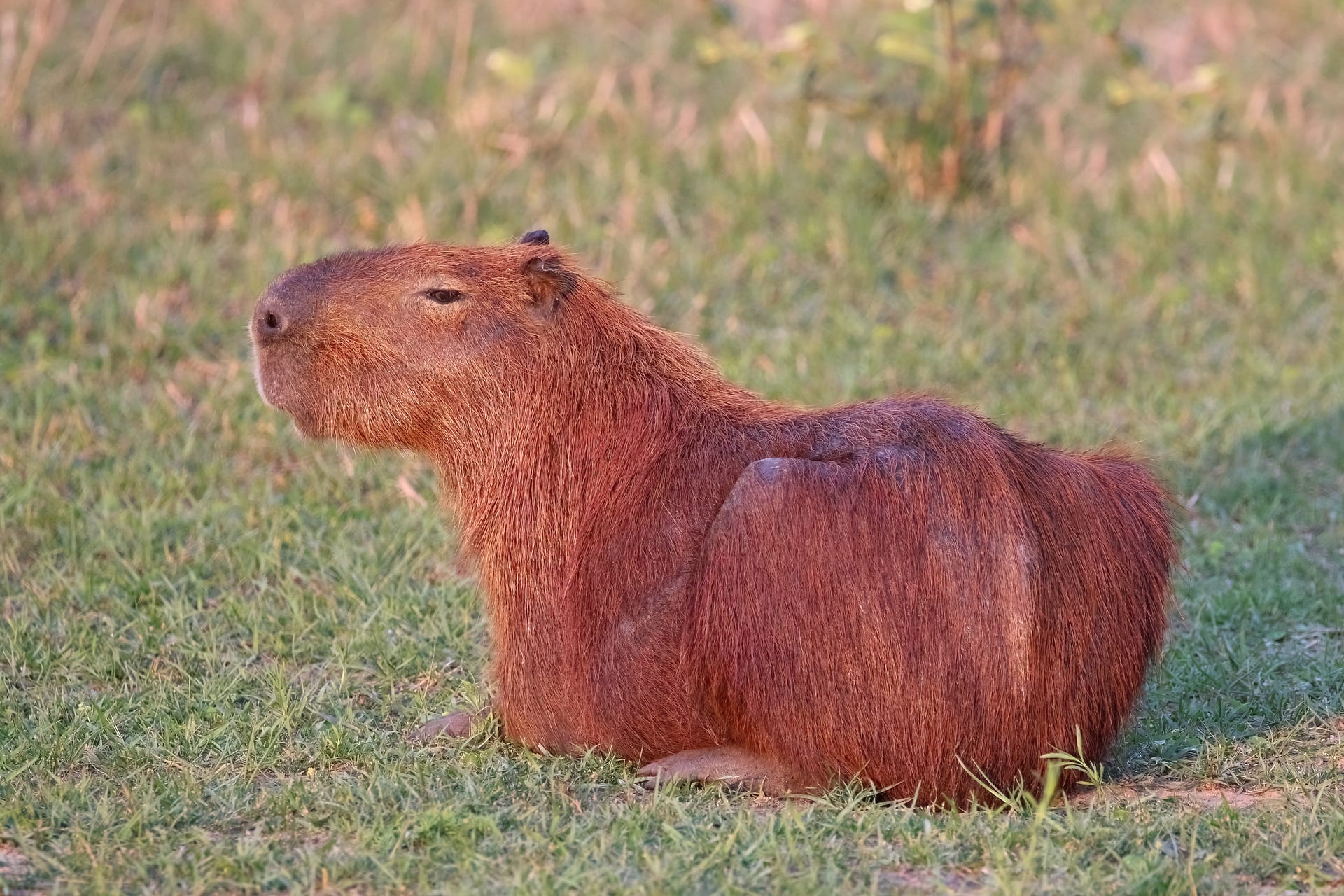
 © Charles J. Sharp / CC BY-SA 4.0
Capybara
Capybaras are the world's largest rodents, weighing 35 to 66 kg and native to South America's waterways. They live in groups of 10 to 20, love water, and can hold their breath underwater for around five minutes. Despite their gentle, sociable nature, capybaras are herd animals that don't thrive alone, and keeping one calls for spacious housing with both dry areas and a water feature. With a maximum lifespan of about 12 years in captivity, they are a long-term commitment best suited to experienced keepers.
View Capybara encyclopedia →0% commission on your first sales!Register by September 30, 2026 and your first 2 sales are commission-free!
Breeder Wanted!
List on BreederDirect and sell directly to customers nationwide!
6 Transparency Commitments from Br-Choku
Every Small Pets listing from Breeder includes the information below. We guarantee transparency through health checks, vaccinations, microchips, and more.
- Hand-Tamed
- Health Checked
- Vaccinated
- Microchipped
- Real Photos
- Age Specified
Browse all 145 breeds
Care Difficulty
Verified breeders wanted for Small Pets
Breeders are signing up now ahead of launch. Subscribe to be notified when new listings go live.
Getting alerts is free with a member account. When new listings match your saved search, we'll notify you by email and in-app.
Browse other categories
Verified breeders (preview)
Are you raising small pets?
Register as a breeder and connect with buyers directly.
Apply as a breederCapybara key facts
- Care level
- Advanced
- Lifespan
- About 4 years in the wild, up to 12 in captivity
- Size
- 106-134cm body (50-62cm at withers) / 35-66kg
- Diet
- Hay, grasses, aquatic plants, vegetables, a little fruit, large-herbivore pellets
- Cage
- Large paddock with a pool deep enough to submerge and a heated indoor den for winter; fencing strong enough for its weight
- Grooming
- Daily bathing keeps the skin healthy; the coarse coat dries out, so water access is essential
- Temperament
- Docile and tames well, but a herd animal; solitary housing causes stress
- Notes
- Provide abundant hay to prevent overgrown teeth. Beware of tick-borne disease; cold-sensitive
About Capybara
Discover capybaras: the world's largest rodent's temperament, group and water-based housing needs, lifespan, and size — key facts before bringing one home.
7 things to know before welcoming a Capybara
1Lives in Groups
Capybaras are highly social animals that live in groups of 10 to 20 in the wild. Keeping a single capybara alone can cause significant stress, so housing should be planned around multiple animals living together.
2Needs Real Water Access
Capybaras are strong swimmers that can stay submerged for around five minutes. Without a body of water large enough to fully immerse in, they can't express this natural behavior, which can also affect their well-being.
3Best Suited to Experts
As the world's largest rodent, weighing 35 to 66 kg, capybaras are considered an advanced-level pet. Prior animal-care experience, solid knowledge, and spacious facilities are all prerequisites.
4Lifespan Up to 12 Years
In the wild, capybaras typically live around 4 years, but in captivity they can live up to about 12 years. Prospective owners should plan for a long-term commitment and long-term care.
5Gentle but Large-Bodied
Capybaras are generally gentle and can become tame around people, but they grow to 106-134 cm in body length and 35-66 kg in weight. Their large size needs to be factored into housing design and daily handling.
6Requires Ample Space
Their large size and group-living habits mean capybaras can't be kept in typical small-animal cages. Prepare a spacious setup, indoors and out, that combines plenty of room with access to water.
7Find a Suitable Vet First
Few veterinary clinics are equipped to treat large rodents like capybaras. Before bringing one home, check that there's a clinic within reach that treats exotic animals.
Frequently asked questions about Capybara
- Q.Do capybaras become attached to people?
- A.Capybaras have a relatively gentle temperament, and some individuals do become tame around people. That said, they are group-living animals, so an environment where they spend all their time alone with a single person may not fully suit their natural behavior.
- Q.Can a beginner keep a capybara?
- A.Capybaras are generally considered an advanced-level pet. Their large body size, group-living instincts, and the need for ample water access make them a demanding choice for a first-time keeper.
- Q.Can capybaras be kept with other animals?
- A.Since capybaras are group-living animals, keeping several together is the general norm rather than housing just one. Cohabiting with other species raises significant compatibility and facility concerns and needs careful consideration.
- Q.How long of a commitment is keeping a capybara?
- A.In captivity, capybaras can live up to about 12 years. Because care continues over such a long period, it's important to plan ahead with that timeframe in mind.
- Q.Are there CITES procedures required to obtain a capybara?
- A.Capybaras are classified as not subject to CITES. Beyond that classification, there is no additional regulatory status to note here.
Useful tools for Capybara care
Learn more about Capybara in the encyclopedia
View Capybara encyclopedia entry →
Care difficulty, lifespan, size and diet — all basics covered.
More in this category
Can't find the one you're looking for?
Post your wishes for free and breeders with matching animals will contact you with introductions.