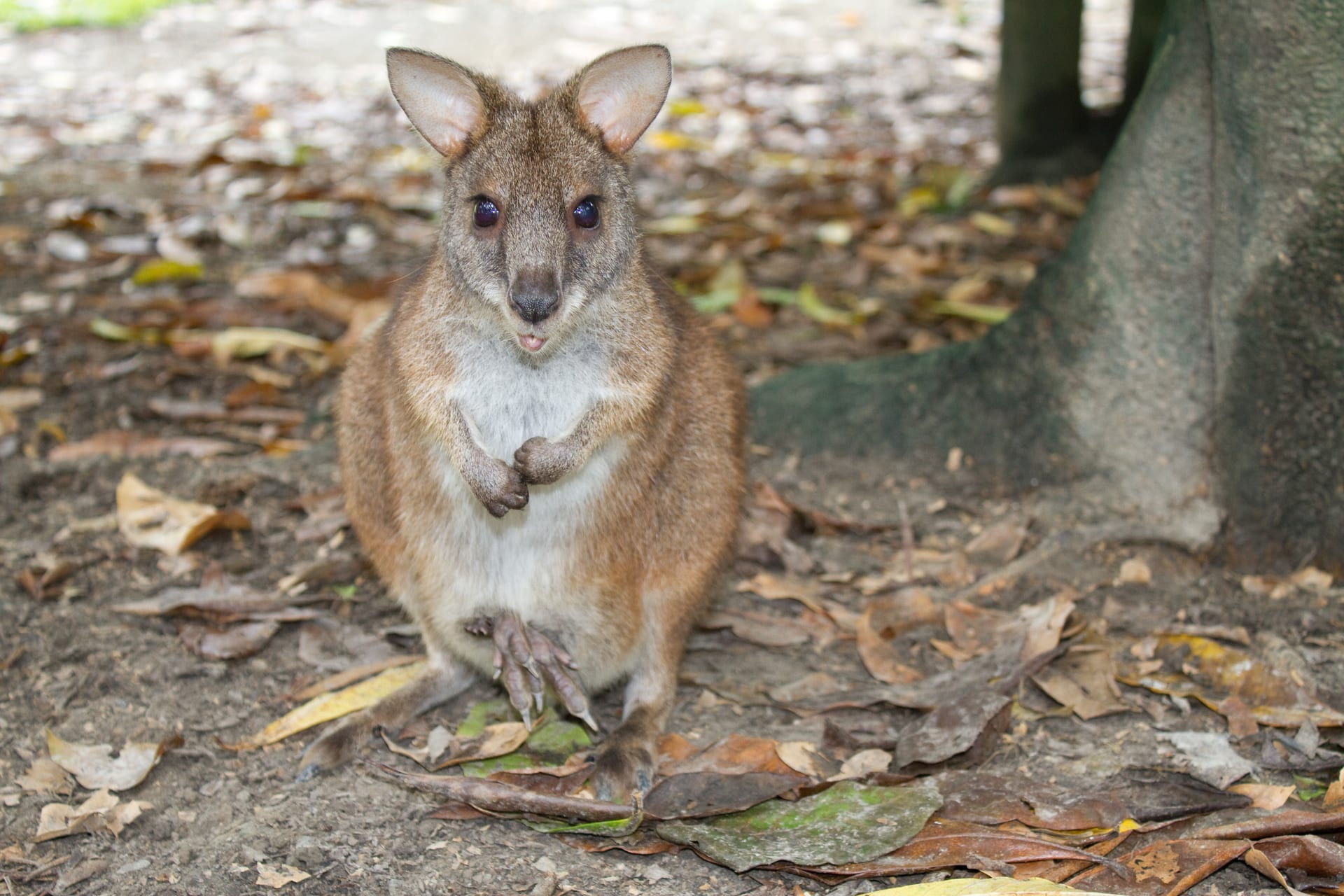
 © Brian Gratwicke / CC BY 2.0
Parma Wallaby
The Parma Wallaby is one of the smallest wallaby species, native to the forests of New South Wales, Australia. Adults have a compact build, with a head-body length of about 45–53 cm and weight ranging from 4.1–5.9 kg in males to 3.2–4.8 kg in females, and they move with agile hops powered by well-developed hind legs. They are nocturnal, tend to prefer solitude, and are often described as quiet in temperament. Once thought extinct, the species was rediscovered in 1965, and in human care they can live 11 to 15 years — companions for the long haul.
View Parma Wallaby encyclopedia →0% commission on your first sales!Register by September 30, 2026 and your first 2 sales are commission-free!
Breeder Wanted!
List on BreederDirect and sell directly to customers nationwide!
BreederDirect's 6 Transparency Commitments
Every Small Pets listing from Breeder includes the information below. We guarantee transparency through health checks, vaccinations, microchips, and more.
- Hand-Tamed
- Health Checked
- Vaccinated
- Microchipped
- Real Photos
- Age Specified
Browse all 168 breeds
Care Difficulty
Verified breeders wanted for Small Pets
Breeders are signing up now ahead of launch. Subscribe to be notified when new listings go live.
Getting alerts is free with a member account. When new listings match your saved search, we'll notify you by email and in-app.
Browse other categories
Verified breeders (preview)

Are you raising small pets?
Register as a breeder and connect with buyers directly.
Apply as a breederParma Wallaby key facts
- Care level
- Advanced
- Lifespan
- 11-15 years (in captivity)
- Size
- Head-body 45-53cm, tail 40-54cm, males 4.1-5.9kg, females 3.2-4.8kg
- Diet
- Grass hay, herbs, kangaroo pellets
- Cage
- A hopping animal that cannot be kept in an indoor cage. Needs a large fenced outdoor run, cover equivalent to dense vegetation, and a shelter from rain and wind.
- Grooming
- No brushing needed. Check pouch hygiene and the condition of joeys in females regularly.
- Temperament
- Nocturnal and timid; panicked animals often crash into fences at full speed, so provide a quiet setting and screening plants. Solitary by nature but tolerates a small group.
- Notes
- Herbivorous; feed mainly hay and avoid excess grain and fruit, which cause dental and digestive disease. Imports require notification under the Infectious Diseases Control Act, and a vet who treats macropods is essential.
About Parma Wallaby
A small wallaby native to New South Wales forests, nocturnal and solitary. Adults reach 45–53 cm head-body length, living 11–15 years in human care — a species suited to experienced keepers.
7 things to know before welcoming a Parma Wallaby
1Advanced-Level Care
Parma Wallabies are considered suitable for experienced keepers. Their jumping ability calls for ample exercise space and a properly set-up enclosure, so newcomers to marsupial care should research thoroughly before bringing one home.
2Nocturnal Activity
They are most active at night and tend to rest in sheltered spots during the day. Care routines should be built around this nighttime rhythm rather than expecting daytime activity.
3Solitary by Nature
In the wild, Parma Wallabies live and forage alone. Housing is generally planned around a single animal with adequate space, rather than group living.
4Powerful Hind Legs
Their well-developed hind legs allow for strong, agile hops. Enclosures need sufficient height and width, along with secure measures to prevent escape.
5A Long-Term Commitment
In human care, Parma Wallabies can live 11 to 15 years, so a long-term care plan is essential. Their environment and care routine may need adjusting as they age.
6Compact Build
Even as adults, they stay relatively small among wallabies, with a head-body length of about 45–53 cm and weights of 4.1–5.9 kg for males and 3.2–4.8 kg for females. Even so, generous enclosure space should be prioritized beyond their size.
7Research Before You Bring One Home
Parma Wallabies still have limited care history in Japan. Before adopting, it's worth thoroughly researching their needs and speaking with an experienced breeder.
Frequently asked questions about Parma Wallaby
- Q.How is the Parma Wallaby different from other wallabies?
- A.The Parma Wallaby is one of the smallest wallaby species, native to the forests of New South Wales. Its compact build, with a head-body length of about 45–53 cm, sets it apart from larger wallaby species.
- Q.What do they do during the day?
- A.Since they're nocturnal, they typically rest in sheltered spots during daylight hours. To see them at their most active, it's best to observe them in the evening and at night.
- Q.Can they be kept together with other wallabies?
- A.In the wild, Parma Wallabies tend to live and forage alone. Housing is generally planned for a single animal with sufficient space, rather than as a group.
- Q.How long can you expect to care for one?
- A.In human care, they typically live 11 to 15 years. It's important to plan for a long-term commitment before bringing one home.
- Q.Is the Parma Wallaby subject to CITES?
- A.Parma Wallabies are not subject to CITES. As with any animal, it's worth researching their needs and suitable environment thoroughly before adopting.
Useful tools for Parma Wallaby care
Learn more about Parma Wallaby in the encyclopedia
View Parma Wallaby encyclopedia entry →
Care difficulty, lifespan, size and diet — all basics covered.
More in this category
Can't find the one you're looking for?
Post your wishes for free and breeders with matching animals will contact you with introductions.