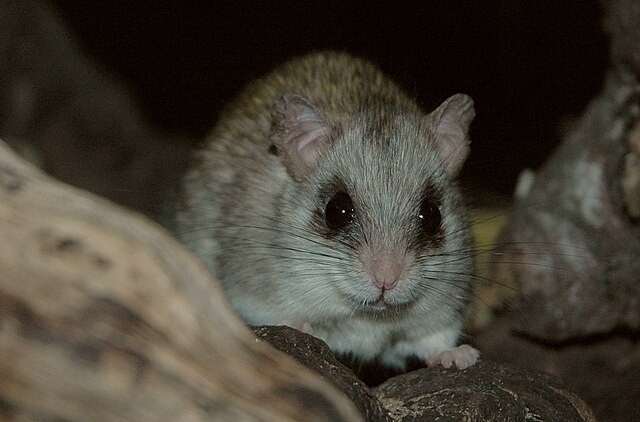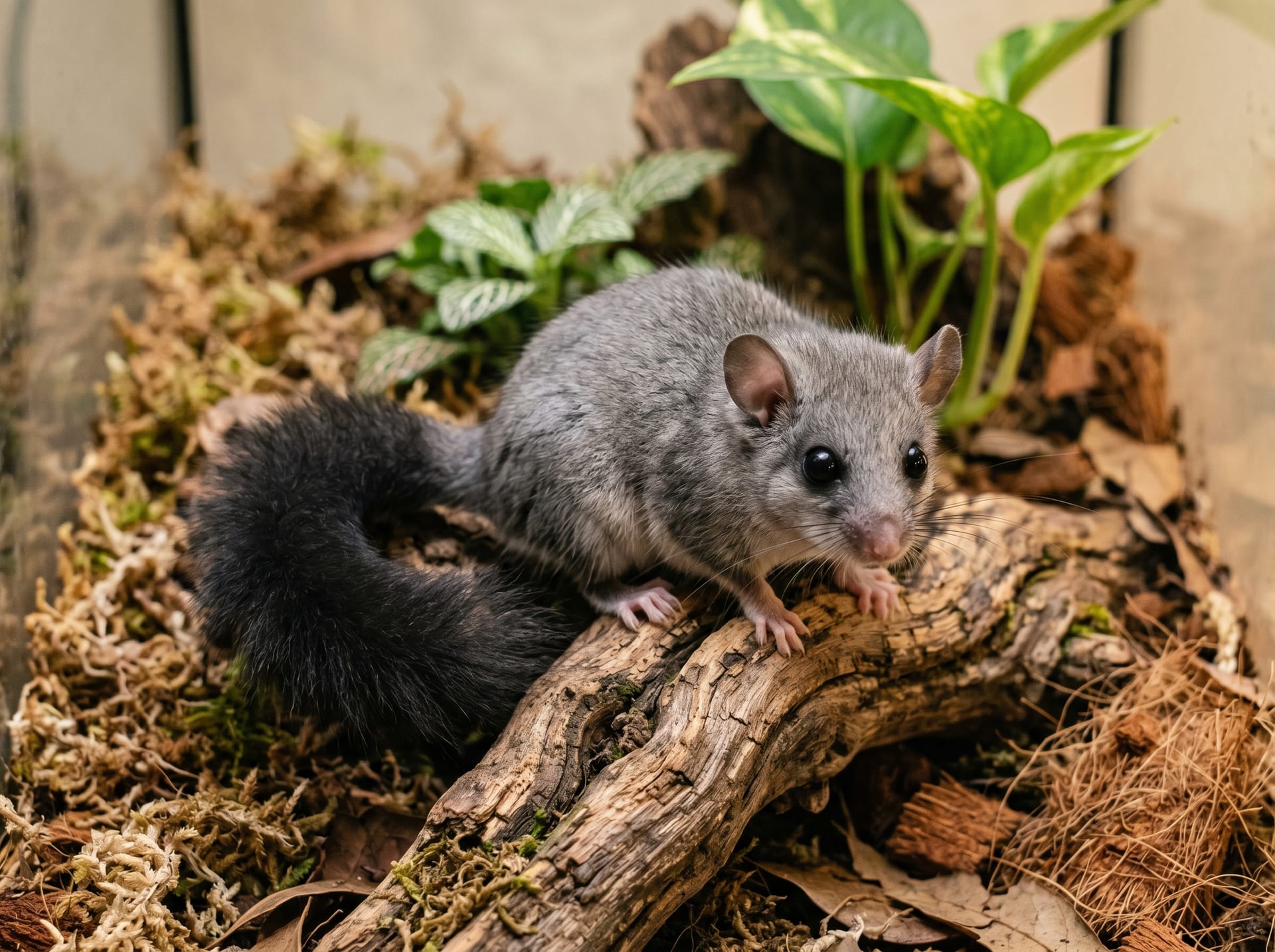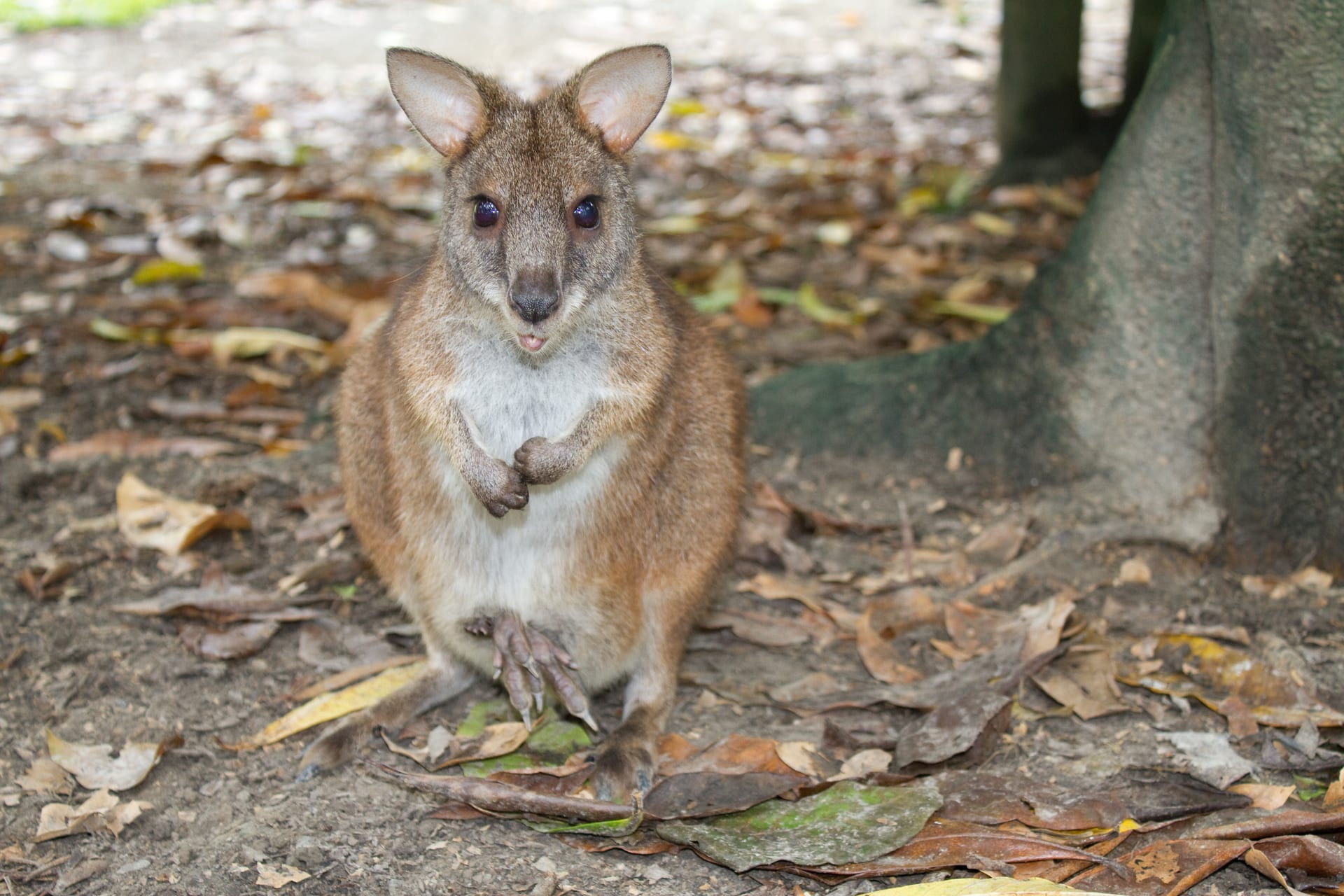
Source: Wikimedia Commons
Parma Wallaby
AdvancedNotamacropus parma
One of the smallest wallabies, from the forests of New South Wales. 3-6 kg and about 50 cm head-body, nocturnal and solitary. Thought extinct until rediscovered in 1965; IUCN Vulnerable.
Difficulty
Advanced
Temperature
18〜26℃
Lifespan
11-15 years (in captivity)
Size
Head-body 45-53cm, tail 40-54cm, males 4.1-5.9kg, females 3.2-4.8kg
Humidity
40〜60%
Diet
Grass hay, herbs, kangaroo pellets
About
The parma wallaby, described by Waterhouse in 1845, is a small macropod of the forests along the Great Dividing Range in north-eastern New South Wales, from near Gosford to the Queensland border. Believed extinct by the late 19th century, an introduced population was found on Kawau Island, New Zealand, in 1965, and wild populations were confirmed near Gosford in 1967. Mainly nocturnal, it hides in dense vegetation by day and emerges before dusk to graze grasses and herbs in forest clearings. It is solitary with almost no social structure. The IUCN lists it as Vulnerable in light of recent declines, but it is not on CITES. Smaller than the Bennett's wallaby already in this encyclopedia, it is rarely offered by exotic specialists in Japan.
Source: Wikipedia (CC BY-SA 4.0)
Lifespan of the Parma Wallaby
The Parma Wallaby lives 11-15 years (in captivity).
Lifespan is 6-8 years in the wild and 11-15 in captivity.
Size of the Parma Wallaby
The Parma Wallaby grows to Head-body 45-53cm, tail 40-54cm, males 4.1-5.9kg, females 3.2-4.8kg.
It is the smallest member of Notamacropus, with a head-body length of 45-53 cm, tail of 40-54 cm and weight of 4.1-5.9 kg in males and 3.2-4.8 kg in females.
Basic Info
Origin
Australia (north-eastern New South Wales); introduced to Kawau Island, New Zealand
Lifespan
11-15 years (in captivity)
Care Specifications
Solitary
Sources: Animal Diversity Web / Wikipedia (Parma wallaby)
References & Sources
Edited & verified by: BreederDirect editorial team
The taxonomic, regulatory, and husbandry data on this page are compiled and verified against the authoritative primary sources below.
Taxonomy & Authority
Accepted name: Notamacropus parma (Waterhouse, 1845)
Synonyms: Macropus parma
Authority databases: GBIF
Nomenclature follows global taxonomic authority databases.
Regulations & Conservation Status
Not CITES-listedIUCN VU · Vulnerable
Domestic law: 感染症法に基づく動物の輸入届出制度の対象(陸生哺乳類)。
Sources: CITES Appendices (species not listed) / IUCN Red List / MHLW Animal Import Notification System
Regulations may change. Always verify the latest information with the relevant authorities.
Parma Wallaby Listings
Loading latest listingsFind listings for this species