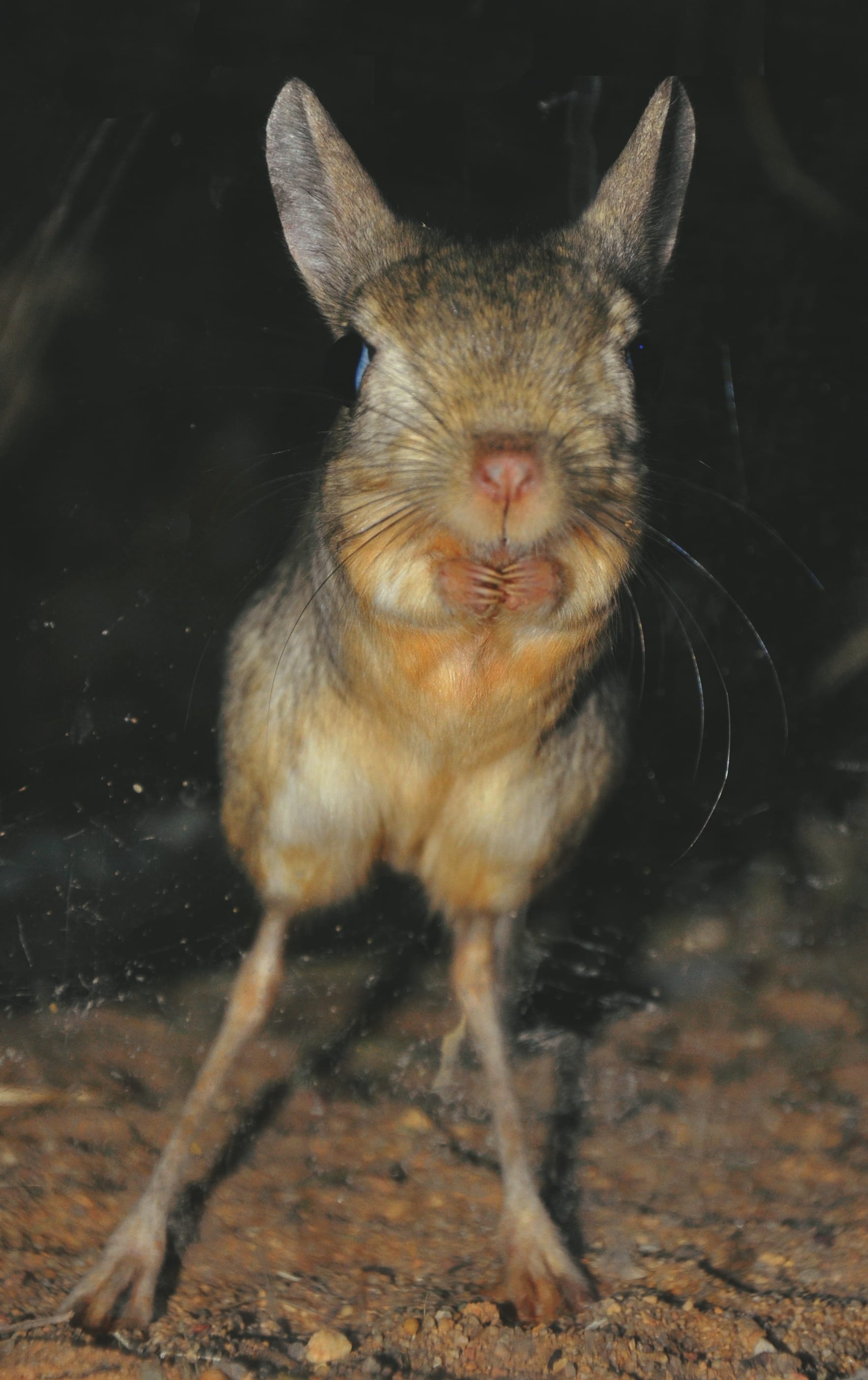
Source: Wikimedia Commons
Greater Egyptian Jerboa
AdvancedJaculus orientalis
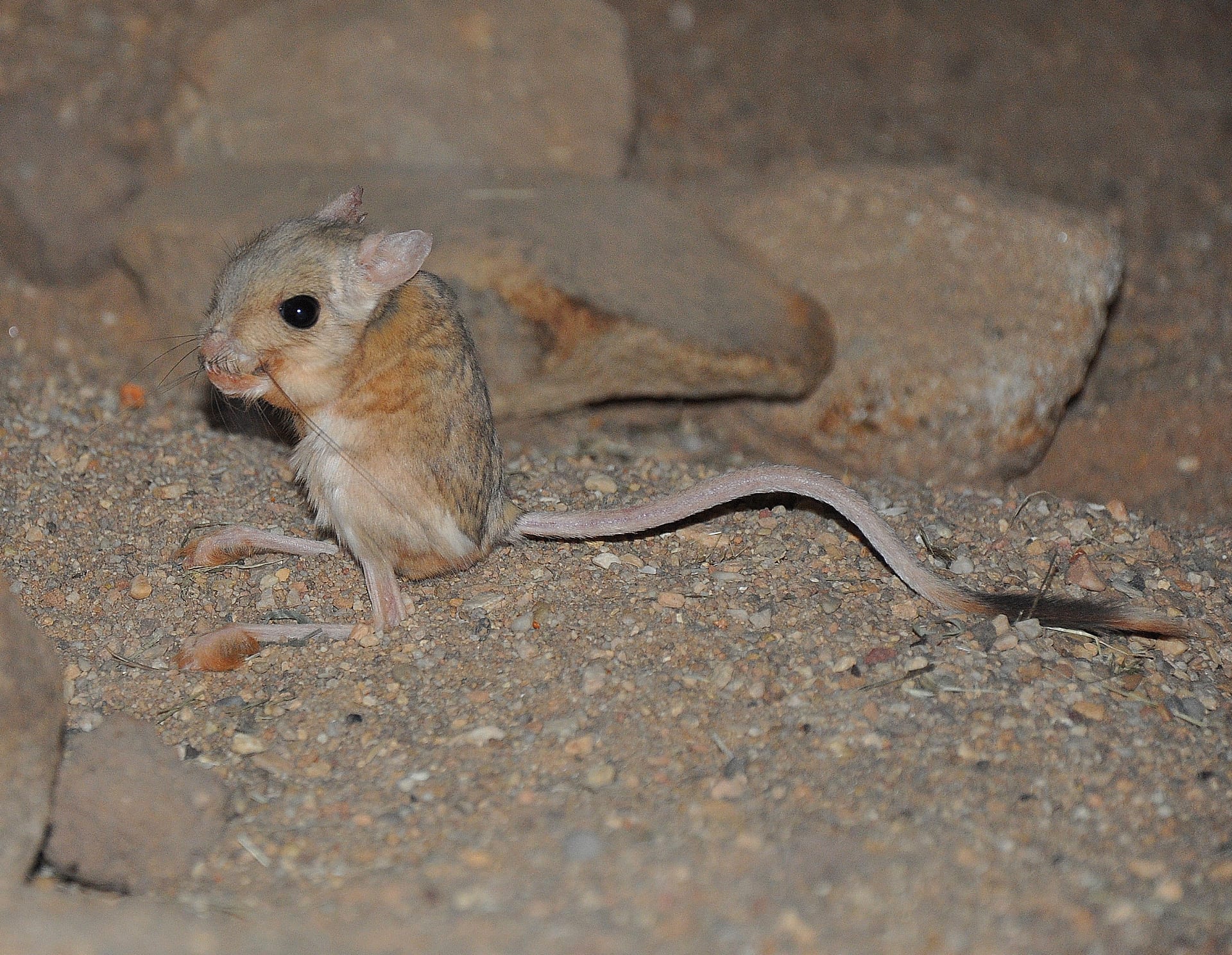
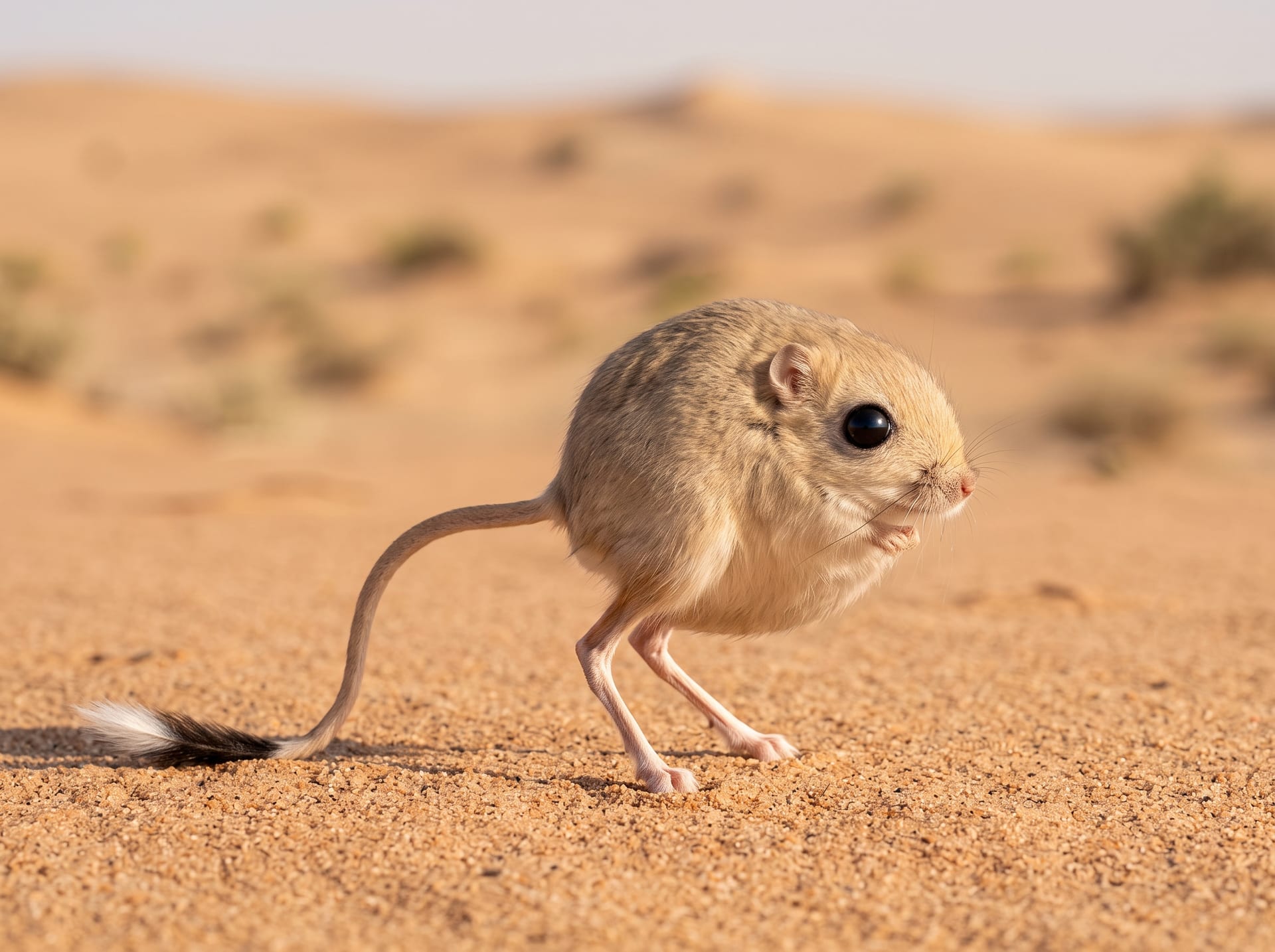
A bipedal hopping jerboa of North African and Middle Eastern drylands. The head-body is about 13 cm but the tail about 20 cm, and it moves by leaping on its hind legs. Strictly nocturnal, living 5-6 years in captivity.
Difficulty
Advanced
Temperature
18〜26℃
Lifespan
5-6 years (in captivity)
Size
Head-body about 13cm, tail about 20cm, about 135-140g
Humidity
40〜60%
Diet
Seeds, grains, vegetables and roots, some insects
About
The greater Egyptian jerboa, described by Erxleben in 1777, is a jerboa (Dipodidae) of the drylands of North Africa from Morocco through Algeria, Tunisia and Libya to Egypt, and of the Middle East including Saudi Arabia, Sinai and the Judaean Desert. It hops bipedally on powerful hind legs, using the long tail as a prop and rudder. Strictly nocturnal, it rests by day in burrows up to 2 m long dug in firm ground, and in cold periods enters deep hibernation with body temperature falling to nearly 10C. It eats seeds, shoots and roots, including desert truffles, and gets its water from food so rarely drinks. Breeding runs from November to July, with gestation of about 40 days and litters of 2-5 (up to 8). Reports of animals gathering in large burrows suggest a degree of sociality. The IUCN lists it as Least Concern. In Japan it is rarely available through exotic pet specialists.
Source: Wikipedia (CC BY-SA 4.0)
Lifespan of the Greater Egyptian Jerboa
The Greater Egyptian Jerboa lives 5-6 years (in captivity).
Captive lifespan averages 5.5 years with records over 6.
Size of the Greater Egyptian Jerboa
The Greater Egyptian Jerboa grows to Head-body about 13cm, tail about 20cm, about 135-140g.
The head-body measures 9.5-16 cm (about 13 cm) against a tail of 12.8-25 cm (about 20 cm), and weight is around 135-140 g with males slightly larger.
Basic Info
Origin
North Africa (Morocco to Egypt), Arabian Peninsula, Sinai
Lifespan
5-6 years (in captivity)
Care Specifications
Group
Sources: Animal Diversity Web / Wikipedia (Greater Egyptian jerboa)
References & Sources
Edited & verified by: BreederDirect editorial team
The taxonomic, regulatory, and husbandry data on this page are compiled and verified against the authoritative primary sources below.
Taxonomy & Authority
Accepted name: Jaculus orientalis Erxleben, 1777
Authority databases: GBIF
Nomenclature follows global taxonomic authority databases.
Regulations & Conservation Status
Not CITES-listedIUCN LC · Least Concern
Domestic law: 感染症法に基づく動物の輸入届出制度の対象(げっ歯目)。
Sources: CITES Appendices (species not listed) / IUCN Red List / MHLW Animal Import Notification System
Regulations may change. Always verify the latest information with the relevant authorities.
Greater Egyptian Jerboa Listings
Loading latest listingsFind listings for this species