Source: Wikimedia Commons
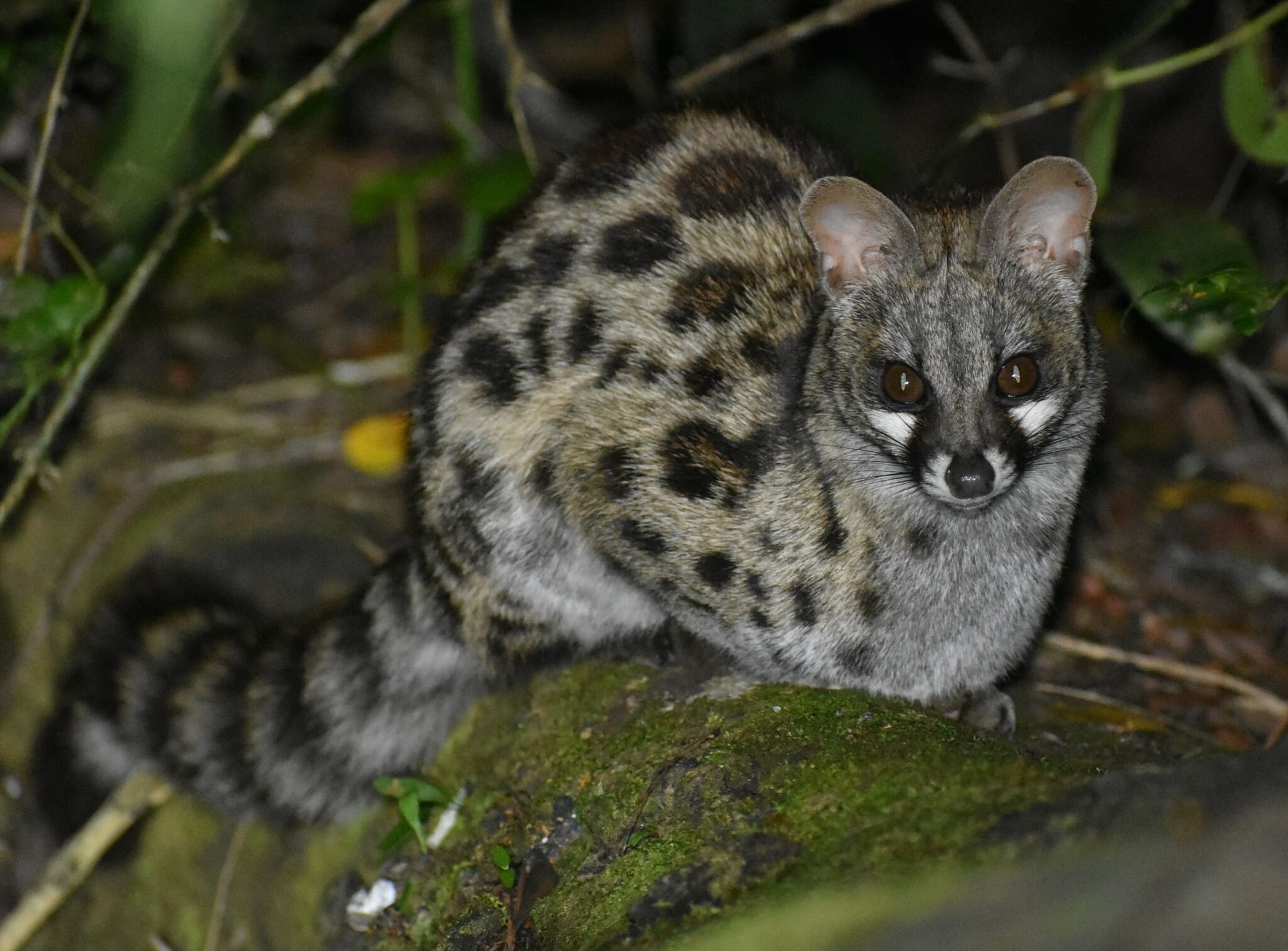
Common Genet
AdvancedGenetta genetta
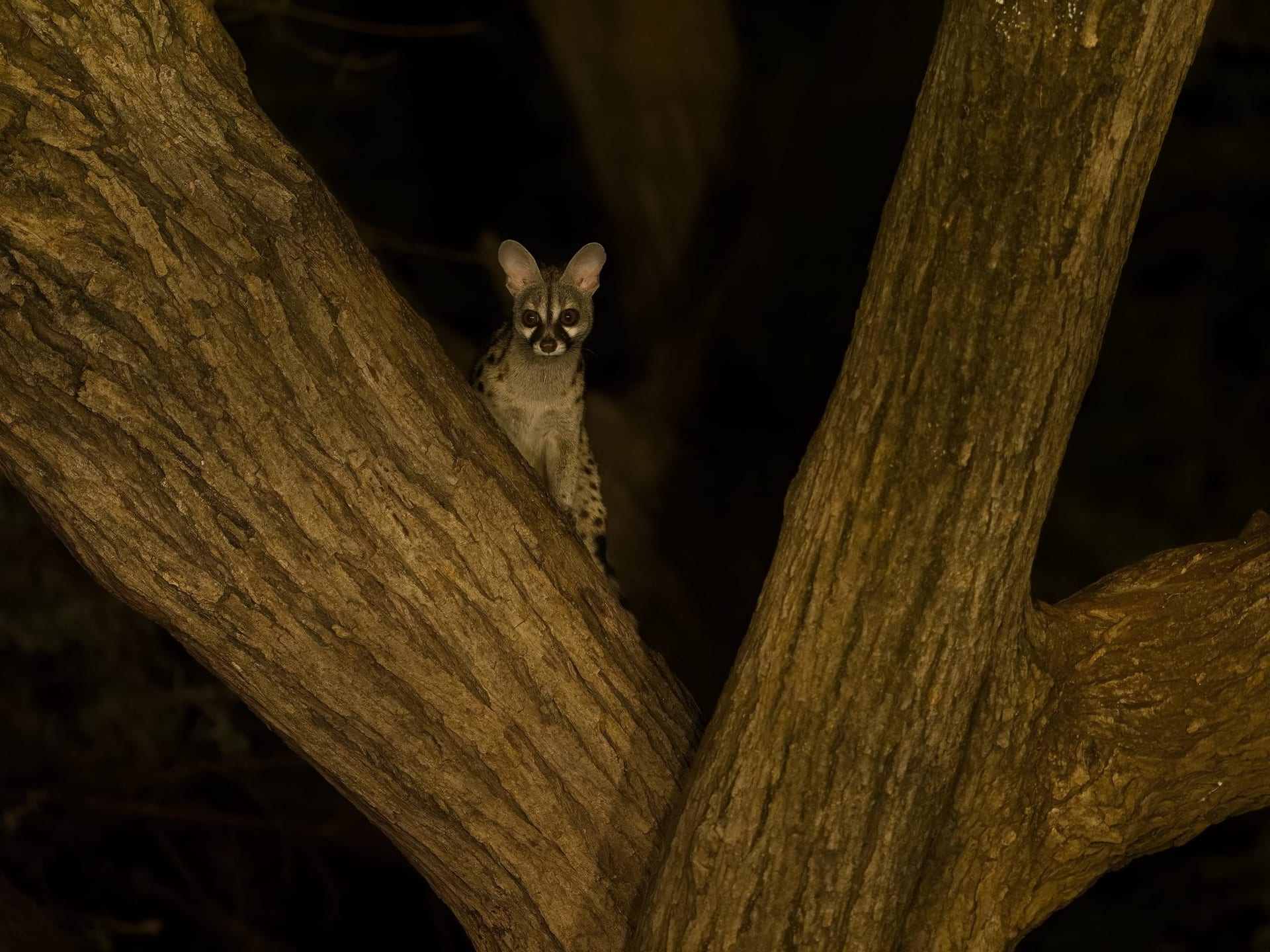
A nocturnal viverrid carnivore of Africa and south-west Europe. Head-body 43-55 cm with a ringed tail almost as long, weighing about 2 kg. Solitary and an agile climber.
Difficulty
Advanced
Temperature
18〜26℃
Lifespan
Up to about 13 years (in captivity)
Size
Head-body 43-55cm, tail 33-52cm, 1-3kg (about 2kg average)
Humidity
40〜60%
Diet
Carnivore diet, poultry, insects, some fruit
About
The common genet, described by Linnaeus in 1758, is a small viverrid carnivore found across Africa north of the Sahara, in the savanna zones south of it down to southern Africa, and along the Arabian Peninsula. It was introduced long ago to the Iberian Peninsula and southern France, where it is established and spreading into Italy. The slender body is grey with black spots and the tail, nearly as long as the body, carries black rings. Nocturnal and crepuscular, it is most active after sunset and lives alone. The diet is broad: small mammals, lizards, birds and eggs, amphibians, arthropods such as centipedes and scorpions, and fruit. Gestation is about 78 days with litters of 1-3. Captive animals have lived 13 years. In the Mediterranean it was historically kept semi-domesticated for rodent control. The IUCN lists it as Least Concern and it is not on CITES. Strong scent marking, nocturnal habits and great agility make it a demanding pet, and in Japan it is only rarely offered by exotic specialists.
Source: Wikipedia (CC BY-SA 4.0)
Lifespan of the Common Genet
The Common Genet lives Up to about 13 years (in captivity).
Size of the Common Genet
The Common Genet grows to Head-body 43-55cm, tail 33-52cm, 1-3kg (about 2kg average).
Head-body length is 43-55 cm, the tail 33-52 cm and weight 1-3 kg, averaging about 2 kg in males.
Basic Info
Origin
Africa (north of the Sahara, savanna zones to the south), Arabian Peninsula; introduced to Iberia and southern France
Lifespan
Up to about 13 years (in captivity)
Care Specifications
Solitary
Sources: Wikipedia (Common genet) / Animal Diversity Web
References & Sources
Edited & verified by: BreederDirect editorial team
The taxonomic, regulatory, and husbandry data on this page are compiled and verified against the authoritative primary sources below.
Taxonomy & Authority
Accepted name: Genetta genetta (Linnaeus, 1758)
Authority databases: GBIF
Nomenclature follows global taxonomic authority databases.
Regulations & Conservation Status
Not CITES-listedIUCN LC · Least Concern
Domestic law: 感染症法に基づく動物の輸入届出制度の対象(陸生哺乳類)。
Sources: CITES Appendices (species not listed) / IUCN Red List / MHLW Animal Import Notification System
Regulations may change. Always verify the latest information with the relevant authorities.
Common Genet Listings
Loading latest listingsFind listings for this species