Introduction to Goldfish Selective Breeding & Genetics | Genetic Patterns in Color, Body Shape & Fins and Basics of Breeding Plans
Goldfish Selective Breeding Goldfish breeding began in China approximately 1,500 years ago with mutant individuals of crucian carp, and after being…
Key Takeaways
Goldfish Selective Breeding Goldfish breeding began in China approximately 1,500 years ago with mutant individuals of crucian carp, and after being…
Related Species

Goldfish Selective Breeding
Goldfish breeding began in China approximately 1,500 years ago with mutant individuals of crucian carp, and after being introduced to Japan during the Edo period, they underwent their own unique evolution. Over 200 breeds have been identified worldwide today, with various traits such as body shape, fin form, body color, and eye shape now fixed in specific varieties.
The fundamental principle of selective breeding is the repeated process of selecting individuals with desired traits to breed together, then selecting individuals from the next generation that are closest to the target goal. By understanding the basics of genetics, you can efficiently produce individuals with the desired phenotype.
Basics of Genetics: Applying Mendel's Laws to Goldfish
Most goldfish traits involve polygenic inheritance (multiple genes), but some traits follow relatively simple Mendelian inheritance patterns.
Color Inheritance
Goldfish color is primarily determined by the quantity and combination of pigment cells (melanophores, xanthophores, and leucophores).
- When crossing red with white (calico), the ratio of red, calico, and white offspring varies greatly between individuals
- Black coloration involves multiple genes, and the black often fades as the fish grows (a phenomenon called "melanism loss")
- The scale types of "transparent scales" and "opaque scales (wavy scales)" segregate genetically
Body Shape and Head Knot Inheritance
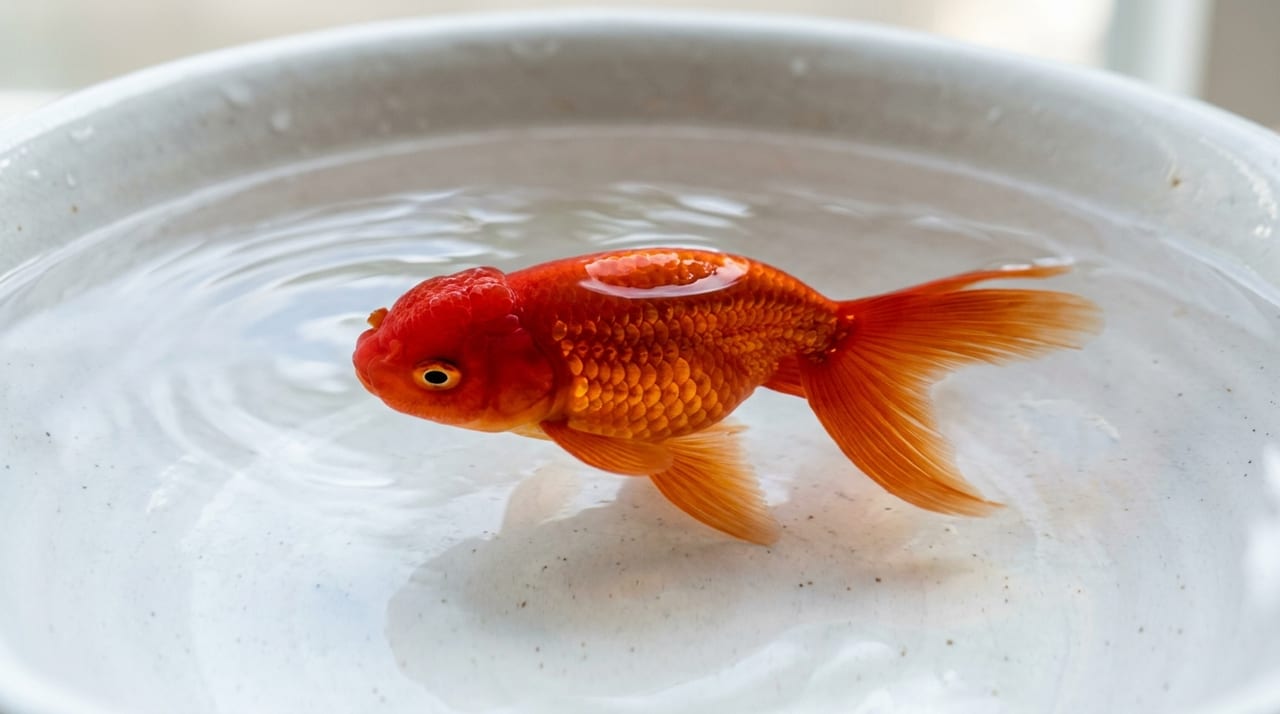
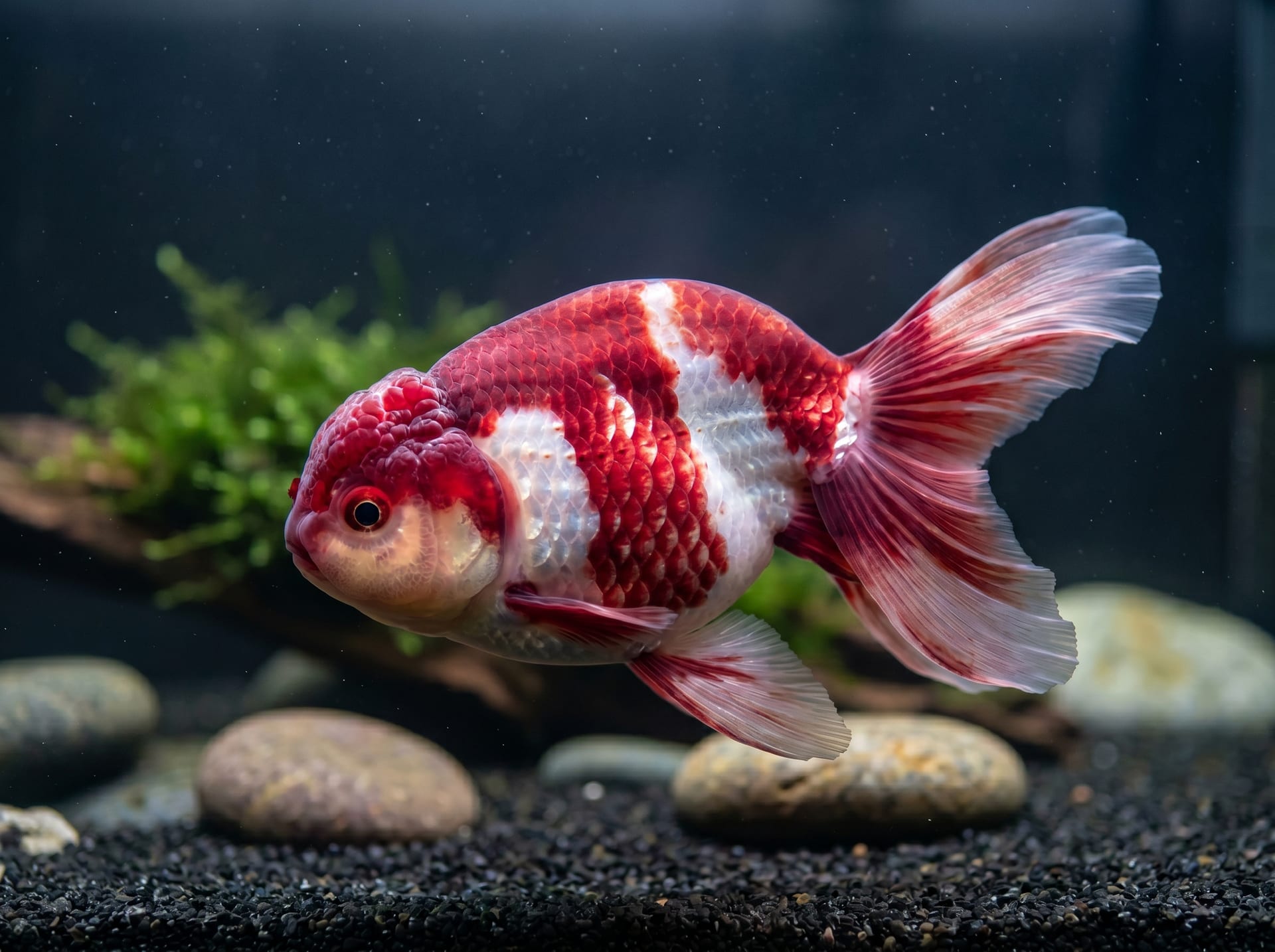
The ranchu body type (lacking a dorsal fin and featuring a rounded body) tends to follow autosomal recessive inheritance. However, the degree of head knot development is influenced by both genetic and environmental factors (temperature, feeding amount, and water quality).
Fin Inheritance
Fin morphologies such as long tail, triple-lobed tail, and four-lobed tail are also heritable, though the degree of fixation varies by breed. Even when breeding ryukin together, short-tailed individuals occasionally appear in a certain proportion.
Practical Selection Breeding
For successful selective breeding, rather than breeding haphazardly, planned selection with clear objectives is essential.
Step 1: Determining Target Traits
Specifically decide on the traits you're aiming for, such as "ranchu with large head knots," "ryukin with stable calico patterning," or "telescope-eyed goldfish with a daruma body shape."
Step 2: Parent Selection
Select individuals with traits close to your goal, choosing both males and females. While inbreeding (crossing closely related individuals) can quickly fix desired traits in the short term, it carries the risk of reduced vigor (inbreeding depression). It is important to periodically introduce external bloodlines to maintain genetic diversity.
Step 3: Spawning and Hatching
Adjust water temperature to 20–23°C to trigger spawning in spring through early summer. Egg production can range from hundreds to tens of thousands, and managing the hatched fry requires adequate water volume and a proper feeding regimen.
Step 4: Staged Selection
Large numbers of fry are born after hatching; individuals that deviate significantly from the target traits are progressively removed (culled). Major body shape deviations are removed at the 1–2 cm stage, and finer selections are made as the fry grow to 3–5 cm and 7–10 cm.
Major Color and Pattern Types and How to Select Them
Clear judging standards for goldfish colors and patterns exist among enthusiasts.
- Solid Red (suaka): Uniformly red (orange) throughout the body. Deep, consistent coloration without stray colors is valued.
- Calico (sarasa): Red and white patched pattern. The beauty of the pattern distribution is important.
- White (shiro): Entirely white. White with metallic sheen (calico-based white) is classified separately.
- Calico: Three or more colors (red, white, blue, and black) mixed randomly. Often combined with transparent scales.
- Sumi (ink black): Black coloration. Since it changes with growth, stable black coloration is desired.
How to Keep Breeding Records
To continue selective breeding, keeping breeding records for each lineage is essential. Here are examples of items to record:
- Spawning date, water temperature, and parent fish ID numbers
- Hatch rate and hatch date
- Number of fry culled and number remaining at each selection stage
- Changes in body shape and color 3–6 months later
Using digital spreadsheets or commercial breeding management apps allows you to efficiently manage multiple lineages. Photo records are also effective for tracking color development changes.
Managing Spawning and Hatching
Spring through early summer (water temperature 18–22°C) is the ideal time for goldfish breeding. To artificially trigger breeding, "induced water changes" that create temperature fluctuations through partial water changes are effective. When you observe the male chasing the female and bumping his head and mouth against her abdomen to squeeze out eggs ("driving behavior"), spawning is imminent.
Preparing Spawning Beds
Place aquatic plants (such as watersprite or cabomba) or artificial spawning grass in the tank beforehand. Eggs attach to plants. After spawning, if the parents are not removed, they will eat the eggs, so move the spawning bed with attached eggs to a separate tank.
Hatching and Fry Management
At around 20°C, eggs hatch within 4–7 days. Newly hatched fry have a yolk sac and do not require food for 2–3 days. After the yolk sac is absorbed, begin feeding infusoria, brine shrimp nauplii, or powdered fry food.
Fry are initially gray to black and undergo color change (color development) over several weeks to months. Individuals that do not develop color are sometimes culled for food, but in hobby breeding, it is common to wait for color development before making selections.
Introduction to Goldfish Shows
Goldfish shows are held by local hobbyist clubs and national goldfish competitions. Judging standards are set for each breed; for ranchu, criteria include "head knot and body knot development," "roundness of body shape," "tail form," and "body color and patterns." If you're attempting a show for the first time, we recommend joining a local hobbyist club to learn the judging standards. Producing show-quality individuals requires selective breeding over several years, but through this process your eye for fish observation and husbandry techniques naturally improve.
Inbreeding and Bloodline Management
In planned selective breeding, "inbreeding" (repeatedly crossing closely related individuals) is sometimes practiced, but continued inbreeding tends to cause reduced vigor, increased malformation rates, and decreased immunity (inbreeding depression). To prevent this, introduce individuals from a different bloodline every 3–5 generations to refresh the gene pool. By obtaining individuals from a different line from trusted breeders or hobbyist clubs and breeding them strategically, you can continue healthy selective breeding.