Morphological Fixation and Genetic Management Guide for Goldfish|Establishing New Varieties, Maintaining Recessive Traits, and Strain Maintenance
Explanation of the genetic principles of morphological fixation in goldfish breeding, practical application of Mendel's laws, steps for establishing new varieties, simultaneous fixation of multiple traits, and the importance of record-keeping and lineage ledgers. Also introduces detailed strategies for maintaining recessive traits such as in seibun-gyo goldfish.
Key Takeaways
Explanation of the genetic principles of morphological fixation in goldfish breeding, practical application of Mendel's laws, steps for establishing new varieties, simultaneous fixation of multiple traits, and the importance of record-keeping and lineage ledgers. Also introduces detailed strategies for maintaining recessive traits such as in seibun-gyo goldfish.
Related Species
Goldfish breeding is not merely the pursuit of beauty. Through decades—sometimes more than a century—of cumulative selection and record-keeping, a single trait becomes "fixed" as a breed characteristic. This article explains the genetic principles underlying morphological fixation that breeders practice in reality, and outlines concrete management techniques for maintaining stable strains over generations.
What Is Morphological Fixation?
"Fixation" refers to a state in which individuals expressing a particular phenotype (visible characteristics) continue to express the same trait with high probability across generations. Genetically, it means that the gene loci controlling the target trait are stable in the homozygous state (where identical alleles have been inherited from both parents).
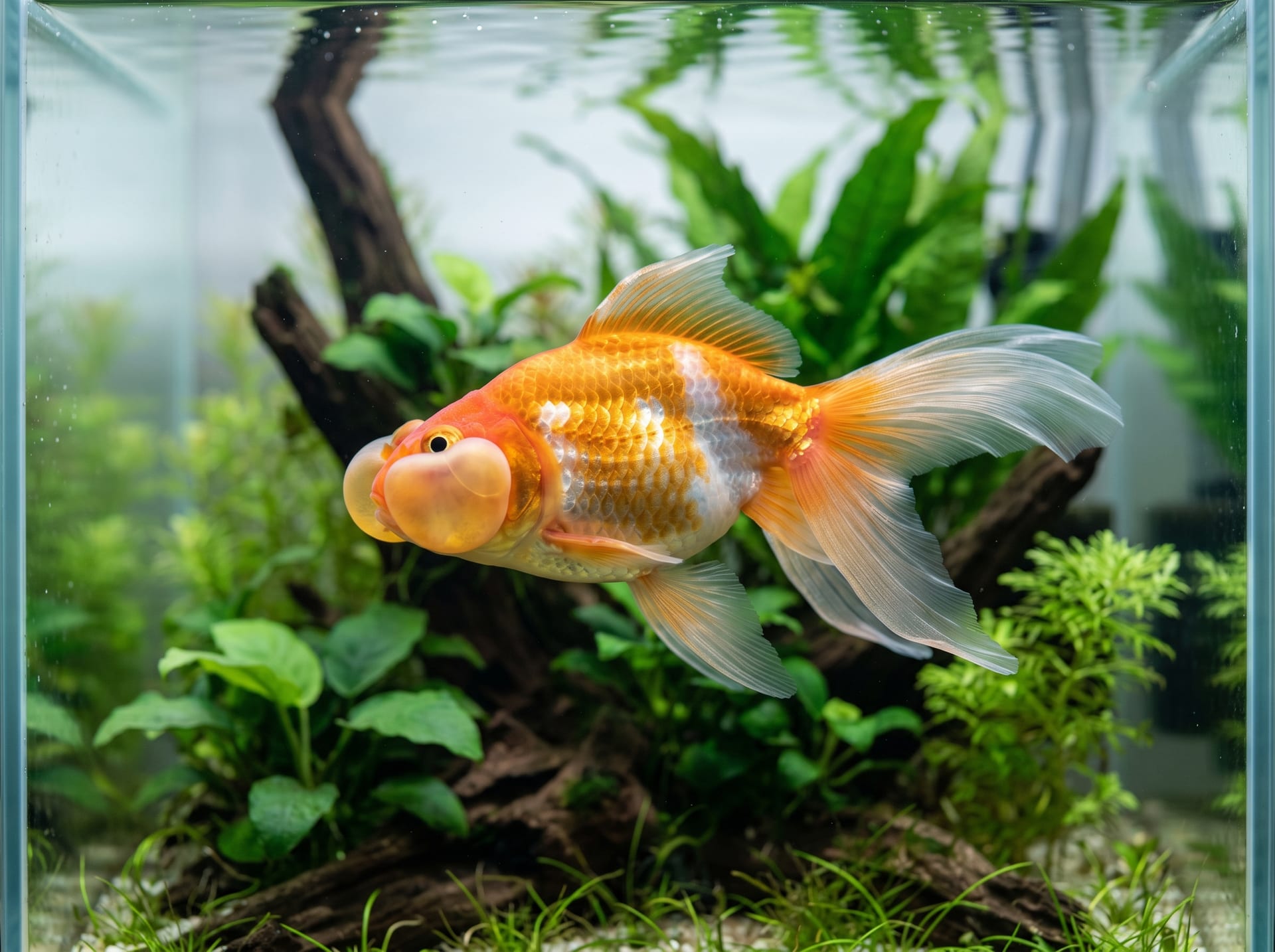
For example, bubble formation in bubble-eye goldfish is a recessive trait, expressing stably only when both parents carry the trait gene in homozygous form. When heterozygotes (Aa) are crossed, theoretically only 25% of the next generation will display the bubble phenotype. This is the mechanism behind the phenomenon where "parents have bubble eyes but their offspring do not."
In insufficiently fixed strains, parents with seemingly identical traits produce diverse offspring, resulting in enormous selection costs. Conversely, in highly fixed strains, trait stability is maintained with small population sizes, and quality prediction for the next generation becomes straightforward.
Putting Mendel's Laws Into Practice
Most major morphological traits in goldfish can be explained through simple dominant-recessive relationships. The fundamental principles worth understanding for practical breeding are as follows.
Fixing Recessive Traits: Crossing individuals carrying the target trait (aa × aa) theoretically produces the phenotype in 100% of offspring. However, as inbreeding progresses, loss of vigor (inbreeding depression) occurs, necessitating periodic outcrossing with aa from different strains to supplement genetic diversity through "outbreeding."
Utilizing Carrier Individuals: Even if an individual with excellent body shape or coloration is heterozygous (Aa), they can be used as "carriers" in strain maintenance without expressing the target phenotype. With Aa × aa combinations, 50% of offspring will express the trait, so even with low fixation rates, expanding the selection population maintains practical production efficiency.
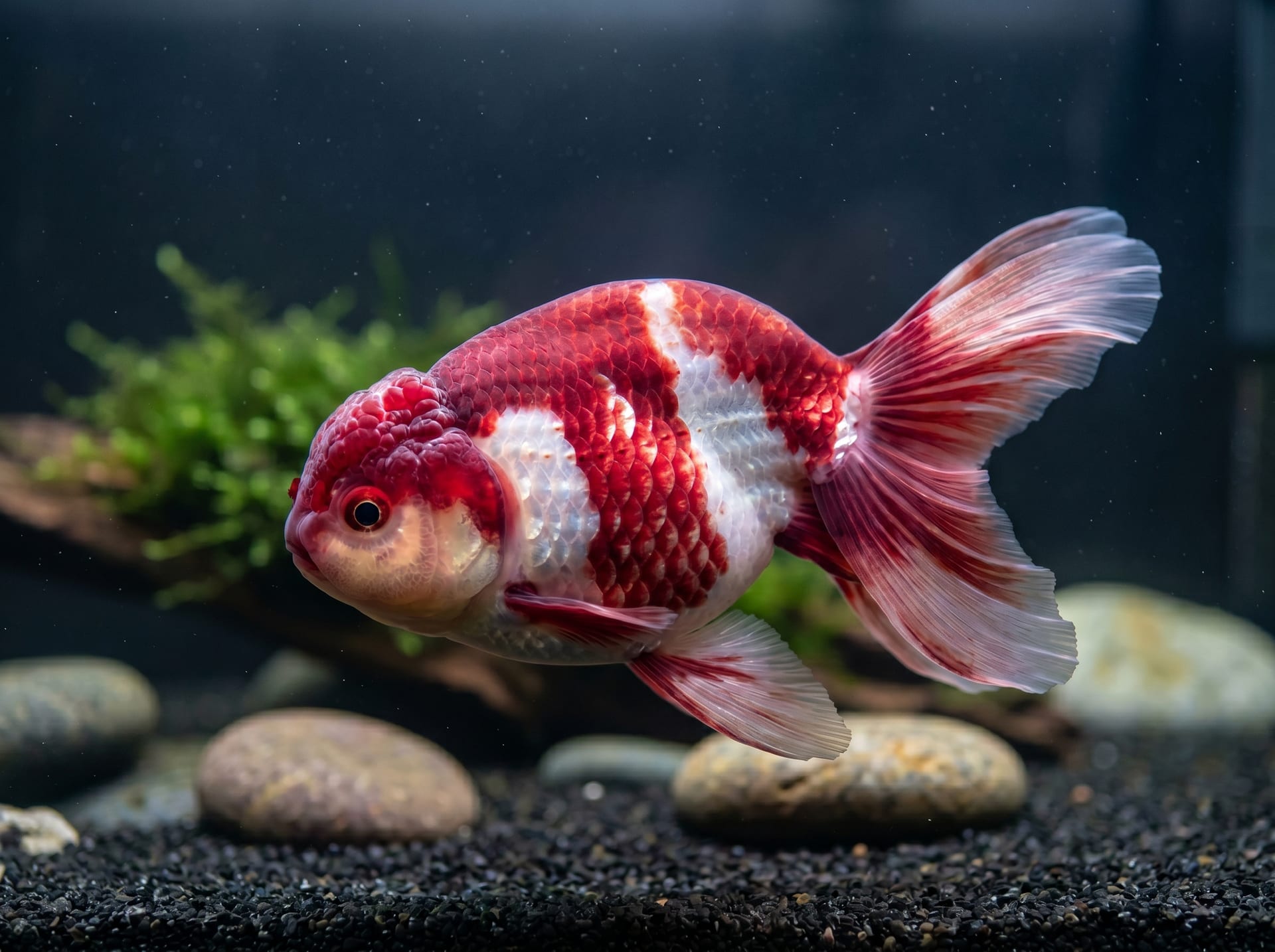
Simultaneous Fixation of Multiple Traits: For traits like the combination of head hood (funa) and four-lobed tail in ranchu, fixing multiple independent traits simultaneously requires advancing homozygosity individually for each trait. As the 9:3:3:1 segregation ratio demonstrates, in dihybrid crosses, the desired phenotype comprises only approximately 1/16 of offspring. Keen selection eye and sufficient egg production numbers are essential.
Practical Steps for Establishing New Varieties
The process by which Japanese breeders establish new varieties generally follows these stages.
Stage One: Securing Variant Individuals Upon discovering a distinctive individual arising from spontaneous mutation or hybridization, first isolate and document it in detail. Photographs, body length, trait expression rate, parental lineage—such data form the foundation for subsequent fixation work.
Stage Two: Backcrossing Cross the variant individual (Aa) with normal-type individuals, then select carriers from the resulting offspring and cross them again with the variant. Repeating this process strips away unnecessary genetic background while elevating the frequency of the target gene.
Stage Three: Purification Through Sibling Crossing Cross carriers together and select strains where the target trait appears stably. At this stage, if signs of inbreeding depression emerge (stunted growth, deformities, immunosuppression), insert backcrossing with different strains. Purification typically requires 5–7 generations.
Stage Four: Trait Documentation and Nomenclature Once the trait stabilizes, document dimensions, morphology, and color patterns, confirming that multiple breeders can reproducibly generate the same phenotype under identical criteria. In Japanese goldfish competitions, such reproducibility serves as the practical standard for breed recognition.
Maintaining Recessive Traits: Lessons from Seibun-Gyo
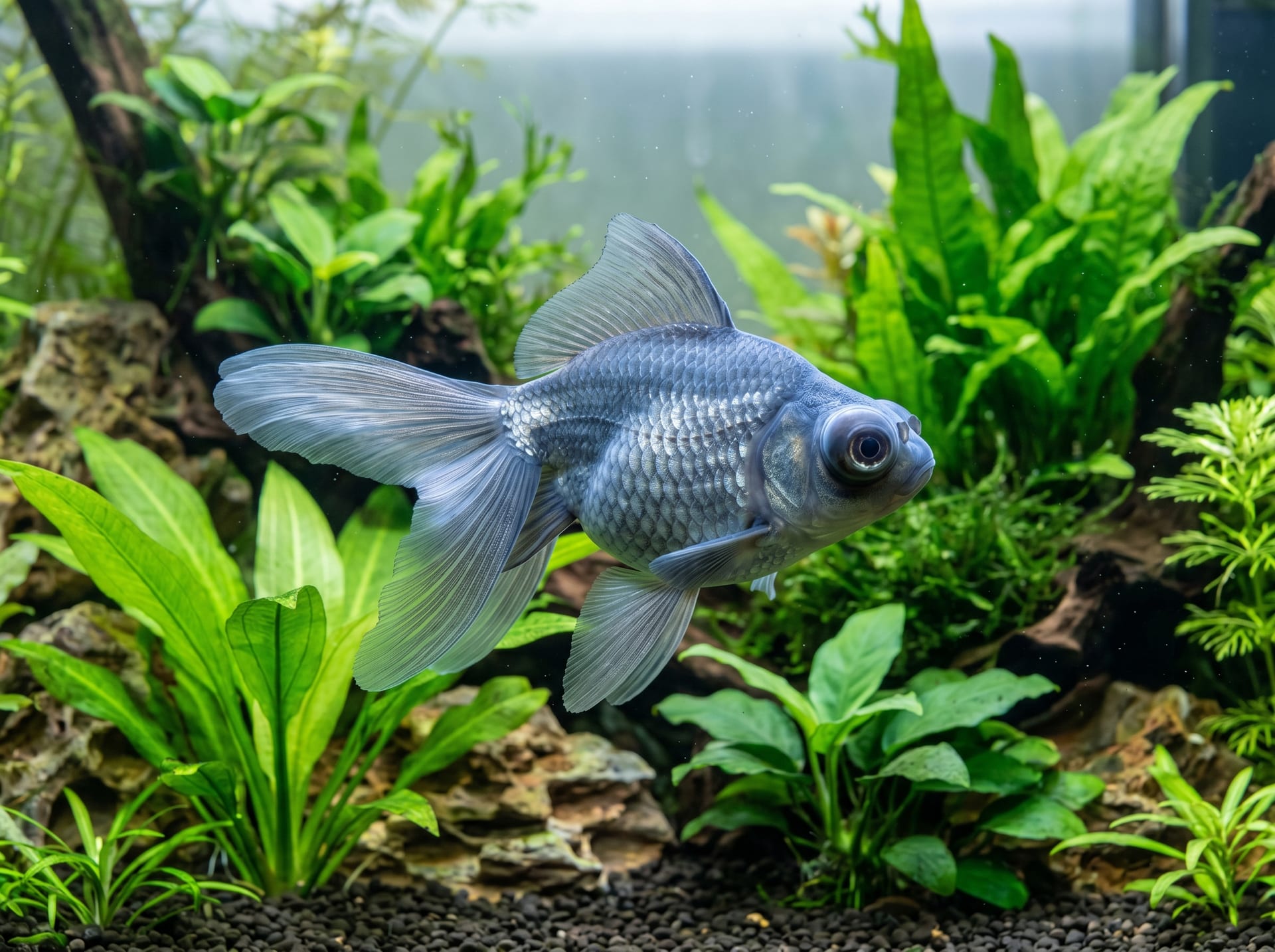
Seibun-gyo (also called black ranchu) is a rare variety maintaining deep black to ink-colored pigmentation across the entire body. While typical goldfish fade to red, white, or calico patterns as they mature, seibun-gyo possesses a genetic background that suppresses this fading.
This ink-color retention involves multiple genes acting recessively, so using even one parent prone to fading severely reduces color expression rates in the next generation. Consequently, established seibun-gyo lineages maintain the strict selection principle of "using only non-fading individuals as parents" across generations.
An effective concrete strategy is parallel maintenance of multiple pairs. Depending on a single strain creates high risk of lineage extinction from disease, accident, or sudden death. Managing 2–3 pairs with identical genetic backgrounds in independent systems and periodically mutually complementing selected individuals substantially reduces lineage loss risk.
Records and Lineage Ledgers: A Breeder's Most Valuable Asset
In morphological fixation, record-keeping precision ranks alongside selection ability as the most critical skill. Minimum items requiring documentation are:
- Spawning date, parent individual ID, water temperature, pH
- Hatch count, survival count, first selection date and selection criteria
- Target trait expression rate (recorded as percentage)
- Abnormality appearance trends (deformity types and frequency)
Accumulating these across multiple generations generates empirical rules—"which pair combinations maximize trait expression rate?" This accumulated knowledge becomes the longest-established breeders' greatest competitive advantage.
Digital management via spreadsheet suffices, but linking photographs to "individual number → offspring number" proves invaluable when later tracing pedigrees.
Conclusion: Fixation as a Fusion of Patience and Science
Morphological fixation in goldfish is a long-term project not accomplished overnight. However, understanding fundamental genetic principles and proceeding with planned crosses yields reliably stable strains within a 5–10 year timeframe.
The essential practice is articulating "why this individual was chosen as a parent" and recording that reasoning. When empirical experience gains scientific backing, breeder technique undergoes exponential deepening. Goldfish breeding represents a uniquely practical learning opportunity to intuitively grasp genetic principles while engaging with living organisms.