Guide to Goldfish Lineage Management and Pedigree Control | Selection, Record-Keeping, and Breeding Strategies Practiced by Breeders
This article explains lineage management strategies for goldfish breeders to maintain and improve quality. We cover the risks of inbreeding and methods to avoid them, establishing selection (culling) criteria, how to keep breeding records, timing for introducing outcrosses, and other practical knowledge for consistently producing high-quality goldfish.
Key Takeaways
This article explains lineage management strategies for goldfish breeders to maintain and improve quality. We cover the risks of inbreeding and methods to avoid them, establishing selection (culling) criteria, how to keep breeding records, timing for introducing outcrosses, and other practical knowledge for consistently producing high-quality goldfish.
✍️
BreederDirect Editorial
The BreederDirect editorial team specializes in care information for animals, covering veterinary care and breeding to deliver beginner-friendly guides.
Find Goldfish on BreederDirect
Buy directly from verified breeders
Browse Related Listings
Find Goldfish listings related to this article on BreederDirect. Buy directly from verified breeders.
To consistently produce high-quality individual goldfish as a breeder, understanding "what parents produced this goldfish" is essential. This requires proper lineage management. Repeated unplanned crosses result in unstable traits—body shape, coloration, and head growth—across generations, making it increasingly difficult to produce fish worthy of show evaluation.
In Japan's goldfish breeding world, the importance of lineage management has long been recognized, particularly among show fish enthusiasts (ranchu, azuma-nishiki, and other show varieties). However, in recent years, the rise of direct-to-consumer breeding and social media sales has led to more people starting breeding without proper lineage management knowledge. This guide covers the fundamentals and practical application of lineage management for everyone from home breeders to serious show participants.
---
Basic Concepts of Lineage Management
Phenotype and Genotype
In goldfish selection, what we can evaluate with our eyes is the "phenotype" (表現型). This includes body shape, color, head growth form, and fin shape. However, when choosing individuals for breeding, we must also consider that individual's "genotype" (遺伝型).
Even individuals with excellent appearance can carry recessive genes that cause problems in the next generation. By maintaining lineage records, you can understand which traits are inherited from which parents and develop breeding plans accordingly.
Inbreeding and Outbreeding
Method
Advantages
Disadvantages
Inbreeding
Fixes specific traits easily; increases phenotype uniformity
Inbreeding depression (reduced immunity, increased deformities and weak individuals)
Outbreeding
Hybrid vigor (improved vitality and disease resistance); introduces diverse traits
Traits segregate easily; difficult to fix desired breed characteristics
In actual breeding practice, the most widely adopted method is to inbreed for several generations to establish desired traits, then introduce outcrossing at an appropriate time. Generally, continuous inbreeding for 3-4 generations increases the risk of inbreeding depression, so introducing unrelated blood before that point is recommended.
---
How to Keep Breeding Records
Essential Information to Record
The foundation of lineage management is breeding records. The minimum information you should keep is:
Parent Fish Information
Spawning Information
Hatching and Fry Information
Growth to Adult Records
Choosing Recording Tools
Paper ledgers, Excel spreadsheets, or smartphone apps all work, but managing records linked to photos is ideal. Photographs from the fry stage, color-change period, and adult stage help you understand characteristics by lineage.
Microchip implants are an option for individual identification, but the surgical risk is high for goldfish size. In practice, the most common approach is managing lineage by breeding container and labeling the containers.
---
Setting Selection (Culling) Criteria
Purpose of Selection
In goldfish breeding, a single spawning produces hundreds to thousands of eggs. It's impossible to raise all to adulthood. Culling is performed to efficiently raise high-quality individuals within limited space.
Selection is better thought of as "removing individuals that shouldn't survive" rather than "choosing individuals to keep." It's crucial to have clear, breed-appropriate standards.
Main Selection Criteria by Breed
Ranchu
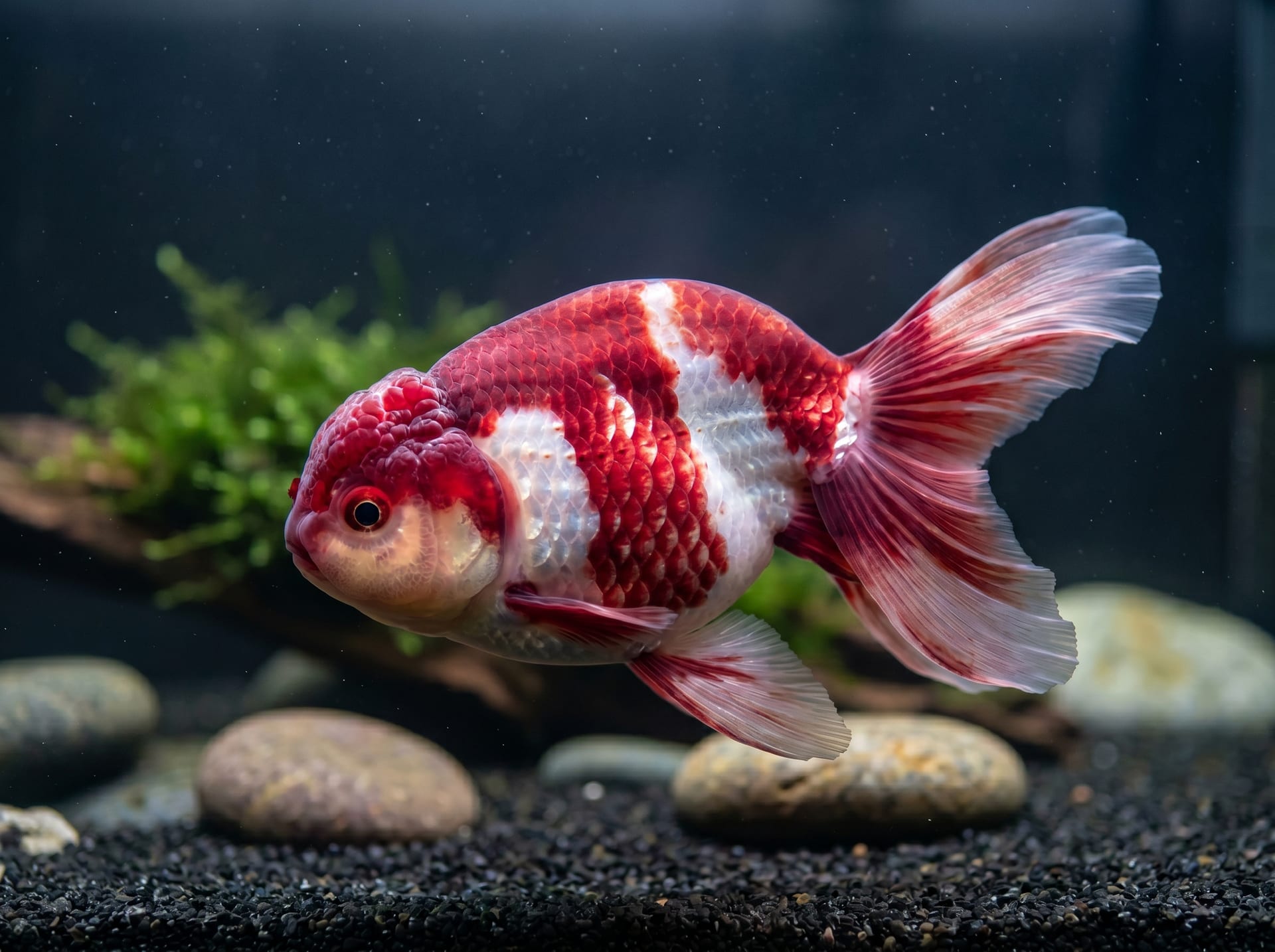
- Beautiful back curvature (dorsal line)
- Head shape conforming to breed standard
- Four-lobed tail opening evenly
- No deformities such as weak lateral line
Telescope Eyes and Bubble Eyes
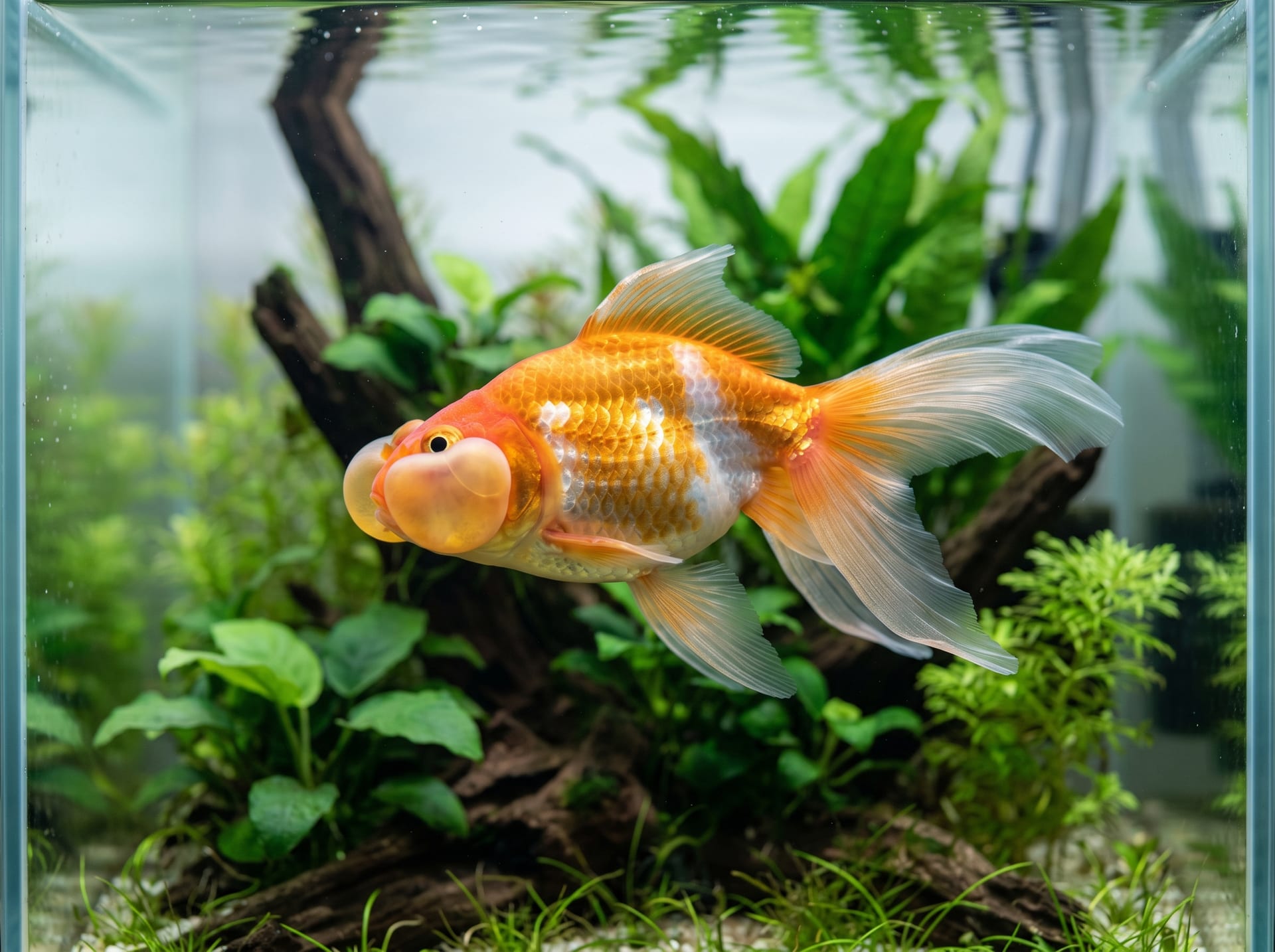
- Left-right symmetry of eyes (bubbles)
- Uniform body coloration
- No tendency to flip upside-down
Wakin and Comet
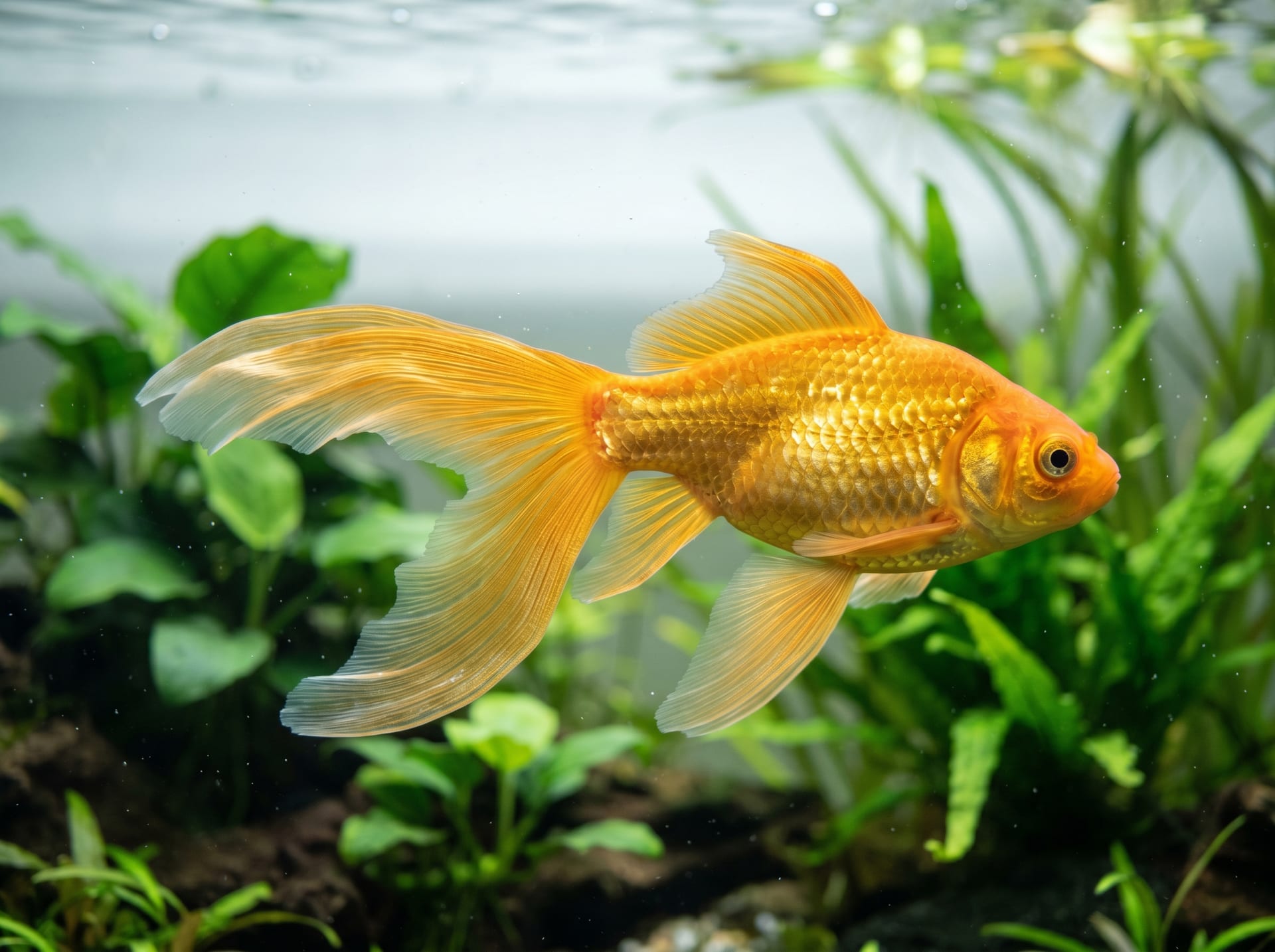
- Uniform fin development
- Left-right body symmetry
- Intensity and uniformity of body color
Culling Timing and Schedule
Stage
Fry Size
Purpose
1-2 weeks post-hatch (1st cull)
5-8mm body length
Remove deformities (curved spine, single tail, mouth abnormalities)
3-4 weeks post-hatch (2nd cull)
1-2cm body length
Remove body shape and coloration not matching breed standard
2-3 months post-hatch (3rd cull)
3-5cm body length
Comprehensive show-standard evaluation; narrow down fish to keep
---
Implementing Outcrossing
Signs That Outcrossing is Needed
Consider outcrossing when you observe:
Reduced immunity (illness becomes more common)
Declining hatch rates and fry survival
Increasing variation in body shape and color
Show evaluations plateauing
Choosing Outcross Partners
Outcross individuals should be sourced from reputable breeders with proven lineages. To avoid introducing disease, newly introduced individuals must undergo at least 4 weeks of quarantine (isolation and medicated baths if necessary) before use in breeding.
Selection criteria for introduced individuals:
1. Possess traits that complement weak characteristics in your own lineage (e.g., if head growth is weak, choose individuals with strong head development)
2. In good health and active
3. Pedigree information (parent fish details) as clear as possible
Management After Outcrossing
The outcrossed generation (F1) typically shows trait segregation. Select individuals from F1 showing strong target traits, then either backcross to your original line or cross F1 individuals together to attempt trait fixation in F2. Plan for 3-5 generations to converge toward breed standard.
---
Long-Term Perspective on Lineage Management
Using Show Competition for External Evaluation
Shows are the best opportunity to gain objective evaluation of your lineage. Judge comments provide valuable feedback on faults you might not notice yourself. Even if you place, record which traits were highly valued and apply that knowledge to the next generation's selection.
Information Exchange and Lineage Cooperation Among Breeders
In Japan's goldfish breeding community, trusted breeders share breeding stock and contribute milt through established relationships. Networking at social media, meetups, and shows significantly improves lineage management quality.
Record-Keeping as a Long-Term Asset
The hardest part of lineage management is maintaining records consistently. The difference in accumulated information between someone who meticulously recorded from their first year of breeding and someone who started later compounds dramatically over years. Perfect records aren't necessary—even just recording spawning dates, male-female pairings, and post-culling counts becomes your greatest asset for improving breeding quality over time.