Source: Wikimedia Commons
Cape Genet
AdvancedGenetta tigrina
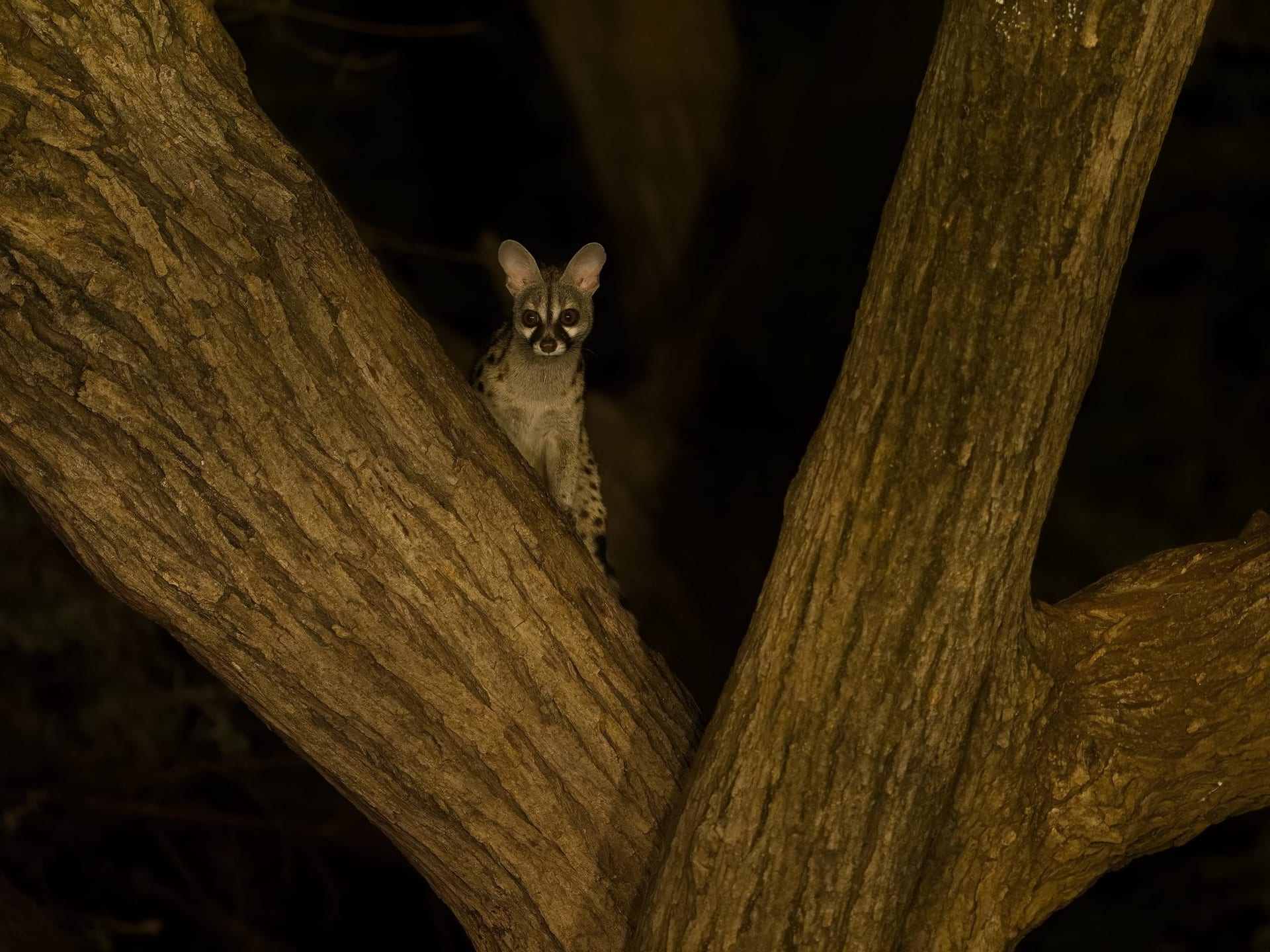
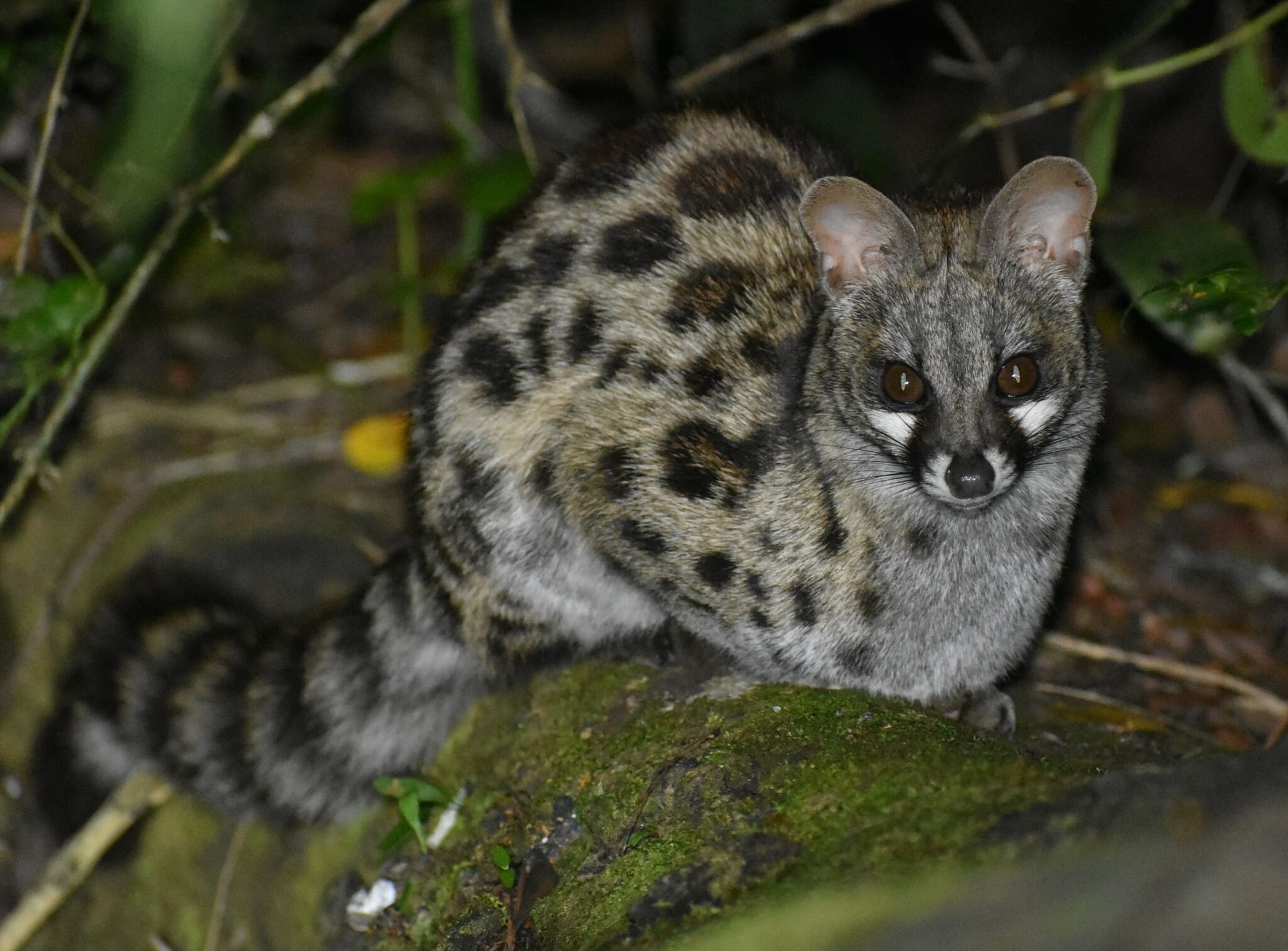
A civet-family carnivore endemic to South Africa, ash grey with irregular brown spots, a black stripe along the spine and a black-and-white ringed tail with a black tip. Nocturnal, it rests in trees and hunts on the ground.
Difficulty
Advanced
Temperature
18〜26℃
Lifespan
Captive record of 15 years
Size
Head and body 42.7–58cm, tail 38.5–45.9cm; 1.36–2.1kg (males slightly larger)
Humidity
40〜60%
Diet
Omnivore: mainly rodents, plus insects, spiders, seeds and grass
About
The Cape genet (Genetta tigrina), also called the South African large-spotted genet, is a member of the civet family endemic to South Africa. It ranges from the Western Cape to KwaZulu-Natal, south of 32°S and to the Lesotho border, living in moist, well-vegetated lowland and mountain fynbos near streams, rivers and standing water; it is the most widespread small carnivore in KwaZulu-Natal. It is ash grey with irregular brown spots and a black stripe along the spine, a white muzzle and white spots below the eyes. The tail is banded black and white with a black tip, and a short dorsal crest and poorly spotted hind legs, dark at the back, set it apart from other genets. It is solitary and mostly nocturnal, resting by day high in trees, under rock overhangs or in caves, and hunting and feeding on the ground. It scent-marks with anal-sac secretions and uses latrine sites. An opportunistic omnivore, it eats mainly rodents plus insects, spiders, scorpions, seeds and grass. Captive animals have lived 15 years. It is one of the mammals kept as exotic pets, and in Japan captive-bred animals appear only occasionally at specialists.
Source: Wikipedia (CC BY-SA 4.0)
Lifespan of the Cape Genet
The Cape Genet lives Captive record of 15 years.
Size of the Cape Genet
The Cape Genet grows to Head and body 42.7–58cm, tail 38.5–45.9cm; 1.36–2.1kg (males slightly larger).
Adult males measure 46–58cm head and body with a 39–45.9cm tail and weigh 1.6–2.1kg; females are 42.7–56cm with a 38.5–43.2cm tail and 1.36–1.87kg.
Basic Info
Origin
Endemic to South Africa: Western Cape to KwaZulu-Natal and the Lesotho border
References & Sources
Edited & verified by: BreederDirect editorial team
The taxonomic, regulatory, and husbandry data on this page are compiled and verified against the authoritative primary sources below.
Taxonomy & Authority
Accepted name: Genetta tigrina (Schreber, 1776)
Authority databases: GBIF · GBIF: Genetta tigrina
Nomenclature follows global taxonomic authority databases.
Regulations & Conservation Status
Not CITES-listedIUCN LC · Least Concern
Not covered by CITES or the Invasive Alien Species Act, and not a specified animal in Japan. Imports fall under Japan's animal import notification system (Infectious Diseases Control Law, MHLW): a health certificate from the exporting country's government must be filed with the quarantine station. Animals bred in Japan can be sold and kept without notification. Never release captive animals into the wild.
Sources: MHLW: Animal import notification system (JA) / Species+ CITES query (not listed) / Ministry of the Environment: Specified (dangerous) animals list (JA)
Regulations may change. Always verify the latest information with the relevant authorities.
Cape Genet Listings
Loading latest listingsFind listings for this species