Source: Wikimedia Commons
Kinkajou
AdvancedPotos flavus
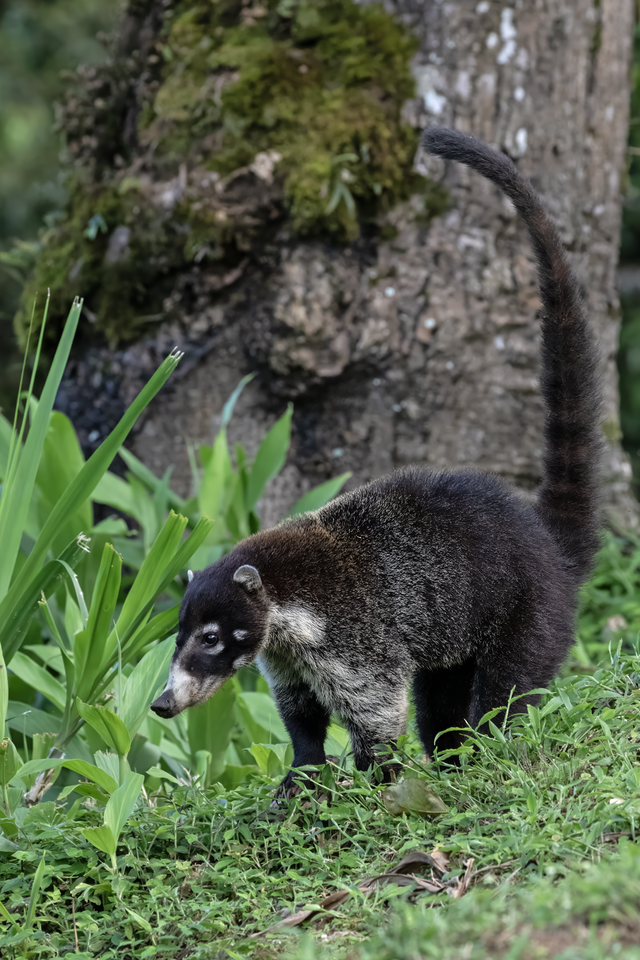
A raccoon-family mammal native to the tropical rainforests of Central and South America. An arboreal, nocturnal mammal with a prehensile tail and large eyes that loves sweet foods.
Difficulty
Advanced
Temperature
18〜26℃
Lifespan
20-25 years
Size
40-60cm / 1.4-4.6kg
Humidity
40〜60%
Diet
Fruit, honey, nectar, insects, specialized feed
About
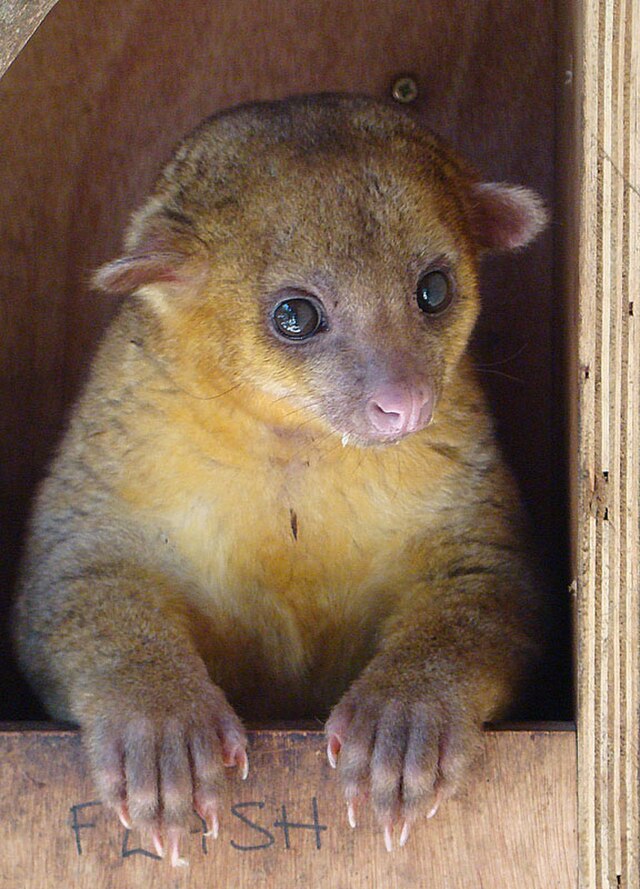
The kinkajou (Potos flavus) is an arboreal mammal of the family Procyonidae, native to the tropical rainforests of Central and South America. Their prehensile tail functions as a fifth limb, allowing agile movement through the forest canopy. Their golden-brown fur, large forward-facing eyes, and long tongue (used for extracting nectar and honey) give them an endearing appearance. Kinkajous can become remarkably affectionate with their owners but retain unpredictable wild behaviors, including sudden biting; they are not suitable for inexperienced exotic pet keepers. Housing requires an extremely large, vertically oriented enclosure (minimum 2 m height) with branches, ropes, and perches. Diet is primarily frugivorous: tropical fruits, honey, nectar, and occasional insects. Specialized veterinary care is essential. Prices typically range from 150,000 to 400,000 yen—higher for babies—and fluctuate year to year with import availability. Kinkajous are scarce in the trade, so most are acquired by reservation through exotic-animal shops, reptile expos, or breeders. Beyond the animal itself, expect 50,000-150,000 yen upfront for a tall (2 m+) enclosure and heating, plus 10,000-20,000 yen per month for tropical fruit and utilities. Always line up a veterinarian able to treat kinkajous before purchase.
Source: Wikipedia (CC BY-SA 4.0)
Lifespan of the Kinkajou
The Kinkajou lives 20-25 years.
They are among the longer-lived small exotics, with captive lifespans of 20–25 years. With a 20-plus-year lifespan, lifetime costs can reach several million yen.
Size of the Kinkajou
The Kinkajou grows to 40-60cm / 1.4-4.6kg.
Adults measure 40–60 cm in body length with a prehensile tail of 40–55 cm, and weigh 1.4–4.6 kg.
Temperature & humidity for the Kinkajou
Optimal temperature is 24–30 °C.
Care Specifications
Semi-aggressiveSolitaryBreeding: Hard
Sources: Wikipedia — Kinkajou (JA)
Captive Breeding
Live-bearing
- Gestation
- 98〜120 days
- Litter size
- 1〜2
- Weaning
- 8〜16 wk
- Sexual maturity
- 18〜27 mo
Breeding season: Year-round; local peaks may correlate with fruit availability
Breeding notes
Captive breeding records are scarce and data remain limited. Litters typically consist of 1 offspring (rarely 2). Reported weaning age varies between sources: 8 weeks (ADW) vs approximately 4 months (SDZG factsheet); full independence is reached around 4 months. Sexual maturity is reached late: approximately 18 months in males and 27 months in females.
Breeding requires planning, proper husbandry, and responsibility. These figures are general guidelines.
Sources: Animal Diversity Web — Potos flavus / San Diego Zoo LibGuides — Kinkajou: Reproduction & Development
References & Sources
Edited & verified by: BreederDirect editorial team
The taxonomic, regulatory, and husbandry data on this page are compiled and verified against the authoritative primary sources below.
Taxonomy & Authority
Accepted name: Potos flavus (Schreber, 1774)
Authority databases: GBIF
Nomenclature follows global taxonomic authority databases.
Regulations & Conservation Status
CITES Appendix IIIIUCN LC · Least Concern
Potos flavus is listed in CITES Appendix III by Uruguay. It does not qualify as one of Japan's specified animals.
Sources: Potos flavus CITES App III / IUCN LC / Ministry of the Environment Specified Animal List
Regulations may change. Always verify the latest information with the relevant authorities.
Kinkajou Listings
Loading latest listingsFind listings for this species