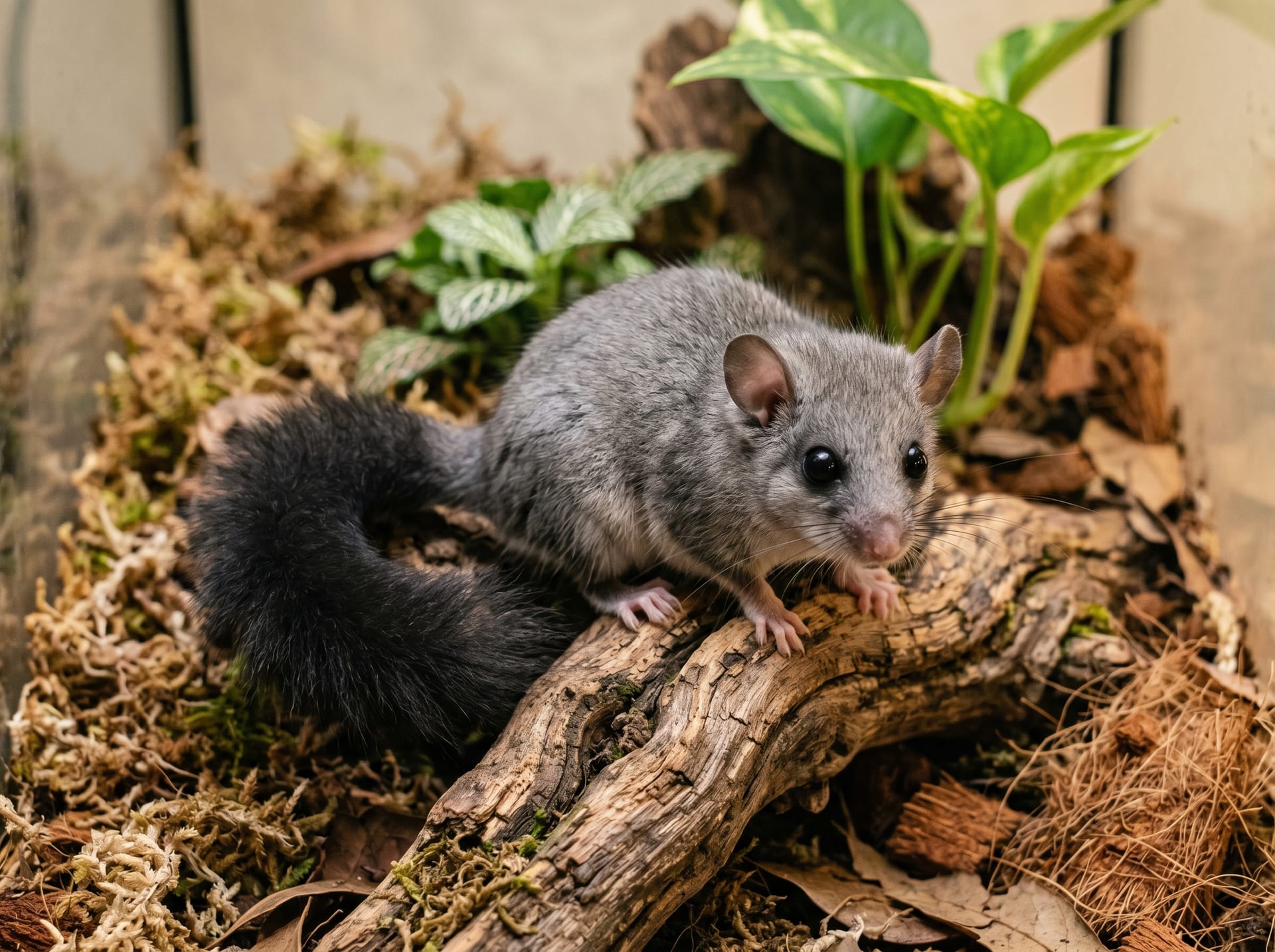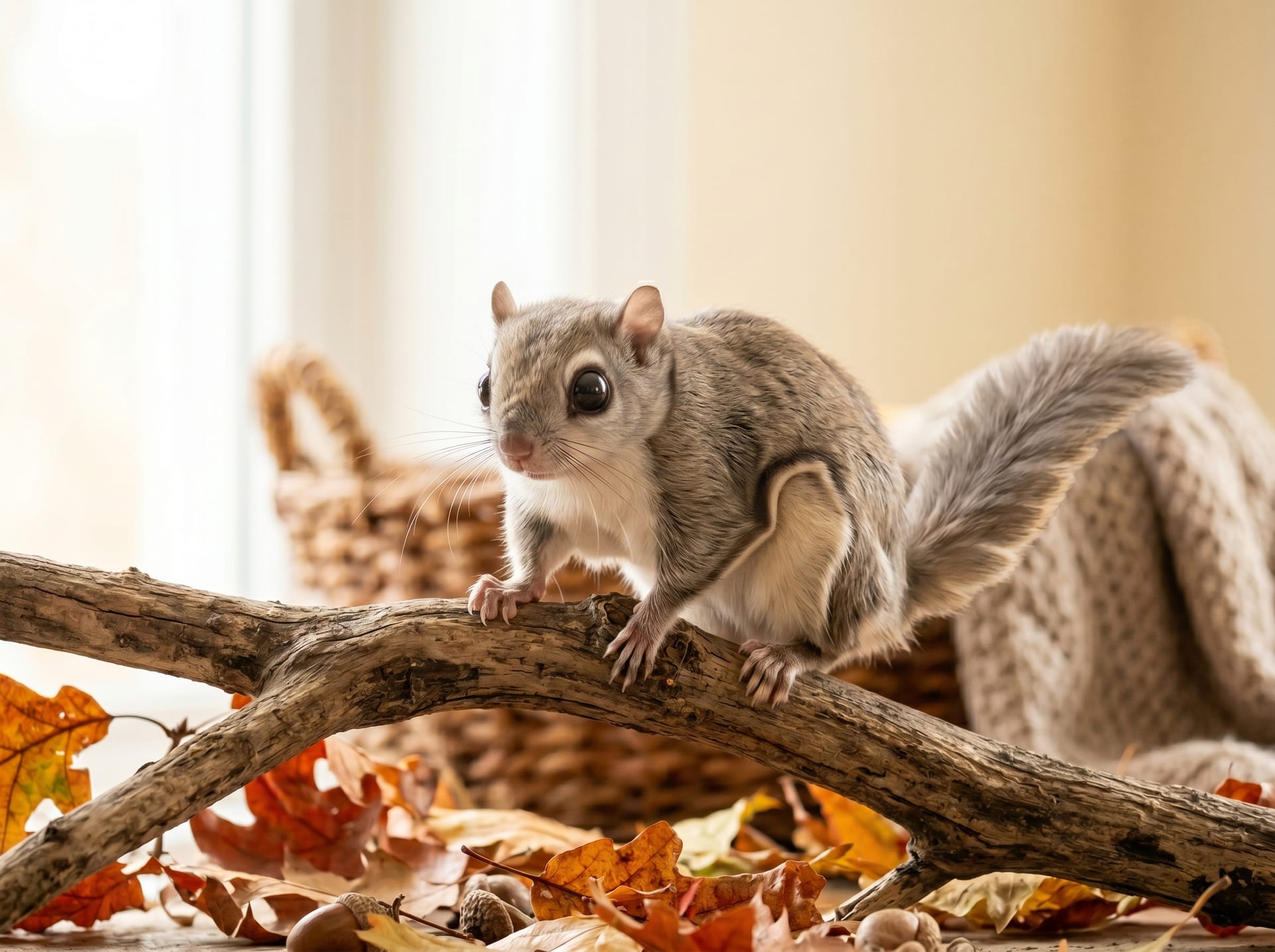
AI-generated image
Japanese Dwarf Flying Squirrel
AdvancedAdorable gliding squirrel with large eyes and fluffy fur. Nocturnal and shy but bonds with patient owners.
Difficulty
Advanced
Temperature
18〜26℃
Lifespan
10-15 years
Size
14-20cm (with tail) / 150-220g
Humidity
40〜60%
Diet
Flying squirrel food, insects, fruits, sap jelly
About
Flying squirrels are a group of small gliding rodents in the family Sciuridae, found across Eurasia and North America. The species most commonly kept as pets include the Southern flying squirrel (Glaucomys volans) from North America and the Siberian flying squirrel (Pteromys volans). Adults measure 10–15 cm and weigh 50–150 g. Their defining feature is the patagium—a membrane stretching between the wrists and ankles—that allows them to glide between trees. They are nocturnal, with large eyes adapted for low-light vision. Flying squirrels can be shy and require patient, consistent socialization before they become comfortable with handling. Keeping them in pairs is recommended for their social well-being. Housing must be a tall cage (minimum 60 cm height) furnished with branches, perches, and a nest box. Diet is omnivorous: fruits, seeds, insects, and nuts. Optimal temperature is 20–28 °C. Common health concerns include metabolic bone disease from calcium deficiency and stress-related illness. Lifespan in captivity is 6–10 years.
Source: Wikipedia (CC BY-SA 4.0)
Basic Info
Origin
Eurasia and North America
Lifespan
10-15 years
Size
14-20cm (with tail) / 150-220g
Temperature
18〜26℃
Humidity
40〜60%
Diet
Flying squirrel food, insects, fruits, sap jelly
References & Sources
Edited & verified by: br-choku editorial team
The taxonomic, regulatory, and husbandry data on this page are compiled and verified against the authoritative primary sources below.
Primary sources
Japanese Dwarf Flying Squirrel Listings
Loading latest listingsFind listings for this species