Source: Wikimedia Commons
Lesser Egyptian Jerboa
AdvancedJaculus jaculus
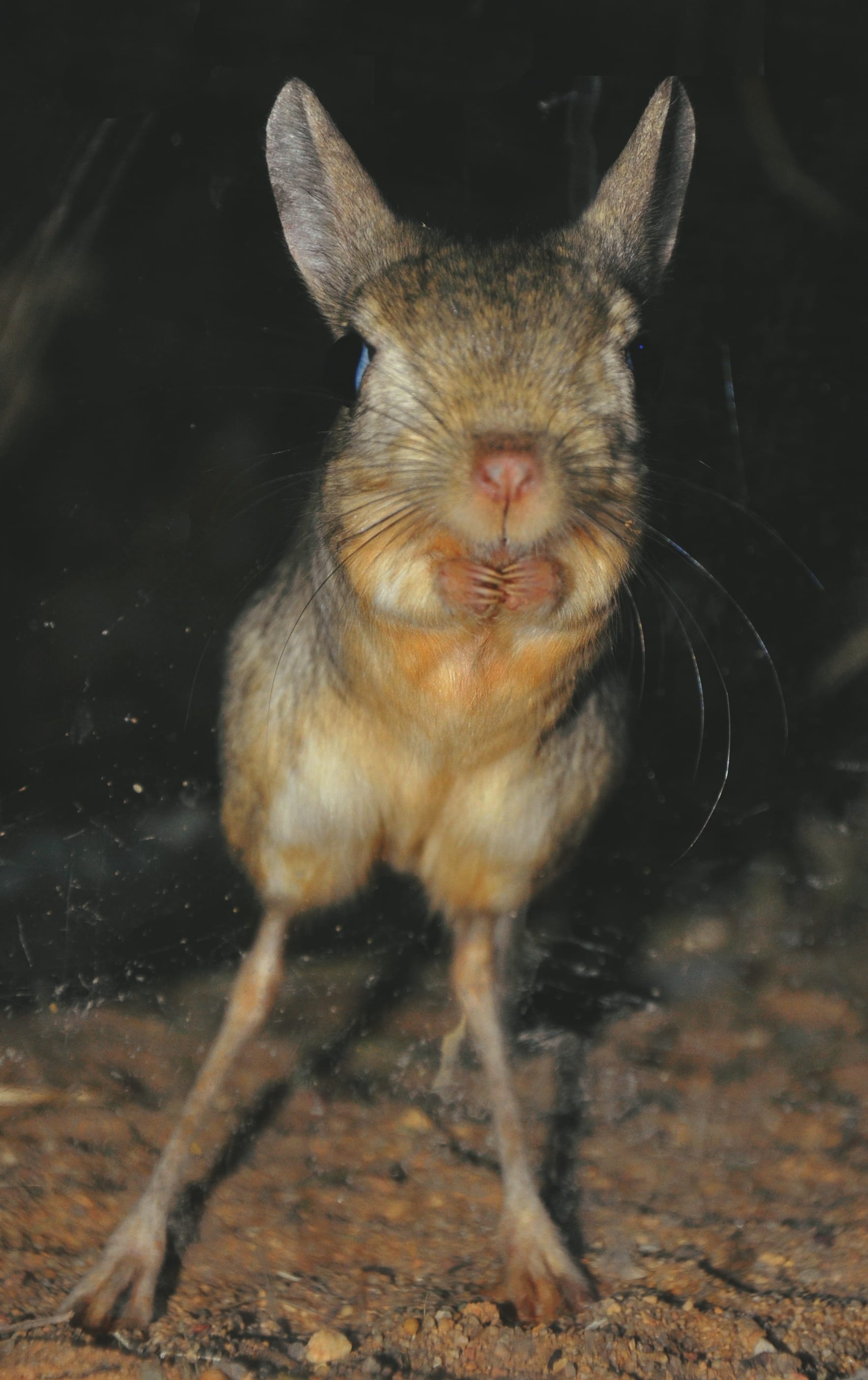
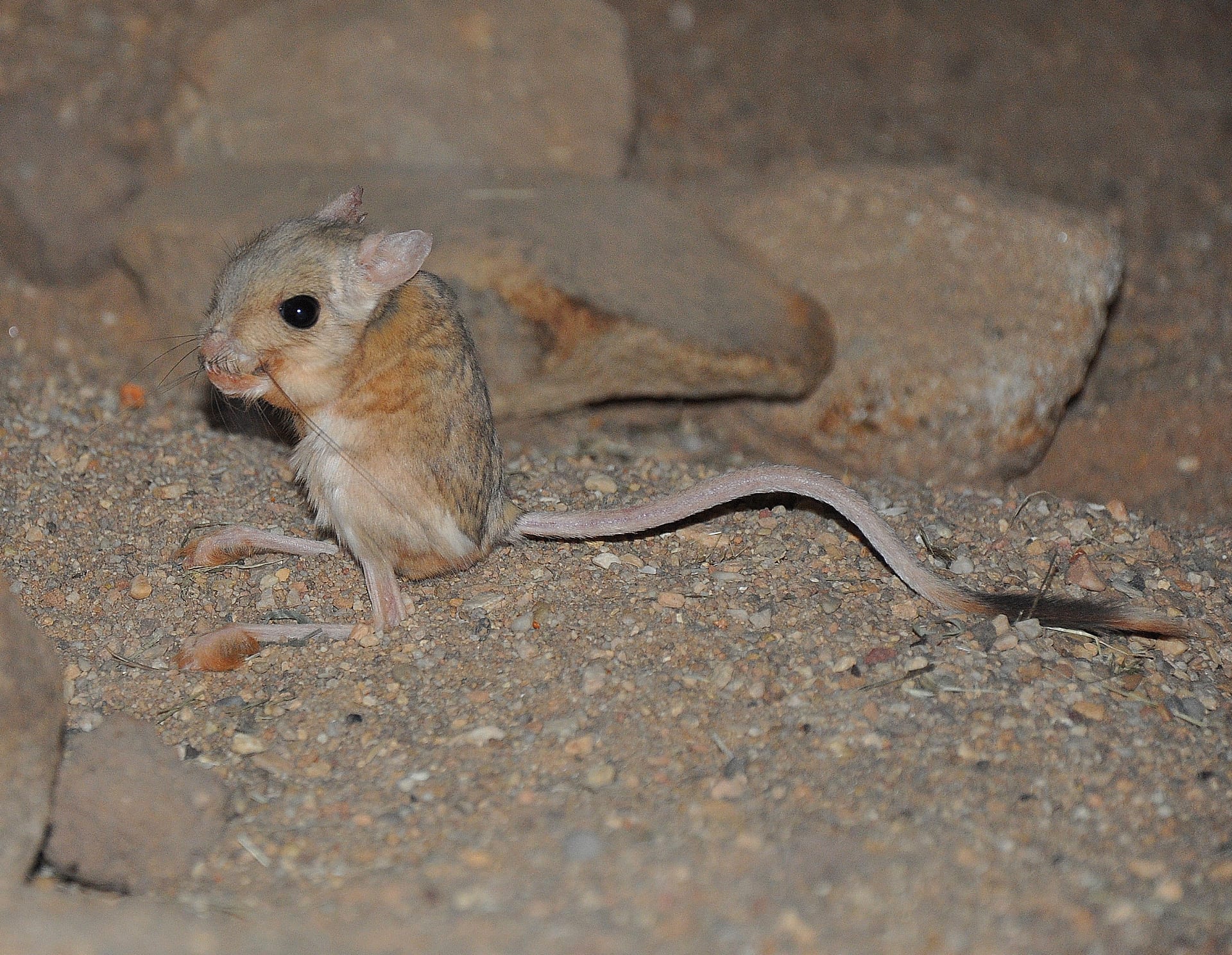
A desert jerboa that hops on long hind legs; body about 10 cm with a tail up to 25 cm. Strictly nocturnal and gets its water from food. Needs a tall, dry enclosure for jumping.
Difficulty
Advanced
Temperature
18〜26℃
Lifespan
5-6 years in captivity
Size
9.5-11cm body (tail 12.8-25cm) / 43-73g
Humidity
40〜60%
Diet
Seeds, millet, dried grasses, a few insects
About
The lesser Egyptian jerboa (Jaculus jaculus) is a small member of the jerboa family found across the Sahara, parts of the Sahel and the Middle East. It hops like a kangaroo, covering up to 3 m in a bound and nearly 10 km in a night. Strictly nocturnal, it spends the day in a burrow dug in a counterclockwise spiral to about 1.2 m deep. It rarely drinks, obtaining water from seeds, succulent grasses, insects and desert truffles. Solitary in the wild, it breeds twice a year with litters of four to five. Keeping it requires a dry sand floor and a tall tank or cage that withstands jumping; it is intolerant of humidity and cold. It dislikes handling and suits experienced keepers who enjoy observation. IUCN Least Concern, not CITES-listed. Imports into Japan fall under the rodent notification system, limited to animals from facilities meeting MHLW storage-facility standards for rodents.
Source: Wikipedia (CC BY-SA 4.0)
Lifespan of the Lesser Egyptian Jerboa
The Lesser Egyptian Jerboa lives 5-6 years in captivity.
Wild lifespan is 3-4 years; 5-6.4 years is recorded in captivity.
Size of the Lesser Egyptian Jerboa
The Lesser Egyptian Jerboa grows to 9.5-11cm body (tail 12.8-25cm) / 43-73g.
Body length is 9.5-11 cm against a tail of 12.8-25 cm, hind feet 5-7.5 cm, weight 43-73 g.
Basic Info
Origin
Sahara Desert, Sahel and the Middle East
Lifespan
5-6 years in captivity
Care Specifications
Solitary
Sources: Animal Diversity Web Jaculus jaculus / Wikipedia (en) Lesser Egyptian jerboa
References & Sources
Edited & verified by: BreederDirect editorial team
The taxonomic, regulatory, and husbandry data on this page are compiled and verified against the authoritative primary sources below.
Primary sources
- Wikipedia
- CITES Appendices (species not listed)
- IUCN Red List Jaculus jaculus (LC)
- MHLW Animal Import Notification System (Infectious Diseases Control Act)
- MHLW list of animals outside the notification system (Rabies Prevention Act / Livestock Act) and import-prohibited animals
- Animal Diversity Web Jaculus jaculus
- GBIF
Taxonomy & Authority
Accepted name: Jaculus jaculus (Linnaeus, 1758)
Authority databases: GBIF
Nomenclature follows global taxonomic authority databases.
Regulations & Conservation Status
Not CITES-listedIUCN LC · Least Concern
Domestic law: Imports into Japan fall under the Infectious Diseases Control Act notification system for rodents; animals must come from facilities meeting MHLW storage standards for rodents, with an exporting-government health certificate.
Sources: CITES Appendices (species not listed) / IUCN Red List Jaculus jaculus (LC) / MHLW Animal Import Notification System (Infectious Diseases Control Act) / MHLW list of animals outside the notification system (Rabies Prevention Act / Livestock Act) and import-prohibited animals
Regulations may change. Always verify the latest information with the relevant authorities.
Lesser Egyptian Jerboa Listings
Loading latest listingsFind listings for this species