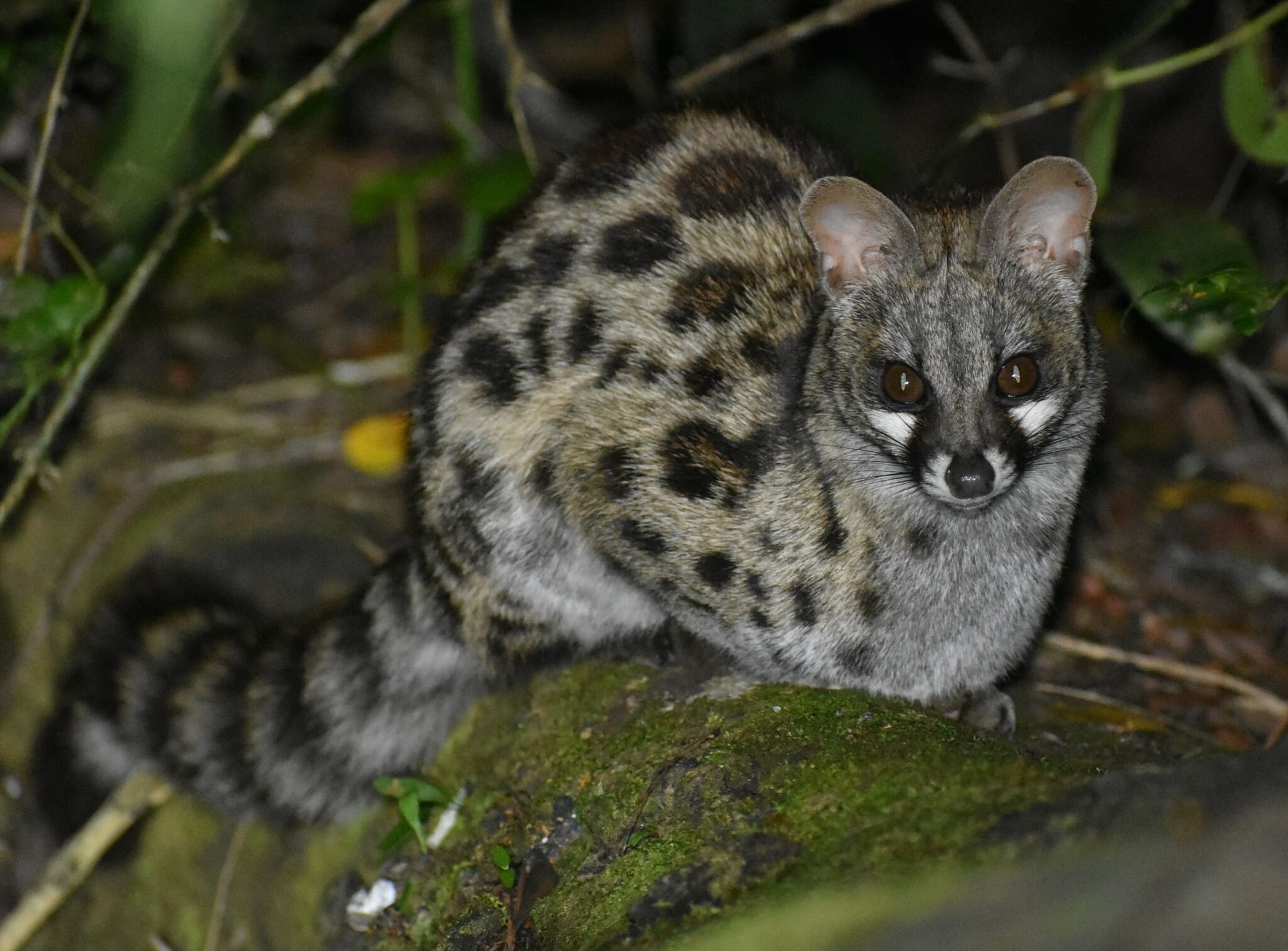
 © Justin Ponder / CC BY 4.0
Cape Genet
The Cape genet is a member of the civet family native to South Africa. Its grey coat carries irregular brown spots, a black stripe runs along the spine, and the tail is ringed in black and white with a black tip. Nocturnal by nature, it rests in trees and hunts on the ground. Its sleek, wild look is a big part of its appeal, but its care difficulty is rated for experienced keepers. With a recorded lifespan of 15 years in captivity, it pays to research its needs thoroughly before you commit.
View Cape Genet encyclopedia →0% commission on your first sales!Register by September 30, 2026 and your first 2 sales are commission-free!
Breeder Wanted!
List on BreederDirect and sell directly to customers nationwide!
BreederDirect's 6 Transparency Commitments
Every Small Pets listing from Breeder includes the information below. We guarantee transparency through health checks, vaccinations, microchips, and more.
- Hand-Tamed
- Health Checked
- Vaccinated
- Microchipped
- Real Photos
- Age Specified
Browse all 168 breeds
Care Difficulty
Verified breeders wanted for Small Pets
Breeders are signing up now ahead of launch. Subscribe to be notified when new listings go live.
Getting alerts is free with a member account. When new listings match your saved search, we'll notify you by email and in-app.
Browse other categories
Verified breeders (preview)

Are you raising small pets?
Register as a breeder and connect with buyers directly.
Apply as a breederCape Genet key facts
- Care level
- Advanced
- Lifespan
- Captive record of 15 years
- Size
- Head and body 42.7–58cm, tail 38.5–45.9cm; 1.36–2.1kg (males slightly larger)
- Diet
- Omnivore: mainly rodents, plus insects, spiders, seeds and grass
- Identification
- The black-and-white ringed tail ends in a black tip (pale in the common genet). A short dorsal crest and sparsely spotted hind legs, dark at the back, also help.
- Housing
- It rests high in trees or under rocks by day and hunts on the ground. Provide a tall, large, strong enclosure with branches, shelves and a dark daytime hide, and make it escape-proof.
- Diet
- Wild genets eat mainly rodents plus insects, spiders, scorpions, seeds and grass. Base the diet on frozen mice and insects and plan it with an exotic-animal vet.
- Temperament
- Solitary and mostly nocturnal; it hisses and growls when stressed. As a sharp-toothed carnivoran it can bite badly.
- Odour
- It scent-marks with anal-sac secretions and uses fixed latrine sites. Indoors, plan for odour control and ventilation, and keep its latrine spot clean.
- Notes
- Captive animals have lived 15 years, and few vets treat genets. Imports fall under the animal import notification system. Never release captive animals into the wild.
About Cape Genet
Cape genet: a nocturnal South African civet-family animal with a spotted grey coat and a ringed tail. Advanced-level care, with 15 years recorded in captivity.
7 things to know before welcoming a Cape Genet
1For experienced keepers
The Cape genet is rated as suited to experienced keepers. It is not a domesticated companion like a dog or cat, so it should not be handled with the same expectations. Gather thorough information about its habits and needs before deciding.
2A nocturnal rhythm
Cape genets are nocturnal, so they are mostly active at night and tend to rest during the day. You may not always be able to interact with one when it suits you. Consider whether your home can accommodate nighttime noise and movement.
3Space with height
This animal rests in trees and hunts on the ground, so its habitat should offer vertical movement, not just floor space. Provide climbable branches or platforms and a hideaway for resting. A secure, escape-resistant build is also essential.
4Adult size
Adults measure 42.7 to 58 cm in head-body length with a 38.5 to 45.9 cm tail, and weigh 1.36 to 2.1 kg; males are slightly larger. The tail is nearly as long as the body, so leave generous room in the enclosure and the space around it.
5Thinking about diet
As a ground-hunting predator, its diet should be planned around its natural feeding habits. Ask the seller, an experienced keeper, or a veterinarian who treats exotic animals for concrete guidance on what to feed.
6Scent and territory
Members of the civet family have scent glands and are known to mark territory with scent. Plan for odor control and regular cleaning of the living area. Also think about where the habitat will sit relative to your living space.
7Long-term care and vets
With 15 years recorded in captivity, you should be confident you can keep up its care over a long period. Before bringing one home, find a veterinary clinic that can examine exotic animals, so you know where to turn if its condition changes.
Frequently asked questions about Cape Genet
- Q.Can a beginner keep a Cape genet?
- A.Its care difficulty is rated for experienced keepers, so it is not an ideal first animal. Build up experience with small animals first, and research the Cape genet's biology and habitat needs thoroughly before deciding.
- Q.How long does a Cape genet live?
- A.There is a recorded lifespan of 15 years in captivity. This varies with the individual and its care, so treat it as a guide and consider whether you can commit to long-term care.
- Q.How big does an adult Cape genet get?
- A.Adults measure 42.7 to 58 cm in head-body length with a 38.5 to 45.9 cm tail, and weigh 1.36 to 2.1 kg, with males slightly larger. Because the tail is long, the habitat needs generous room.
- Q.Is a Cape genet active during the day?
- A.It is nocturnal, so it is mostly active at night and usually rests during the day. Consider whether its nighttime movement and noise will fit your household.
- Q.What kind of habitat suits a Cape genet?
- A.Since it rests in trees and hunts on the ground, a habitat with room to move up and down suits it best. Provide climbable branches or platforms and a place to hide and rest, and make sure the enclosure is escape-resistant.
Useful tools for Cape Genet care
Learn more about Cape Genet in the encyclopedia
View Cape Genet encyclopedia entry →
Care difficulty, lifespan, size and diet — all basics covered.
More in this category
Can't find the one you're looking for?
Post your wishes for free and breeders with matching animals will contact you with introductions.