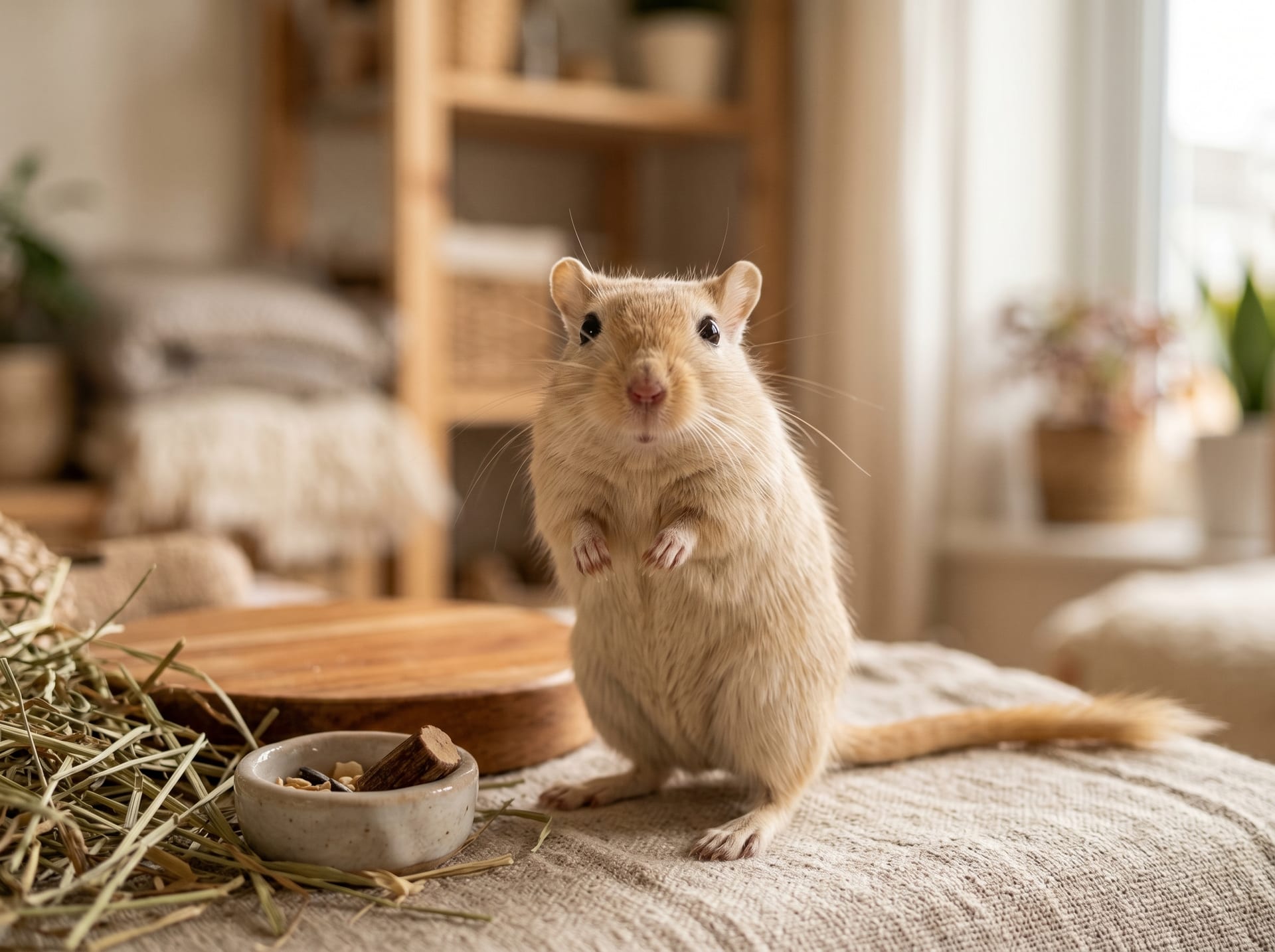
Gerbil
The gerbil is a small, lively animal native to the arid regions of Central Asia, known for its curious and energetic personality. Highly social by nature, gerbils thrive when kept in pairs or small groups. They are hardy and relatively low-maintenance, making them a good choice for first-time small-animal owners.
0% commission on your first sales!Register by September 30, 2026 and your first 2 sales are commission-free!
Breeder Wanted!
List on BreederDirect and sell directly to customers nationwide!
6 Transparency Commitments from Br-Choku
Every Small Pets listing from Breeder includes the information below. We guarantee transparency through health checks, vaccinations, microchips, and more.
- Hand-Tamed
- Health Checked
- Vaccinated
- Microchipped
- Real Photos
- Age Specified
Browse all 28 breeds
Care Difficulty
Verified breeders wanted for Small Pets
Breeders are signing up now ahead of launch. Subscribe to be notified when new listings go live.
Getting alerts is free with a member account. When new listings match your saved search, we'll notify you by email and in-app.
Browse other categories
Verified breeders (preview)
Are you raising small pets?
Register as a breeder and connect with buyers directly.
Apply as a breederAbout Gerbil
Gerbils originate from the dry grasslands and deserts of Mongolia and northern China, where they live in family groups and dig extensive burrow systems. They were introduced to the United States in the 1950s as laboratory animals, and their hardiness and charm quickly made them popular as household pets worldwide. Excluding the tail, gerbils measure around 10–13 cm in body length; the tail is roughly equal in length and ends in a distinctive tufted tip. They come in a wide range of color varieties beyond the natural agouti, including white, black, and cinnamon. Curious and energetic, gerbils are active at various times throughout the day and night, making them entertaining to observe. They produce little odor and make minimal noise, making them a practical and appealing choice even in apartment living.
7 things to know before welcoming a Gerbil
1Keep in Pairs or Groups
Gerbils are naturally social animals that live in colonies in the wild. Keeping a single gerbil can lead to stress and may negatively affect its health. Same-sex pairs or small groups are generally recommended for their wellbeing.
2Sand Bathing for Grooming
Gerbils keep themselves clean through sand bathing rather than water baths. Providing a container of fine sand (such as chinchilla sand) in the cage a few times a week helps maintain healthy, shiny fur. Avoid washing them with water, as it can cause stress and a dangerous drop in body temperature.
3Expect Digging and Chewing
Gerbils have a strong instinct to dig and chew. Provide a deep layer of bedding (5–10 cm or more) so they can burrow and tunnel naturally. Offer safe chewing materials such as untreated wooden chews or cardboard tubes regularly to satisfy this behavior and help keep their teeth worn down.
4Never Grab by the Tail
A gerbil's tail has delicate skin that can strip away if grabbed firmly, a condition known as degloving. Always handle gerbils by gently scooping the whole body with cupped hands, and never restrain them by the tail. Until they are tame, handle them close to a surface to minimize the risk of injury from a fall.
5Prefer Warm, Dry Conditions
Adapted to desert climates, gerbils are sensitive to high humidity. Aim for an ambient temperature of 20–26°C and relative humidity below 50%. During hot, humid summers, ensure good ventilation and place the cage away from direct sunlight and air-conditioning drafts.
6Prone to Epileptic Seizures
Gerbils are genetically predisposed to epileptic-like seizures, which can be triggered by sudden sounds, bright lights, or abrupt handling. If a seizure occurs, do not restrain the animal—keep the surroundings quiet and let it rest in a calm, dimly lit space afterward. Consult a veterinarian if seizures become frequent.
7Estimated Setup and Running Costs
Initial setup costs for a cage, wheel, sand bath container, bedding, and food dish typically run around ¥10,000–¥20,000. Ongoing monthly expenses for pellet food, bedding, and sand are roughly ¥1,000–¥2,000. Since a pair requires little additional space or equipment compared to a single gerbil, keeping two is considered cost-effective.
Frequently asked questions about Gerbil
- Q.Can gerbils be kept alone?
- A.While it is possible to keep a single gerbil, they are highly social animals that can become stressed without a companion. Keeping same-sex pairs is strongly recommended whenever possible.
- Q.What type of cage is best for gerbils?
- A.Glass tanks or enclosures that allow for deep bedding are ideal, as they support natural burrowing behavior. Wire cages can pose risks of leg injury and bedding scatter. Aim for a minimum width of around 60 cm to give them adequate space.
- Q.How are gerbils different from hamsters?
- A.Unlike hamsters, gerbils are active during the day as well as at night, and they are far more social, thriving in pairs. They have a slimmer build with a long tufted tail and tend to move quickly. Overall, they offer more opportunities for active observation than hamsters.
- Q.Do gerbils bond with their owners?
- A.With regular gentle handling, many gerbils become comfortable with their owner's hands and may even eat treats from your fingers. As they move quickly, it is safest to handle them close to the ground until they are well-accustomed to you.
- Q.What should gerbils be fed?
- A.The main diet should consist of commercial gerbil pellets or small animal seed mixes, supplemented in small amounts with vegetables or dried corn. High-fat foods and excessive seeds can lead to obesity, so offer these sparingly. Fresh water should always be available.
Useful tools for Gerbil care
Gerbil related articles
See more Gerbil articles →More in this category
Can't find the one you're looking for?
Post your wishes for free and breeders with matching animals will contact you with introductions.