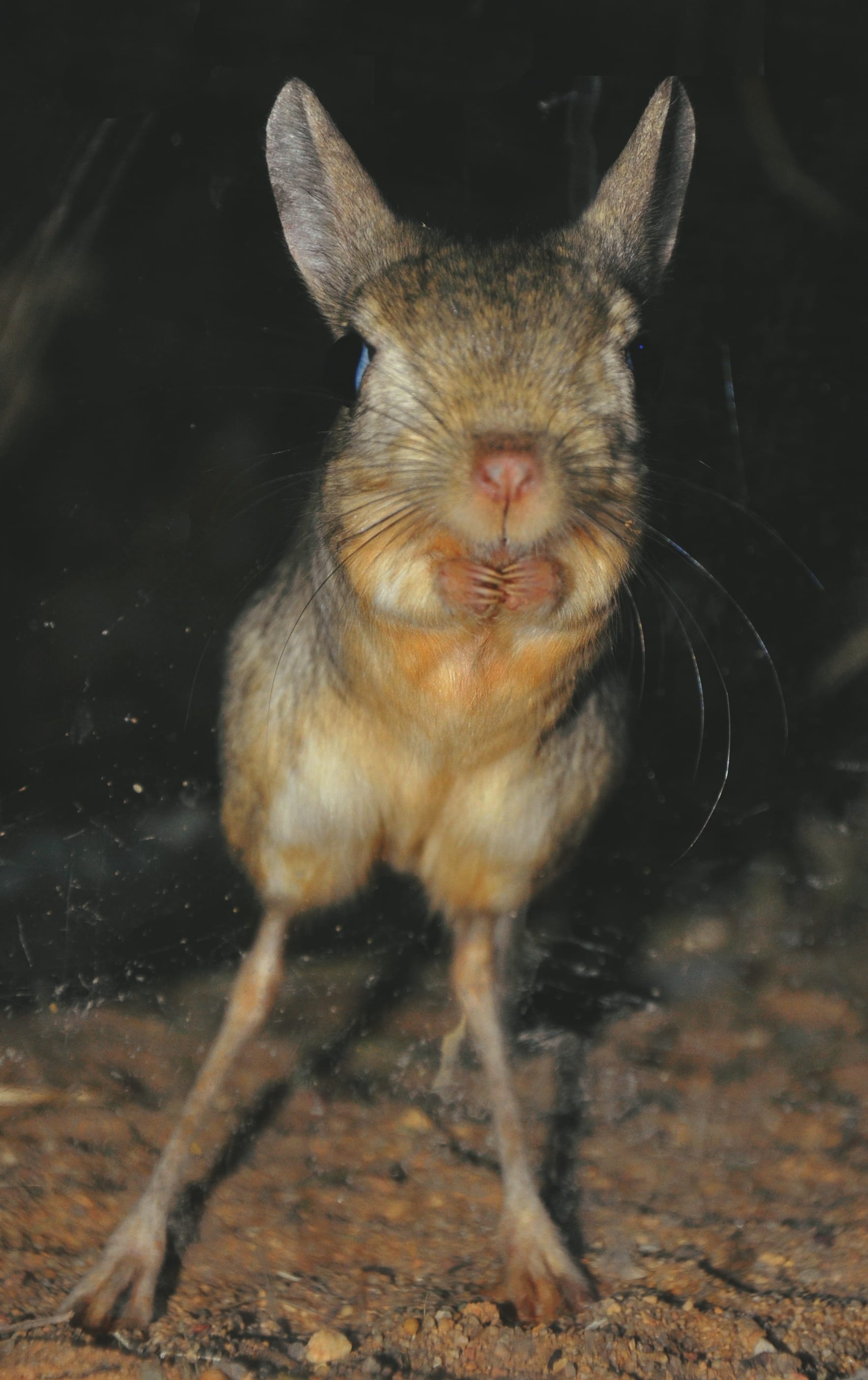
 © Elias Neideck / CC BY-SA 3.0
Greater Egyptian Jerboa
The Greater Egyptian Jerboa is a striking bipedal rodent native to the arid regions of North Africa and the Middle East. Its tail, at roughly 20 cm, is noticeably longer than its 13 cm body, helping it balance while leaping. Strictly nocturnal, it rests quietly through the day and becomes active after dark, hopping about on its powerful hind legs. Jerboas rarely tame down to handling and move with quick, skittish reflexes, so keeping them well takes experience and careful setup. With its oversized eyes and distinctive hopping gait, this species has real ornamental appeal, but recreating a dry, desert-like enclosure makes it best suited to advanced keepers.
View Greater Egyptian Jerboa encyclopedia →0% commission on your first sales!Register by September 30, 2026 and your first 2 sales are commission-free!
Breeder Wanted!
List on BreederDirect and sell directly to customers nationwide!
6 Transparency Commitments from Br-Choku
Every Small Pets listing from Breeder includes the information below. We guarantee transparency through health checks, vaccinations, microchips, and more.
- Hand-Tamed
- Health Checked
- Vaccinated
- Microchipped
- Real Photos
- Age Specified
Browse all 145 breeds
Care Difficulty
Verified breeders wanted for Small Pets
Breeders are signing up now ahead of launch. Subscribe to be notified when new listings go live.
Getting alerts is free with a member account. When new listings match your saved search, we'll notify you by email and in-app.
Browse other categories
Verified breeders (preview)
Are you raising small pets?
Register as a breeder and connect with buyers directly.
Apply as a breederAbout Greater Egyptian Jerboa
A bipedal jerboa native to the arid regions of North Africa and the Middle East, with a tail longer than its body and strictly nocturnal habits. Captive lifespan is 5-6 years; best suited to advanced keepers.
7 things to know before welcoming a Greater Egyptian Jerboa
1Strictly Nocturnal Habits
Jerboas sleep through most of the day and become active only after dark. Care and observation naturally center on evening and nighttime hours.
2Powerful Jumper, Escape Risk
Their hind legs generate surprisingly powerful jumps, often higher than expected. A securely lidded, sufficiently tall enclosure is essential to prevent escapes.
3Needs a Dry Environment
Native to arid habitats, jerboas do not tolerate damp conditions well. Choose substrate and ventilation that keep the enclosure consistently dry.
4Not Easily Tamed
Naturally wary and quick to flee, jerboas rarely become comfortable with handling. They're best enjoyed as an animal to watch rather than hold.
5Delicate Body, Handle Gently
Their long hind legs and tail are delicate and easily injured under rough restraint. Handle gently and carefully during health checks or transfers.
6Best Kept Alone
Jerboas tend to be territorial, and housing multiple individuals together can lead to conflict. Keeping them singly is generally recommended.
7Digging and Gnawing Instincts
Jerboas have a natural instinct to dig burrows and gnaw on materials. A deep substrate layer lets them express this behavior, and cage surroundings should use gnaw-safe materials.
Frequently asked questions about Greater Egyptian Jerboa
- Q.Does the Greater Egyptian Jerboa tame down to handling?
- A.They tend to be wary and quick-moving, so they rarely become comfortable being handled. They're best kept as an animal to watch rather than touch.
- Q.Can I see it active during the day?
- A.It's strictly nocturnal and spends most of the day resting. To see it active, observe it in the evening or at night.
- Q.How long do they typically live?
- A.In captivity, they're reported to live around 5 to 6 years. It's worth preparing for a long-term commitment before bringing one home.
- Q.Can I keep more than one together?
- A.They tend to be territorial, and housing multiple individuals together can lead to conflict, so keeping them singly is generally recommended.
- Q.Is this a good species for beginners?
- A.Recreating a dry habitat and managing their quick, skittish movements takes some experience, so this species is considered better suited to advanced keepers.
Useful tools for Greater Egyptian Jerboa care
Learn more about Greater Egyptian Jerboa in the encyclopedia
View Greater Egyptian Jerboa encyclopedia entry →
Care difficulty, lifespan, size and diet — all basics covered.
More in this category
Can't find the one you're looking for?
Post your wishes for free and breeders with matching animals will contact you with introductions.