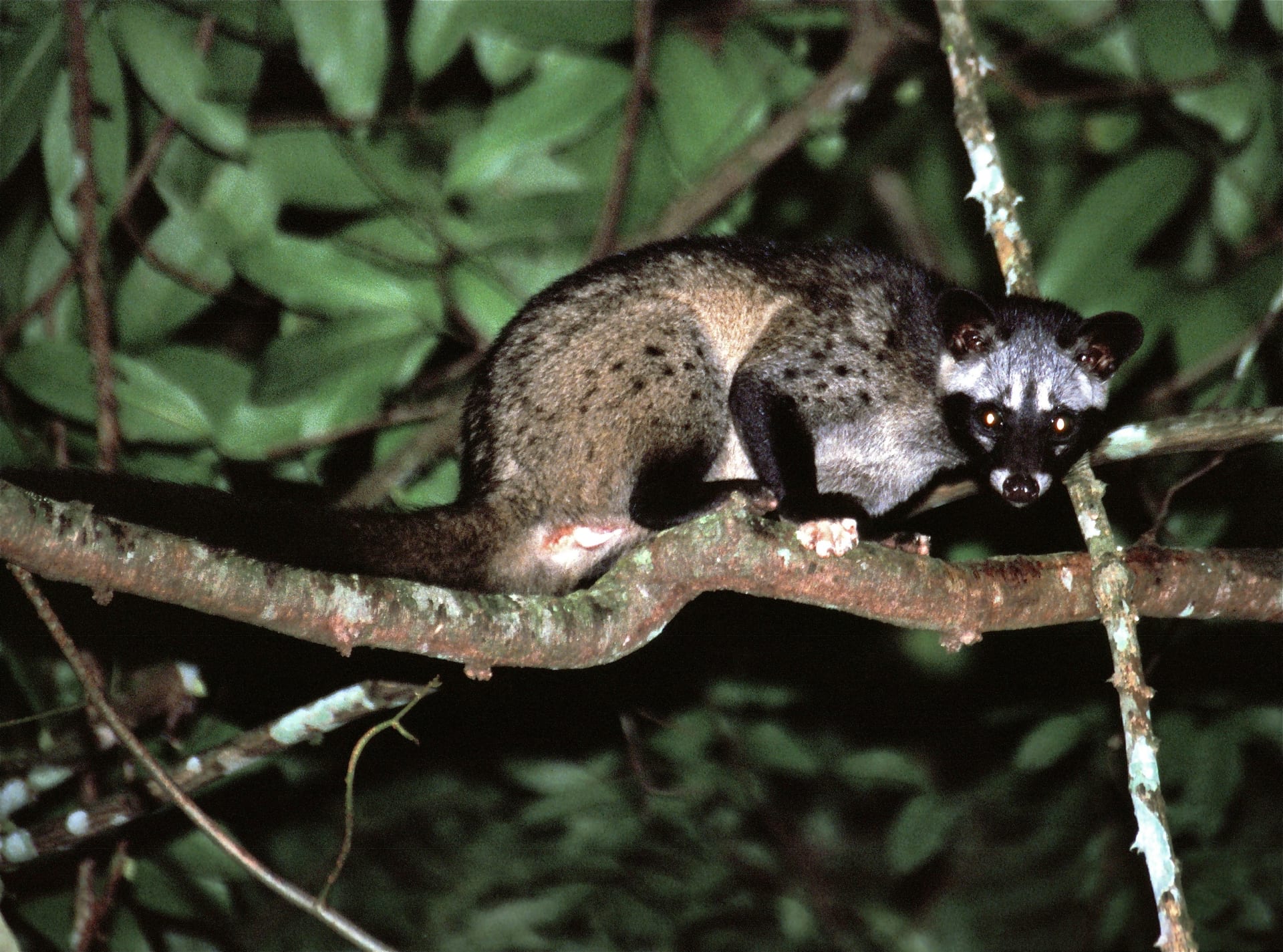
 © Bernard DUPONT from FRANCE / CC BY-SA 2.0
Asian Palm Civet
The Asian palm civet is a civet from the forests of South and Southeast Asia. It has coarse, dark fur with rows of spots along the flanks, a white facial pattern, and a long tail without rings. Mostly nocturnal and tree-dwelling, it favors ripe fruit. Adults average about 50 cm in head-and-body length, with a tail of about 48 cm, and weigh about 3 kg (1.3 to 5 kg). Lifespan is 15 to 20 years in the wild, with a captive record of 24 years and 5 months. Its distinctive look is appealing, but it is rated for advanced keepers and calls for long-term commitment and careful preparation.
View Asian Palm Civet encyclopedia →Breeder Wanted!
List on BreederDirect and sell directly to customers nationwide!
BreederDirect's 6 Transparency Commitments
Every Small Pets listing from Breeder includes the information below. We guarantee transparency through health checks, vaccinations, microchips, and more.
- Hand-Tamed
- Health Checked
- Vaccinated
- Microchipped
- Real Photos
- Age Specified
Browse all 168 breeds
Care Difficulty
Verified breeders wanted for Small Pets
Breeders are signing up now ahead of launch. Subscribe to be notified when new listings go live.
Getting alerts is free with a member account. When new listings match your saved search, we'll notify you by email and in-app.
Browse other categories
Verified breeders (preview)
Are you raising small pets?
Register as a breeder and connect with buyers directly.
Apply as a breederAsian Palm Civet key facts
- Care level
- Advanced
- Lifespan
- 15–20 years wild; captive record of 24 years 5 months
- Size
- Head and body about 50cm, tail about 48cm; about 3kg (1.3–5kg)
- Diet
- Omnivore, mostly fruit: ripe fruit, especially figs and palm fruit
- Housing
- Nocturnal and arboreal, resting in tree holes by day. Provide a tall, strong enclosure with branches, shelves and a dark sleeping box; it is strong and agile, so secure doors and mesh against escape.
- Diet
- It prefers ripe fruit such as figs and palm fruit but will eat almost anything. Plan a balanced diet with an exotic-animal vet rather than fruit alone.
- Odour
- It rubs a scent gland under its tail on objects to mark them, and sprays a nauseating secretion from its anal glands when threatened. Odour is a major issue indoors.
- Temperament
- Usually solitary. As a carnivoran with sharp teeth and claws, an adult can inflict serious bites.
- Regulations
- Listed in CITES Appendix III by India; imports fall under the animal import notification system. Not a specified animal in Japan.
- Notes
- It can live around 20 years and very few vets treat civets; find one first. Never release captive animals into the wild.
About Asian Palm Civet
Asian palm civet: a nocturnal, tree-dwelling civet of South and Southeast Asia. About 3 kg, with a captive record of 24 years 5 months. Rated for advanced keepers.
7 things to know before welcoming a Asian Palm Civet
1Advanced-Level Care
The difficulty level is rated for advanced keepers. Because the animal is nocturnal and lives in trees, the setup has to match its natural habits, so it is realistic to gain experience with other small animals first. It also helps to line up experienced keepers and a veterinarian who treats exotic animals before you bring one home.
2A Long Commitment
Lifespan is 15 to 20 years in the wild, and there is a captive record of 24 years and 5 months. Because this is a long commitment, think ahead about whether you can keep caring for it through moves and changes in your household.
3Nocturnal Rhythm
It is most active at night and rests during the day. Nighttime noise and movement can affect your household, so consider placing the enclosure away from bedrooms. Provide a quiet, calm resting spot for the daytime and introduce changes gradually.
4Vertical Living Space
This is a tree-dwelling animal, so height matters as much as floor area, along with branches and platforms to climb and cross. Adults average about 50 cm in head-and-body length plus a tail of about 48 cm, so allow room to stretch out and move.
5Fruit-Loving Diet
In the wild it prefers ripe fruit. In captivity, a diet of fruit alone may leave nutrition unbalanced, so decide the menu together with a veterinarian or experienced keeper. Preferences vary between individuals, so keeping notes on leftovers and weight changes is useful.
6Size and Escape-Proofing
Body weight averages about 3 kg (1.3 to 5 kg) and varies between individuals. Its build suits climbing, so prepare for escapes and damage to furniture with secure latches and reinforcement on the enclosure and room.
7Odor and Hygiene
Members of the civet family are known to have scent glands, so plan for odor and clean the enclosure regularly. Wash your hands thoroughly after handling the animal or cleaning. If you are worried about its health, consult a veterinarian early rather than relying on your own judgment.
Frequently asked questions about Asian Palm Civet
- Q.Can a beginner keep one?
- A.Its difficulty level is rated for advanced keepers, so it is hard to recommend for someone getting a first pet. Gain experience with small animals and learn how to manage nocturnal, tree-dwelling species before considering one.
- Q.How long does it live?
- A.It lives 15 to 20 years in the wild, and there is a captive record of 24 years and 5 months. Treat these as guidelines, since individuals vary, and plan on a long period of care.
- Q.How big do adults get?
- A.Head-and-body length averages about 50 cm, the tail is about 48 cm, and weight is about 3 kg (1.3 to 5 kg). With its long tail and tree-climbing habits, it needs both width and height in its living space.
- Q.What does it eat?
- A.In the wild it favors ripe fruit. In captivity, avoid relying on fruit alone and work with a veterinarian or experienced keeper to build a balanced diet.
- Q.How is it treated under CITES?
- A.India has listed it in CITES Appendix III. Even when importing from countries other than India, documents such as a certificate of origin are required. Imported animals are also subject to Japan's import notification system under the Infectious Diseases Control Law. No notification is needed to buy, sell or keep animals bred in Japan.
Useful tools for Asian Palm Civet care
Learn more about Asian Palm Civet in the encyclopedia
View Asian Palm Civet encyclopedia entry →
Care difficulty, lifespan, size and diet — all basics covered.
More in this category
Can't find the one you're looking for?
Post your wishes for free and breeders with matching animals will contact you with introductions.