Source: Wikimedia Commons
Asian Palm Civet
AdvancedParadoxurus hermaphroditus
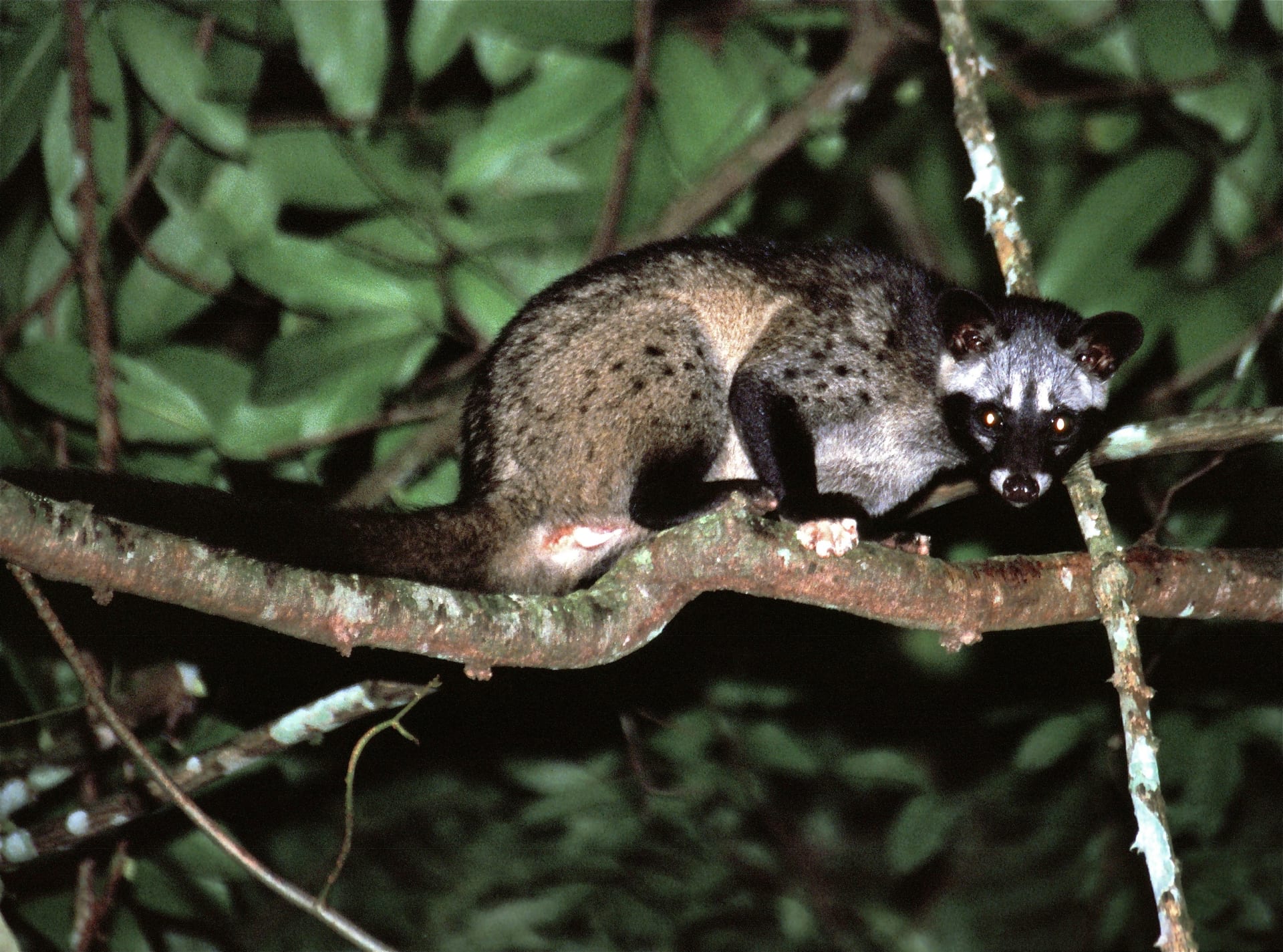
A civet of South and Southeast Asian forests with coarse dark fur, rows of spots on the flanks, a white-marked face and a long unringed tail. It is nocturnal and arboreal and prefers ripe fruit.
Difficulty
Advanced
Temperature
18〜26℃
Lifespan
15–20 years wild; captive record of 24 years 5 months
Size
Head and body about 50cm, tail about 48cm; about 3kg (1.3–5kg)
Humidity
40〜60%
Diet
Omnivore, mostly fruit: ripe fruit, especially figs and palm fruit
About
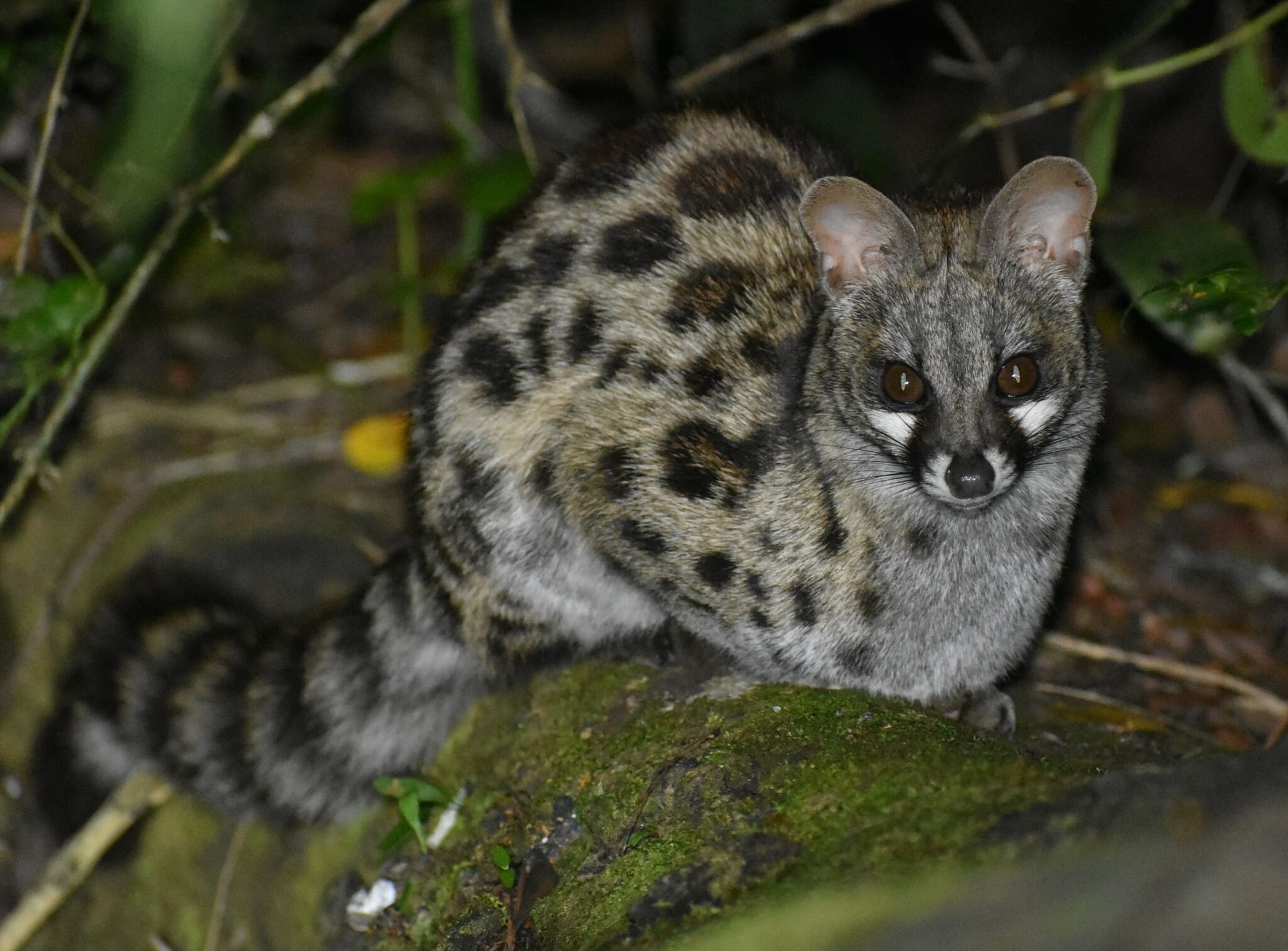
The Asian palm civet (Paradoxurus hermaphroditus) is a member of the civet family (Viverridae). It ranges from Kashmir in the west to the Philippines in the east, across southern India, Sri Lanka, southern China, Southeast Asia and many islands, living in forest as well as parks, suburban gardens and orchards. The short, coarse coat is black to grey, with dark stripes down the back and three rows of black spots on each side, and white patches above and below the eyes and beside the nose, rather like a raccoon's mask. Unlike other civets its tail has no rings, only a black tip. It is nocturnal, arboreal and usually solitary, resting by day in tree holes or rock crevices. It prefers fruit, especially figs and palm fruit, but eats whatever is available. A perineal scent gland under the tail is dragged to leave scent marks, and when threatened it releases a nauseating secretion from its anal glands. It lives 15–20 years in the wild, with a captive record of 24 years 5 months. India lists it in CITES Appendix III. In Japan, specialists import babies only occasionally.
Source: Wikipedia (CC BY-SA 4.0)
Lifespan of the Asian Palm Civet
The Asian Palm Civet lives 15–20 years wild; captive record of 24 years 5 months.
Size of the Asian Palm Civet
The Asian Palm Civet grows to Head and body about 50cm, tail about 48cm; about 3kg (1.3–5kg).
It weighs about 3kg (1.3–5kg), with an average head-and-body length of about 50cm and a tail of about 48cm, nearly as long as the body.
Basic Info
Origin
South and Southeast Asia, from Kashmir to the Philippines, including southern India, Sri Lanka, southern China and Southeast Asian islands
References & Sources
Edited & verified by: BreederDirect editorial team
The taxonomic, regulatory, and husbandry data on this page are compiled and verified against the authoritative primary sources below.
Taxonomy & Authority
Accepted name: Paradoxurus hermaphroditus (Pallas, 1777)
Authority databases: GBIF · GBIF: Paradoxurus hermaphroditus
Nomenclature follows global taxonomic authority databases.
Regulations & Conservation Status
CITES Appendix IIIIUCN LC · Least Concern
Listed in CITES Appendix III by India (since 16 March 1989); imports from other countries still need documents such as a certificate of origin. It is not a specified animal in Japan. Japan's import suspension for masked palm civets (Paguma larvata) does not cover this species. Imports fall under Japan's animal import notification system (Infectious Diseases Control Law, MHLW): a health certificate from the exporting country's government must be filed with the quarantine station. Animals bred in Japan can be sold and kept without notification. Never release captive animals into the wild.
Sources: Species+: CITES listing of Paradoxurus hermaphroditus / MHLW: Animal import notification system (JA) / Ministry of the Environment: Specified (dangerous) animals list (JA)
Regulations may change. Always verify the latest information with the relevant authorities.
Asian Palm Civet Listings
Loading latest listingsFind listings for this species