Source: Wikimedia Commons
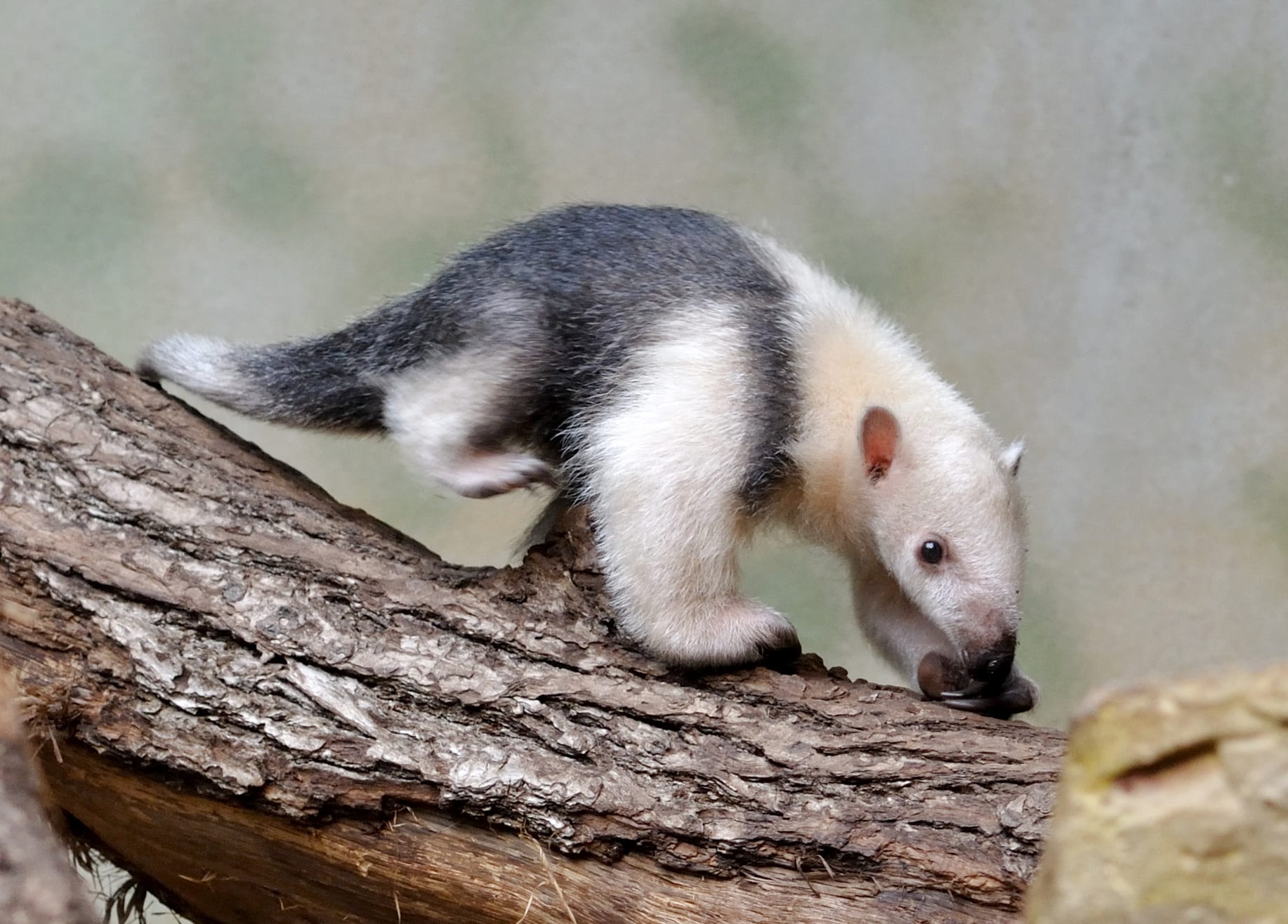
Southern Tamandua
AdvancedTamandua tetradactyla
An arboreal South American anteater that laps up ants and termites with its long tongue and defends itself with powerful forearms and claws. Solitary and nocturnal; up to 9.5 years in captivity. Needs a specialised liquid diet.
Difficulty
Advanced
Temperature
18〜26℃
Lifespan
Up to 9 years 6 months recorded in captivity
Size
34-88cm body (tail 37-67cm) / 1.5-8.4kg
Humidity
40〜60%
Diet
Anteater gruel (insect meal, meat and fruit), ants and termites
About
The southern tamandua (Tamandua tetradactyla) is a medium-sized anteater found in Trinidad and across South America from Venezuela to southern Brazil, Uruguay and northern Argentina at elevations up to 1,600 m. Most have a black 'vest' on a pale body, though some lack the pattern. It eats ants and termites in roughly equal proportions plus small amounts of fruit and beetle larvae. Mainly nocturnal and semi-arboreal, spending 13-64 percent of its time in trees. Solitary, with home ranges of 100-375 hectares; when threatened it rears on its hind legs and strikes with powerful forearms and large claws, hissing and releasing scent from anal glands. Captivity records reach 9 years 6 months, and although solitary in the wild it is said to do well in pairs in captivity. Keeping one requires preparing a gruel that substitutes for ants, a tall enclosure with thick climbing branches, and precautions against claw injuries, so it suits experienced keepers. IUCN Least Concern. Its congener the northern tamandua (T. mexicana) is listed in CITES Appendix III by Guatemala, but this species is not listed. Imports into Japan fall under the notification system for terrestrial mammals of the Infectious Diseases Control Act.
Source: Wikipedia (CC BY-SA 4.0)
Lifespan of the Southern Tamandua
The Southern Tamandua lives Up to 9 years 6 months recorded in captivity.
Size of the Southern Tamandua
The Southern Tamandua grows to 34-88cm body (tail 37-67cm) / 1.5-8.4kg.
Head-body length 34-88 cm, tail 37-67 cm, weight 1.5-8.4 kg with no sexual dimorphism.
Basic Info
Origin
South America (Venezuela to northern Argentina, Trinidad)
Care Specifications
Solitary
Sources: Animal Diversity Web Tamandua tetradactyla / Wikipedia (en) Southern tamandua
References & Sources
Edited & verified by: BreederDirect editorial team
The taxonomic, regulatory, and husbandry data on this page are compiled and verified against the authoritative primary sources below.
Taxonomy & Authority
Accepted name: Tamandua tetradactyla (Linnaeus, 1758)
Authority databases: GBIF
Nomenclature follows global taxonomic authority databases.
Regulations & Conservation Status
Not CITES-listedIUCN LC · Least Concern
Domestic law: Imports into Japan fall under the Infectious Diseases Control Act notification system for terrestrial mammals; a health certificate from the exporting government is required.
The congeneric northern tamandua Tamandua mexicana is listed in CITES Appendix III by Guatemala; this species is not listed.
Sources: CITES Appendices (species not listed) / IUCN Red List Tamandua tetradactyla (LC) / MHLW Animal Import Notification System (Infectious Diseases Control Act)
Regulations may change. Always verify the latest information with the relevant authorities.
Southern Tamandua Listings
Loading latest listingsFind listings for this species