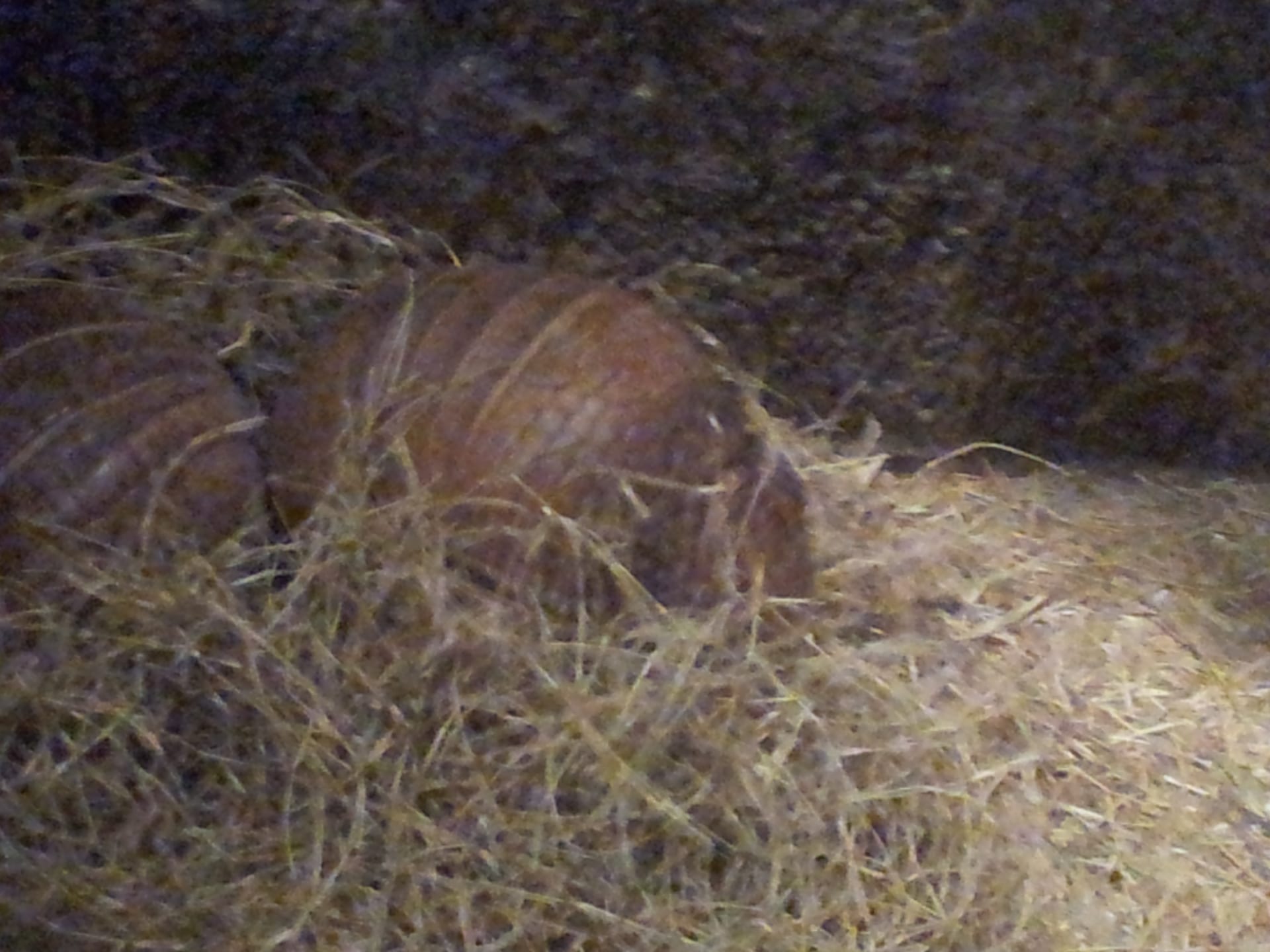
 © Moe Epsilon / CC BY-SA 3.0
Southern Three-banded Armadillo
The Southern Three-banded Armadillo is one of the few armadillos that can close itself completely into a ball. Three movable bands run across its shell, and an adult measures about 30 cm long (tail about 6.4 cm) and weighs roughly 1.4–1.6 kg. It does not dig its own burrow and feeds mainly on ants and termites. Captive records reach 36 years, and its care level is rated for experienced keepers. If the rolled-up pose and unusual shell appeal to you, take time to learn about its diet, housing and long-term commitment before bringing one home.
View Southern Three-banded Armadillo encyclopedia →Breeder Wanted!
List on BreederDirect and sell directly to customers nationwide!
BreederDirect's 6 Transparency Commitments
Every Small Pets listing from Breeder includes the information below. We guarantee transparency through health checks, vaccinations, microchips, and more.
- Hand-Tamed
- Health Checked
- Vaccinated
- Microchipped
- Real Photos
- Age Specified
Browse all 168 breeds
Care Difficulty
Verified breeders wanted for Small Pets
Breeders are signing up now ahead of launch. Subscribe to be notified when new listings go live.
Getting alerts is free with a member account. When new listings match your saved search, we'll notify you by email and in-app.
Browse other categories
Verified breeders (preview)
Are you raising small pets?
Register as a breeder and connect with buyers directly.
Apply as a breederSouthern Three-banded Armadillo key facts
- Care level
- Advanced
- Lifespan
- Captive record of 36 years
- Size
- About 30cm long (tail about 6.4cm); 1.4–1.6kg
- Diet
- Insectivore: mainly ants and termites (fruit and vegetables in captivity)
- Housing
- It does not dig its own burrow and rests in old anteater burrows or under dense cover. Always give a dark, snug shelter and plenty of floor space to walk.
- Diet
- Wild animals live on ants and termites; captives also eat insects, fruit and vegetables. The diet is specialised, so confirm it with an experienced vet or the breeder.
- Temperature
- It traps warm air inside its shell and huddles in cold weather. The ideal keeping temperature is unclear, but as a subtropical species it needs winter heating.
- Temperament
- Usually solitary. When alarmed it rolls up and snaps the last gap shut hard, so handle it so your fingers are not caught.
- Regulations
- Imports fall under the animal import notification system; animals bred in Japan need no notification.
- Notes
- Very long-lived, with a 36-year captive record. Few vets treat armadillos, so find one first. It is Near Threatened in the wild, partly due to the pet trade. Never release captive animals into the wild.
About Southern Three-banded Armadillo
A guide to the Southern Three-banded Armadillo: a small armadillo that rolls into a complete ball, about 30 cm long and 1.4–1.6 kg, with a 36-year captive record. Care level: experienced keepers.
7 things to know before welcoming a Southern Three-banded Armadillo
1For experienced keepers
Its care level is rated for experienced keepers. Diet and housing call for specialist knowledge, and information can be limited, so it is best considered after you have built up experience with other small animals.
2A 36-year captive record
There is a captive record of 36 years. Individuals vary, but you should plan on caring for the animal over a very long time, including possible changes in your housing and family circumstances.
3Rolling up and handling
When it feels threatened, it closes its body completely into a ball. This is a defensive reaction, so do not try to force it open; wait quietly until it settles. Handle it close to the ground and take care not to drop it.
4Thinking about diet
This is an insectivore that feeds mainly on ants and termites. In captivity, one approach is to combine insects with food made for insect-eating animals to balance nutrition. Discuss the exact menu with the breeder or a veterinarian, and line up a source for the food before the animal arrives.
5Hideout and space
Because it does not dig its own burrow, a secure hideout where it can rest is important. Provide one large enough to fit the animal even when rolled up, and give it an enclosure with room to move around. Adjust the layout and substrate as you observe how it behaves.
6Temperature and humidity
It is a South American animal, so watch out for cold and sudden temperature changes. Put a thermometer and hygrometer inside the enclosure, and decide in advance how you will provide heating and climate control so conditions stay stable through the seasons. The suitable temperature and humidity range is best confirmed with the breeder or a veterinarian.
7Preparing and finding a vet
Veterinary clinics that can treat exotic animals may be limited, so find a vet who can see armadillos before you bring one home and confirm an emergency contact. Ask the breeder about the diet, feeding method, health condition and previous housing. Daily observation helps you notice changes in appetite or activity early.
Frequently asked questions about Southern Three-banded Armadillo
- Q.Can a beginner keep a Southern Three-banded Armadillo?
- A.Its care level is rated for experienced keepers. Diet and housing require specialist knowledge, so it is best to gain experience with small animals and gather plenty of information before considering one.
- Q.How big does an adult get?
- A.An adult is about 30 cm long (tail about 6.4 cm) and weighs roughly 1.4–1.6 kg. When rolled up, it forms a compact ball.
- Q.How long does it live?
- A.There is a captive record of 36 years. Individuals vary, so no single figure applies, but you should plan for a very long commitment.
- Q.What does it eat?
- A.It feeds mainly on ants and termites. Decide the captive menu together with the breeder or a veterinarian, and arrange a food source before the animal comes home.
- Q.Why does it roll into a ball?
- A.It is a defensive behavior to protect itself. With three movable bands on its shell, it is one of the few armadillos that can close up completely into a ball. If it rolls up, do not force it open; wait quietly for it to settle.
Useful tools for Southern Three-banded Armadillo care
Learn more about Southern Three-banded Armadillo in the encyclopedia
View Southern Three-banded Armadillo encyclopedia entry →
Care difficulty, lifespan, size and diet — all basics covered.
More in this category
Can't find the one you're looking for?
Post your wishes for free and breeders with matching animals will contact you with introductions.