Hamster Escape Prevention Guide — Causes, Cage Security & Recapture Methods
Preventing hamster escapes: why hamsters escape, cage-type security measures, search techniques, and safe recapture methods.
Key Takeaways
Preventing hamster escapes: why hamsters escape, cage-type security measures, search techniques, and safe recapture methods.
Related Species
Hamsters are skilled escape artists. Preventing escapes requires understanding their abilities and securing enclosures properly.
Why Hamsters Escape
Natural Instincts - Explore territories in wild (can roam miles nightly) - Search for food and resources - Burrow and dig (genetic drive) - Curiosity and restlessness - No concept of "home confinement"
Environmental Triggers - Inadequate space (boredom) - Insufficient enrichment - Cage positioning at various heights - Tempting spaces visible through transparent walls - Stress from noise or overcrowding
Common Escape Routes
Wire Cage Bars - Dwarf hamsters fit through 5mm gaps - Bar-spaced cages problematic - Biting bars creates escape points - Leverage against fixtures - Can squeeze through openings
Tank Lids - Mesh lids easily chewed through - Screen covers offer minimal protection - Flexible materials compromised easily - Weight insufficient for persistent chewers - Gaps at corners from warping
Ventilation Areas - Air holes enlarged by chewing - Corner vents weakened over time - Metal mesh reduced to openings - Particularly in plastic enclosures - Systematic widening of existing holes
Wheel and Accessory Gaps - Spaces between wheel and wall - Fixture attachment points - Ledge to outside edges - Areas where accessories contact walls - Unexpected gaps when viewed from escape perspective
Selecting Secure Enclosures
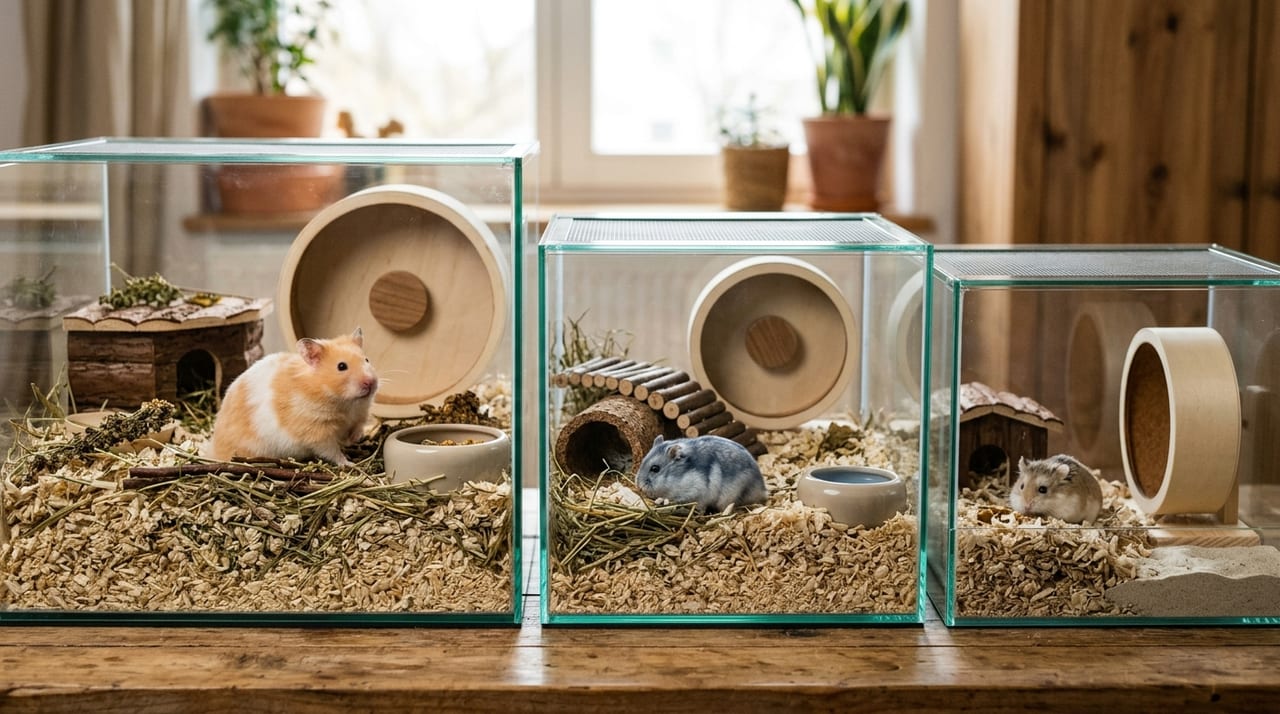
Ideal Enclosure Types - Large glass aquariums (minimum 80 liters) - Plastic storage containers (bin cages) - Large plastic tanks - Homemade wooden enclosures - Commercial bin cage conversions
Essential Features - Smooth, chew-resistant walls - Secure, locking or latch lids - No gaps larger than 1 cm - Minimum 80 liters for dwarf hamsters - 110+ liters for Syrian hamsters - Excellent ventilation
Avoid Entirely - Wire cages with bar spacing - Mesh-topped tanks - Cages with removable lids - Multi-level dwellings with escape points - Any enclosure with gaps or soft plastic